
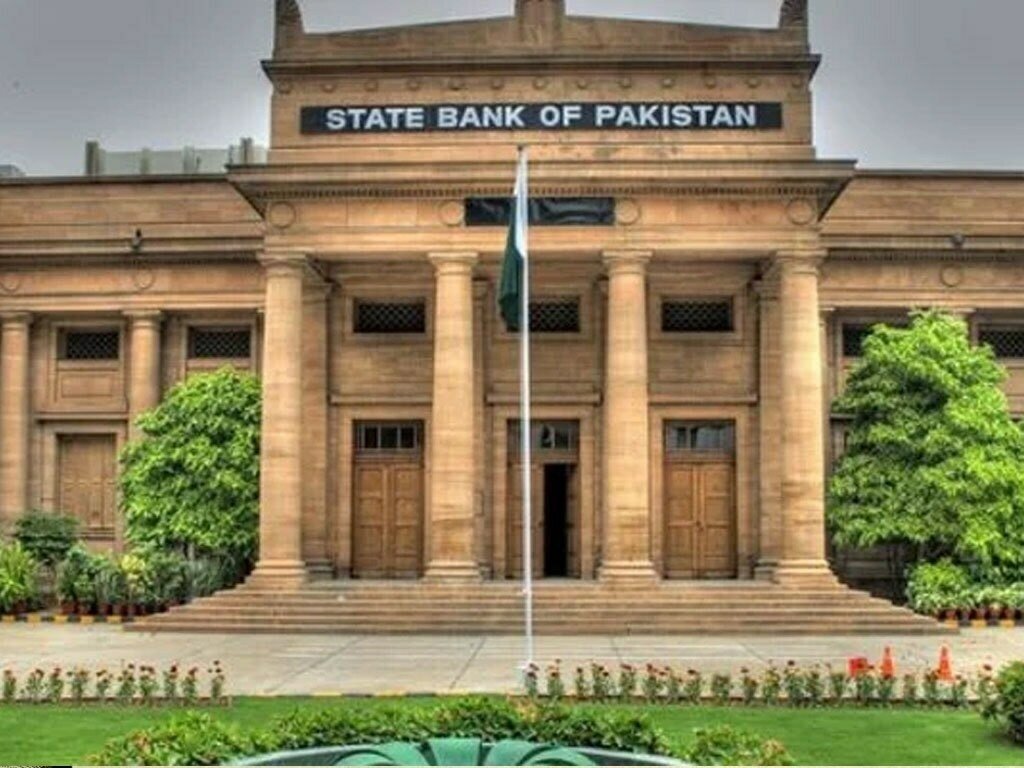
KARACHI — Workers’ remittances to Pakistan from overseas surged by 8.6% during the fiscal year 2025-26, reaching a total of $41.6 billion, according to the State Bank of Pakistan. This growth reflects the significant contributions of the Pakistani diaspora, with monthly inflows in June 2026 recorded at $3.5 billion.
What Happened
The State Bank of Pakistan reported that workers’ remittances for the fiscal year 2025-26 amounted to $41.6 billion, marking an 8.6% increase from the $38.3 billion received in the previous fiscal year. The remittances were primarily sourced from key countries including Saudi Arabia, the United Arab Emirates, the United Kingdom, and the United States. Specifically, Saudi Arabia contributed $9,783.1 million, the UAE $8,806.9 million, the UK $6,325.7 million, and the USA $3,623.8 million.
European Union countries also played a significant role, contributing $5,226.6 million in total. Italy led the EU contributions with $1,547.3 million, followed by Spain with $905.6 million, Germany with $806.6 million, and France with $591.6 million. Other notable contributions came from Greece, Ireland, and Belgium.
Beyond Europe, substantial remittances came from countries such as Australia ($1,142.1 million), Canada ($798.4 million), South Africa ($290.7 million), Malaysia ($167.6 million), Norway ($150 million), South Korea ($108.8 million), and Japan ($67.6 million).
In June 2026 alone, remittances were recorded at $3.475 billion, a decrease of 18.3% from May 2026’s $4.25 billion. However, compared to June 2025, there was a 2% increase from $3.41 billion. The major contributors for June 2026 were Saudi Arabia ($829.6 million), the UAE ($792.2 million), the UK ($514.9 million), and the USA ($296.8 million).
Background
Remittances have historically been a critical component of Pakistan’s economy, providing a vital source of foreign exchange. The Pakistani diaspora, spread across the globe, has consistently supported the nation’s economy through these financial inflows. The State Bank of Pakistan regularly monitors and reports on these remittances, which are crucial for maintaining the country’s balance of payments and supporting its foreign exchange reserves.
In recent years, remittances have shown resilience despite global economic challenges, including the COVID-19 pandemic. The government’s efforts to facilitate and streamline remittance processes have also contributed to the steady inflow of funds.
Why It Matters
The increase in workers’ remittances is significant for Pakistan’s economy, as these inflows help stabilize the country’s foreign exchange reserves, which are essential for international trade and debt servicing. A healthy reserve position can enhance investor confidence and potentially lead to improved credit ratings for the country.
Economically, remittances provide a lifeline for many families in Pakistan, contributing to household incomes and supporting consumption. This, in turn, stimulates economic activity and can lead to improved living standards for recipients.
Politically, the government’s ability to maintain and potentially increase remittance inflows is crucial for its economic strategy, especially in light of ongoing challenges such as inflation and fiscal deficits. The steady growth in remittances reflects the trust and confidence of overseas Pakistanis in the country’s economic management.
On an international level, the increase in remittances underscores the strong ties between Pakistan and its diaspora, highlighting the global interconnectedness of the Pakistani community.
Key Takeaways
- Workers’ remittances to Pakistan grew by 8.6% in FY26, reaching $41.6 billion.
- Major sources included Saudi Arabia, UAE, UK, and USA, with significant contributions from the EU.
- June 2026 remittances were $3.475 billion, a slight increase compared to June 2025.
- Remittances are crucial for Pakistan’s foreign exchange reserves and economic stability.
- The growth in remittances reflects strong ties between Pakistan and its global diaspora.
Source Attribution
This article is based on official government statements, press releases, and public communications from relevant authorities.














