
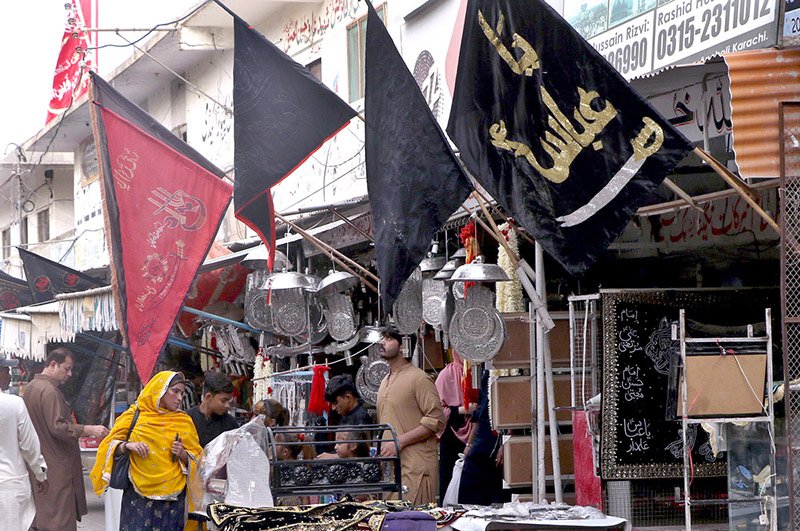
SARGODHA — The Youm-e-Ashura processions in Sargodha concluded peacefully on Friday, June 26, under stringent security measures. The district police, backed by the civil administration and security agencies, executed a thorough security plan for the safety of participants and smooth event conduct.
Procession Details
The 10th of Muharram, known as Youm-e-Ashura, is a significant day of mourning for the Shia Muslim community, commemorating the martyrdom of Imam Hussain, grandson of Prophet Muhammad, at the Battle of Karbala. In Sargodha, 214 processions took place, categorized into:
- 27 of category A,
- 32 of category B,
- 155 of category C, based on size and significance.
Security Measures
Security arrangements were meticulously planned by the district police with support from civil administration and various security agencies. Authorities implemented a multi-layered security strategy:
- Deployment of police personnel at key locations,
- Use of surveillance cameras,
- Establishment of control rooms for real-time monitoring.
Police conducted thorough searches of procession routes and surrounding areas to avoid any incidents. District Police Officer (DPO) Sargodha emphasized the importance of peace during the processions. “Our primary objective was to ensure the safety of all participants and facilitate the religious observance without disruptions,” he stated, commending the local community and religious leaders for their cooperation.
Religious and Security Significance
Youm-e-Ashura holds deep religious significance in Pakistan, especially for the Shia community. It is observed with solemnity, featuring processions, recitations, and religious activities. The day has historically seen increased security due to potential sectarian tensions and violence threats.
The government and local authorities typically devise extensive security plans for Muharram, involving:
- Multiple layers of security personnel,
- Community engagement,
- Surveillance technology.
These efforts aim to prevent incidents that could disrupt peace or endanger participants.
Impact and Importance
The peaceful conclusion of the Youm-e-Ashura processions in Sargodha is crucial for several reasons. Firstly, it demonstrates the effectiveness of coordinated security efforts by local authorities, vital for maintaining public safety during religious observances. Successful security plan implementation reflects law enforcement’s capability to manage large-scale events without incidents.
Furthermore, the peaceful conduct of the processions reinforces communal harmony and religious tolerance within the region. In Pakistan, where sectarian tensions can lead to violence, peaceful religious observance indicates social cohesion and mutual respect among communities.
The event’s peaceful nature can also enhance public confidence in the government’s capacity to protect citizens and uphold their right to religious expression, fostering security and stability. This sense of safety has broader implications for social and economic development in the region.














