
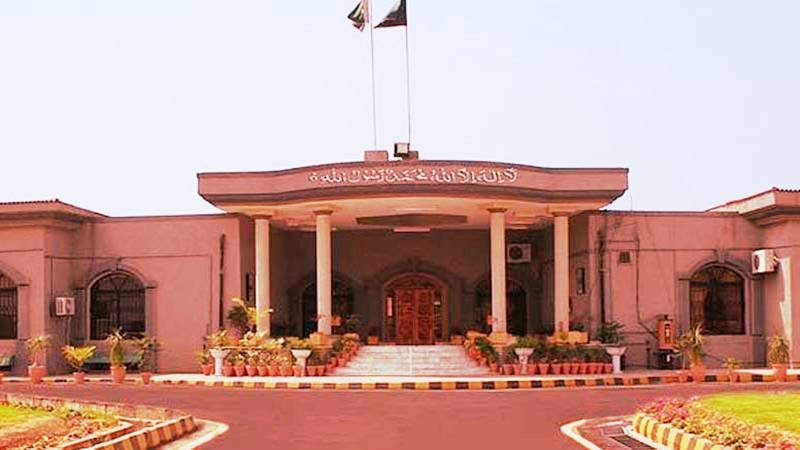
ISLAMABAD — A petition was filed in the Islamabad High Court on Wednesday challenging the National Highway Authority’s (NHA) decision to impose a 50% additional toll surcharge on vehicles without an M-Tag and those with insufficient M-Tag balances. The move has sparked a debate about the fairness and legality of such penalties.
What Happened
The petition, lodged by an unnamed petitioner, argues that the NHA’s decision to levy a 50% surcharge on vehicles lacking an M-Tag or having low M-Tag balances is unjust and discriminatory. The petitioner contends that this penalty places an undue burden on commuters who may not have immediate access to recharge facilities or who may not be aware of the M-Tag requirements. The petition seeks the Islamabad High Court’s intervention to annul the surcharge, claiming it violates fundamental rights guaranteed under the Constitution of Pakistan.
The NHA had previously announced the enforcement of this surcharge as a measure to streamline toll collection and reduce traffic congestion at toll plazas. According to the NHA, the M-Tag system is designed to facilitate smoother traffic flow by enabling electronic toll collection, thereby minimizing the need for manual cash transactions. However, the imposition of a hefty penalty has been met with criticism from various quarters, including motorists and civil rights activists.
In response to the petition, the Islamabad High Court has issued notices to the NHA, seeking a detailed explanation of the rationale behind the surcharge. The court has also asked for a comprehensive report on the implementation and impact of the M-Tag system on traffic management and toll collection efficiency.
Background
The M-Tag system was introduced by the NHA as part of its efforts to modernize toll collection on Pakistan’s national highways and motorways. The system uses radio frequency identification (RFID) technology to automatically deduct toll charges from a pre-paid account linked to the vehicle’s M-Tag. This initiative was aimed at reducing delays at toll booths, enhancing revenue collection, and curbing leakages in the toll collection process.
Despite its intended benefits, the implementation of the M-Tag system has faced several challenges, including technical glitches, insufficient public awareness, and inadequate recharge facilities. The NHA has been under pressure to address these issues to ensure the system’s smooth operation and public acceptance.
Why It Matters
The petition against the NHA’s surcharge policy is significant as it raises questions about the balance between technological advancement and public convenience. The outcome of this legal challenge could set a precedent for how public authorities implement and enforce new technologies that impact daily life.
Economically, the surcharge could affect a large number of commuters who rely on the national highways for travel. Many of these individuals may not have easy access to M-Tag recharge facilities, particularly in rural areas, potentially leading to increased travel costs and inconvenience. Socially, the surcharge could exacerbate inequalities, as those with limited financial resources may find it more challenging to comply with the M-Tag requirements.
Politically, the case underscores the need for transparent and equitable policy-making by government authorities. It highlights the importance of ensuring that technological advancements do not disproportionately disadvantage certain segments of the population. The court’s decision could influence future policy directions regarding the integration of technology in public services.
Key Takeaways
- A petition has been filed against the NHA’s 50% penalty on non-M-Tag vehicles.
- The Islamabad High Court has sought an explanation from the NHA on the surcharge.
- The M-Tag system aims to streamline toll collection but faces implementation challenges.
- The surcharge could disproportionately affect rural commuters and those with limited resources.
- The case may set a precedent for the integration of technology in public services.
Source Attribution
This article is based on official government statements, press releases, and public communications from relevant authorities.














