
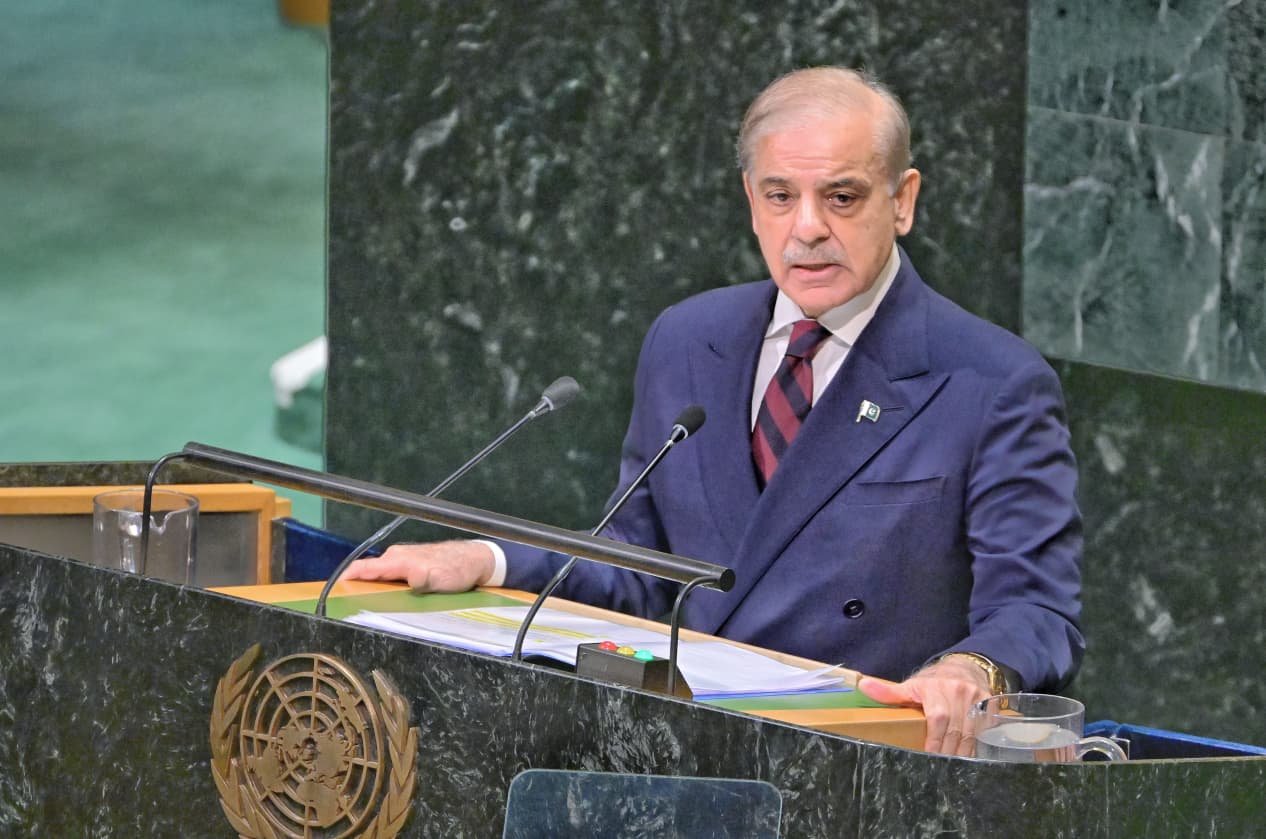
NEW YORK — Prime Minister Shehbaz Sharif on Friday addressed the United Nations General Assembly, emphasizing the urgent need for diplomatic efforts to resolve ongoing conflicts in the Middle East. He also issued a stern warning to India regarding any attempts to alter the flow of river waters shared with Pakistan, labeling such actions as potential acts of war.
What Happened
During his speech at the UN General Assembly, Prime Minister Shehbaz Sharif highlighted the escalating tensions in the Middle East, urging the international community to engage in renewed diplomatic initiatives. He expressed concerns over the humanitarian crises resulting from these conflicts and called for a collective effort to restore peace and stability in the region.
Sharif’s address also included a pointed warning to India concerning the Indus Waters Treaty, which governs the distribution of river waters between the two countries. He stated, “Any attempt to stop, impede or divert Pakistan’s share of river waters will be treated as an act of war.” This statement underscores the critical nature of water resources in South Asia, where both nations rely heavily on shared river systems for agriculture and drinking water.
The Prime Minister’s remarks come amid longstanding tensions between Pakistan and India over water rights, which have been exacerbated by climate change and increasing water scarcity. His speech aimed to highlight the potential for conflict escalation if water disputes are not managed through diplomatic channels.
Background
The Indus Waters Treaty, brokered by the World Bank in 1960, allocates the waters of the Indus River and its tributaries between India and Pakistan. Despite being a cornerstone of water-sharing agreements, the treaty has faced challenges as both countries experience growing water demands due to population growth and climate change.
Historically, the treaty has been a source of tension, with periodic accusations from both sides of treaty violations. In recent years, India has undertaken several dam projects on rivers allocated to Pakistan, raising concerns about potential impacts on downstream water availability.
In the Middle East, conflicts in regions such as Syria, Yemen, and Palestine have led to severe humanitarian crises, with millions displaced and in need of aid. The international community has struggled to find lasting solutions to these conflicts, often hindered by geopolitical interests and regional rivalries.
Why It Matters
Prime Minister Sharif’s call for peace in the Middle East and his warning to India on water issues carry significant implications for regional stability and international relations. The Middle East remains a focal point of global attention due to its strategic importance and the humanitarian impact of ongoing conflicts. Diplomatic efforts to resolve these issues could lead to improved regional security and economic development.
In South Asia, water scarcity poses a critical challenge, with potential to exacerbate tensions between nuclear-armed neighbors Pakistan and India. Any unilateral actions that threaten the water supply could lead to severe diplomatic fallout and potentially escalate into conflict, affecting millions of lives and regional stability.
Sharif’s emphasis on diplomacy highlights the need for cooperative approaches to shared challenges, such as water management and conflict resolution. By addressing these issues at the UN, Pakistan seeks to garner international support and pressure for peaceful solutions.
Key Takeaways
- Prime Minister Shehbaz Sharif called for renewed diplomatic efforts to address Middle East conflicts at the UN General Assembly.
- He warned India that altering Pakistan’s share of river waters could be considered an act of war.
- The Indus Waters Treaty remains a critical framework for water-sharing between India and Pakistan.
- Water scarcity and climate change are increasing tensions over shared water resources in South Asia.
- International diplomatic efforts are essential for resolving Middle East conflicts and preventing regional instability.
Source Attribution
This article is based on official government statements, press releases, and public communications from relevant authorities.














