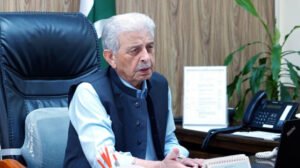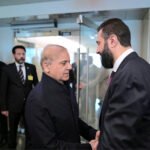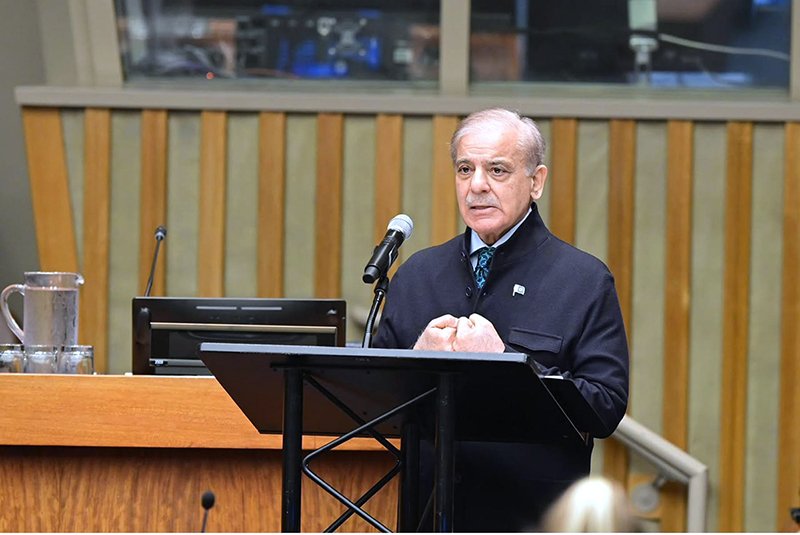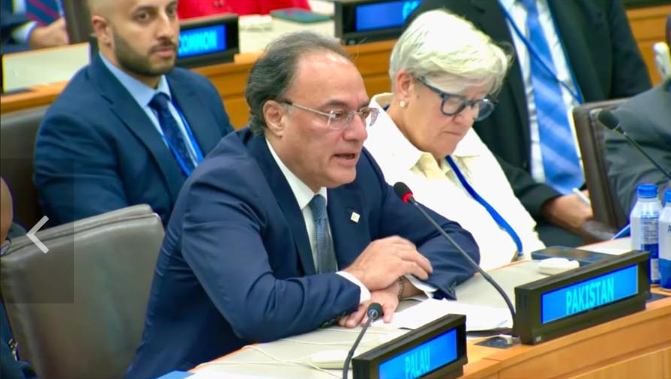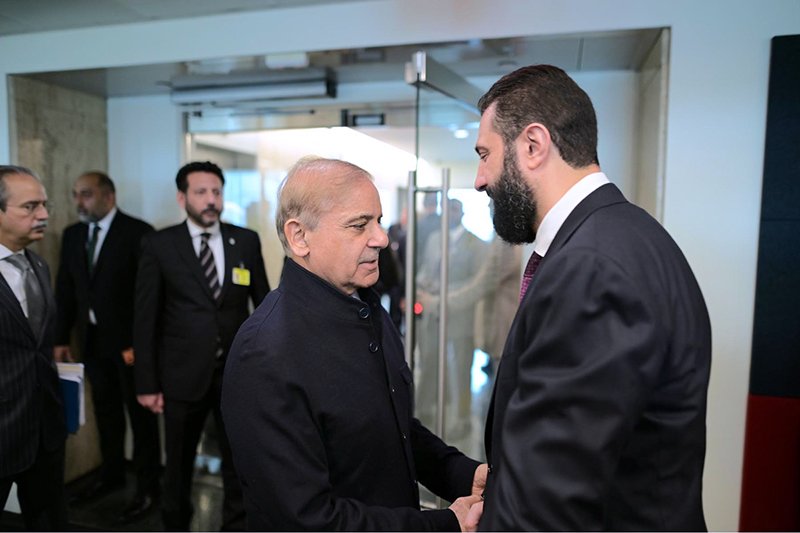
NEW YORK — Prime Minister Shehbaz Sharif met with President of the Syrian Arab Republic Ahmed al-Sharaa on the sidelines of the United Nations General Assembly (UNGA) session in New York. The meeting, held on September 26, 2023, focused on strengthening bilateral relations and discussing regional issues of mutual concern.
What Happened
During the meeting, Prime Minister Shehbaz Sharif and President Ahmed al-Sharaa exchanged views on a range of topics, including economic cooperation, regional security, and the humanitarian situation in Syria. The leaders emphasized the importance of enhancing trade ties and exploring new avenues for collaboration in various sectors.
Prime Minister Sharif reiterated Pakistan’s commitment to supporting Syria in its reconstruction efforts and highlighted the potential for increased cooperation in areas such as agriculture, education, and technology. He stated, “Pakistan stands ready to assist Syria in its journey towards peace and development.”
President al-Sharaa expressed gratitude for Pakistan’s consistent support and underscored the need for a peaceful resolution to the ongoing conflict in Syria. He noted, “The Syrian people are resilient, and with the support of our friends, we will rebuild our nation.”
The meeting also touched upon the broader geopolitical landscape, with both leaders agreeing on the necessity of multilateral dialogue to address regional tensions. They stressed the importance of international cooperation in combating terrorism and promoting stability in the Middle East.
Background
Pakistan and Syria have historically maintained cordial relations, with diplomatic ties dating back to the mid-20th century. Over the years, both countries have engaged in various bilateral initiatives, although the Syrian conflict posed challenges to deepening economic and political cooperation.
The Syrian civil war, which began in 2011, has severely impacted the country’s infrastructure and economy, leading to a humanitarian crisis. Pakistan has consistently advocated for a peaceful resolution to the conflict and has provided humanitarian aid to Syrian refugees.
The United Nations General Assembly serves as a platform for world leaders to engage in dialogue on pressing global issues. The annual session in New York facilitates bilateral meetings, allowing leaders to discuss matters of mutual interest outside the formal agenda.
Why It Matters
The meeting between Prime Minister Shehbaz Sharif and President Ahmed al-Sharaa is significant for several reasons. Firstly, it underscores Pakistan’s active role in international diplomacy and its commitment to fostering peace in the Middle East. By engaging with Syria, Pakistan aims to contribute to regional stability and support the Syrian people in their recovery efforts.
Economically, the potential for increased trade and cooperation between Pakistan and Syria could benefit both nations. As Syria looks to rebuild its infrastructure, Pakistani businesses may find opportunities in construction, technology, and agriculture sectors. Such collaboration could also enhance Pakistan’s economic footprint in the Middle East.
Politically, the meeting highlights Pakistan’s balanced foreign policy approach, maintaining relations with diverse nations amidst complex geopolitical dynamics. By advocating for dialogue and cooperation, Pakistan positions itself as a mediator in regional conflicts, potentially enhancing its international standing.
Socially, Pakistan’s support for Syria aligns with its humanitarian principles, showcasing solidarity with a nation facing immense challenges. This stance may strengthen Pakistan’s image as a compassionate and responsible member of the international community.
Key Takeaways
- Prime Minister Shehbaz Sharif and President Ahmed al-Sharaa discussed economic cooperation and regional security.
- Pakistan expressed readiness to assist Syria in reconstruction and development efforts.
- The leaders emphasized the importance of multilateral dialogue to address regional tensions.
- Pakistan’s engagement with Syria highlights its commitment to Middle East peace and stability.
- The meeting reflects Pakistan’s balanced foreign policy and humanitarian principles.
Source Attribution
This article is based on official government statements, press releases, and public communications from relevant authorities.