
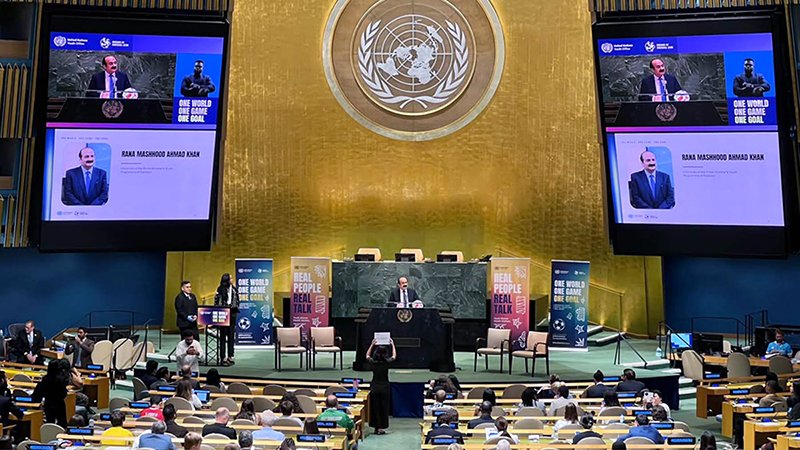
NEW YORK — Chairman of the Prime Minister’s Youth Programme, Rana Mashood Ahmed Khan, addressed a United Nations event titled “One World, One Game, One Goal: Football as a Catalyst for Youth Mental Health and Well-being” on Wednesday. The event focused on leveraging the global appeal of football to enhance mental health and well-being among young people worldwide.
What Happened
During his address at the UN event, Rana Mashood Ahmed Khan emphasized the transformative power of football in promoting mental health and well-being among youth. He highlighted how the sport can serve as a unifying force that transcends cultural and national boundaries, fostering a sense of community and belonging. “Football is more than just a game; it is a powerful tool for social change and mental well-being,” Khan stated.
The event brought together global leaders, mental health experts, and sports professionals to discuss strategies for using football as a means to improve mental health outcomes for young people. Khan shared insights from Pakistan’s initiatives that integrate sports into mental health programs, noting the positive impact observed in communities where these initiatives have been implemented.
Khan also underscored the importance of international collaboration in addressing youth mental health challenges. He called for increased investment in sports infrastructure and mental health services, particularly in developing countries, to ensure that young people have access to the resources they need to thrive.
Background
Football has long been recognized as a global sport with significant cultural and social influence. The United Nations has previously highlighted the role of sports in achieving sustainable development goals, including health and well-being. In recent years, there has been a growing recognition of the mental health benefits of physical activity, including team sports like football.
The Prime Minister’s Youth Programme in Pakistan has been actively involved in promoting sports as a means to enhance youth development and well-being. The program includes various initiatives aimed at increasing youth participation in sports, providing training and resources, and fostering an environment where young people can develop physically and mentally.
Why It Matters
The focus on football as a catalyst for youth mental health is particularly relevant in the current global context, where mental health issues among young people are on the rise. The COVID-19 pandemic has exacerbated these challenges, with increased isolation and stress impacting youth worldwide. By promoting sports as a means of improving mental health, initiatives like those discussed at the UN event can play a crucial role in addressing these issues.
For Pakistan, the integration of sports into mental health strategies aligns with broader efforts to improve public health and youth development. By investing in sports infrastructure and programs, the country can create opportunities for young people to engage in positive, health-promoting activities. This approach not only supports mental health but also contributes to social cohesion and community building.
Internationally, the event underscores the potential for sports to serve as a bridge between nations, fostering collaboration and understanding. By focusing on shared goals like youth mental health, countries can work together to develop innovative solutions that benefit young people globally.
Key Takeaways
- Rana Mashood Ahmed Khan addressed a UN event on football’s role in youth mental health.
- The event highlighted football as a tool for social change and mental well-being.
- Pakistan’s initiatives integrate sports into mental health programs with positive outcomes.
- Increased investment in sports infrastructure is crucial for youth development.
- International collaboration is essential for addressing global youth mental health challenges.
Source Attribution
This article is based on official government statements and public communications from relevant authorities.














