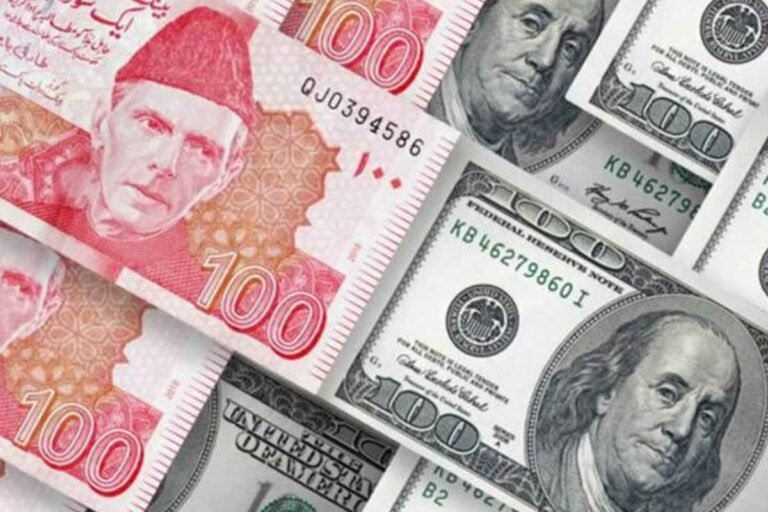
ISLAMABAD — The Pakistani Rupee experienced a slight appreciation against the US Dollar on Wednesday, closing at Rs 278.00 in interbank trading, a marginal gain from the previous day’s closing of Rs 278.01. This minor fluctuation reflects ongoing volatility in the currency market as Pakistan navigates complex economic challenges.
What Happened
According to the Forex Association of Pakistan (FAP), the Rupee’s value increased by 01 paisa against the US Dollar in the interbank market. This slight appreciation marks a small but notable shift in the currency dynamics, as the Rupee closed at Rs 278.00 compared to the previous day’s Rs 278.01.
In the open market, the buying and selling rates of the US Dollar were recorded at Rs 279.00 and Rs 279.05, respectively. These rates are indicative of the broader market conditions and reflect the demand and supply dynamics affecting the currency exchange.
The State Bank of Pakistan (SBP) reported changes in other major currencies as well. The Euro saw an increase of Rs 0.78, closing at Rs 317.60 from the previous Rs 316.82. Meanwhile, the British Pound appreciated by Rs 0.29, ending the day at Rs 371.67 compared to Rs 371.38 the day before. The Japanese Yen remained unchanged at Rs 1.71, while the Emirate Dirham and Saudi Riyal closed at Rs 75.69 and Rs 74.04, respectively, with the latter gaining 02 paisa.
Background
The Pakistani Rupee has been under significant pressure due to a combination of internal and external economic factors. Historically, fluctuations in the Rupee’s value have been influenced by Pakistan’s trade deficit, foreign exchange reserves, and international financial obligations. The country’s reliance on imports, coupled with limited export growth, has often led to a demand for foreign currency that outstrips supply, putting downward pressure on the Rupee.
Recent economic policies and negotiations with international financial institutions, such as the International Monetary Fund (IMF), have aimed to stabilize the economy and manage currency volatility. The government has implemented measures to increase foreign exchange reserves and reduce the trade deficit, although challenges remain.
Why It Matters
The Rupee’s performance against the US Dollar is a critical indicator of Pakistan’s economic health. Even minor fluctuations can have significant implications for inflation, import costs, and the overall cost of living. A stronger Rupee can help reduce the cost of imported goods, which is crucial for a country that relies heavily on imports for essential commodities and industrial inputs.
For businesses, particularly those involved in international trade, currency stability is vital for planning and operations. A stable Rupee allows companies to manage costs more effectively and reduces the risk associated with currency exchange fluctuations. This stability can also influence foreign investment decisions, as investors seek predictable economic environments.
On a broader scale, the Rupee’s value affects Pakistan’s ability to service foreign debt. A stronger Rupee can reduce the local currency cost of repaying international loans, providing relief to the national budget. Conversely, a weaker Rupee can exacerbate debt servicing challenges, straining public finances and potentially leading to austerity measures.
Key Takeaways
- The Pakistani Rupee appreciated by 01 paisa against the US Dollar, closing at Rs 278.00 in interbank trading.
- The open market buying and selling rates for the US Dollar were Rs 279.00 and Rs 279.05, respectively.
- The Euro and British Pound also saw increases, closing at Rs 317.60 and Rs 371.67, respectively.
- Currency stability remains crucial for Pakistan’s economic planning and foreign investment prospects.
- The Rupee’s performance impacts inflation, import costs, and the country’s ability to service foreign debt.
Source Attribution
This article is based on official government statements, press releases, and public communications from relevant authorities.