
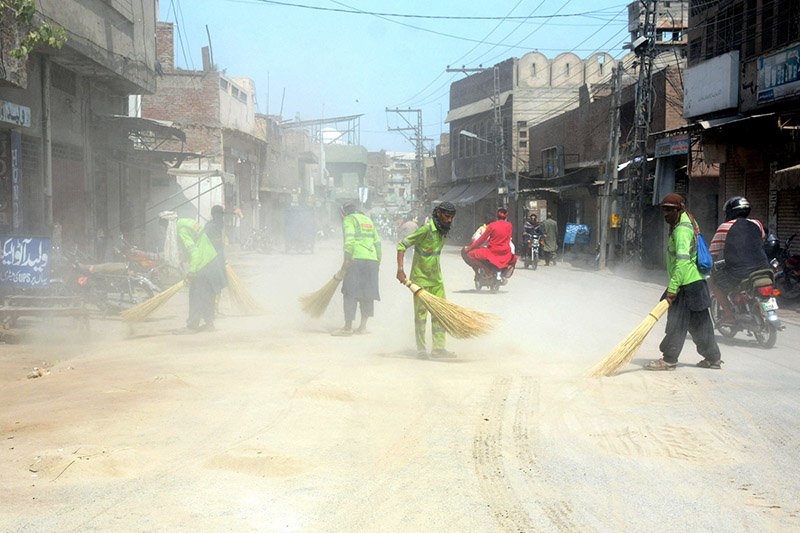
MULTAN — Sanitary workers in Multan have initiated a thorough cleanup operation at Doulat Gate following the conclusion of the 10th Muharram (Ashura) procession. On Saturday, the team worked on removing sand and debris left by the large crowds commemorating the solemn occasion.
Significance of the Procession
The Ashura procession on the 10th day of Muharram is a pivotal event for the Shia Muslim community, marking the martyrdom of Imam Hussain, the grandson of Prophet Muhammad. In Multan, as in many cities across Pakistan, thousands participated in the procession, marching through the streets in a display of mourning and religious devotion.
Cleanup Efforts
Following the event, the Multan municipal authorities dispatched sanitary workers to restore the area. The team was tasked with sweeping sand and debris that had accumulated during the procession. A dust cloud rose during the cleanup, a frequent occurrence given the dry conditions and volume of debris.
The local municipal office stated, “The cleanup operation is part of our commitment to maintaining public spaces and ensuring that the city remains clean and safe for all residents.” The operation was conducted swiftly to minimize disruptions for traffic and local businesses.
Importance of Keeping Public Spaces Clean
Ashura is observed annually by Shia Muslims worldwide, with processions held in various Pakistani cities including Karachi, Lahore, and Islamabad. The day is a public holiday, featuring public gatherings and recitations. Pakistani authorities implement extensive security measures to ensure the safety of participants.
In Multan, as elsewhere, authorities work with religious leaders to manage events smoothly. Post-event cleanups like this one are routine and essential for restoring normalcy.
Why the Cleanup Matters
Maintaining public hygiene and safety post-gatherings is crucial. Swift actions by sanitary workers help prevent health hazards from debris accumulation.
Economically, the cleanup allows local businesses to resume operations without delay. Doulat Gate is a bustling area with shops and vendors relying on foot traffic.
Socially, it demonstrates the city’s respect for religious practices while reflecting its commitment to the broader community. Efficient management of such events enhances Pakistan’s international image, showcasing its capability in handling large-scale public gatherings.
Key Takeaways
- Sanitary workers swiftly conducted a cleanup at Doulat Gate post-Ashura procession.
- The operation restored the area by removing sand and debris.
- Ashura commemorates Imam Hussain’s martyrdom, a significant event for Shia Muslims.
- Cleanup is vital for hygiene, economic activity, and social harmony.
- Efficient event management boosts Pakistan’s global image.














