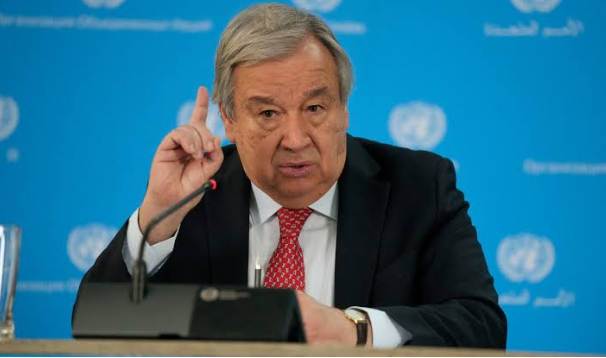
UNITED NATIONS — UN Secretary-General Antonio Guterres has urged global leaders, technology firms, and civil society to take collective action against the rapid spread of hate speech facilitated by digital technologies. Speaking on September 17 at the opening of a global conference on promoting interreligious and cultural dialogue, Guterres highlighted the urgent need for regulatory frameworks to keep pace with technological advancements.
What Happened
During the conference, Guterres addressed the alarming rate at which hate speech is proliferating online, aided by sophisticated digital tools. He emphasized that the toxic messages of hate are not only spreading quickly but are also deeply impacting societies worldwide. “Its toxic message is spreading fast and striking deep,” Guterres stated, underscoring the need for immediate and coordinated efforts to address this growing challenge.
The conference, aimed at fostering dialogue among different cultures and religions, served as a platform for the UN chief to call for a unified response to curb the influence of hate speech. Guterres appealed to governments to implement effective regulations, urged technology companies to take responsibility for the content shared on their platforms, and called on civil society to promote tolerance and understanding.
Guterres’ remarks come amid increasing concerns about the role of social media and other digital platforms in amplifying hate speech, misinformation, and extremist ideologies. The UN chief highlighted the necessity for a global strategy that balances freedom of expression with the need to prevent harm and protect vulnerable communities.
Background
Hate speech has been a persistent issue globally, with its roots tracing back to various socio-political and cultural conflicts. The advent of the internet and social media has significantly amplified the reach and impact of such speech, making it a pressing concern for international bodies and governments alike.
In recent years, there have been several high-profile incidents where digital platforms have been used to spread hate speech, leading to real-world violence and discrimination. The Christchurch mosque shootings in New Zealand in 2019, for instance, were partly fueled by online hate and extremist content. These events have prompted calls for stricter regulations and more robust measures to combat online hate.
Various international frameworks, including those by the United Nations, have been established to address hate speech. However, the rapid evolution of technology often outpaces these regulatory efforts, necessitating continuous updates and adaptations to existing policies.
Why It Matters
The unchecked spread of hate speech on digital platforms poses significant risks to social cohesion and global peace. It can incite violence, fuel discrimination, and undermine democratic processes by spreading misinformation and polarizing societies. In Pakistan, as in many other countries, the impact of digital hate speech is felt across various sectors, including politics, religion, and ethnic relations.
Economically, the proliferation of hate speech can deter investment and tourism, as countries perceived as unstable or intolerant may be less attractive to international stakeholders. Socially, it can lead to increased tensions among different communities, potentially resulting in conflicts and social unrest.
On a political level, the spread of hate speech can undermine governance and the rule of law, as it often targets marginalized groups and erodes trust in public institutions. Internationally, it challenges the efforts of organizations like the United Nations to promote peace and security, as digital platforms transcend national borders and require a coordinated global response.
Key Takeaways
- UN Secretary-General Antonio Guterres has called for global action against digital hate speech.
- The rapid spread of hate speech online is facilitated by advanced digital technologies.
- Guterres emphasized the need for governments, tech companies, and civil society to collaborate.
- Unchecked hate speech poses risks to social cohesion, economic stability, and political governance.
- International frameworks struggle to keep pace with technological advancements in digital communication.
Source Attribution
This article is based on official statements and public communications from the United Nations.