
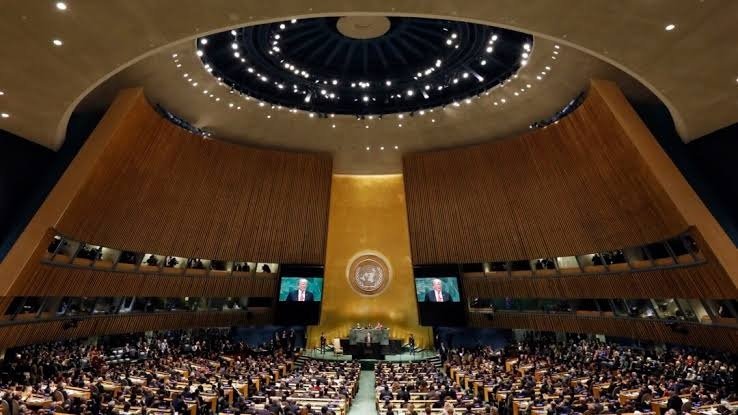
NEW YORK — The United Nations General Assembly (UNGA) voted 136-9 on Tuesday to override a United States attempt to halt discussions on the ongoing embargo against Cuba. Pakistan was among the nations advocating for the continuation of the debate, highlighting the increasing hardships faced by the Cuban population due to the decades-long sanctions.
What Happened
The UN General Assembly convened to address the longstanding embargo imposed by the United States on Cuba, a measure that has been in place for over six decades. In a decisive move, 136 member states voted in favor of continuing the debate, effectively rejecting the U.S. proposal to cease discussions on the matter. Nine nations sided with the U.S., while 12 abstained from the vote.
Pakistan, aligning with the majority, emphasized the humanitarian impact of the embargo on the Cuban people. The Pakistani representative at the UN stated, “The embargo has not only stifled economic growth in Cuba but has also exacerbated the suffering of its citizens, particularly in the wake of global economic challenges.”
The debate at the UNGA comes amid growing international calls for the lifting of the embargo, which critics argue has failed to achieve its intended political objectives while causing significant economic hardship for ordinary Cubans. The U.S., however, maintains that the embargo is a necessary tool to pressure the Cuban government on issues related to human rights and political freedoms.
Background
The U.S. embargo against Cuba was first imposed in 1960 following the Cuban Revolution and the nationalization of American-owned properties in Cuba. Over the years, the embargo has been strengthened through various legislative measures, including the Cuban Democracy Act of 1992 and the Helms-Burton Act of 1996. These laws aim to isolate Cuba economically until it transitions to a democratic government.
Despite periodic attempts to ease restrictions, such as during the Obama administration, the core elements of the embargo remain intact. The UNGA has repeatedly called for the lifting of the embargo, with annual votes overwhelmingly in favor of ending it. However, these resolutions are non-binding and have not led to substantive policy changes by the U.S.
Why It Matters
The UNGA’s decision to continue the debate on the Cuban embargo underscores the growing international consensus against unilateral sanctions that disproportionately affect civilian populations. For Pakistan, supporting the debate aligns with its broader foreign policy goals of advocating for equitable international relations and humanitarian considerations.
Economically, the embargo has significantly hindered Cuba’s development, limiting its access to international markets and financial systems. This has resulted in shortages of essential goods, including food and medicine, exacerbating the hardships faced by ordinary Cubans. The continuation of the debate at the UNGA keeps the issue in the international spotlight, potentially increasing pressure on the U.S. to reconsider its stance.
Politically, the vote reflects a shift in global attitudes towards unilateral sanctions, with many countries advocating for multilateral approaches to conflict resolution and human rights advocacy. The debate also highlights the diplomatic isolation of the U.S. on this issue, as evidenced by the overwhelming majority against its proposal.
Key Takeaways
- The UNGA voted 136-9 to continue discussions on the U.S. embargo against Cuba.
- Pakistan supported the continuation of the debate, citing humanitarian concerns.
- The embargo has been in place since 1960, with significant economic impacts on Cuba.
- The UNGA’s decision reflects a broader international consensus against unilateral sanctions.
- The debate maintains international pressure on the U.S. to reconsider its policy.
Source Attribution
This article is based on official government statements, press releases, and public communications from relevant authorities.














