
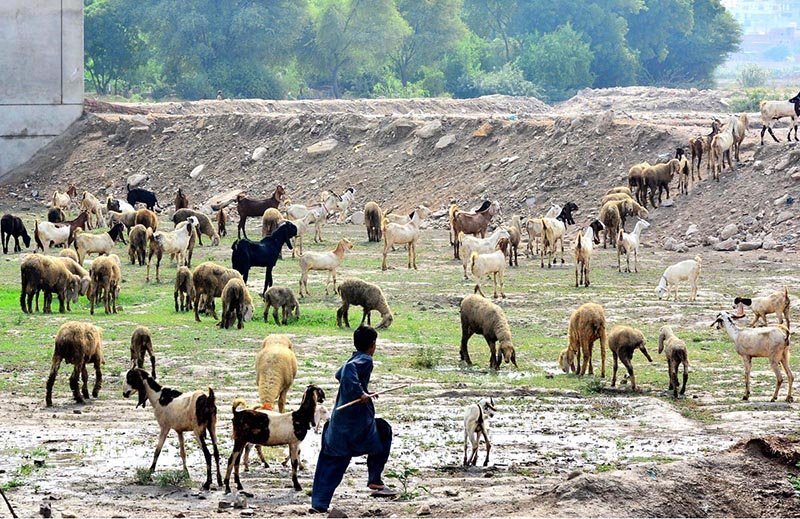
HYDERABAD — A young shepherd was observed tending to a herd of sheep and goats grazing in an open field on the outskirts of Hyderabad on September 17. This scene highlights the ongoing coexistence of traditional pastoral practices alongside the rapid urbanization of the region.
What Happened
In the early hours of September 17, a young shepherd was seen diligently managing his flock of sheep and goats on the fringes of Hyderabad. The animals roamed freely across the open fields, which are increasingly becoming rare due to the city’s expanding infrastructure. The shepherd, whose identity remains anonymous, represents a dwindling number of individuals maintaining traditional livelihoods in the face of urban sprawl.
Eyewitnesses noted the shepherd’s adept handling of the animals, ensuring they grazed safely and did not stray onto nearby roads. This pastoral scene is a common yet diminishing sight, as Hyderabad continues to grow and develop. The city’s expansion has led to the conversion of many such grazing lands into residential and commercial properties, posing challenges for those who rely on these lands for their livelihood.
According to local residents, the presence of shepherds and their flocks is a reminder of the area’s agrarian roots. However, with the increasing encroachment of urban development, the availability of open grazing fields is rapidly declining. The shepherd’s role is not only to manage the flock but also to navigate the challenges posed by urbanization, such as traffic and restricted access to traditional grazing areas.
Background
Hyderabad, a city with a rich historical and cultural heritage, is experiencing significant urban growth. This expansion has been driven by a combination of population increase, economic development, and infrastructural projects. Historically, the outskirts of Hyderabad have been used for agriculture and livestock grazing, activities that have sustained local communities for generations.
In recent years, however, the pressure on land resources has intensified. Urban planners and developers have targeted these peripheral areas for new housing projects, commercial centers, and road networks. This has led to a reduction in available land for traditional agricultural practices, including grazing.
The government has acknowledged the need to balance urban development with the preservation of agricultural lands. Policies have been proposed to protect certain areas from development, but enforcement remains inconsistent. As a result, shepherds and farmers often find themselves at odds with developers and local authorities over land use rights.
Why It Matters
The presence of shepherds on the outskirts of Hyderabad is emblematic of the broader challenges faced by rural communities in Pakistan as urbanization accelerates. The loss of grazing lands not only threatens the livelihoods of shepherds but also impacts the local economy, which relies on agriculture and livestock as key sectors.
Economically, the reduction in grazing areas can lead to decreased livestock production, affecting meat and dairy supply chains. This can result in higher prices for consumers and reduced income for those involved in livestock farming. Socially, the displacement of traditional practices can lead to the erosion of cultural heritage and community identity.
Politically, the issue underscores the need for comprehensive urban planning that considers the needs of all stakeholders, including rural communities. Ensuring that development projects do not disproportionately impact vulnerable populations is crucial for sustainable growth.
Internationally, Pakistan’s approach to balancing urbanization with rural preservation can serve as a model for other developing nations facing similar challenges. The country’s ability to manage these competing interests will be critical in shaping its future economic and social landscape.
Key Takeaways
- A young shepherd manages a flock on Hyderabad’s outskirts amid urban expansion.
- Urbanization is reducing available grazing lands, impacting traditional livelihoods.
- Balancing development with agricultural preservation is a key policy challenge.
- The issue highlights the economic and social impacts of rapid urban growth.
- Pakistan’s approach to urban-rural balance could inform global practices.
Source Attribution
This article is based on official government statements, press releases, and public communications from relevant authorities.














