
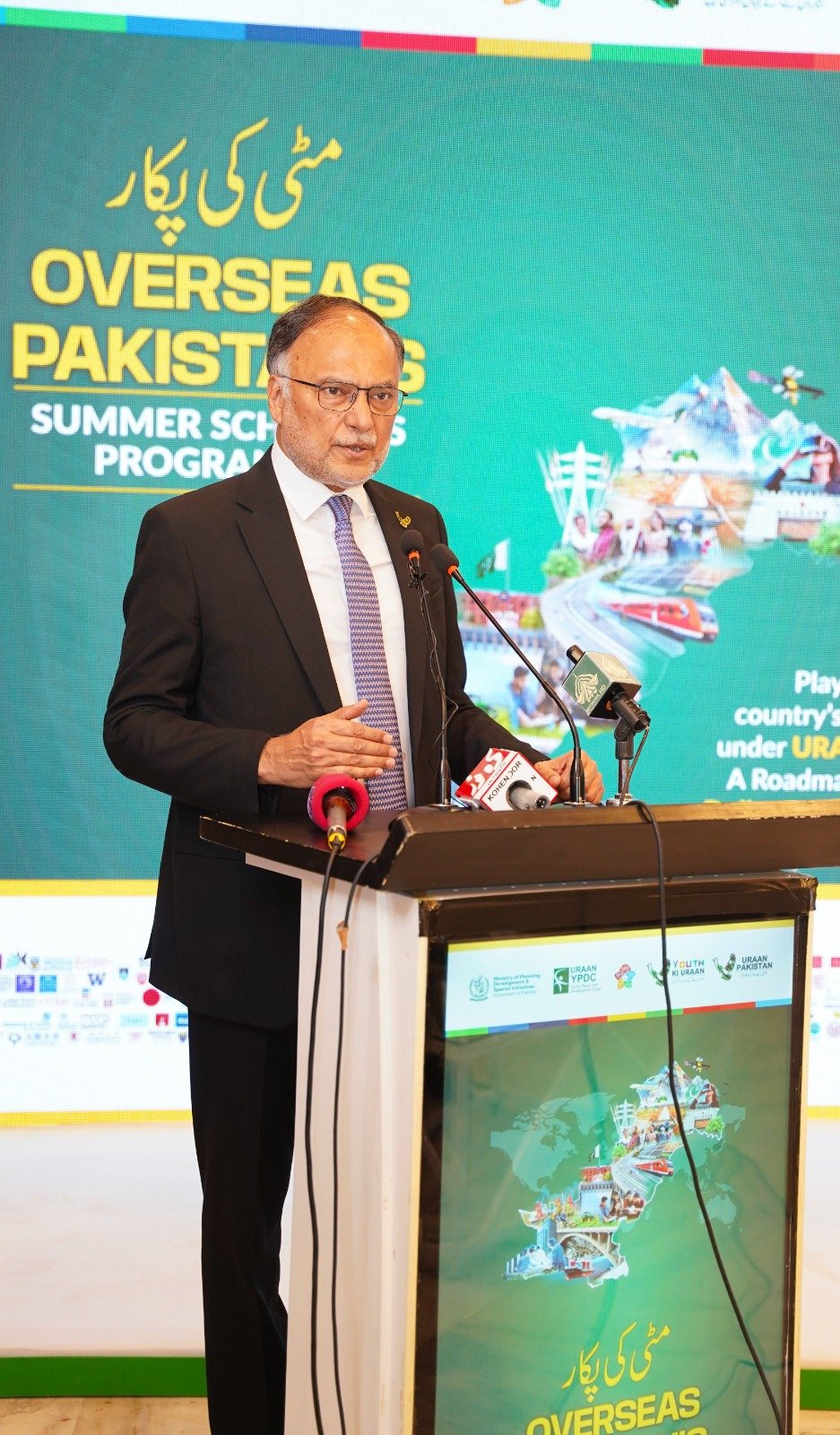
ISLAMABAD — Federal Minister for Planning, Development and Special Initiatives Ahsan Iqbal announced on Wednesday that Pakistan is transitioning from a phase of economic stabilization to a new era focused on growth. He emphasized the pivotal role of the country’s youth in driving this transformation towards greater global relevance.
What Happened
In a statement made during a press briefing, Ahsan Iqbal highlighted the strategic shift in Pakistan’s economic policy from stabilizing the economy to fostering growth. “Our youth are the decisive force that will propel Pakistan into a new chapter of economic ambition,” he stated. The minister underscored the importance of engaging young people in various sectors to harness their potential for innovation and development.
Iqbal elaborated on the government’s plans to capitalize on the demographic dividend by investing in education, skills development, and technology. He pointed out that these investments are crucial for equipping the youth with the necessary tools to contribute effectively to the economy. The minister also mentioned initiatives aimed at creating job opportunities and encouraging entrepreneurship among young Pakistanis.
The announcement comes at a time when Pakistan is seeking to enhance its economic standing on the global stage. The focus on youth is seen as a strategic move to leverage the country’s demographic advantage, with over 60% of the population under the age of 30.
Background
Pakistan has faced numerous economic challenges over the past decades, including high inflation, fiscal deficits, and a reliance on international financial assistance. In recent years, the government has implemented various measures to stabilize the economy, such as structural reforms and fiscal consolidation. These efforts have laid the groundwork for a shift towards growth-oriented policies.
Historically, Pakistan’s economic policies have oscillated between stabilization and growth, often dictated by external economic pressures and internal political dynamics. The current focus on youth as a driver of growth reflects a broader trend in emerging economies to harness the potential of younger populations for sustainable development.
Why It Matters
The emphasis on youth in Pakistan’s economic strategy is significant for several reasons. Economically, it represents a shift towards leveraging human capital as a primary resource for growth. By investing in education and skills development, Pakistan aims to create a workforce that is capable of meeting the demands of a rapidly changing global economy.
Socially, this focus has the potential to address issues of unemployment and underemployment among young people, which have been persistent challenges in the country. By providing opportunities for meaningful employment and entrepreneurship, the government hopes to reduce economic disparities and improve social mobility.
Politically, engaging the youth in the economic development process can enhance social stability and foster a sense of national unity. As young people become active participants in the economy, they are more likely to contribute positively to the country’s political and social fabric.
On an international level, Pakistan’s strategic pivot towards growth and youth engagement can enhance its competitiveness and attractiveness as an investment destination. By showcasing a commitment to developing its human capital, Pakistan may attract foreign investment and partnerships, further bolstering its economic prospects.
Key Takeaways
- Pakistan is shifting its economic focus from stabilization to growth, with youth as a central component.
- Federal Minister Ahsan Iqbal emphasized the importance of investing in education and skills development.
- The government aims to leverage the demographic dividend to enhance global economic relevance.
- This strategy addresses unemployment and aims to foster social stability and unity.
- Pakistan’s focus on youth could enhance its attractiveness as an investment destination.
Source Attribution
This article is based on official government statements and public communications from relevant authorities.














