2026

Business

Barclays Upgrades Pakistan’s Sovereign Debt Rating to Overweight

ISLAMABAD — Barclays, a prominent global financial institution, has upgraded Pakistan’s sovereign debt rating to ‘Overweight’. This decision reflects a positive outlook on the country’s economic prospects. The announcement was made by Khurram Shehzad, Advisor to the Finance Minister, emphasizing the strengthening of Pakistan’s external and fiscal positions. Barclays’ Upgrade Barclays’ decision to enhance Pakistan’s sovereign debt rating signifies strong support for the country’s economic policies and fiscal management. An ‘Overweight’ rating indicates that Barclays considers Pakistan’s bonds an attractive investment, with anticipated returns surpassing other emerging markets. Shehzad shared this update via his official X account, underscoring the global market’s confidence in Pakistan’s economic trajectory. The upgrade signals improvements in Pakistan’s external accounts, such as a narrowing current account deficit and stable foreign exchange reserves. Shehzad noted that government-initiated fiscal reforms have been pivotal in stabilizing the economy, significantly influencing Barclays’ reassessment. Economic Trends Barclays identifies several positive trends in Pakistan’s economy, including rising exports, remittances from overseas Pakistanis, and a stronger industrial sector. These developments contribute to a more sustainable economic environment, enabling better fiscal management and decreasing dependence on external borrowing. Historical Challenges and Reforms Pakistan has grappled with economic challenges like a high fiscal deficit, inflation, and currency volatility. The government has been implementing structural reforms to stabilize the economy and attract foreign investment. These measures include expanding the tax base, enhancing public sector efficiency, and improving the business climate. Historically, political instability, security concerns, and external shocks have affected Pakistan’s economic performance. Recent initiatives aim to foster a conducive environment for economic growth. The government’s commitment to fiscal discipline and transparency has earned recognition from international financial institutions, enhancing confidence in Pakistan’s economic outlook. Significance of the Upgrade Barclays’ upgrade is a vote of confidence in Pakistan’s economic management. It signals to international investors that Pakistan is a viable investment destination, potentially boosting capital inflows and economic growth. The ‘Overweight’ rating could improve Pakistan’s access to global capital markets, lowering borrowing costs and supporting critical infrastructure development. Improved economic conditions could offer more job opportunities, higher wages, and better living standards for citizens. The government’s emphasis on fiscal reforms and economic stability is anticipated to create a more resilient economy, capable of enduring external shocks and sustaining long-term growth. Globally, Pakistan’s enhanced economic outlook could strengthen its geopolitical standing, fostering robust trade relationships and strategic partnerships. As the country stabilizes and grows, it may assume a more influential role in regional economic dynamics, contributing to regional stability and development.

Business

ECC Approves Technical Supplementary Grants and Sectoral Support Measures

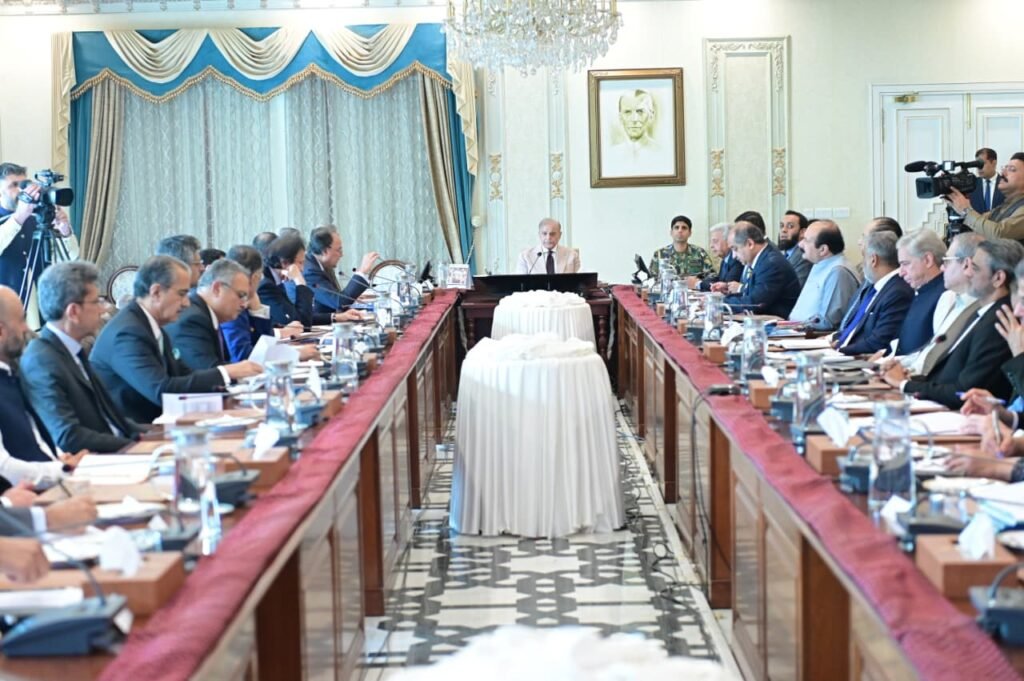
ISLAMABAD — The Economic Coordination Committee (ECC) of the Cabinet, under the leadership of Federal Minister for Finance and Revenue Senator Muhammad Aurangzeb, approved crucial Technical Supplementary Grants (TSGs) and sectoral support measures on Wednesday. The meeting at the Finance Division focused on addressing urgent financial needs across various sectors. ECC Meeting Highlights The ECC gathered to address pressing financial matters, resulting in the approval of several TSGs aimed at supporting different sectors of the economy. These grants provide immediate financial relief to sectors vital for the country’s economic stability and growth. However, the specific allocations and beneficiary sectors were not disclosed in the initial report. Senator Aurangzeb stressed, “The approved grants are essential for maintaining economic momentum and ensuring critical sectors receive needed support for effective operations.” This decision reflects the government’s dedication to overcoming financial challenges and aiding economic recovery. Sectoral Support Measures The ECC also discussed various sectoral support measures designed to assist industries impacted by recent economic disruptions. These measures aim to boost productivity and competitiveness, enhancing overall economic resilience. Understanding ECC’s Role The ECC plays a critical role within Pakistan’s government, responsible for coordinating economic policies and managing financial resources. It regularly convenes to address urgent economic issues and decide on financial allocations, subsidies, and other economic measures. Approving TSGs is a routine practice, allowing the ECC to reallocate funds to meet unexpected financial needs or support strategic initiatives. Recently, Pakistan’s economy has been challenged by inflationary pressures, a depreciating currency, and global economic shifts. The government has responded with various fiscal and monetary policies aimed at stabilizing the economy and fostering growth. Significance of Approved Measures The approval of these TSGs and sectoral support measures is significant for several reasons: Economic Impact: The grants inject much-needed liquidity into critical sectors, sustaining operations and preventing disruptions with broader economic implications. Social Stability: By maintaining sectoral stability, these measures help preserve jobs and support livelihoods in heavily affected sectors, vital for social stability. Political Confidence: The ECC’s decisions showcase proactive economic management, boosting public confidence and supporting the government’s position in upcoming elections and public scrutiny. International Relations: Demonstrating fiscal responsibility and commitment to reform may enhance Pakistan’s economic standing, attracting foreign investment crucial for long-term growth.

World

EU, UK Support Pakistan’s Right To Defend Against TTP Threat

ISLAMABAD — The European Union (EU) and United Kingdom (UK) have affirmed their support for Pakistan’s right to self-defense against the Tehrik-i-Taliban Pakistan (TTP), a militant group in the region. This affirmation follows concerns about the presence of multiple terrorist organizations in Afghanistan, as observed by the United Nations Security Council Monitoring Team. International Backing Against Terrorism The EU and UK envoys reasserted their backing of Pakistan’s terrorism combat efforts, especially due to the rising TTP threat. The UN Security Council Monitoring Team has reported over 20 terrorist organizations operating with relative freedom under the Taliban regime in Afghanistan. Among these are between 13,000 to 23,000 terrorist fighters, including members of TTP, Al-Qaida, Islamic State Khorasan Province (ISKP), Eastern Turkistan Islamic Movement (ETIM), Islamic Movement of Uzbekistan (IMU), and Jamaat Ansarullah. This situation highlights the international community’s recognition of the security challenges Pakistan faces due to these militant groups’ activities. The EU and UK support represents a significant diplomatic gesture, emphasizing regional stability and the need for coordinated anti-terrorism efforts. Security Challenges and Diplomatic Significance Pakistan has expressed concern over security risks from Afghanistan, especially after the Taliban’s return to power in August 2021. The resurgence of TTP and other groups has led to increased cross-border attacks, threatening Pakistan’s national security directly. The TTP, known as the Pakistani Taliban, is responsible for numerous attacks in Pakistan, targeting civilian and military sites. It aims to overthrow the Pakistani government and establish its version of Islamic law. The Taliban takeover in Afghanistan has emboldened TTP, allowing it to regroup and plan attacks using Afghanistan as a safe haven. Impact on Bilateral Relations and Economic Growth Support from the EU and UK is vital for Pakistan as it navigates the complex geopolitical environment of South Asia. Affirming Pakistan’s right to self-defense not only strengthens bilateral ties but also reinforces global anti-terrorism efforts. This international support could boost collaboration in intelligence-sharing, counter-terrorism training, and financial aid to enhance Pakistan’s security infrastructure. Economically, terrorism has impeded Pakistan’s growth, deterring foreign investment and affecting tourism. Resolving these security issues can help Pakistan foster a more favorable environment for economic development and regional trade. Global Security Implications The international community’s stance against Afghan-based terrorist organizations necessitates a unified approach for regional stability. These groups not only threaten Pakistan but also pose a risk to global security with their potential for international attacks. Key Takeaways The EU and UK have affirmed Pakistan’s right to self-defense against TTP threats. Over 20 terrorist organizations, including TTP, operate freely in Afghanistan. UN estimates suggest up to 23,000 terrorist fighters are present in the region. International support is crucial for Pakistan’s counter-terrorism efforts.

Business

Finance Minister Presents Auditor-General’s Reports to National Assembly

ISLAMABAD — Federal Minister for Finance and Revenue, Senator Muhammad Aurangzeb, presented the Appropriation Accounts of the Government of Pakistan for the Financial Year 2024–25 to the National Assembly on Wednesday. The session also included the submission of the Auditor-General’s Reports, which cover the Accounts of the Federation for the Audit Year 2025–26, as mandated by Article 171 of the Constitution. Overview of the Submission During the National Assembly session in Islamabad, Finance Minister Muhammad Aurangzeb introduced the detailed Appropriation Accounts for the fiscal year 2024–25. These accounts outline the government’s expenditures and financial management. Additionally, the Auditor-General’s reports were presented, scrutinizing federal accounts for the audit year 2025–26. This presentation fulfills a constitutional requirement, promoting transparency and accountability in the government’s financial operations. The reports provide a thorough analysis of public fund usage, highlighting any discrepancies or irregularities found. The Auditor-General’s findings are vital for fiscal discipline, ensuring taxpayer money is effectively utilized. Senator Aurangzeb reiterated the government’s commitment to financial transparency and accountability. “These reports are essential for assessing our financial practices and ensuring fiscal responsibility,” he stated. Key National Assembly members will review and discuss these reports in upcoming sessions. Constitutional and Fiscal Significance The Auditor-General of Pakistan audits the accounts of the federal and provincial governments, along with other government-established authorities. This role, under Article 171 of the Constitution, requires audit reports to be submitted to the President and the National Assembly. Appropriation Accounts offer detailed insights into budget allocations and expenditures. They help the legislature monitor government spending, ensuring it aligns with approved budgets. The audit process identifies fund misuse and suggests corrective measures. Historically, these reports have been critical in Pakistan’s fiscal governance, promoting transparency and accountability in public financial management. Impact on Economic Governance Presenting the Auditor-General’s reports and Appropriation Accounts is crucial for Pakistan’s economic governance. These documents check the government’s financial activities, ensuring efficient and effective use of public funds. Identifying financial mismanagement helps rectify issues that could otherwise destabilize the economy. For Pakistani citizens, these reports assure that tax contributions are monitored and appropriately used. They also provide a foundation for public discourse on government spending, enabling citizens to hold leaders accountable. Globally, adhering to financial reporting constitutional requirements enhances Pakistan’s reputation as a transparent and well-governed nation. This bolsters foreign investment, as investors prefer countries demonstrating fiscal responsibility and accountability. Key Takeaways Finance Minister Muhammad Aurangzeb presented the Appropriation Accounts for 2024–25 and Auditor-General’s reports for 2025–26 to the National Assembly. The reports promote transparency in financial operations and are essential for fiscal discipline. Compliance with constitutional financial reporting supports Pakistan’s international standing.

Pakistan

Government Confident of Completing Constitutional Term, Says Rana Ihsan Afzal

ISLAMABAD — Coordinator to the Prime Minister, Rana Ihsan Afzal, expressed confidence that the current government will complete its constitutional term without significant obstacles. During an interview on a private television channel, he emphasized the government’s commitment to public welfare initiatives. Government Goals and Commitments Rana Ihsan Afzal assured the public that the government is on track to fulfill its constitutional mandate, set to conclude in 2023. He highlighted dedication to implementing policies aimed at improving socio-economic conditions. “We are focused on delivering public welfare and providing necessary services,” he stated, underscoring the administration’s priorities. Ongoing Initiatives Afzal elaborated on ongoing projects designed to uplift the standard of living across Pakistan. Significant efforts in sectors such as healthcare, education, and infrastructure development are central to the government’s agenda. These initiatives are crucial for ensuring the nation’s long-term stability and prosperity. Addressing Political Stability Addressing concerns about political instability, Afzal asserted that the government remains stable and committed to its goals. “There are no significant hurdles in our path, and we are confident in our ability to complete our term,” he reiterated, dismissing rumors of early elections and disruptions. Background of the Current Administration The government, led by Prime Minister Shehbaz Sharif, took office following the 2018 general elections. It has faced challenges, including economic difficulties, political opposition, and the impacts of COVID-19. Despite this, the focus remains on fulfilling electoral promises and constitutional responsibilities. Historical Context Historically, Pakistani governments have struggled to complete their full terms due to political and economic pressures. Rana Ihsan Afzal’s assurance comes amid speculation about governmental stability fueled by opposition and media narratives. Importance of Political Stability Rana Ihsan Afzal’s statement aims to address uncertainties about the government’s stability and governance capabilities. Political stability is crucial for maintaining investor confidence and ensuring the continuity of vital development projects necessary for economic growth. The government’s ability to complete its term is essential for uninterrupted public service delivery and long-term policy implementation. Public welfare focus is crucial for addressing socio-economic challenges faced by Pakistanis. Internationally, a stable government in Pakistan is vital for regional stability and maintaining positive global relations. Pakistan’s geopolitical significance affects South Asia and beyond. Key Takeaways Rana Ihsan Afzal expressed confidence in the government’s ability to complete its constitutional term. The government is focused on public welfare initiatives in healthcare, education, and infrastructure. Political stability is deemed crucial for economic growth and investor confidence. The assurance aims to address public and international concerns about governmental stability. Pakistan’s internal stability has significant regional and global implications.

Pakistan

PTA Announces Network Upgrade to Enhance Performance and Security

ISLAMABAD — The Pakistan Telecommunication Authority (PTA) has scheduled a significant network upgrade from June 24, 2026, at 5:00 PM to June 25, 2026, at 6:00 AM. This maintenance aims to enhance the stability, reliability, and security of PTA’s network infrastructure. Details of the Network Upgrade The PTA announced a crucial upgrade set for late June. It will start on June 24, 2026, at 5:00 PM and end by June 25, 2026, at 6:00 AM. The PTA stated that this upgrade is vital for improving the overall performance of their network systems. Enhanced service quality is expected for users across Pakistan. This planned upgrade is part of ongoing efforts to meet the demands of modern telecommunications. By addressing technical issues, the upgrade aims to reduce downtime and improve user experience. The PTA has asked users to be patient as some services may face temporary disruptions during this time. Importance of the Upgrade The PTA has highlighted this upgrade’s significance in enhancing network stability, reliability, and security. Such upgrades are essential for maintaining efficient telecommunications services in the country. PTA’s Initiatives The Pakistan Telecommunication Authority has been working to improve the nation’s telecommunication infrastructure. Efforts include modernizing and expanding network capabilities, aligning with the government’s vision to promote digital connectivity. Historically, the sector faced challenges with outdated infrastructure and limited rural coverage. The PTA’s initiatives, including this upgrade, aim to address these issues. Impact on Various Sectors This network upgrade reflects the PTA’s dedication to improving telecom services in Pakistan. Enhancing network stability and security ensures reliable and efficient services, crucial in the digital age. Economically, better telecommunication infrastructure benefits multiple sectors, such as: Business Education Healthcare Reliable networks enable businesses to function efficiently, support remote work, and facilitate digital transactions. In education, enhanced networks improve online learning platforms and resource access. Socially, improved telecommunications foster connectivity and collaboration among individuals and communities. This is especially important in rural areas, enhancing quality of life. Internationally, the upgrade aligns with global trends towards digital transformation. By investing in network improvements, Pakistan strengthens its position in the global telecommunications landscape.

World

EU, UK Envoys Support Pakistan’s Right To Self-Defense Against TTP

ISLAMABAD — European Union Special Envoy Gilles Bertrand and United Kingdom Special Envoy Richard Lindsay have voiced support for Pakistan’s right to self-defense against threats from the Tehrik-i-Taliban Pakistan (TTP). They criticized the Taliban regime in Afghanistan for not eliminating terrorist safe havens, underscoring the security challenges Pakistan faces. International Envoys’ Support In separate interviews, both Bertrand and Lindsay acknowledged Pakistan’s concerns over cross-border terrorism from Afghanistan. They affirmed Pakistan’s right to defend against imminent TTP threats, a group responsible for many attacks within Pakistan. Their statements emerge amid rising tensions with Afghanistan, as Islamabad accuses the Taliban of sheltering TTP militants. Gilles Bertrand, representing the EU, stated, “Pakistan’s security concerns are valid, and it is crucial for the international community to recognize the challenges it faces from terrorism.” Similarly, UK envoy Richard Lindsay remarked, “The Taliban’s inability to dismantle terrorist networks is a threat to regional stability.” They emphasized international cooperation against terrorism and urged the Taliban to take action against militant groups. TTP Background The TTP, known as the Pakistani Taliban, has persistently threatened Pakistan’s internal security. Formed in 2007, it has conducted numerous attacks on civilians, military personnel, and government sites. Despite Pakistan’s military efforts to dismantle the TTP’s infrastructure, the group has regrouped, launching attacks from Afghanistan. Pakistan has urged the Afghan Taliban to honor commitments in the Doha Agreement, preventing terrorist groups from using Afghan territory to threaten other nations. The Taliban’s inaction has strained Islamabad-Kabul relations, with Pakistan calling for international accountability of the Taliban commitments. Significance of International Statements The EU and UK envoys’ support is noteworthy as it shows growing international recognition of Pakistan’s security challenges and the necessity for a coordinated terrorism response. Such backing may bolster Pakistan’s diplomatic efforts to pressure the Taliban into taking action against the TTP. For Pakistan, the TTP threat extends beyond security, posing political and economic challenges. Terrorist attacks erode investor confidence and hinder economic growth, affecting citizens’ lives. The presence of militant groups affects regional stability, with broader international security implications. The envoys’ remarks highlight the complex geopolitical landscape in South Asia, where international interests intersect. By supporting Pakistan, the EU and UK might influence others to adopt a similar stance, potentially increasing diplomatic pressure on the Taliban regime. Key Takeaways EU and UK envoys support Pakistan’s right to self-defense against TTP threats. Envoys criticize the Taliban regime for not dismantling terrorist safe havens. Pakistan faces ongoing security, political, and economic challenges due to TTP activities. International support may enhance diplomatic pressure on the Taliban.

Sports

Pakistan U-19 Focused On Retaining Asia Cup Title, Says Head Coach

MULTAN — Head Coach Shahid Anwar of Pakistan’s Under-19 cricket team stressed the crucial mission of defending their title at the upcoming ACC Under-19 Asia Cup. Speaking at the Under-19 Skills Development Camp in Multan on June 24, Anwar underscored the team’s dedication to retaining their championship status. Preparing for the Asia Cup During the camp in Multan, Shahid Anwar addressed 31 young cricketers from across Pakistan, emphasizing their crucial role as reigning champions of the ACC Under-19 Asia Cup. Anwar highlighted their main goal: to reclaim the prestigious title they won in the previous edition. He stated, “Our focus is on preparing the players to perform at their best in the Asia Cup. We are the defending champions, and it is our responsibility to uphold the title.” His motivational remarks were intended to inspire the athletes to commit fully to intensive training aimed at improving their skills and competition readiness. Development and Training The Under-19 Skills Development Camp is pivotal for identifying and nurturing future cricket talent in Pakistan. The training includes various facets of the game such as batting, bowling, fielding, and mental conditioning. Anwar, along with other coaches, is dedicated to ensuring the players are ready to tackle international cricket challenges. Tournament Significance The ACC Under-19 Asia Cup is a biennial tournament organized by the Asian Cricket Council, showcasing young talent from across Asia. Pakistan’s Under-19 team has a rich history of success in this tournament, having claimed the title multiple times. Their success underscores the country’s strong cricket infrastructure and talent nurturing programs. In the previous tournament, Pakistan’s victory was marked by skill and teamwork, setting high expectations for the current squad to defend the title against formidable regional teams. Importance of Victory Defending the Asia Cup title is vital for several reasons. It highlights the importance of developing young talent within Pakistan’s cricket ecosystem. The Under-19 team is a feeder for the national team, and success here can greatly influence the future trajectory of Pakistan cricket. Economically, international tournament success boosts the sport’s visibility within the country, potentially attracting sponsorships and investments for cricket development programs. Players performing well in the Asia Cup can open avenues for professional opportunities both locally and internationally. Maintaining a strong foothold in regional tournaments like the Asia Cup enhances Pakistan’s standing in the international cricket community and fosters a sense of national pride. Key Takeaways Pakistan’s Under-19 team is focused on defending their ACC Under-19 Asia Cup title. The Under-19 Skills Development Camp in Multan prepares 31 players for the competition. Head Coach Shahid Anwar stresses the responsibility of maintaining the championship. The Asia Cup is crucial for showcasing and nurturing young cricket talent. Success in the tournament can significantly impact Pakistan cricket economically and politically.

Business

Pakistan Rice Festival 2026 Attracts European Business Leaders in Netherlands

ISLAMABAD — The Pakistan Rice Festival 2026, held in the Netherlands, attracted over 100 European business leaders. This event marked a significant effort to boost Pakistani rice exports. Federal Minister for Commerce Jam Kamal Khan praised the festival for enhancing trade ties and promoting a positive global image of Pakistan. Event Highlights The festival showcased the quality and variety of Pakistani rice, a key export commodity. Activities included rice tasting sessions and business networking opportunities. These were designed to connect Pakistani exporters with European importers and distributors. The event provided a platform for demonstrating the quality of basmati and non-basmati rice to a European audience. Ministerial Remarks Federal Minister for Commerce Jam Kamal Khan commended the successful organization of the festival. He highlighted its importance in expanding Pakistan’s export markets and fostering international trade relations. Minister Khan emphasized that such events are crucial for increasing the visibility of Pakistani products in global markets. He stated, “These events not only promote our exports but also help in projecting a positive image of Pakistan internationally.” Background on Pakistani Rice Exports Pakistan is one of the world’s leading rice exporters, with rice being the second-largest export commodity after textiles. The country produces significant quantities of basmati rice, known for its aroma and long grain, which is highly sought after in international markets. The European Union (EU) represents a major market for Pakistani rice. Events like the Pakistan Rice Festival aim to increase market share in Europe as part of a broader export strategy. Recently, Pakistan has faced challenges in maintaining its position in the global rice market due to competition from other rice-producing countries and stringent quality standards imposed by importing nations. The Pakistani government is actively addressing these challenges by improving production techniques, ensuring compliance with international standards, and enhancing marketing efforts abroad. Significance of the Festival The Pakistan Rice Festival 2026 is significant for several reasons: Economically, it represents a strategic move to strengthen Pakistan’s export sector, vital for economic growth and stability. By engaging with European business leaders, Pakistan aims to secure new trade deals and increase its market share in the lucrative EU market. Socially, it builds cultural and business bridges between Pakistan and Europe, providing insights into European consumer preferences. Politically, the event underscores Pakistan’s commitment to enhancing international trade relations and diversifying export markets.

Business

Chinese Investors Show Confidence in Pakistan’s SECP Reforms

ISLAMABAD — Chinese strategic investors have shown strong confidence in the recent reforms implemented by the Securities and Exchange Commission of Pakistan (SECP). This confidence is particularly attributed to the leadership of Chairman Dr. Kabir Ahmed Sidhu. The approval was communicated in a letter addressed to the SECP Chairman, highlighting the positive reception of these reforms within Pakistan’s capital markets. Investment Approval On June 24, Chinese investors associated with the Pakistan Stock Exchange (PSX) expressed their approval of the reforms introduced by the SECP. These reforms are considered pivotal for enhancing regulatory frameworks and operational efficiency in Pakistan’s capital markets. With a significant stake in the PSX, the investors conveyed their optimism about Pakistan’s financial market future in a formal letter to Dr. Sidhu. Strategic Importance The letter highlighted the strategic importance of these reforms in promoting a more robust and transparent financial environment. The investors praised SECP’s efforts to streamline processes and improve market transparency, which are expected to attract more foreign investment. These reforms align Pakistan’s financial regulations with international standards, boosting investor confidence and market stability. SECP Initiatives Dr. Sidhu reiterated the SECP’s commitment to creating a supportive environment for local and international investors. He acknowledged the endorsement from Chinese investors as evidence of the positive impact of these regulatory changes. The SECP’s recent measures include: Improving corporate governance Enhancing market surveillance Introducing new financial instruments to diversify investment options Reform Background The SECP has been implementing a series of reforms aimed at revitalizing Pakistan’s capital markets. Historically, the PSX faced challenges such as limited investor participation, market volatility, and regulatory inefficiencies. Recently, the SECP addressed these issues with comprehensive policy changes and regulatory updates. Milestones Achieved A significant milestone in this reform agenda was the demutualization of the PSX, which separated ownership from management to improve governance. Additionally, the SECP has focused on enhancing the legal framework to protect investors and ensure fair market practices. These efforts are part of Pakistan’s broader economic strategy to attract foreign direct investment and boost economic growth. Impact and Importance Chinese investors’ confidence in SECP reforms is a strong endorsement of Pakistan’s ongoing efforts to modernize its financial sector. This development signals to the international community that Pakistan is a viable investment destination. The reforms are expected to: Increase market liquidity Reduce systemic risks Improve the overall investment climate Economically, foreign investment influx can lead to job creation, infrastructure development, and technological advancements. For Pakistan, striving to overcome economic challenges, such endorsements are vital for economic stabilization and enhancing global standing. Politically, Chinese investor support aligns with the strategic partnership between Pakistan and China, particularly under the China-Pakistan Economic Corridor (CPEC) framework. Strengthening financial ties can further solidify bilateral relations and contribute to regional stability and economic integration.

Scroll to Top