2026

Business

NHA Implements 71 Road Projects Worth Rs227 Billion Under PSDP

The National Highway Authority (NHA) is overseeing 71 road infrastructure projects with an allocated Rs227 billion budget. These initiatives form a core part of the Public Sector Development Programme (PSDP) 2025-26, emphasizing Pakistan’s commitment to bolstering infrastructure investment as highlighted in the Economic Survey 2025-26. Significant highway development investments aim to improve nationwide transport networks. Infrastructure Investment and Economic Growth The Economic Survey underscores road transport infrastructure’s crucial role in economic growth and regional integration. This year, the government is focused on expanding and upgrading Pakistan’s highway network. This vital public investment seeks to enhance nationwide connectivity, fostering regional economic activities. Economic Advantages of Highway Development Enhanced road connectivity is vital for Pakistan’s economy. The infrastructure investment program targets several economic objectives: Boosting trade between provinces and regions Enhancing commercial transport efficiency Improving mobility for both businesses and citizens Driving GDP growth by reducing logistics costs Promoting regional economic integration Key Highway Projects in PSDP 2025-26 These 71 projects are strategically located in crucial corridors across Pakistan, demonstrating the federal government’s dedication to enhancing transport infrastructure. The Rs227 billion investment aims to improve transport connectivity and spur economic progress. Impact on Trade and Competitiveness The PSDP 2025-26 investment aims to reduce travel and transportation costs for businesses and citizens. Decreased logistics expenses enhance trade competitiveness across various sectors. In the medium term, these infrastructure improvements are expected to bolster GDP growth. Enhanced connectivity is set to position Pakistan as a regional trade hub, enhancing the investment climate for both domestic and foreign enterprises.

Business

CPEC Driving Connectivity and Infrastructure Growth, Survey Finds

ISLAMABAD — The China-Pakistan Economic Corridor (CPEC) is pivotal in boosting connectivity and infrastructure growth. These elements are crucial for regional economic integration. The Economic Survey 2025-26, released on Thursday, highlights CPEC’s growing impact on Pakistan’s economy. This annual survey offers a comprehensive analysis of Pakistan’s economic performance, underscoring CPEC’s contribution to long-term development goals. The corridor has now entered a new phase of investment and expansion. Strategic Partnership Spurs Economic Growth CPEC is identified as the flagship project of the strategic partnership between Islamabad and Beijing. This partnership, based on mutual trust and shared economic interests, is transforming several key sectors: Transportation and logistics infrastructure Energy generation and distribution Industrial development and manufacturing Trade facilitation and regional connectivity Infrastructure Projects Power Regional Integration CPEC’s infrastructure projects are central to Pakistan’s regional economic integration efforts. They link major economic zones nationwide, facilitating the smooth movement of goods and services. Enhanced connectivity strengthens cross-border trade, enhancing ties with neighboring markets. As CPEC expands, it attracts essential infrastructure investments. This promotes long-term economic growth and boosts revenue generation in Pakistan. Pakistan as a Regional Trade Hub CPEC positions Pakistan as a vital player in regional economic cooperation. Its infrastructure network is key to connecting South and Central Asia. The survey indicates that ongoing investment in CPEC projects will fortify Pakistan’s economic links with regional partners. This integration supports continuous revenue growth and opens opportunities for market expansion. CPEC’s development is essential in supporting Pakistan’s economy, aiding various sectors, and enhancing the nation’s economic strategy and regional trade objectives.

Pakistan

Islamabad IGP Reviews Traffic Management, Public Facilitation Measures

Inspector General of Police Syed Ali Nasir Rizvi chaired a key meeting focusing on traffic management and public facilitation in Islamabad, the federal capital of Pakistan. Efforts to Streamline Traffic Flow Chief Traffic Officer Muhammad Sarfraz Virk and SP Kainat Azhar Khan collaborated on strategies to improve citywide traffic flow. The meeting targeted streamlining traffic operations and alleviating congestion for residents’ ease. The IGP prioritized the reduction of traffic congestion and directed officials to develop actionable and swiftly implementable solutions. Key Initiatives for Traffic Improvement To tackle traffic challenges in Islamabad, several initiatives were discussed to aid commuters and residents: Reducing peak hour traffic congestion Enhancing commuter convenience Upholding road safety standards Streamlining traffic operations The IGP underscored the importance of sustainable solutions for both immediate and long-term traffic issues, emphasizing public convenience and safety. Continuous Evaluation of Traffic Plans Traffic officials are actively reviewing detailed strategies for better traffic management in Islamabad. While implementation timelines are not yet disclosed, the Islamabad police remain dedicated to solving traffic challenges and enhancing urban mobility and public facilitation across the city.

Military, Pakistan

Zardari Congratulates Navy on Commissioning of PNS/M Hangor Submarine

ISLAMABAD — President Asif Ali Zardari on Thursday congratulated the Pakistan Navy on commissioning the PNS Hangor submarine. He highlighted this achievement as a crucial step in strengthening Pakistan’s maritime defense capabilities and advancing naval modernization. Strengthening National Security The commissioning of the PNS Hangor marks a significant leap in Pakistan’s naval modernization efforts. President Zardari emphasized its vital role in enhancing the nation’s defense posture in regional waters. He acknowledged the essential support from the Chinese government in the Hangor program, underscoring the collaboration’s importance in improving Pakistan’s naval capabilities. Pakistan-China Naval Collaboration The PNS Hangor submarine, developed with substantial assistance from China, significantly enhances the Pakistan Navy’s underwater warfare capabilities in the Arabian Sea. This effort showcases the strategic partnership between Islamabad and Beijing. The collaboration aims to strengthen Pakistan’s maritime security and naval capabilities, contributing to regional stability. Features of the PNS Hangor Submarine The newly commissioned PNS Hangor submarine incorporates advanced technologies into Pakistan’s naval fleet. Key features include: Cutting-edge underwater warfare capabilities Extended operational reach in the Arabian Sea Enhanced deterrence posture in regional waters Modern surveillance and detection systems This addition is poised to boost the navy’s operational effectiveness, significantly reinforcing Pakistan’s maritime security infrastructure and regional defense capabilities.

Sports

PCB Warns Players Over Unsanctioned T20 Tournament Planned in Rawalpindi

ISLAMABAD — The Pakistan Cricket Board (PCB) has issued a stern warning against participating in a T20 cricket tournament planned for Rawalpindi, as it lacks official approval. Authorities are acting swiftly to deter player participation as the event approaches its player draft. Warning to Players and Officials The PCB has formally notified all registered players, coaches, and officials, urging them not to participate in or support this unauthorized event. Engaging with the tournament would breach PCB regulations, impacting everyone governed by its rules. PCB’s Strict Sanction Rules Under PCB guidelines, participation is restricted to cricket events that have received board approval. The PCB strictly oversees domestic cricket, allowing only officially sanctioned tournaments. Partaking in unsanctioned events constitutes a violation of the PCB’s code of conduct. Penalties for Unauthorized Participation Engaging in the unauthorised Rawalpindi tournament could lead to severe penalties from the PCB, including: Financial penalties and fines Temporary or permanent bans from sanctioned competitions Suspension from domestic and international cricket events Revocation of central contracts and board benefits Monitoring and Compliance The PCB is actively monitoring the situation. Officials stress adherence to official guidelines to uphold cricket standards. All cricket personnel are urged to steer clear of the Rawalpindi tournament, safeguarding Pakistani cricket’s integrity and ensuring compliance with set standards.

Pakistan

Pakistan Plans Overhaul of Islamabad’s Governance Structure

ISLAMABAD — The Federal Minister for Planning, Development and Special Initiatives, Professor Ahsan Iqbal, has announced an extensive plan to overhaul Islamabad’s governance structure. The city, home to approximately 2.4 million people, currently operates under outdated administrative systems. Need for Governance Reform In a consultative meeting on governance reform in Islamabad, Minister Iqbal highlighted the urgent need for changes. Driven by rapid population growth, this reform addresses the shortcomings of the current administrative system, which fails to meet the evolving needs of residents. Immediate revisions are crucial due to the complex and large-scale services required. The reforms aim to ensure more efficient administration and improved service delivery to Islamabad’s inhabitants. Urgent Challenges in Islamabad Professor Ahsan Iqbal identified several critical issues within the current administrative framework that demand immediate attention: Inadequate service delivery systems for 2.4 million residents Outdated frameworks unable to manage urban expansion Increased complexities in urban management Insufficient infrastructure for continuous population growth Modernization Initiative for the Federal Capital The governance reform seeks to modernize Islamabad’s administrative practices, aligning them with contemporary urban management standards. This federal initiative tackles growing concerns about service delivery in Pakistan’s capital. The consultative meeting commenced a comprehensive review process. Stakeholders will evaluate challenges and propose solutions to implement effective governance through a new framework. Consultative Reform Steps These reforms are pivotal in enhancing federal governance in Islamabad, addressing the rapid growth and urbanization challenges facing the capital. The government plans to collaborate closely with stakeholders throughout the reform process, which is crucial for developing comprehensive solutions tailored to Islamabad’s unique administrative requirements.

Business

Pakistan Post Disburses Rs 1.86 Billion in Remittances in Early 2026

ISLAMABAD — From January to March 2026, Pakistan Post has disbursed Rs 1.86 billion through 29,728 international remittance transactions, as reported in the Economic Survey 2025-26. This substantial figure highlights the agency’s key role in delivering financial services, especially in areas with limited banking infrastructure. Collaboration with Western Union Pakistan Post collaborates with Western Union to manage remittance transactions efficiently. This partnership generated Rs 7.5 million in revenue within the quarter. With a network of 469 post offices nationwide, Pakistan Post ensures international transfer services are accessible throughout the country. Postal Banking and Financial Inclusion Pakistan Post serves as a critical remittance channel in areas lacking commercial banks. Many regions in Pakistan do not have traditional financial institutions, making post offices essential for financial services. This extensive network provides necessary access to remittance services in rural and remote communities. Economic and Market Impact The operations enhance financial inclusion by connecting overseas workers with their families in rural areas. Nearly 30,000 transactions in one quarter demonstrate ongoing demand for these vital financial services. Pakistan Post stabilizes incomes in underserved areas, promoting economic growth where banking options are limited.

Business

SBP Launches First Research Agenda to Guide Policy Through 2029

KARACHI — The State Bank of Pakistan (SBP) has unveiled its first-ever Research Agenda for 2026–2029. This strategic plan aims to deliver actionable insights for achieving price stability and fostering sustainable, inclusive growth across Pakistan. Framework for Evidence-Based Policy This four-year framework is set to modernize the central bank’s policy-making process. By grounding monetary and economic decisions in organized and forward-thinking research, the SBP aligns its future priorities with national economic challenges. This initiative marks a notable shift towards evidence-based policy-making within Pakistan’s financial sector, emphasizing data-driven strategies over reactive economic approaches. Core Areas for Economic Stability The SBP’s research agenda focuses on three key areas vital for ensuring economic stability: Inflation management and price stability Financial stability in the banking sector Long-term economic development and sustainable growth These areas address critical challenges in Pakistan’s financial system, considering both current conditions and future development objectives. Strengthening Monetary Policy With Research By defining clear research priorities, the State Bank intends to respond more effectively to evolving economic landscapes. This framework enables targeted solutions, empowering the SBP to manage inflation, address banking sector vulnerabilities, and overcome growth constraints. The proactive strategy is designed to fortify Pakistan’s monetary policy framework through 2029. It demonstrates a strong commitment to data-driven economic policy-making, equipping the central bank to handle future challenges with greater agility.

Pakistan

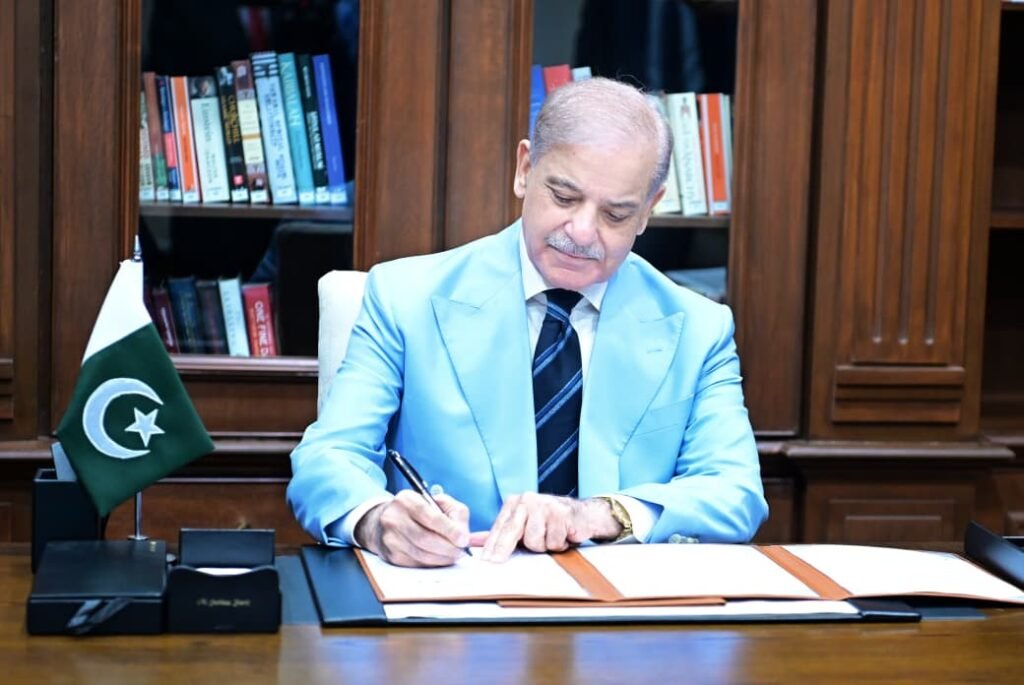
PM Shehbaz Chairs Review Meeting on Apna Ghar Programme

ISLAMABAD — Prime Minister Muhammad Shehbaz Sharif chaired a comprehensive review meeting on the Apna Ghar Programme on Wednesday. This high-level meeting focused on Pakistan’s federal housing initiative, which aims to provide affordable housing solutions nationwide. Progress Evaluation of the Housing Initiative The meeting assessed the progress and implementation of the Apna Ghar Programme. This initiative is designed to support citizens across Pakistan’s provinces, tackling the national housing shortage, a significant government priority. Prime Minister Sharif evaluated current developments and outlined strategic future directions. The programme’s primary objective is to help middle and lower-income families achieve homeownership. Key Focus Areas in Discussion Prime Minister Shehbaz Sharif, joined by senior officials, explored essential facets of the housing programme. Major Examination Highlights Current implementation progress across provinces Challenges encountered during the programme rollout Future expansion plans and timelines Affordability mechanisms for beneficiaries Upcoming Announcements from Islamabad Immediate details from the meeting were not provided. However, the Prime Minister’s Office is expected to release a detailed statement soon, which will focus on key policy directions and programme updates. Officials suggest that timelines and expansion plans will be announced post-review. Further information from Islamabad regarding the next phase of the Apna Ghar Programme is anticipated.

Pakistan

PM Shehbaz Chairs Review Meeting on Apna Ghar Housing Programme

ISLAMABAD — Prime Minister Shehbaz Sharif chaired a crucial review meeting in Islamabad on the Apna Ghar Housing Programme. This initiative aims to offer affordable housing to eligible citizens across Pakistan. Progress and Implementation Assessment During the meeting, Prime Minister Shehbaz Sharif assessed the progress and implementation of the Apna Ghar Programme. The participation of high-level federal officials and representatives from various ministries underscored its significance in Islamabad. The programme forms a key part of the federal government’s social welfare agenda, highlighting Pakistan’s commitment to addressing the housing needs of underserved communities nationwide. Key Features of the Scheme The Apna Ghar Programme is designed to help low-income families obtain subsidised housing throughout the country. Supported by government funding, the programme enhances these families’ ability to achieve homeownership. It targets groups who have limited access to traditional mortgages, providing alternative solutions that operate outside conventional banking systems. Benefits for Citizens Subsidised housing options for low-income families Government-backed financing options Focus on underserved communities nationwide Alternative homeownership solutions beyond traditional banking Federal Housing Policy Priority Although specific conclusions from the meeting were not made public, affordable housing continues to be a key focus within the federal government’s policy framework. The Apna Ghar Programme remains central to Pakistan’s strategy to improve housing accessibility. Under Prime Minister Shehbaz Sharif’s leadership, it stands as a cornerstone of social welfare policy in Islamabad.

Scroll to Top