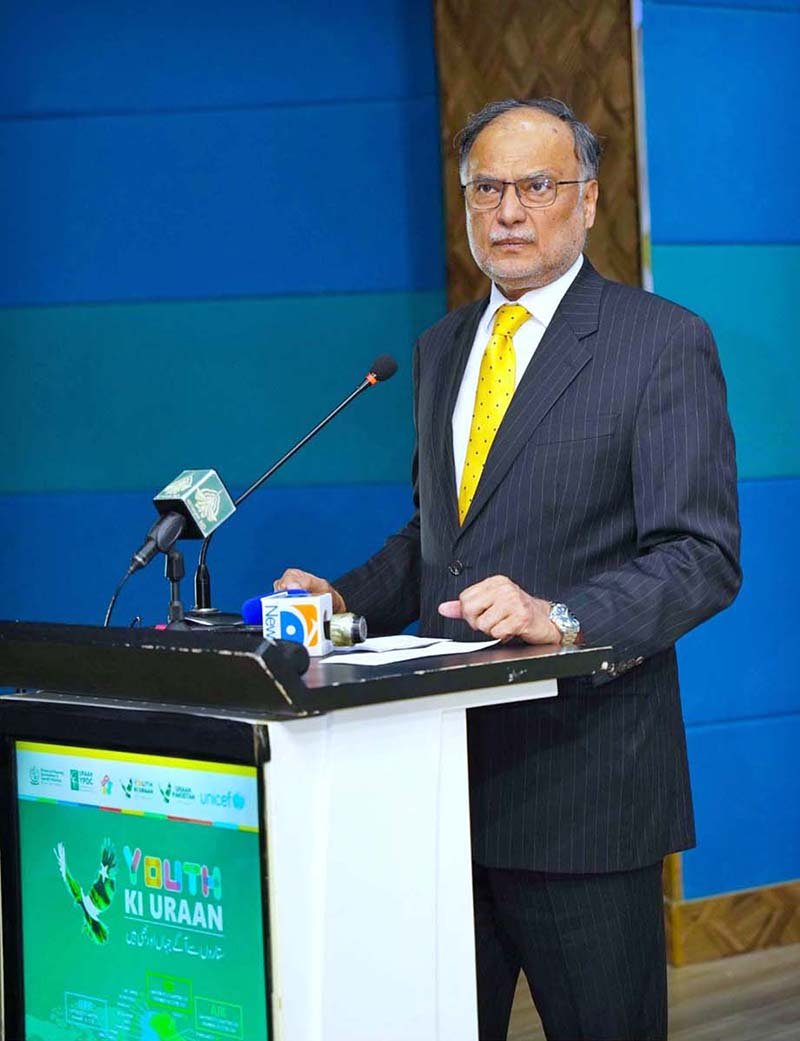
ISLAMABAD — Federal Minister for Planning, Development and Special Initiatives Professor Ahsan Iqbal on Friday highlighted the strategic importance of developing expertise in chip design and human capital to bolster Pakistan’s export potential. Speaking at an event organized by the Ghulam Ishaq Khan Institute of Engineering, he underscored the need for Pakistan to advance its technological capabilities to establish a modern, export-oriented economy.
What Happened
Professor Ahsan Iqbal addressed a gathering at the Ghulam Ishaq Khan Institute of Engineering, emphasizing the critical role of technology and skilled human resources in shaping Pakistan’s economic future. He pointed out that the global economy is increasingly driven by technological advancements, and Pakistan must not lag behind. “We need to focus on developing our human resources and enhancing our capabilities in chip design and other advanced technologies,” Iqbal stated.
The minister stressed that investing in education and skill development is essential for Pakistan to compete on an international level. He noted that the country’s young population presents a unique opportunity to build a workforce capable of meeting the demands of a technology-driven global market. “Our youth can become the backbone of a vibrant economy if we equip them with the right skills,” he added.
Iqbal also highlighted the government’s commitment to fostering innovation and research in the field of engineering and technology. He mentioned ongoing initiatives aimed at improving educational infrastructure and promoting partnerships between academia and industry to facilitate knowledge transfer and practical training.
Background
Pakistan’s economy has traditionally relied on agriculture and textiles as primary export sectors. However, in recent years, there has been a growing recognition of the need to diversify and modernize the economy. The government has been focusing on enhancing the IT sector, which has shown promise as a significant contributor to exports. The emphasis on chip design and advanced technology is part of a broader strategy to integrate Pakistan into the global technology supply chain.
Historically, Pakistan’s educational institutions have faced challenges in keeping pace with rapid technological changes. However, initiatives such as the establishment of technology parks and increased funding for research and development are steps towards addressing these gaps. The government’s Vision 2025 plan also outlines goals for developing a knowledge-based economy.
Why It Matters
The focus on chip design and human capital development is crucial for Pakistan’s economic trajectory. As global demand for semiconductor technology continues to rise, countries with the capability to design and manufacture chips are positioned for significant economic gains. By investing in this sector, Pakistan can tap into a lucrative market, reduce its reliance on traditional exports, and improve its trade balance.
Furthermore, developing human capital in technology fields can lead to job creation and economic empowerment for the country’s youth. With a large and growing young population, equipping them with skills in high-demand areas like chip design can drive innovation and entrepreneurship, leading to a more robust and resilient economy.
Internationally, establishing a strong presence in the technology sector can enhance Pakistan’s competitiveness and attract foreign investment. By aligning with global technological trends, Pakistan can strengthen its economic partnerships and increase its influence in international markets.
Key Takeaways
- Federal Minister Ahsan Iqbal emphasized the importance of chip design and human capital for Pakistan’s export growth.
- Investing in education and technology is crucial for integrating Pakistan into the global economy.
- Developing skills in advanced technologies can create job opportunities and drive economic empowerment.
- Strengthening the technology sector can enhance Pakistan’s competitiveness and attract foreign investment.
- The government’s Vision 2025 plan includes goals for a knowledge-based economy to modernize the export sector.
Source Attribution
This article is based on official government statements, press releases, and public communications from relevant authorities.