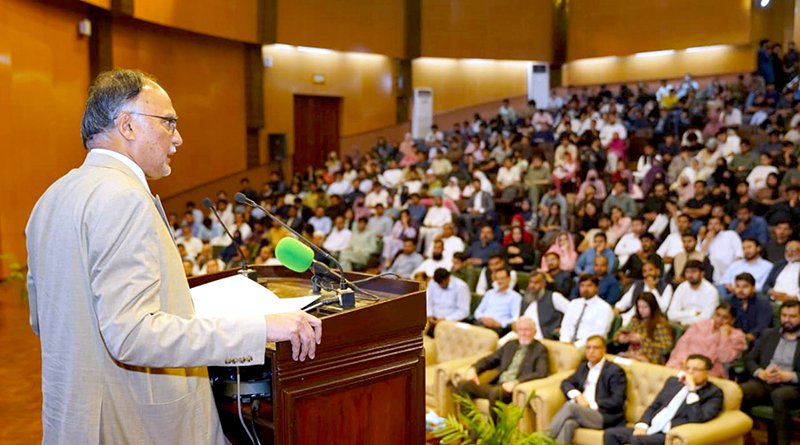
TOPI — Federal Minister for Planning, Development and Special Initiatives Ahsan Iqbal addressed the concluding ceremony of the Digital Design and Verification Training Programme 2026 at the Ghulam Ishaq Khan Institute of Engineering Sciences and Technology (GIKI) in Topi, Swabi District, Khyber Pakhtunkhwa. The event, held on September 26, 2023, marked the culmination of a significant educational initiative aimed at enhancing digital skills among engineering students.
What Happened
During his address, Ahsan Iqbal emphasized the importance of digital literacy and advanced technical skills in driving Pakistan’s economic growth. He noted that the Digital Design and Verification Training Programme 2026 is a pioneering effort to equip students with the necessary tools to excel in the rapidly evolving technological landscape. The programme, conducted at GIKI, focused on providing hands-on training in digital design and verification, crucial areas in modern engineering disciplines.
Iqbal praised the efforts of GIKI in fostering an environment conducive to innovation and learning. He stated, “Our youth must be prepared to meet the challenges of the digital age, and initiatives like these are vital in ensuring that they are well-equipped to do so.” The minister also highlighted the government’s commitment to supporting educational programmes that align with national development goals.
The ceremony was attended by faculty members, students, and industry professionals who have been involved in the programme. Participants expressed their appreciation for the opportunity to gain practical experience in digital design, a field that is increasingly becoming integral to various sectors of the economy.
Background
The Digital Design and Verification Training Programme 2026 is part of a broader initiative by the Ministry of Planning, Development and Special Initiatives to enhance technical education in Pakistan. GIKI, a leading institution in engineering education, has been at the forefront of integrating advanced technology training into its curriculum. The programme’s focus on digital design and verification addresses a critical skills gap in the engineering sector, where demand for such expertise is growing.
In recent years, Pakistan has made strides in promoting digital education as part of its Vision 2025 plan, which aims to transform the country into a knowledge-based economy. The government has been investing in infrastructure and educational reforms to support this vision, with programmes like the one at GIKI playing a pivotal role.
Why It Matters
The successful implementation of the Digital Design and Verification Training Programme 2026 holds significant implications for Pakistan’s economic and technological development. By equipping students with advanced digital skills, the programme aims to bridge the gap between academic learning and industry requirements, thereby enhancing employability and innovation.
As global industries increasingly rely on digital technologies, the demand for skilled professionals in digital design and verification is expected to rise. This programme not only prepares students to meet this demand but also positions Pakistan as a competitive player in the global tech arena. The skills acquired through such training can lead to advancements in various sectors, including telecommunications, manufacturing, and information technology.
Moreover, initiatives like these are crucial for fostering a culture of innovation and entrepreneurship among the youth. By providing students with the tools to develop and implement digital solutions, Pakistan can cultivate a new generation of tech-savvy entrepreneurs who can drive economic growth and job creation.
Key Takeaways
- Ahsan Iqbal emphasized the importance of digital skills at the GIKI ceremony.
- The Digital Design and Verification Training Programme 2026 aims to enhance technical education.
- GIKI’s initiative aligns with Pakistan’s Vision 2025 for a knowledge-based economy.
- The programme addresses the skills gap in digital design and verification.
- Equipping students with these skills boosts employability and innovation.
Source Attribution
This article is based on official government statements, press releases, and public communications from relevant authorities.