
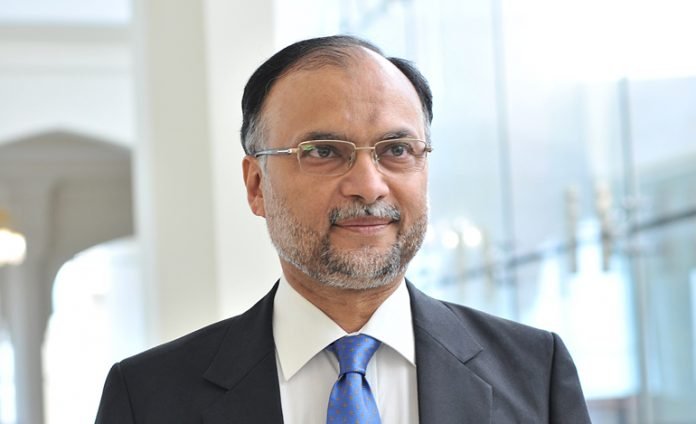
ISLAMABAD — Federal Minister for Planning, Development and Special Initiatives, Professor Ahsan Iqbal, has called on the Pakistani diaspora in the United States to set aside political differences and unite under the “Pakistan First” initiative. The minister emphasized the importance of supporting Pakistan’s economic growth through innovation, technology, and exports during a recent address.
What Happened
On Thursday, Professor Ahsan Iqbal addressed members of the Pakistani community in the United States, urging them to rally behind efforts to transform Pakistan’s economy. He highlighted the critical role that technology and innovation, particularly in artificial intelligence (AI), can play in driving export-led growth. Iqbal stressed the need for the diaspora to contribute to these sectors, which he believes are pivotal for Pakistan’s future economic stability and prosperity.
“We must rise above political differences and unite for the economic transformation of Pakistan,” Iqbal stated. He urged the diaspora to leverage their skills, networks, and resources to foster an environment conducive to technological advancement and export expansion. The minister’s call to action is part of a broader strategy to engage overseas Pakistanis in national development initiatives.
Iqbal’s appeal comes at a time when Pakistan is seeking to enhance its global competitiveness by integrating cutting-edge technologies into its economic framework. He pointed out that the diaspora’s involvement is crucial in achieving the government’s vision of a technologically advanced and export-oriented economy.
Background
Historically, the Pakistani diaspora has played a significant role in the country’s economic development through remittances and investments. The government has often sought to engage overseas Pakistanis in various initiatives aimed at boosting economic growth and development. In recent years, there has been a concerted effort to tap into the expertise and resources of the diaspora to support sectors such as technology, innovation, and exports.
Pakistan’s economy has faced numerous challenges, including a trade deficit and reliance on traditional industries. The government has recognized the need to diversify the economy by promoting sectors that can drive sustainable growth. The focus on AI and innovation aligns with global trends, as countries worldwide are investing heavily in these areas to enhance productivity and competitiveness.
Why It Matters
The involvement of the Pakistani diaspora in AI and export-led growth is of significant importance for several reasons. Economically, it can help bridge the technology gap and bring in much-needed expertise and investment. The diaspora’s participation can accelerate the adoption of AI technologies, which are essential for modernizing industries and improving efficiency.
Socially, engaging the diaspora fosters a sense of national unity and pride, encouraging overseas Pakistanis to contribute to their homeland’s development. Politically, it demonstrates a commitment to inclusive growth by involving all stakeholders in national progress, regardless of political affiliations.
Internationally, a focus on AI and innovation can enhance Pakistan’s standing as a competitive player in the global market. By prioritizing these sectors, Pakistan can attract foreign investment, create jobs, and improve its trade balance. The government’s outreach to the diaspora is a strategic move to harness the potential of overseas Pakistanis in achieving these goals.
Key Takeaways
- Federal Minister Ahsan Iqbal calls on the US-based Pakistani diaspora to support economic growth through AI and exports.
- The initiative aims to unite overseas Pakistanis under the “Pakistan First” banner, transcending political differences.
- The government’s strategy focuses on leveraging technology and innovation to enhance global competitiveness.
- The diaspora’s involvement is crucial for bridging the technology gap and fostering economic stability.
- Engaging overseas Pakistanis can boost national unity and contribute to Pakistan’s international economic standing.
Source Attribution
This article is based on official government statements, press releases, and public communications from relevant authorities.














