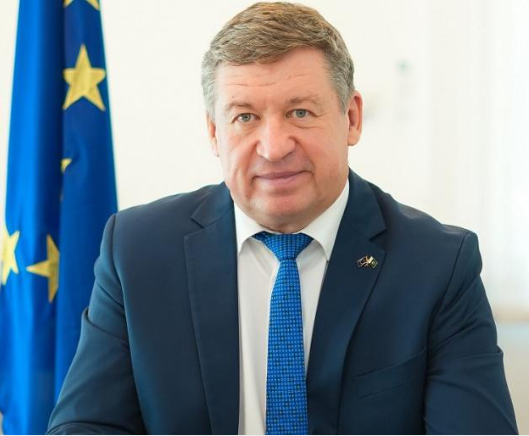
LAHORE — European Union (EU) Ambassador Raimundas Karoblis engaged in detailed discussions with the leadership of the All Pakistan Textile Mills Association (APTMA) on September 18, focusing on strategies to extend the Generalised Scheme of Preferences Plus (GSP Plus) beyond 2027. The meeting took place at the APTMA House, where the Ambassador was accompanied by Mr. Kert Ajamaa, First Secretary, and Mr. Theis Munksgaard-Hansen, Manager Development Cooperation.
What Happened
During the meeting, Ambassador Karoblis and APTMA officials explored various strategies to ensure the continuation of the GSP Plus status, which is crucial for Pakistan’s textile exports to the EU. The GSP Plus scheme provides preferential access to the EU market by reducing tariffs, thereby enhancing the competitiveness of Pakistani textiles. The discussions were aimed at addressing the challenges and requirements for the extension of this trade arrangement.
APTMA representatives highlighted the importance of the GSP Plus status, noting that it significantly contributes to the economic stability of Pakistan’s textile sector, which is a major source of employment and foreign exchange earnings. They emphasized the need for compliance with EU regulations and standards to secure the extension of the scheme.
Ambassador Karoblis acknowledged Pakistan’s efforts in meeting the EU’s criteria for the GSP Plus status, which includes adherence to international conventions on human rights, labor rights, environmental protection, and good governance. He expressed the EU’s willingness to support Pakistan in its endeavors to fulfill these obligations, ensuring a mutually beneficial trade relationship.
Background
The GSP Plus is a special incentive arrangement for sustainable development and good governance, which allows vulnerable developing countries to pay fewer or no duties on their exports to the EU. Pakistan has been a beneficiary of the GSP Plus status since 2014, which has played a pivotal role in boosting its textile exports to the EU market. The scheme is set to expire in 2027, prompting discussions on its extension.
Historically, Pakistan has faced challenges in maintaining compliance with the EU’s stringent requirements, which include 27 international conventions. The country has made significant progress in areas such as labor rights and environmental standards, but continuous efforts are needed to address remaining gaps.
Why It Matters
The extension of the GSP Plus status is of paramount importance to Pakistan’s economy, particularly its textile industry, which constitutes a significant portion of the country’s exports. The preferential access to the EU market enables Pakistani textile products to compete effectively against those from other countries, thereby sustaining jobs and contributing to economic growth.
For the EU, maintaining trade relations with Pakistan under the GSP Plus framework supports its broader objectives of promoting sustainable development and good governance in partner countries. The scheme not only facilitates trade but also encourages compliance with international standards, which is aligned with the EU’s global trade policies.
The potential extension of the GSP Plus status also holds geopolitical significance, as it strengthens bilateral relations between Pakistan and the EU. It provides a platform for dialogue on various issues, including human rights, environmental protection, and economic cooperation, thereby fostering a comprehensive partnership.
Key Takeaways
- EU Ambassador Raimundas Karoblis met with APTMA leaders to discuss extending the GSP Plus status beyond 2027.
- The GSP Plus scheme is crucial for Pakistan’s textile exports, providing tariff reductions in the EU market.
- Compliance with EU regulations on human rights and environmental standards is essential for the scheme’s extension.
- The GSP Plus extension is vital for Pakistan’s economic stability and employment in the textile sector.
- The discussions reflect the EU’s commitment to supporting sustainable development and good governance in Pakistan.
Source Attribution
This article is based on official government statements, press releases, and public communications from relevant authorities.