
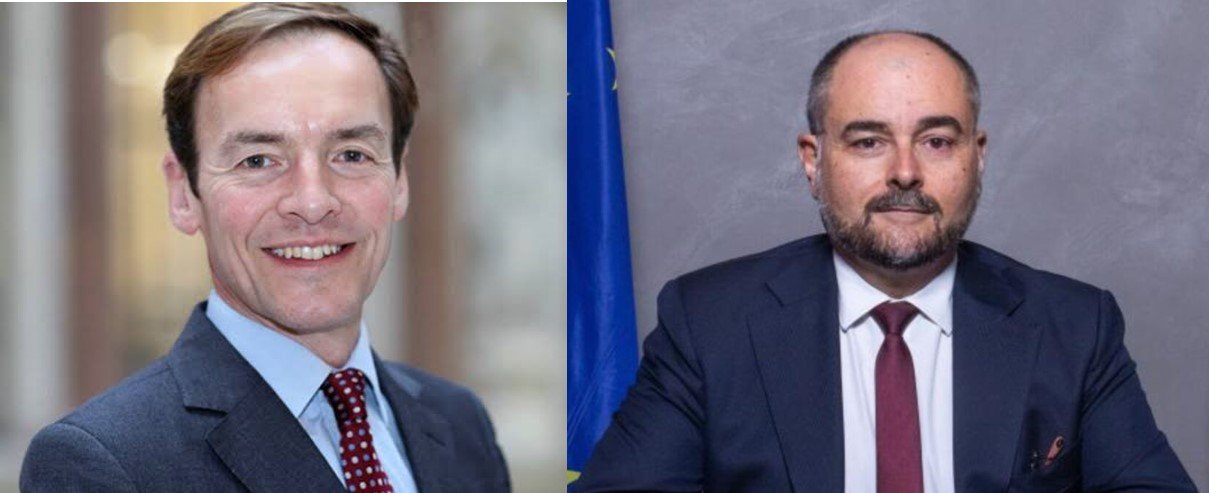
ISLAMABAD — The European Union (EU) and United Kingdom (UK) have affirmed their support for Pakistan’s right to self-defense against the Tehrik-i-Taliban Pakistan (TTP), a militant group in the region. This affirmation follows concerns about the presence of multiple terrorist organizations in Afghanistan, as observed by the United Nations Security Council Monitoring Team.
International Backing Against Terrorism
The EU and UK envoys reasserted their backing of Pakistan’s terrorism combat efforts, especially due to the rising TTP threat. The UN Security Council Monitoring Team has reported over 20 terrorist organizations operating with relative freedom under the Taliban regime in Afghanistan.
Among these are between 13,000 to 23,000 terrorist fighters, including members of TTP, Al-Qaida, Islamic State Khorasan Province (ISKP), Eastern Turkistan Islamic Movement (ETIM), Islamic Movement of Uzbekistan (IMU), and Jamaat Ansarullah.
This situation highlights the international community’s recognition of the security challenges Pakistan faces due to these militant groups’ activities. The EU and UK support represents a significant diplomatic gesture, emphasizing regional stability and the need for coordinated anti-terrorism efforts.
Security Challenges and Diplomatic Significance
Pakistan has expressed concern over security risks from Afghanistan, especially after the Taliban’s return to power in August 2021. The resurgence of TTP and other groups has led to increased cross-border attacks, threatening Pakistan’s national security directly.
The TTP, known as the Pakistani Taliban, is responsible for numerous attacks in Pakistan, targeting civilian and military sites. It aims to overthrow the Pakistani government and establish its version of Islamic law. The Taliban takeover in Afghanistan has emboldened TTP, allowing it to regroup and plan attacks using Afghanistan as a safe haven.
Impact on Bilateral Relations and Economic Growth
Support from the EU and UK is vital for Pakistan as it navigates the complex geopolitical environment of South Asia. Affirming Pakistan’s right to self-defense not only strengthens bilateral ties but also reinforces global anti-terrorism efforts. This international support could boost collaboration in intelligence-sharing, counter-terrorism training, and financial aid to enhance Pakistan’s security infrastructure.
Economically, terrorism has impeded Pakistan’s growth, deterring foreign investment and affecting tourism. Resolving these security issues can help Pakistan foster a more favorable environment for economic development and regional trade.
Global Security Implications
The international community’s stance against Afghan-based terrorist organizations necessitates a unified approach for regional stability. These groups not only threaten Pakistan but also pose a risk to global security with their potential for international attacks.
Key Takeaways
- The EU and UK have affirmed Pakistan’s right to self-defense against TTP threats.
- Over 20 terrorist organizations, including TTP, operate freely in Afghanistan.
- UN estimates suggest up to 23,000 terrorist fighters are present in the region.
- International support is crucial for Pakistan’s counter-terrorism efforts.














