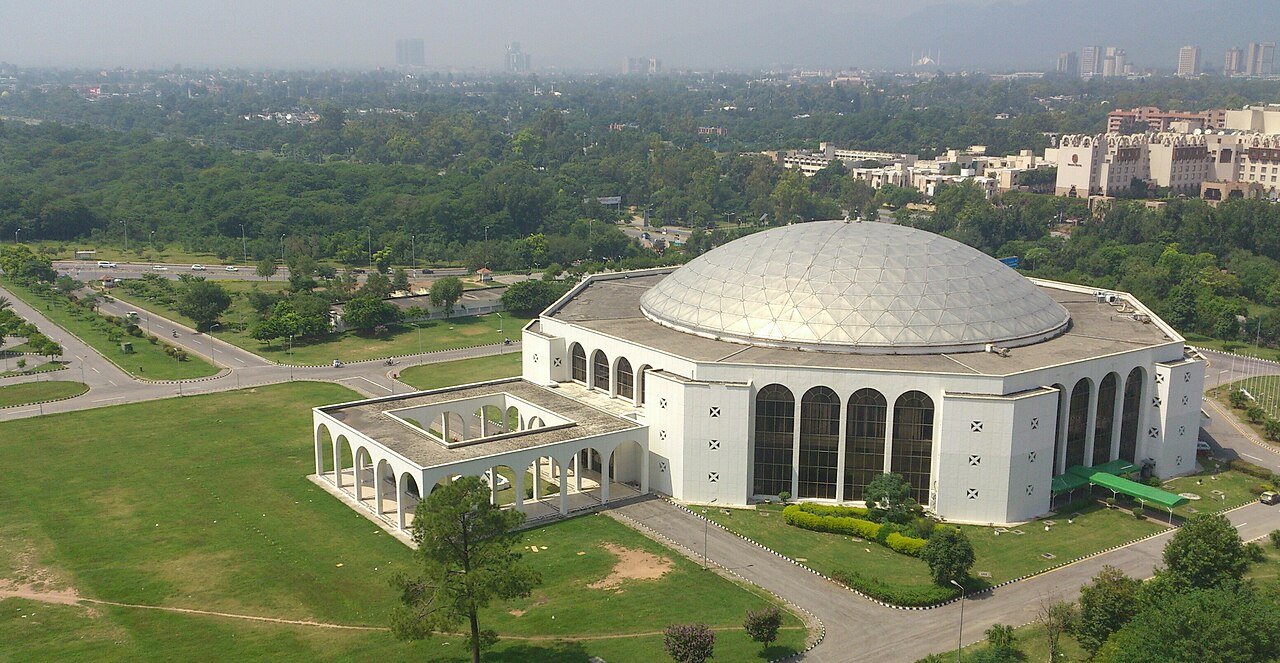
ISLAMABAD: The Federal Constitutional Court of Pakistan has completed its first year of work, deciding 8,735 cases while receiving 6,657 new filings, figures shared at a ceremony held in Islamabad on Friday to mark the milestone.
Chief Justice Aminuddin Khan and the other judges of the court attended the event, held on the eve of the first anniversary of the court’s formation, at which a commemorative postage stamp was unveiled digitally and the court’s e-Courts system was formally inaugurated. A book summarising selected judgments of the court was also launched, with the aim of helping the public understand its decisions.
Addressing the ceremony, the Chief Justice said the court had set up its basic judicial and administrative infrastructure during its first year and introduced reforms to improve efficiency. He pointed in particular to the practice of allocating fixed time for arguments, which he said had helped speed up the disposal of cases. He congratulated the judges, lawyers and staff on the first year and said continuous improvement was essential.
Background
The Federal Constitutional Court was created in November 2025 under the 27th Constitutional Amendment, which set up a dedicated court to hear constitutional matters, including disputes between the federation and the provinces and questions about the interpretation of the Constitution. Justice Aminuddin Khan took oath as its first Chief Justice on November 14, 2025, a year ago today.
Before the new court was established, constitutional petitions were heard by the Supreme Court alongside its large load of civil and criminal appeals. Separating constitutional cases was intended to let each court concentrate on its own work and reduce delays for litigants.
What This Means for You
The numbers show the court decided 2,078 more cases than it received during the year, which means its pending caseload shrank rather than grew. Spread across the year, that is an average of about 24 cases decided every day, against about 18 new cases filed daily. For people waiting on a constitutional petition, a court that clears more cases than come in offers a better chance of a hearing without years of delay. The new e-Courts system is meant to bring more of the court’s work online, and the book of selected judgments gives lawyers, students and ordinary readers an easier way to follow its key rulings.
The court is now entering its second year with the e-Courts system in place, and the Chief Justice said the focus would remain on further reforms to make the justice process faster and more efficient.
Sources: Radio Pakistan, Federal Constitutional Court of Pakistan
Featured image: Photo: Zacharie Grossen / Wikimedia Commons, CC BY-SA 4.0