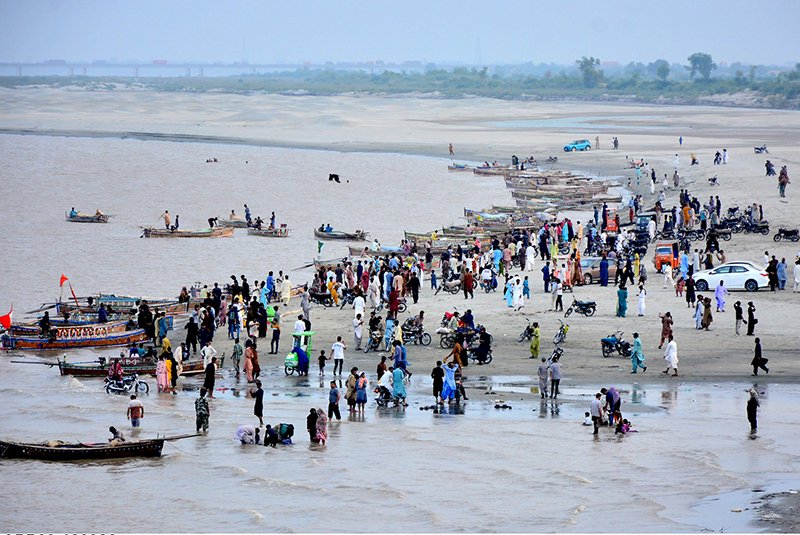
HYDERABAD — The recent surge in water levels of the Indus River, following heavy monsoon rains across Pakistan, has become a focal point for local families who are flocking to its banks to enjoy the scenic views and spend quality time together.
What Happened
The Indus River, one of the longest rivers in the world, has seen a significant rise in water levels due to the heavy monsoon rains that have swept across the country. This natural phenomenon has turned the riverbanks into popular spots for families seeking leisure and respite from the urban hustle. In Hyderabad, families have been observed gathering along the riverbanks, taking advantage of the cooler weather and the lush greenery that has sprung up as a result of the rains.
Local vendors have also set up stalls along the riverbanks, offering snacks and refreshments to the visitors. The atmosphere is described as festive, with children playing and adults relaxing by the water’s edge. A local resident, Ali Khan, remarked, “The river looks beautiful with the increased water levels. It’s a great place for families to come and enjoy nature.”
The rise in water levels, while providing recreational opportunities, also serves as a reminder of the potential for flooding in some areas. Authorities have been monitoring the situation closely to ensure that the river’s rise does not pose a threat to nearby communities.
Background
The Indus River is a crucial water source for Pakistan, supporting agriculture, industry, and daily life for millions. Historically, the river has been prone to seasonal fluctuations, with monsoon rains often leading to increased water levels. The monsoon season, which typically runs from June to September, brings heavy rainfall to the region, replenishing water reservoirs but also posing risks of flooding.
In recent years, climate change has exacerbated weather patterns, making monsoon rains more unpredictable. The government has been working on flood management strategies, including the construction of dams and embankments, to mitigate the impact of rising water levels on populated areas.
Why It Matters
The rise in water levels of the Indus River has both immediate and long-term implications for Pakistan. In the short term, the river’s increased flow provides an opportunity for families to engage with nature and enjoy outdoor activities, which is particularly important for urban dwellers seeking a break from city life.
Economically, the influx of visitors to the riverbanks can boost local businesses, as vendors and small enterprises cater to the needs of tourists. This can provide a temporary economic uplift to communities that rely on tourism and local trade.
However, the potential for flooding remains a significant concern. The government must balance the recreational use of the river with the need for safety and disaster preparedness. Effective flood management is crucial to protect lives and property, especially in areas prone to inundation.
On a broader scale, the situation underscores the importance of sustainable water management practices in Pakistan. As climate change continues to affect weather patterns, the country must invest in infrastructure and policies that can adapt to these changes, ensuring the long-term viability of its water resources.
Key Takeaways
- The Indus River’s water levels have risen due to heavy monsoon rains, attracting families to its banks.
- Local vendors are benefiting economically from the increased foot traffic along the river.
- The potential for flooding remains a concern, requiring vigilant monitoring by authorities.
- Climate change is making monsoon patterns more unpredictable, necessitating improved water management strategies.
- The situation highlights the need for sustainable infrastructure to mitigate the impacts of climate change on water resources.
Source Attribution
This article is based on official government statements, press releases, and public communications from relevant authorities.