
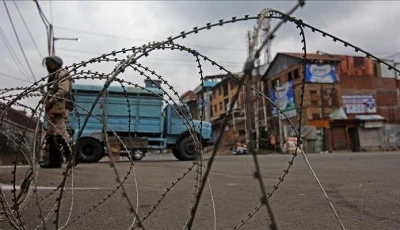
SRINAGAR — Kashmir Martyrs’ Day was observed on Monday to commemorate the lives lost during the 1931 massacre, as Indian Illegally Occupied Jammu and Kashmir (IIOJK) continues to face stringent security measures. The day marks nearly a century since worshippers were killed while trying to complete the Azaan, a call to prayer, highlighting ongoing tensions in the region.
What Happened
The Kashmir Martyrs’ Day, traditionally observed on July 13, commemorates the events of 1931 when 22 Kashmiris were killed by the forces of the then Dogra ruler while protesting against the autocratic regime. This year, the day was marked by heightened security and restrictions across IIOJK. The anniversary, once officially recognized, has been removed from the official calendar, reflecting the region’s shifting political landscape.
Security forces were deployed across major towns and cities in IIOJK to prevent gatherings and protests. Local reports indicated that internet services were intermittently suspended, and checkpoints were set up to monitor movement. The restrictions are part of broader measures that have been in place since the revocation of Article 370 in August 2019, which granted special autonomy to the region.
Despite the clampdowns, residents of IIOJK continue to remember the sacrifices made in 1931. “The martyrs’ sacrifices are etched in our history and consciousness,” said a local resident. “Their struggle for dignity and rights continues to inspire us today.”
Background
The 1931 massacre is a pivotal event in Kashmir’s history, symbolizing the struggle against oppressive rule. On that day, a large crowd had gathered outside the Central Jail in Srinagar to protest the trial of Abdul Qadeer, a young man accused of inciting rebellion. The protest turned violent when the Dogra forces opened fire, killing 22 people.
Historically, Kashmir Martyrs’ Day was observed with official ceremonies and public gatherings. However, following the abrogation of Article 370, the day was removed from the list of public holidays, and official recognition ceased. This change is part of broader efforts by the Indian government to integrate the region more closely with the rest of the country, a move that has been met with resistance from local populations.
Why It Matters
The observance of Kashmir Martyrs’ Day underlines the enduring conflict and unrest in IIOJK. The removal of the day from the official calendar and the ongoing security clampdowns are indicative of the Indian government’s approach to the region, which includes demographic changes and media restrictions. These measures have been criticized by human rights organizations and have led to increased tensions between India and Pakistan, both of which claim the region in full.
The socio-political dynamics in IIOJK have significant implications for regional stability. The clampdowns and demographic changes are seen by many as attempts to alter the region’s cultural and political landscape, which could lead to further unrest. The international community has expressed concern over the human rights situation in IIOJK, urging dialogue and peaceful resolution.
For the residents of IIOJK, the memory of the 1931 massacre remains a powerful symbol of resistance and identity. The continued observance of the day, despite official erasure, highlights the resilience of the Kashmiri people and their ongoing struggle for autonomy and rights.
Key Takeaways
- Kashmir Martyrs’ Day marks the 1931 massacre, a significant event in the region’s history.
- The day was observed amid tight security and restrictions in IIOJK.
- The anniversary has been removed from the official calendar following the revocation of Article 370.
- The situation in IIOJK remains tense, with ongoing security measures and demographic changes.
- The international community continues to express concern over human rights in the region.
Source Attribution
This article is based on official government statements, press releases, and public communications from relevant authorities.














