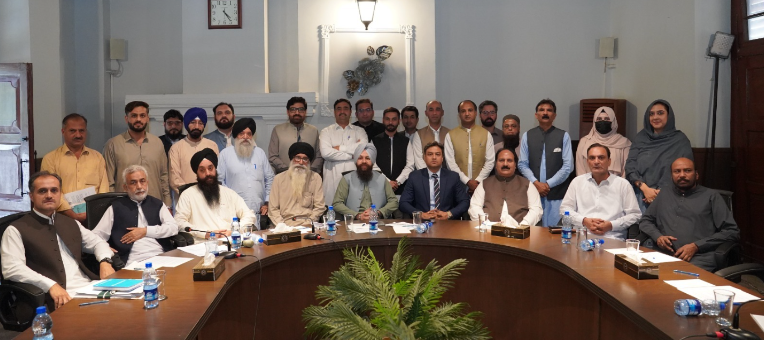
PESHAWAR — The Khyber Pakhtunkhwa Sikh Anand Kaaraj Bill, 2026, has progressed further in its legislative journey as it was reviewed by parliamentarians, government officials, and representatives from the Sikh community and human rights institutions. The bill, which aims to formalize Sikh marriage rituals in the province, was discussed in a briefing organized by the Parliamentary Caucus on Minorities in the Khyber Pakhtunkhwa Assembly.
What Happened
The meeting, held on September 24, was a collaborative effort involving various stakeholders, including the Sikh community, to scrutinize the provisions of the proposed legislation. The bill, named after the Sikh marriage ceremony ‘Anand Kaaraj’, seeks to recognize and regulate Sikh marriages under provincial law, addressing a longstanding demand of the Sikh community in Pakistan.
The briefing provided a platform for detailed discussions on the bill’s provisions and the procedural steps required before it can be presented to the provincial legislature for approval. Participants expressed optimism about the bill’s potential to address legal ambiguities surrounding Sikh marriages and to ensure that the rights of the Sikh community are safeguarded.
During the session, government officials highlighted the importance of the bill in promoting religious freedom and equality. A representative from the Sikh community stated, “This bill is crucial for us as it not only recognizes our religious practices but also ensures our marriages are legally binding.” The Parliamentary Caucus on Minorities emphasized their commitment to advancing the rights of all religious minorities in the province.
Background
The Sikh Anand Kaaraj Bill is part of broader efforts to address the legal needs of religious minorities in Pakistan. Historically, Sikh marriages in Pakistan have been conducted according to religious customs but lacked formal legal recognition, leading to complications in legal matters such as inheritance and marital disputes.
In recent years, there has been a growing movement within Pakistan to recognize the religious and cultural practices of minority communities. The federal government and various provincial assemblies have taken steps to introduce legislation that respects and protects the rights of minorities, aligning with Pakistan’s constitutional commitment to religious freedom.
Why It Matters
The advancement of the Sikh Anand Kaaraj Bill is significant for several reasons. Firstly, it represents a step forward in acknowledging and respecting the cultural and religious practices of the Sikh community in Khyber Pakhtunkhwa. By providing legal recognition to Sikh marriages, the bill addresses a critical gap in the legal framework that has historically marginalized the community.
Economically, the bill could have positive implications for the Sikh community by simplifying legal processes related to marriage, inheritance, and family law. This legal clarity is expected to reduce disputes and enhance the community’s ability to engage in economic activities without the burden of legal uncertainties.
Socially, the bill reinforces the government’s commitment to promoting inclusivity and equality among its citizens. It sends a strong message of support to religious minorities, fostering a sense of belonging and security within the Sikh community. This legislative move is likely to strengthen communal harmony and contribute to a more cohesive society.
Politically, the bill’s progress reflects the provincial government’s responsiveness to the needs of minority communities. It underscores the importance of legislative measures in ensuring that the rights of all citizens, regardless of their religious affiliation, are protected and upheld.
Key Takeaways
- The Khyber Pakhtunkhwa Sikh Anand Kaaraj Bill, 2026, is under legislative review to formalize Sikh marriage rituals.
- The bill addresses the legal recognition of Sikh marriages, a longstanding demand of the Sikh community in Pakistan.
- Stakeholders, including government officials and Sikh representatives, are optimistic about the bill’s potential impact on religious freedom and equality.
- The bill is part of broader efforts to protect the rights of religious minorities in Pakistan.
- Its progress signifies a commitment to inclusivity and legal clarity for minority communities.
Source Attribution
This article is based on official government statements, press releases, and public communications from relevant authorities.