
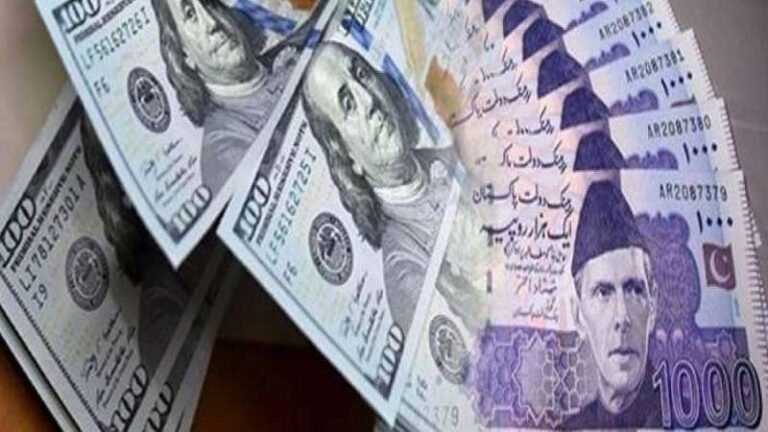
ISLAMABAD — The Pakistani Rupee experienced a modest appreciation of 0.3 paisa against the US Dollar in interbank trading on Friday. It closed at Rs 278.22, compared to the previous day’s rate of Rs 278.25, according to the Associated Press of Pakistan.
Recent Developments in Interbank Market
This slight gain in the Rupee against the US Dollar in the interbank market reflects ongoing currency fluctuations influenced by various economic factors. The Forex Association of Pakistan reported open market dollar buying and selling rates at Rs 277.50 and Rs 280.00, respectively. This appreciation occurs amid economic challenges and efforts by the State Bank of Pakistan to stabilize the currency.
Currency traders and analysts note that the Rupee’s value is pressured by external debt obligations, import payments, and foreign exchange reserves. The central bank’s monetary policies and interventions are crucial in managing these pressures and maintaining currency stability.
Influence of Global Economic Factors
The Rupee’s performance is also linked to the global economic environment, including the strength of the US Dollar, oil prices, and geopolitical developments. These factors collectively influence Pakistan’s foreign exchange demand and supply dynamics.
Challenges and Measures for Stabilization
The Pakistani Rupee has faced significant volatility recently, driven by both domestic and international factors. Historically, depreciation against the US Dollar has resulted from trade imbalances, inflation, and fiscal deficits.
To combat this, the Pakistani government and the State Bank of Pakistan have implemented several measures. These include monetary tightening, foreign exchange interventions, and seeking financial assistance from the International Monetary Fund (IMF). These efforts aim to bolster foreign exchange reserves, reduce inflation, and restore investor confidence. Nonetheless, long-term currency stability requires extensive economic reforms and fiscal discipline.
Impact on Economy and Businesses
The Rupee’s performance against the US Dollar significantly impacts Pakistan’s economy and its citizens. A stable or appreciating Rupee helps reduce import costs, including essential goods and energy supplies, easing inflationary pressures on consumers.
For businesses, a stronger Rupee can lower the cost of imported raw materials and intermediate goods, enhancing competitiveness and profitability. This can contribute to economic growth and job creation.
Conversely, a depreciating Rupee can lead to higher import costs, increased inflation, and a widening trade deficit, challenging economic policymakers. It can also affect Pakistan’s ability to service its external debt, as repayments become more expensive in local currency terms.
Overall, currency stability is crucial for attracting foreign investment and maintaining investor confidence. A volatile currency can deter investment and hinder economic development, making it imperative for policymakers to address structural issues and pursue sustainable economic policies.
Key Highlights
- The Pakistani Rupee appreciated by 0.3 paisa against the US Dollar in interbank trading, closing at Rs 278.22.
- The Forex Association reported open market dollar buying and selling rates at Rs 277.50 and Rs 280.00, respectively.
- Currency fluctuations are influenced by external debt, import payments, and foreign exchange reserves.
- A stable Rupee can reduce import costs and inflation, benefiting consumers.














