
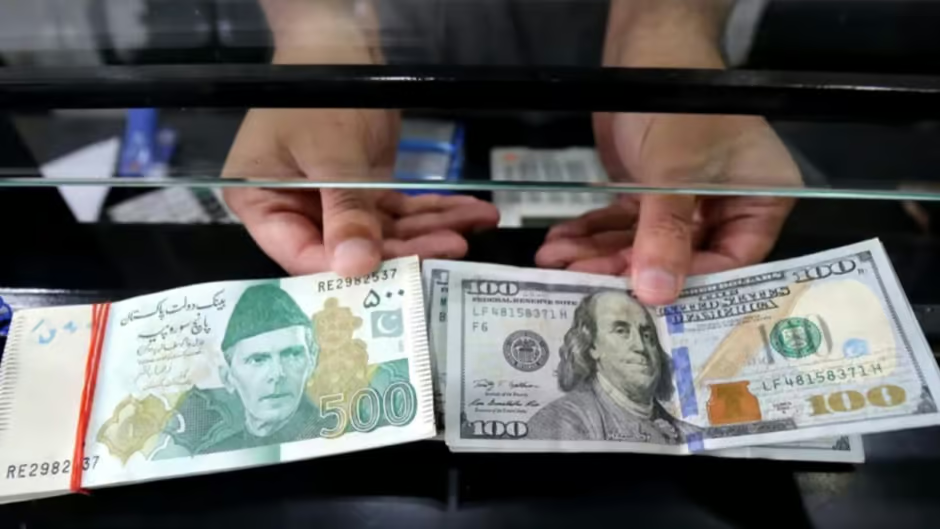
ISLAMABAD — The Pakistani Rupee experienced a slight appreciation against the US Dollar in interbank trading on Tuesday, closing at Rs 278.16, a minor increase from the previous day’s closing rate of Rs 278.17. This marginal change reflects ongoing fluctuations in the currency market as reported by the Forex Association of Pakistan (FAP).
What Happened
The Rupee’s gain of 01 paisa against the US Dollar was observed in the interbank market, marking a subtle yet notable movement in the currency’s exchange rate. According to data provided by the Forex Association of Pakistan, the buying and selling rates of the US Dollar in the open market were recorded at Rs 279.00 and Rs 279.20, respectively. These figures indicate a stable yet slightly volatile market environment.
In addition to the US Dollar, other currencies also showed varying trends. The Euro saw a decrease of Rs 0.32, closing at Rs 316.92 compared to the previous day’s Rs 317.24, as per the State Bank of Pakistan (SBP). Meanwhile, the Japanese Yen remained unchanged, maintaining its position at Rs 1.71. The British Pound experienced a decrease of Rs 0.41, closing at Rs 368.02 from Rs 367.61 the previous day.
The Emirati Dirham’s exchange rate decreased by 01 paisa to close at Rs 75.73, while the Saudi Riyal remained stable, closing at Rs 74.06. These changes reflect the dynamic nature of currency exchange rates, influenced by various economic factors both domestically and internationally.
Background
The Pakistani Rupee’s performance against major currencies is often influenced by a combination of domestic economic policies, international market trends, and geopolitical factors. Historically, the Rupee has faced periods of depreciation due to factors such as trade deficits, inflationary pressures, and external debt obligations. The State Bank of Pakistan plays a crucial role in managing the country’s monetary policy and intervening in the foreign exchange market to stabilize the Rupee when necessary.
In recent years, Pakistan has engaged in various economic reforms and sought assistance from international financial institutions to bolster its foreign exchange reserves and stabilize the Rupee. These efforts are part of broader economic strategies aimed at achieving sustainable growth and financial stability.
Why It Matters
The slight appreciation of the Rupee against the US Dollar, while modest, holds significance for Pakistan’s economy. A stronger Rupee can help reduce the cost of imports, potentially easing inflationary pressures on essential goods and commodities. This is particularly important for a country like Pakistan, which relies heavily on imported goods, including fuel and machinery.
For businesses and consumers, a stable or appreciating Rupee can lead to more predictable pricing and budgeting, fostering a more conducive environment for economic planning and investment. Additionally, a stronger currency can enhance investor confidence, attracting foreign direct investment and contributing to economic growth.
On the international stage, currency stability is crucial for maintaining trade relationships and fulfilling international financial obligations. As Pakistan continues to navigate complex economic challenges, including balancing its current account and managing external debt, the Rupee’s performance remains a key indicator of the country’s financial health.
Key Takeaways
- The Pakistani Rupee appreciated by 01 paisa against the US Dollar, closing at Rs 278.16 in interbank trading.
- The Euro and British Pound both experienced decreases against the Rupee, while the Japanese Yen remained unchanged.
- The exchange rates of the Emirati Dirham and Saudi Riyal showed minimal changes, reflecting a stable market environment.
- A stronger Rupee can help reduce import costs and ease inflationary pressures in Pakistan.
- Currency stability is vital for economic planning, investor confidence, and maintaining international trade relationships.
Source Attribution
This article is based on official government statements, press releases, and public communications from relevant authorities.














