

2026

Pakistan

PHF Introduces National Women’s Hockey Development Initiative

ISLAMABAD — The Pakistan Hockey Federation (PHF) has unveiled the ‘National Women’s Hockey High-Performance and Coaching Development Program’. This initiative, announced on Monday, aims to rejuvenate and advance women’s hockey across the nation, addressing both player development and coaching standards. What Happened The PHF’s launch of the ‘National Women’s Hockey High-Performance and Coaching Development Program’ signifies a concerted effort to revitalize women’s hockey in Pakistan. The program is designed to enhance the skills and capabilities of female hockey players and coaches, providing them with the necessary resources and training to compete at higher levels. According to the PHF, this initiative will include workshops, training camps, and competitive events specifically tailored for women in hockey. PHF President Brigadier (Retd) Khalid Sajjad Khokhar emphasized the importance of this program in a statement, saying, “This initiative is a crucial step in ensuring that women’s hockey in Pakistan receives the attention and support it deserves. Our aim is to create a sustainable environment where female athletes can thrive and excel.” The program is expected to roll out in phases, with initial activities scheduled to begin in major cities across Pakistan. The launch event also highlighted the federation’s commitment to gender equality in sports, with PHF Secretary General Asif Bajwa stating, “Empowering women in sports is not just about providing opportunities but also about creating a platform for them to showcase their talent and achieve their dreams.” The PHF plans to collaborate with international hockey bodies to bring in expertise and best practices from around the world. Background Women’s hockey in Pakistan has historically been overshadowed by the men’s game, which has enjoyed more visibility and support. The PHF has faced criticism in the past for not doing enough to promote women’s participation in the sport. However, there have been efforts over the years to address these disparities. The introduction of this new program is part of a broader strategy to rectify past neglect and foster a more inclusive environment for female athletes. In recent years, there has been a growing recognition of the need to support women’s sports in Pakistan, with various governmental and non-governmental organizations advocating for increased funding and resources. The PHF’s initiative aligns with these efforts, aiming to build a robust infrastructure for women’s hockey from the grassroots to the national level. Why It Matters The launch of the ‘National Women’s Hockey High-Performance and Coaching Development Program’ holds significant implications for the future of sports in Pakistan. By focusing on women’s hockey, the PHF is addressing a long-standing gap in the sports ecosystem, which can lead to broader social change. Empowering women through sports can have a ripple effect, promoting gender equality and encouraging more women to participate in various fields. Economically, the development of women’s hockey can open new avenues for sponsorships and partnerships, potentially boosting the sports industry in Pakistan. Internationally, a stronger women’s hockey team can enhance Pakistan’s reputation in global sports arenas, providing opportunities for international competitions and collaborations. Socially, the program can inspire young girls across the country to pursue sports, breaking cultural barriers and challenging stereotypes about women’s roles in society. By creating role models in the field of hockey, the PHF can contribute to a more progressive narrative around women’s capabilities and achievements. Key Takeaways The PHF has launched a new program to develop women’s hockey in Pakistan. The initiative aims to improve player and coach skills through targeted training. It addresses historical gender disparities in Pakistan’s sports landscape. The program is expected to have economic, social, and international benefits. PHF is collaborating with international bodies to enhance program effectiveness. Source Attribution This article is based on official statements and public communications from the Pakistan Hockey Federation. Author: NEN Editorial Desk | Editor: NEN Newsroom | Fact Checked By: NEN Editorial Team Author: NEN Editorial Desk  |  Editor: NEN Newsroom  |  Last Updated: August 09, 2026  |  Source: NEN Reporter This article was produced by the NEN Editorial Desk in accordance with NEN Agency’s Editorial Policy and Fact-Checking Policy.

Pakistan

ICCI President Advocates Embracing AI and Biotechnology for Future Growth

ISLAMABAD — The President of the Islamabad Chamber of Commerce and Industry (ICCI), Sardar Tahir Mehmood, has emphasized the need for a transformative shift in Pakistan’s entrepreneurial approach. On August 9, he urged the nation’s youth and business community to transcend traditional business models and gear up for the ‘Fifth Age,’ characterized by advancements in Artificial Intelligence (AI), biotechnology, genetic engineering, healthcare, information technology, and robotics. What Happened During a recent address, Sardar Tahir Mehmood highlighted the critical importance of adopting cutting-edge technologies to remain competitive in the global market. He stated, “The future belongs to those who are ready to embrace AI and biotechnology.” Mehmood’s remarks come at a time when the global economy is increasingly driven by technological innovation and digital transformation. He stressed that Pakistan’s economic growth hinges on the ability of its entrepreneurs to innovate and integrate these technologies into their business strategies. Mehmood pointed out that the rapid advancements in AI and biotechnology are reshaping industries worldwide, creating new opportunities and challenges. He urged Pakistani businesses to invest in research and development, and to foster a culture of innovation to harness these opportunities. Furthermore, Mehmood called for educational institutions to update their curricula to include these emerging technologies, ensuring that the future workforce is equipped with the necessary skills. He emphasized the role of government and industry leaders in creating an ecosystem that supports technological adoption and innovation. Background Pakistan’s economy has traditionally relied on agriculture and textiles, with a significant portion of its GDP coming from these sectors. However, in recent years, there has been a growing recognition of the need to diversify the economy and invest in technology-driven sectors. The government has initiated several programs to boost the tech industry, including the establishment of technology parks and incentives for startups. Globally, AI and biotechnology are at the forefront of technological advancements. AI is being used to improve efficiencies across various sectors, from manufacturing to healthcare, while biotechnology is revolutionizing fields such as medicine and agriculture. Countries that have embraced these technologies have seen significant economic benefits, leading to increased competitiveness and innovation. Why It Matters The call to embrace AI and biotechnology is significant for Pakistan’s economic future. As global competition intensifies, nations that fail to adopt new technologies risk being left behind. For Pakistan, integrating these technologies could lead to increased productivity, job creation, and economic diversification. Economically, the adoption of AI and biotechnology could enhance Pakistan’s export potential by enabling the production of high-value goods and services. This shift could reduce the country’s reliance on traditional sectors and open up new markets. Socially, the integration of these technologies could improve quality of life by advancing healthcare solutions and creating more efficient public services. Politically, it could position Pakistan as a leader in technological innovation within the region, attracting foreign investment and fostering international collaborations. However, the transition to a technology-driven economy requires significant investment in education and infrastructure. It also necessitates policy reforms to support innovation and protect intellectual property rights. The government’s role in facilitating this transition is crucial, as is the collaboration between the public and private sectors. Key Takeaways Sardar Tahir Mehmood urges Pakistani entrepreneurs to embrace AI and biotechnology for future growth. Adoption of these technologies is essential for remaining competitive in the global market. Educational reforms and government support are critical to fostering a tech-driven economy. Integration of AI and biotechnology could lead to economic diversification and job creation in Pakistan. Significant investment in infrastructure and policy reforms is necessary for successful technological adoption. Source Attribution This article is based on official statements and public communications from the Islamabad Chamber of Commerce and Industry. Author: NEN Editorial Desk | Editor: NEN Newsroom | Fact Checked By: NEN Editorial Team Author: NEN Editorial Desk  |  Editor: NEN Newsroom  |  Last Updated: August 09, 2026  |  Source: Press Release from Government of Pakistan This article was produced by the NEN Editorial Desk in accordance with NEN Agency’s Editorial Policy and Fact-Checking Policy.
Pakistan

Sri Lanka and Pakistan Seek Enhanced Tourism and Cultural Ties

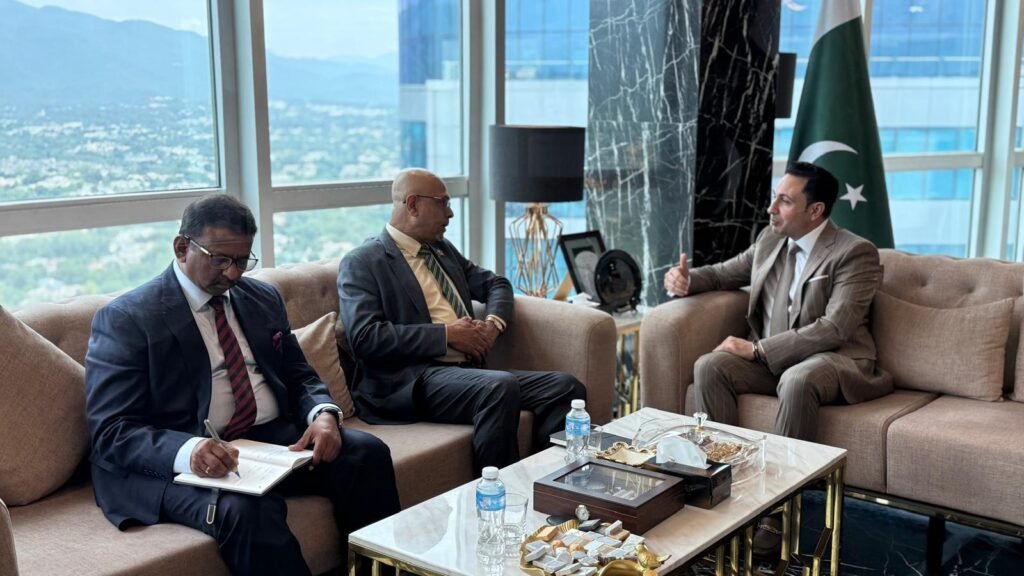
ISLAMABAD — Sri Lanka and Pakistan are exploring new opportunities to enhance cooperation in tourism and cultural exchanges, following a meeting between Sri Lankan High Commissioner to Pakistan Fred Senevirathne and Sardar Yasir Ilyas Khan, Advisor to the Prime Minister of Pakistan on Tourism. The discussions, held in Islamabad, focused on strengthening bilateral ties in tourism, culture, education, and people-to-people exchanges. What Happened During the meeting, High Commissioner Fred Senevirathne and Sardar Yasir Ilyas Khan deliberated on various strategies to boost tourism and cultural cooperation between Sri Lanka and Pakistan. The discussions emphasized the potential for increased collaboration in tourism, which is a significant sector for both countries. Senevirathne highlighted Sri Lanka’s interest in attracting Pakistani tourists and promoting cultural exchanges that could foster deeper understanding and friendship between the two nations. Sardar Yasir Ilyas Khan, who also serves as CEO of Centaurus Group and Mövenpick Hotel, expressed Pakistan’s eagerness to enhance tourism ties with Sri Lanka. He noted that such cooperation could lead to mutual benefits, including economic growth and strengthened cultural relations. Khan underscored the importance of facilitating easier travel and promoting joint ventures in the tourism industry. The meeting also touched upon educational exchanges and the potential for collaborative projects in the cultural sector. Both officials agreed on the need to create more opportunities for people-to-people interactions, which could serve as a foundation for long-term bilateral cooperation. Background Pakistan and Sri Lanka have historically enjoyed friendly relations, marked by cooperation in various sectors including trade, defense, and culture. Tourism has been identified as a key area for potential growth, given the rich cultural heritage and natural beauty of both countries. In recent years, both nations have been working to enhance their tourism sectors, recognizing the economic benefits and opportunities for cultural diplomacy. Pakistan’s tourism industry has been gaining momentum, with the government implementing policies to attract more international visitors. Similarly, Sri Lanka has been focusing on rebuilding its tourism sector, which was significantly impacted by the COVID-19 pandemic. The recent discussions are part of broader efforts to revitalize tourism and foster cultural ties. Why It Matters The discussions between Sri Lanka and Pakistan hold significant implications for both countries, particularly in terms of economic growth and cultural diplomacy. Tourism is a vital sector that can contribute to economic development by creating jobs, generating foreign exchange, and promoting regional integration. Enhanced tourism cooperation can also lead to increased cultural understanding and stronger diplomatic relations. For Pakistan, boosting tourism ties with Sri Lanka could help diversify its tourism offerings and attract more visitors from the South Asian region. This aligns with Pakistan’s broader strategy to position itself as a key tourist destination, leveraging its historical sites, diverse landscapes, and cultural heritage. For Sri Lanka, attracting Pakistani tourists could provide a much-needed boost to its tourism industry, which is recovering from the pandemic’s effects. Increased cultural exchanges can also pave the way for educational collaborations and joint cultural projects, enriching both societies and fostering a sense of shared heritage. Key Takeaways Sri Lanka and Pakistan are exploring ways to enhance cooperation in tourism and cultural exchanges. The meeting focused on strategies to attract tourists and promote people-to-people interactions. Both countries recognize the economic and cultural benefits of strengthened tourism ties. Educational exchanges and joint cultural projects were also discussed as potential areas of collaboration. The discussions align with broader efforts to revitalize tourism sectors in both nations. Source Attribution This article is based on official government statements, press releases, and public communications from relevant authorities. Author: NEN Editorial Desk | Editor: NEN Newsroom | Fact Checked By: NEN Editorial Team Author: NEN Editorial Desk  |  Editor: NEN Newsroom  |  Last Updated: August 09, 2026  |  Source: NEN Reporter This article was produced by the NEN Editorial Desk in accordance with NEN Agency’s Editorial Policy and Fact-Checking Policy.
Pakistan

Thai Embassy Hosts Free Medical Camp in Islamabad for King’s Birthday

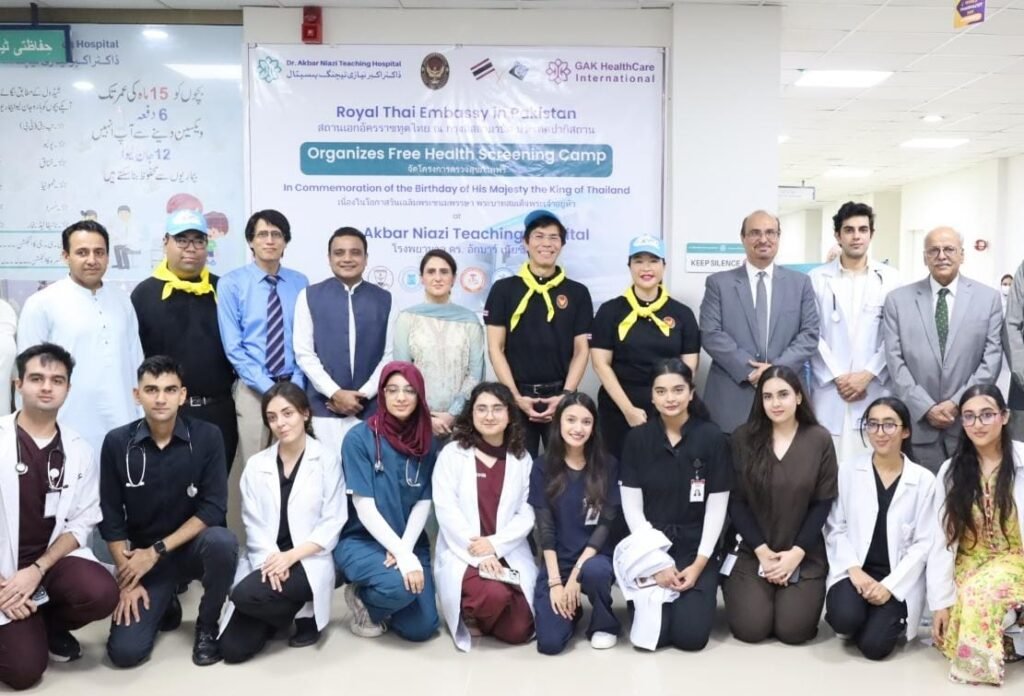
ISLAMABAD — The Royal Thai Embassy in Pakistan, in partnership with Dr. Akbar Niazi Teaching Hospital (ANTH), celebrated the birthday of Thailand’s King Maha Vajiralongkorn Phra Vajiraklaochaoyuhua by organizing a free medical camp in Islamabad. The event provided essential healthcare services to hundreds of underserved residents on October 23, 2023. What Happened The Royal Thai Embassy, in collaboration with ANTH, set up a free health screening medical camp aimed at offering quality healthcare services to those who lack access to regular medical consultations and check-ups. The camp was held at the premises of Dr. Akbar Niazi Teaching Hospital, where a team of qualified medical professionals provided a range of services, including general health check-ups, consultations, and screenings for various ailments. According to embassy officials, the initiative was part of a series of events to commemorate the birthday of King Maha Vajiralongkorn, who is revered in Thailand. The camp attracted a large turnout, with hundreds of residents from nearby communities benefiting from the free services. “This initiative reflects the strong ties between Thailand and Pakistan and our commitment to supporting the local community,” said a representative from the Royal Thai Embassy. Dr. Akbar Niazi Teaching Hospital, known for its community outreach programs, played a crucial role in the successful execution of the event. The hospital provided the necessary infrastructure and medical staff to ensure the camp ran smoothly. “We are proud to partner with the Royal Thai Embassy in this noble cause,” said a spokesperson for ANTH. “Our goal is to make healthcare accessible to all, especially those who cannot afford it.” Background Thailand and Pakistan have enjoyed diplomatic relations since 1951, with both countries engaging in various cultural, educational, and economic exchanges. The Royal Thai Embassy in Pakistan has been active in promoting Thai culture and fostering bilateral relations through numerous initiatives, including cultural events and community service projects. The celebration of King Maha Vajiralongkorn’s birthday is a significant event in Thailand, marked by various activities aimed at promoting social welfare and community service. The king, who ascended the throne in 2016, is known for his philanthropic efforts and initiatives to improve the well-being of people both in Thailand and abroad. Why It Matters The free medical camp organized by the Royal Thai Embassy is significant for several reasons. Firstly, it highlights the importance of international cooperation in addressing healthcare challenges faced by underserved populations. By partnering with local institutions like ANTH, the embassy effectively leveraged resources to provide much-needed medical services to those who might otherwise be unable to afford them. Secondly, the event underscores the role of diplomatic missions in fostering goodwill and strengthening bilateral ties through community engagement. Such initiatives not only enhance the image of the participating country but also contribute to the host nation’s social development. Economically, the camp alleviates some of the healthcare burdens faced by low-income families in Pakistan, who often struggle to access affordable medical care. By providing free consultations and screenings, the initiative helps in early detection and prevention of diseases, potentially reducing future healthcare costs for individuals and the community. Key Takeaways The Royal Thai Embassy in Pakistan organized a free medical camp to celebrate the Thai King’s birthday. The event provided healthcare services to hundreds of underserved residents in Islamabad. The initiative was a collaboration with Dr. Akbar Niazi Teaching Hospital. The camp reflects strong Thailand-Pakistan relations and community support. Efforts like these help reduce healthcare burdens on low-income families. Source Attribution This article is based on official government statements, press releases, and public communications from relevant authorities. Author: NEN Editorial Desk | Editor: NEN Newsroom | Fact Checked By: NEN Editorial Team Author: NEN Editorial Desk  |  Editor: NEN Newsroom  |  Last Updated: August 09, 2026  |  Source: NEN Reporter This article was produced by the NEN Editorial Desk in accordance with NEN Agency’s Editorial Policy and Fact-Checking Policy.
Pakistan

Youth Encouraged to Drive Social Change at Naran Conference

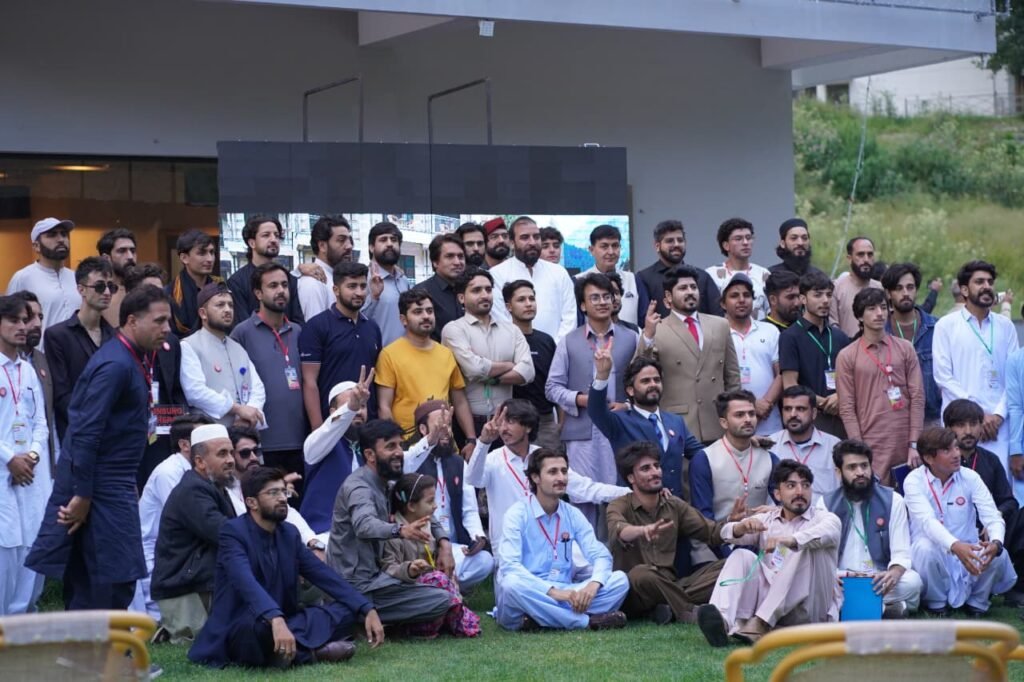
ISLAMABAD — Young people were encouraged to expand their horizons and engage actively in societal transformation at the ninth annual Qalb Conference, held on August 8 and 9 at Sirin Resort, Naran. The event aimed to inspire the youth to strengthen social connections and translate innovative ideas into practical initiatives. What Happened The ninth annual Qalb Conference, a two-day event held at the scenic Sirin Resort in Naran, brought together young leaders, activists, and social entrepreneurs from across Pakistan. The conference focused on empowering youth to take a proactive role in driving social change. Participants were urged to broaden their perspectives, build robust social networks, and implement their ideas to address pressing societal issues. Speakers at the conference included prominent figures from various sectors, including education, technology, and social services. They shared insights on how the youth can leverage their skills and creativity to contribute to national development. A key theme was the importance of translating ideas into action, with sessions dedicated to practical workshops and networking opportunities. One of the keynote speakers, a renowned social entrepreneur, emphasized the need for young people to be at the forefront of change. “The energy and creativity of our youth are unparalleled,” he stated. “It’s crucial that we harness this potential to tackle the challenges our society faces today.” The event also featured panel discussions on topics such as digital innovation, community service, and environmental sustainability. These discussions highlighted successful case studies of youth-led initiatives that have made significant impacts in their communities. Background The Qalb Conference has been an annual fixture since its inception, aiming to foster a spirit of innovation and leadership among Pakistan’s youth. Historically, the conference has served as a platform for young individuals to connect with mentors and industry leaders, facilitating a knowledge exchange that is vital for personal and professional growth. In recent years, the focus has increasingly shifted towards actionable outcomes, encouraging participants not only to discuss ideas but also to implement them. This aligns with broader national efforts to engage the youth in social and economic development, recognizing their potential as catalysts for change. Why It Matters The significance of the Qalb Conference lies in its potential to mobilize the youth as agents of change. Pakistan’s demographic landscape is characterized by a large youth population, which presents both opportunities and challenges. Engaging this segment in constructive activities can lead to substantial social and economic benefits. Economically, empowering the youth to innovate and lead can drive entrepreneurship, create jobs, and stimulate economic growth. Socially, it can lead to more inclusive and equitable communities, as young people often bring fresh perspectives and a willingness to challenge the status quo. Politically, an engaged youth population can contribute to a more vibrant and participatory democracy. By encouraging young people to take an active role in societal issues, the conference supports the development of informed and responsible citizens. Internationally, showcasing youth-led initiatives can enhance Pakistan’s image as a nation that values innovation and progress. This can attract global partnerships and investments, further bolstering the country’s development trajectory. Key Takeaways The Qalb Conference focused on empowering youth to drive social change through innovation and leadership. Participants were encouraged to translate ideas into practical initiatives to address societal issues. The event highlighted the importance of youth engagement in economic, social, and political spheres. Speakers included leaders from education, technology, and social services sectors. The conference aligns with national efforts to harness the potential of Pakistan’s large youth population. Source Attribution This article is based on official government statements, press releases, and public communications from relevant authorities. Author: NEN Editorial Desk | Editor: NEN Newsroom | Fact Checked By: NEN Editorial Team Author: NEN Editorial Desk  |  Editor: NEN Newsroom  |  Last Updated: August 09, 2026  |  Source: NEN Reporter This article was produced by the NEN Editorial Desk in accordance with NEN Agency’s Editorial Policy and Fact-Checking Policy.
World

Pakistani and Canadian Officials Discuss Regional Dynamics and Defence Pact

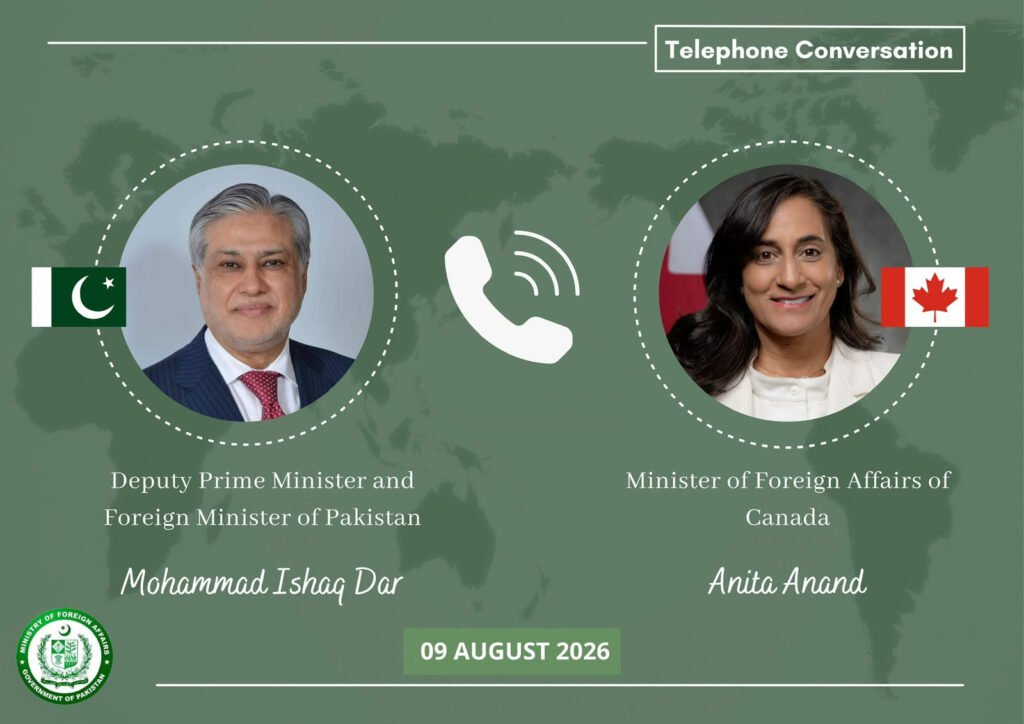
ISLAMABAD — Deputy Prime Minister and Foreign Minister Senator Mohammad Ishaq Dar held a conversation with Canadian Foreign Minister Anita Anand on Sunday to discuss the evolving regional situation, particularly focusing on the Makkah Joint Defence Agreement recently signed between Pakistan, Saudi Arabia, and Türkiye. What Happened The discussion between Deputy Prime Minister Mohammad Ishaq Dar and Canadian Foreign Minister Anita Anand revolved around the geopolitical implications of the Makkah Joint Defence Agreement. This agreement, signed earlier this month, aims to enhance military cooperation and strategic alignment among Pakistan, Saudi Arabia, and Türkiye. The two officials exchanged views on how this trilateral pact could influence regional stability and security dynamics. According to official statements, both ministers underscored the importance of maintaining peace and stability in the region, which has been fraught with tensions due to various geopolitical challenges. “Our discussion focused on mutual interests in promoting peace and security in the region,” said Deputy Prime Minister Dar. The Canadian Foreign Minister echoed these sentiments, emphasizing the need for collaborative efforts to address regional security issues. The conversation also touched upon other regional matters, including economic cooperation and bilateral relations between Pakistan and Canada. Both ministers expressed a commitment to strengthening diplomatic ties and exploring opportunities for economic collaboration. Background The Makkah Joint Defence Agreement marks a significant step in regional military cooperation, especially in the context of Middle Eastern geopolitics. Historically, Pakistan has maintained strong military and economic ties with both Saudi Arabia and Türkiye. This agreement is seen as a continuation of efforts to bolster these relationships and address shared security concerns. The region has witnessed various conflicts and political tensions, with countries like Iran and Yemen often at the center of geopolitical discussions. The trilateral defence pact is perceived as a strategic move to counterbalance regional threats and ensure a stable security environment. Canada, while geographically distant, has vested interests in the stability of the Middle East and South Asia due to its global diplomatic and economic engagements. The dialogue between the Pakistani and Canadian officials reflects Canada’s active role in international peacekeeping and diplomatic initiatives. Why It Matters The Makkah Joint Defence Agreement is a critical development in the context of regional security and international relations. For Pakistan, this pact not only strengthens its defence capabilities but also solidifies its strategic alliances with key regional players like Saudi Arabia and Türkiye. This is particularly important given the ongoing security challenges in Afghanistan and the broader Middle East. For Canada, engaging in dialogue with Pakistan on regional security issues underscores its commitment to global peace and stability. Such discussions can pave the way for increased diplomatic and economic cooperation between the two countries, potentially leading to joint initiatives in areas like trade, education, and technology. The agreement and subsequent discussions also have implications for international diplomatic alignments. As countries like the United States and China continue to exert influence in the region, alliances such as the one formed through the Makkah Joint Defence Agreement could shift the balance of power and influence regional policy decisions. Key Takeaways Pakistani and Canadian officials discussed the regional implications of the Makkah Joint Defence Agreement. The agreement aims to enhance military cooperation between Pakistan, Saudi Arabia, and Türkiye. Both countries emphasized the importance of regional peace and stability. The dialogue reflects Canada’s interest in international peacekeeping and diplomatic efforts. Strengthened alliances could influence the geopolitical landscape in the Middle East and South Asia. Source Attribution This article is based on official government statements, press releases, and public communications from relevant authorities. Author: NEN Editorial Desk | Editor: NEN Newsroom | Fact Checked By: NEN Editorial Team Author: NEN Editorial Desk  |  Editor: NEN Newsroom  |  Last Updated: August 09, 2026  |  Source: Press Release from Government of Pakistan This article was produced by the NEN Editorial Desk in accordance with NEN Agency’s Editorial Policy and Fact-Checking Policy.
World

Sindhi Adabi Sangat Explores Literary Themes at Hyderabad Meeting

HYDERABAD — The Sindhi Adabi Sangat convened its weekly literary session at the Khanabdosh Writers Cafe, Sindh Museum, Hyderabad, on August 9, under the leadership of renowned writer Faheem Noonari. The meeting, hosted by Executive Secretary Syed Zwar Naqvi, was a platform for discussing various literary works and themes. What Happened The gathering featured presentations of literary works by several authors. Muhammad Yusuf Joyo presented his story titled ‘We are all dumb,’ while Saleem Chana shared his piece ‘Chah Bandh.’ Ehsaas Merel showcased his travelogue ‘Safar and Sarooneen.’ The presentations sparked a lively discussion among the attendees, which included notable figures such as Fahim Noonari, Zwar Naqvi, Saleem Chana, Imran Soomro, Gul Sindhi, and Mola Bux Mohabbati. Faheem Noonari and other participants praised Yusuf Joyo’s story for its depth, describing it as a reflection on societal consciousness, comparing it to the state of being mute. The story’s internal and external dimensions were highlighted as significant areas for understanding. The narrative was appreciated for its exploration of folk wisdom and modern classics. Saleem Chana’s poetic verses were also well-received. Yusuf Joyo, Abdul Latif Mallah, Ehsaas Merel, Wahid Kandharo, Farhan Mari, and Abuzar Mallah commented on the emotional appeal of Chana’s work. The discussions emphasized the importance of poetry in evoking emotional responses and connecting with cultural roots. Ehsaas Merel’s travelogue ‘Traveller/Saroonun’ was discussed by Prof. Dr. Qazi Khadim, Nazeer Malkani, Idris Jatoi, Abdul Magsi, Inam Magsi, and Faheem Noonari. The travelogue offered a comparative review of the economic and developmental aspects of Khyber Pakhtunkhwa province in relation to Sindh. The narrative was praised for its artistic depiction of the surroundings and the insightful observations made by the author. In his presidential remarks, Faheem Noonari commended the efforts of the Sindhi Adabi Sangat Hyderabad members, acknowledging their dedication and continuous engagement in literary pursuits. Background The Sindhi Adabi Sangat is a prominent literary organization in Sindh, dedicated to promoting Sindhi literature and culture. It regularly hosts sessions to discuss literary works, providing a platform for writers and poets to present their creations and engage in intellectual discourse. The organization has a long-standing tradition of nurturing literary talent and fostering a deeper understanding of Sindhi cultural heritage. Why It Matters The weekly meetings of the Sindhi Adabi Sangat play a crucial role in preserving and promoting Sindhi literature, which is an integral part of Pakistan’s cultural tapestry. By providing a forum for writers to share their works and receive feedback, the organization helps sustain literary traditions and encourages new voices in the literary landscape. Literary discussions, such as those held by the Sindhi Adabi Sangat, contribute to the broader cultural and intellectual development of society. They offer insights into societal issues, historical contexts, and cultural narratives that shape the collective consciousness of the region. The discussions on Yusuf Joyo’s story and Ehsaas Merel’s travelogue, for instance, highlight the role of literature in reflecting and critiquing social realities. Moreover, the comparative analysis of regional development in Merel’s travelogue underscores the importance of literature in documenting and analyzing socio-economic changes. Such works can inform policy discussions and contribute to a deeper understanding of regional disparities and developmental challenges. Key Takeaways The Sindhi Adabi Sangat held its weekly literary session in Hyderabad, chaired by Faheem Noonari. Presentations included works by Muhammad Yusuf Joyo, Saleem Chana, and Ehsaas Merel. Discussions focused on societal consciousness, emotional appeal in poetry, and regional development. The organization plays a vital role in promoting Sindhi literature and cultural heritage. Literary discussions contribute to cultural and intellectual development, offering insights into societal issues. Source Attribution This article is based on official government statements, press releases, and public communications from relevant authorities. Author: NEN Editorial Desk | Editor: NEN Newsroom | Fact Checked By: NEN Editorial Team Author: NEN Editorial Desk  |  Editor: NEN Newsroom  |  Last Updated: August 09, 2026  |  Source: NEN Reporter This article was produced by the NEN Editorial Desk in accordance with NEN Agency’s Editorial Policy and Fact-Checking Policy.
World

Transparency Urged in Pakistan’s Critical Minerals Agreements

ISLAMABAD — Pakistan’s Coordinator to the Federal Tax Ombudsman, Saif-ur-Rehman, emphasized the importance of transparency in agreements concerning the country’s critical mineral resources on Sunday. He highlighted that these resources could significantly attract advanced technologies, diversify exports, and create substantial employment opportunities if managed as long-term national assets through transparent and well-regulated investment policies. What Happened During a statement on Sunday, Saif-ur-Rehman, the Coordinator to the Federal Tax Ombudsman, underscored the critical role of transparency in managing Pakistan’s mineral resources. He pointed out that the country is endowed with vast mineral wealth which, if harnessed properly, has the potential to transform the economic landscape. Rehman stressed that transparent and well-regulated investment policies are essential to ensure these resources are managed as national assets. Rehman noted that Pakistan’s mineral sector could be a significant driver of economic growth. He stated, “Pakistan’s vast mineral resources have the potential to attract advanced technologies, diversify exports, and generate substantial employment.” However, he warned that without transparency and proper regulation, the full potential of these resources might not be realized. The call for transparency comes at a time when the global demand for critical minerals is increasing, driven by technological advancements and the transition to renewable energy sources. Rehman’s comments suggest a need for Pakistan to position itself strategically in the global market by ensuring that its mineral agreements are transparent and beneficial to the nation. Background Pakistan is known for its rich deposits of minerals such as copper, gold, and rare earth elements. The country has been attempting to develop its mining sector to boost economic growth and reduce reliance on traditional industries like agriculture and textiles. Historically, the sector has faced challenges such as lack of investment, inadequate infrastructure, and regulatory hurdles. In recent years, there has been a push to attract foreign investment into the mining sector. However, past experiences with international agreements have highlighted the need for transparency and fair practices to avoid disputes and ensure that the benefits of mining activities are equitably shared. Why It Matters The emphasis on transparency in mineral agreements is crucial for several reasons. Economically, the development of the mineral sector could significantly boost Pakistan’s GDP and create jobs. By attracting advanced technologies, the country can improve its mining practices, increase efficiency, and enhance the value of its exports. Socially, the creation of employment opportunities in the mining sector could alleviate poverty and improve living standards in mineral-rich regions. This is particularly important in rural areas where economic opportunities are limited. Politically, transparent agreements can enhance trust between the government, investors, and the public. Past controversies over mineral agreements have led to public discontent and legal challenges. By ensuring transparency, the government can build confidence and foster a stable investment climate. On an international level, as countries shift towards renewable energy sources, the demand for critical minerals is expected to rise. Pakistan, with its untapped mineral resources, has the potential to become a key player in the global market. Transparent agreements can help the country secure a favorable position in international trade and attract sustainable investments. Key Takeaways Saif-ur-Rehman emphasized the need for transparency in Pakistan’s mineral agreements. Pakistan’s mineral wealth has the potential to attract advanced technologies and create jobs. Transparent and well-regulated policies are essential for managing mineral resources as national assets. The global demand for critical minerals is increasing, presenting opportunities for Pakistan. Transparent agreements can enhance economic growth, social welfare, and political stability. Source Attribution This article is based on official government statements and public communications from relevant authorities. Author: NEN Editorial Desk | Editor: NEN Newsroom | Fact Checked By: NEN Editorial Team Author: NEN Editorial Desk  |  Editor: NEN Newsroom  |  Last Updated: August 09, 2026  |  Source: NEN Reporter This article was produced by the NEN Editorial Desk in accordance with NEN Agency’s Editorial Policy and Fact-Checking Policy.
World

Pakistan Positioned As Prime Hub For Chinese Investment

ISLAMABAD — The Islamabad Chamber of Commerce and Industry (ICCI) has advocated for an expansion of Pakistan-China economic cooperation, urging a shift towards innovation, advanced manufacturing, digital transformation, and high-value investments. This call aims to elevate the bilateral economic relationship beyond its conventional parameters. What Happened The ICCI recently emphasized the need to enhance the economic partnership between Pakistan and China, focusing on sectors that promise sustainable growth and technological advancement. The chamber highlighted that while traditional areas of cooperation have yielded substantial benefits, there is significant untapped potential in emerging sectors. The ICCI’s statement comes amid ongoing discussions to strengthen the China-Pakistan Economic Corridor (CPEC), a flagship project under China’s Belt and Road Initiative. According to the ICCI, Pakistan offers a strategic advantage for Chinese investors due to its geographical location, abundant natural resources, and a growing market for consumer goods. The chamber suggested that by investing in high-tech industries and digital infrastructure, Chinese companies could not only benefit from Pakistan’s resources but also contribute to the country’s economic development. “Pakistan is ideally positioned to serve as a regional hub for Chinese investments, particularly in sectors that are poised for growth in the coming decades,” stated an ICCI spokesperson. The ICCI also noted that increased Chinese investment in Pakistan could lead to job creation, skill development, and technology transfer, which are crucial for Pakistan’s industrial and economic growth. The chamber urged the government to facilitate this process by providing a conducive environment for foreign investors, including policy reforms and incentives. Background The economic relationship between Pakistan and China has been primarily driven by the CPEC, which has seen significant investments in infrastructure, energy, and transportation. Since its inception, CPEC has been hailed as a game-changer for Pakistan’s economy, promising to improve connectivity and boost trade. However, the focus has largely remained on traditional sectors, with limited exploration into new areas of cooperation. Historically, Pakistan has relied on Chinese investments to bolster its infrastructure and energy sectors. The CPEC projects have included the development of roads, railways, and power plants, which have been instrumental in addressing Pakistan’s energy shortages and improving its logistics network. Despite these successes, there is a growing consensus that diversifying the areas of cooperation could yield even greater benefits. Why It Matters The call for expanding Pakistan-China economic ties into new sectors is significant for several reasons. Economically, it represents an opportunity for Pakistan to modernize its industrial base and integrate more deeply into global value chains. By attracting investments in high-tech industries and digital infrastructure, Pakistan can enhance its competitiveness and foster innovation, which are essential for sustainable economic growth. Socially, increased Chinese investment could lead to job creation and skill development, addressing some of the critical challenges faced by Pakistan’s labor market. With a young and growing population, the demand for employment opportunities is high. Investments in new sectors could provide the necessary impetus to absorb this workforce, reducing unemployment and improving living standards. Politically, strengthening economic ties with China aligns with Pakistan’s strategic interests, given the geopolitical dynamics of the region. As China continues to expand its influence through the Belt and Road Initiative, Pakistan stands to gain by positioning itself as a key partner in this ambitious project. This partnership could also enhance Pakistan’s standing on the international stage, providing it with greater leverage in regional and global affairs. Key Takeaways The ICCI advocates for expanding Pakistan-China economic cooperation into new sectors. Focus areas include innovation, advanced manufacturing, and digital transformation. Enhanced cooperation could lead to job creation, skill development, and technology transfer. The call aligns with ongoing efforts to strengthen the China-Pakistan Economic Corridor. Strategic investments could bolster Pakistan’s economy and geopolitical standing. Source Attribution This article is based on official statements from the Islamabad Chamber of Commerce and Industry and public communications from relevant authorities. Author: NEN Editorial Desk | Editor: NEN Newsroom | Fact Checked By: NEN Editorial Team Author: NEN Editorial Desk  |  Editor: NEN Newsroom  |  Last Updated: August 09, 2026  |  Source: NEN Reporter This article was produced by the NEN Editorial Desk in accordance with NEN Agency’s Editorial Policy and Fact-Checking Policy.

Pakistan

Regional Blood Centre Dera Ismail Khan Enhances Efforts for Blood Donation

DERA ISMAIL KHAN — The Regional Blood Centre (RBC) in Dera Ismail Khan is intensifying its efforts to bolster institutional cooperation and promote voluntary blood donation. This initiative aims to ensure timely blood availability for patients and improve component-based transfusion practices through strategic meetings and collaborations. What Happened The RBC in Dera Ismail Khan has embarked on a comprehensive campaign to enhance its blood donation and transfusion services. This initiative involves a series of meetings and visits, engaging key stakeholders such as the Board of Governors of the Medical Teaching Institute (MTI), Defence Security Forces (DSF), and senior medical professionals. The objective is to strengthen institutional coordination and promote a culture of voluntary blood donation. According to officials, these efforts are crucial in addressing the challenges faced in ensuring a steady supply of safe blood for patients in need. The RBC aims to transition from replacement-based to component-based transfusion practices, which are considered more efficient and safer for patients. By focusing on voluntary donations, the RBC hopes to create a more reliable and sustainable blood supply system. Dr. Asad Khan, a senior official at the RBC, stated, “Our goal is to foster a culture of voluntary blood donation, which is essential for maintaining a steady and safe blood supply. We are working closely with various institutions to achieve this target.” The RBC’s strategy involves engaging with educational institutions, community organizations, and healthcare providers to raise awareness about the importance of voluntary blood donation. Background Blood donation and transfusion services in Pakistan have historically relied heavily on replacement donations, where family members or friends of a patient donate blood to replace what is used. However, this system often leads to shortages and compromises the safety and availability of blood. The World Health Organization (WHO) advocates for voluntary, non-remunerated blood donations as the safest and most effective way to ensure a sufficient blood supply. In recent years, there has been a growing recognition of the need to shift towards voluntary blood donation in Pakistan. The government and various health organizations have been working to implement policies and frameworks to support this transition. The RBC in Dera Ismail Khan is part of a broader effort to align with these international standards and improve the overall quality of blood transfusion services in the region. Why It Matters The initiative by the RBC in Dera Ismail Khan is significant for several reasons. Firstly, it addresses a critical healthcare challenge in Pakistan — the availability of safe and adequate blood supplies. By promoting voluntary blood donation, the RBC aims to reduce dependency on replacement donations, which can be unreliable and pose risks to patient safety. Economically, a more efficient blood donation system can lead to cost savings for healthcare facilities, as voluntary donations reduce the need for emergency procurement and associated logistical expenses. Socially, fostering a culture of voluntary donation can enhance community solidarity and awareness about health and wellness. Politically, the RBC’s efforts align with national health policies aimed at improving healthcare infrastructure and services. By setting a precedent for other regions, Dera Ismail Khan’s RBC could influence broader policy changes and encourage similar initiatives across Pakistan. Internationally, aligning with WHO guidelines enhances Pakistan’s reputation in global health forums and supports its commitments to improving public health outcomes. Key Takeaways The RBC in Dera Ismail Khan is promoting voluntary blood donation to ensure a steady blood supply. Efforts include collaboration with MTI, DSF, and medical professionals to enhance institutional coordination. The initiative aims to transition from replacement-based to component-based transfusion practices. Voluntary blood donation is crucial for patient safety and aligns with WHO guidelines. This effort supports national health policies and could influence broader healthcare improvements in Pakistan. Source Attribution This article is based on official government statements, press releases, and public communications from relevant authorities. Author: NEN Editorial Desk | Editor: NEN Newsroom | Fact Checked By: NEN Editorial Team Author: NEN Editorial Desk  |  Editor: NEN Newsroom  |  Last Updated: August 09, 2026  |  Source: NEN Reporter This article was produced by the NEN Editorial Desk in accordance with NEN Agency’s Editorial Policy and Fact-Checking Policy.

Scroll to Top