
Author name: Yasir Zubairi

Yasir Zubairi is the founder and publisher of NEN Agency (News Era Network). He leads NEN's coverage of Pakistan's national affairs, economy, foreign relations and sports, and is responsible for the accuracy and standards of every story published on nenagency.com.

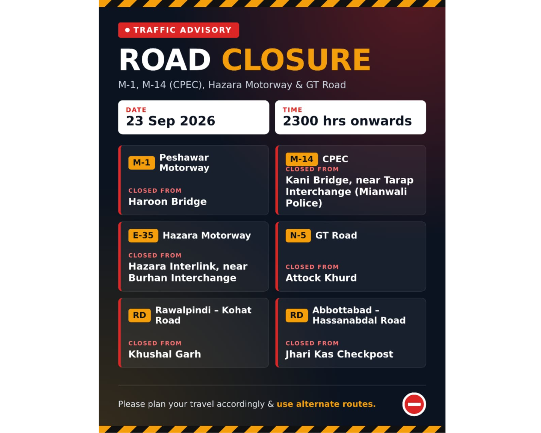
Key Motorways And GT Road To Close From 11 PM, Warns Islamabad Traffic Police
Pakistan

Key Motorways And GT Road To Close From 11 PM, Warns Islamabad Traffic Police

ISLAMABAD — The Islamabad Traffic Police (ITP) announced the closure of several major routes, including the M-1 Peshawar Motorway, M-14 CPEC route, Hazara Motorway, and sections of the GT Road, starting from 11:00 PM on Wednesday. This measure is to remain in effect until further notice, urging motorists to plan accordingly and seek alternative routes. What Happened The Islamabad Traffic Police issued a traffic advisory detailing the closure of several key routes in the capital region. The affected routes include the M-1 Peshawar Motorway, M-14 CPEC route, Hazara Motorway, and certain sections of the GT Road. The closures are set to begin at 11:00 PM on Wednesday and will continue until further notice. An official from the ITP stated that these measures are being taken to manage traffic flow and ensure public safety, although specific reasons for the closures were not disclosed. Motorists are advised to plan their journeys with these closures in mind, and to use alternative routes where possible. The ITP has highlighted the importance of adhering to the advisory to avoid inconvenience and potential traffic congestion in the affected areas. The advisory is part of the ITP’s ongoing efforts to maintain orderly traffic management within Islamabad and its surrounding areas. Background The Islamabad Traffic Police frequently issues advisories and implements traffic management strategies to address various challenges, including construction, maintenance work, or security concerns. In the past, similar closures have been implemented during high-profile events or in response to security threats. The M-1 and M-14 motorways are crucial links in Pakistan’s road network, facilitating trade and travel across the country. The Hazara Motorway, part of the China-Pakistan Economic Corridor (CPEC), plays a significant role in connecting northern regions with the rest of Pakistan. Historically, the GT Road has been a vital artery for trade and transportation, linking major cities across the Punjab and Khyber Pakhtunkhwa provinces. These routes are not only essential for daily commuters but also for long-distance travelers and commercial transport, making their closure a matter of significant concern for logistics and travel planning. Why It Matters The closure of these major routes has substantial implications for both local and national traffic. For daily commuters in Islamabad and surrounding areas, these closures could lead to significant delays and disruptions. Businesses relying on these routes for the transportation of goods may face logistical challenges, potentially impacting supply chains and economic activities. On a broader scale, these closures underscore the importance of maintaining and upgrading Pakistan’s transportation infrastructure to handle both routine and emergency situations. The M-1 and M-14 motorways, along with the Hazara Motorway, are critical components of the CPEC initiative, which aims to enhance connectivity and economic integration between Pakistan and China. Any disruption to these routes could have ripple effects on trade and economic activities linked to CPEC. Furthermore, the advisory highlights the need for effective communication and coordination between traffic management authorities and the public to minimize inconvenience and ensure safety. As the capital city, Islamabad’s traffic management strategies often set a precedent for other regions, making the successful implementation of such measures crucial for broader national traffic management policies. Key Takeaways The ITP has announced the closure of major routes including M-1, M-14, Hazara Motorway, and sections of GT Road starting from 11:00 PM on Wednesday. Motorists are advised to plan their journeys in advance and consider alternative routes to avoid inconvenience. The closures are part of ongoing traffic management efforts by the ITP to ensure public safety and orderly traffic flow. These routes are vital for daily commuters and commercial transport, highlighting the potential for significant disruptions. The closures underscore the importance of effective infrastructure management and communication between authorities and the public. Source Attribution The article is based on official statements and public communications from the Islamabad Traffic Police. Author: NEN Editorial Desk | Editor: NEN Newsroom | Fact Checked By: NEN Editorial Team Author: NEN Editorial Desk  |  Editor: NEN Newsroom  |  Last Updated: September 23, 2026  |  Source: NEN Reporter This article was produced by the NEN Editorial Desk in accordance with NEN Agency’s Editorial Policy and Fact-Checking Policy.
Deputy PM Urges OIC Unity on Kashmir at UN and Global Platforms
World

Deputy PM Urges OIC Unity on Kashmir at UN and Global Platforms

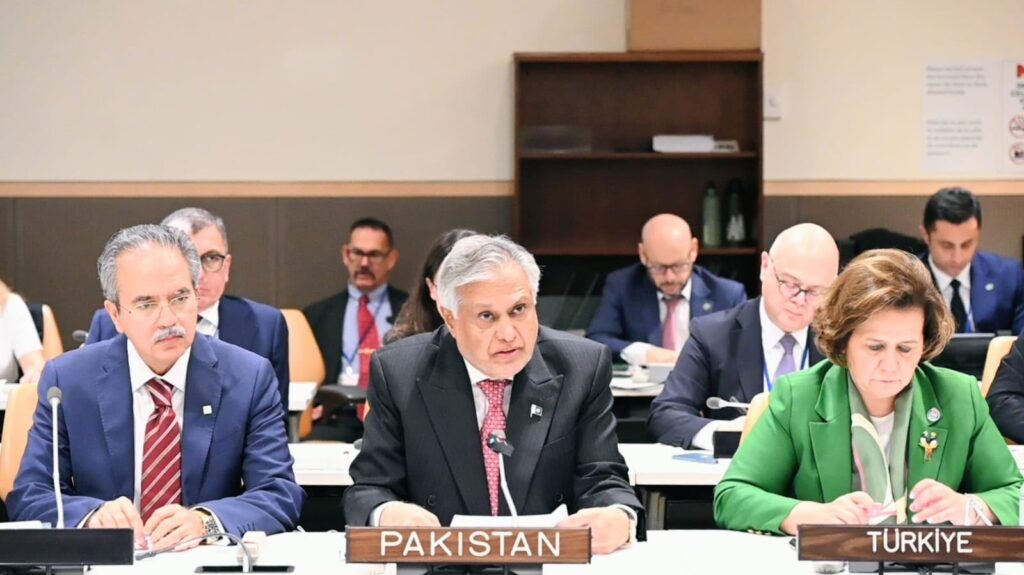
NEW YORK — Deputy Prime Minister and Foreign Minister Senator Mohammad Ishaq Dar has called on the Organization of Islamic Cooperation (OIC) member states to maintain a unified stance on the Kashmir issue at the United Nations and other international forums. Speaking on Wednesday at the Ministerial Meeting of the OIC Contact Group on Jammu and Kashmir, held alongside the 81st session of the UN General Assembly, Dar emphasized the need for collective action in addressing the ongoing challenges in the region. What Happened During his address, Deputy Prime Minister Dar highlighted the persistent restrictions on political and civic freedoms in Indian Illegally Occupied Jammu and Kashmir (IIOJK). He urged OIC member countries to present a cohesive front in advocating for the rights of the Kashmiri people on international stages. Dar expressed gratitude to the OIC Secretary-General, the members of the Contact Group, the OIC Special Envoy on Jammu and Kashmir, and the OIC Independent Permanent Human Rights Commission for their unwavering support for Kashmir. Dar underscored the ongoing attempts by India to alter the demographic, political, and cultural landscape of Jammu and Kashmir. He reiterated that Jammu and Kashmir is an internationally recognized dispute on the UN Security Council’s agenda and reaffirmed Pakistan’s commitment to a peaceful resolution in line with UN resolutions and the aspirations of the Kashmiri people. He stated, “No domestic legislation, judicial verdict, electoral exercise, or demographic manipulation can substitute for the Kashmiri people’s inalienable right to self-determination.” Background The Kashmir conflict has been a longstanding issue between India and Pakistan, dating back to the partition of British India in 1947. The region has been a flashpoint for several wars and ongoing skirmishes between the two countries. The UN Security Council has passed several resolutions calling for a plebiscite to determine the will of the Kashmiri people, but these have yet to be implemented. India’s revocation of Article 370 in August 2019, which granted special autonomy to Jammu and Kashmir, has further intensified tensions. The move was followed by a security lockdown and communications blackout in the region, drawing international criticism and concern over human rights violations. Why It Matters The Kashmir issue remains a significant point of contention in South Asian geopolitics, affecting regional stability and international relations. The call for unity among OIC member states is crucial as it seeks to amplify the voice of the Kashmiri people on global platforms, potentially influencing international policy and intervention. For Pakistan, maintaining international focus on Kashmir is vital to counter India’s narrative and actions in the region. The support of the OIC, representing a collective of Muslim-majority countries, adds weight to Pakistan’s diplomatic efforts. It also highlights the broader implications for human rights and self-determination, principles that resonate with international norms and values. The ongoing situation in Kashmir has socio-economic implications for the region’s development and stability. Prolonged conflict affects the lives of millions, with restrictions impacting education, healthcare, and economic opportunities. A unified international stance could pressure India to engage in meaningful dialogue and negotiations, potentially leading to a resolution that respects the rights and aspirations of the Kashmiri people. Key Takeaways Deputy Prime Minister Ishaq Dar urged OIC unity on Kashmir at the UN General Assembly. Dar highlighted India’s attempts to alter Jammu and Kashmir’s demographic and political character. Pakistan remains committed to a peaceful resolution in accordance with UN resolutions. The Kashmir issue is a significant geopolitical concern with implications for regional stability. OIC support is crucial for amplifying the Kashmiri people’s voice on international platforms. Source Attribution This article is based on official government statements, press releases, and public communications from relevant authorities. Author: NEN Editorial Desk | Editor: NEN Newsroom | Fact Checked By: NEN Editorial Team Author: NEN Editorial Desk  |  Editor: NEN Newsroom  |  Last Updated: September 23, 2026  |  Source: Press Release from Government of Pakistan This article was produced by the NEN Editorial Desk in accordance with NEN Agency’s Editorial Policy and Fact-Checking Policy.
Pakistan-Russia And Pakistan-Oman Joint Military Exercises Begin
World

Pakistan-Russia And Pakistan-Oman Joint Military Exercises Begin

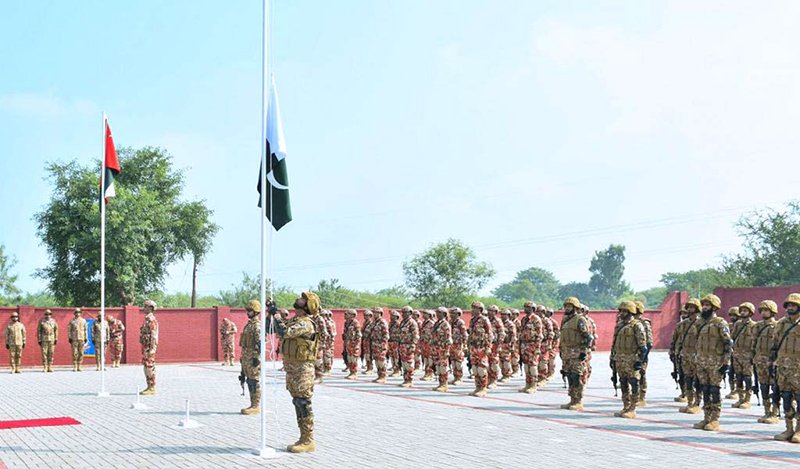
PABBI — The 9th edition of the Pakistan-Russia Joint Exercise Druzhba-IX and the 2nd edition of the Pakistan-Oman Joint Exercise Washaq Al Jabal-II, also known as Mountain Lynx-II, commenced on Tuesday at Cherat and the National Counter Terrorism Centre (NCTC) in Pabbi, respectively. These exercises aim to enhance military cooperation and interoperability among the participating nations. What Happened The joint military exercises between Pakistan and its international partners, Russia and Oman, have officially started. The Druzhba-IX exercise with Russia is being conducted at Cherat, a key military training site in Pakistan, while the Washaq Al Jabal-II exercise with Oman is taking place at the NCTC in Pabbi. These exercises are part of ongoing efforts to strengthen military ties and improve joint operational capabilities. The Druzhba series, which translates to ‘Friendship’ in Russian, has been a recurring event since its inception, aimed at fostering closer military cooperation between Pakistan and Russia. The exercise includes various training modules focusing on counter-terrorism, hostage rescue operations, and other tactical maneuvers. Meanwhile, the Washaq Al Jabal-II exercise with Oman, named after the Mountain Lynx, focuses on enhancing mountain warfare skills and counter-terrorism operations in challenging terrains. This exercise underscores the strategic partnership between Pakistan and Oman, emphasizing mutual interests in regional security and stability. According to military officials, these exercises are designed to share best practices, enhance tactical skills, and improve the ability to conduct joint operations. The exercises will continue for several days, featuring a series of drills and scenarios aimed at testing the readiness and adaptability of the participating forces. Background The Druzhba exercises between Pakistan and Russia began in 2016, marking a significant development in military cooperation between the two countries. These exercises have been held annually, alternating between Pakistan and Russia, and have grown in complexity and scope over the years. The Pakistan-Oman military relationship has also seen significant growth, with the Washaq Al Jabal series being a testament to their strengthening ties. The first edition of this exercise took place in 2021, focusing on enhancing joint operational capabilities in mountainous regions. Both exercises align with Pakistan’s broader defense strategy, which emphasizes regional cooperation and capacity building with international partners to address common security challenges. Why It Matters The commencement of these joint military exercises holds significant implications for Pakistan’s defense strategy and its international relations. The Druzhba-IX exercise with Russia highlights the evolving military partnership between the two nations, a relationship that has gained momentum over the past decade as both countries seek to diversify their defense ties beyond traditional allies. For Pakistan, these exercises serve as an opportunity to enhance its military capabilities, particularly in counter-terrorism and unconventional warfare. The collaboration with Russia, a major global military power, provides Pakistan with access to advanced military tactics and technologies, which can be critical in addressing internal and regional security threats. Similarly, the Washaq Al Jabal-II exercise with Oman underscores the importance of regional partnerships in maintaining stability in the Middle East and South Asia. By strengthening military ties with Oman, Pakistan reinforces its commitment to regional security and counter-terrorism efforts, which are vital given the geopolitical dynamics of the region. These exercises also send a message to the international community about Pakistan’s proactive approach to defense cooperation and its willingness to engage with diverse partners to ensure peace and stability. Key Takeaways The 9th edition of the Pakistan-Russia Joint Exercise Druzhba-IX and the 2nd edition of the Pakistan-Oman Joint Exercise Washaq Al Jabal-II have commenced. Druzhba-IX focuses on counter-terrorism and tactical maneuvers, while Washaq Al Jabal-II emphasizes mountain warfare skills. These exercises enhance military cooperation and interoperability between Pakistan, Russia, and Oman. The exercises are part of Pakistan’s strategy to strengthen regional security through international partnerships. Pakistan’s collaboration with Russia and Oman reflects its commitment to addressing regional security challenges. Source Attribution This article is based on official government statements, press releases, and public communications from relevant authorities. Author: NEN Editorial Desk | Editor: NEN Newsroom | Fact Checked By: NEN Editorial Team Author: NEN Editorial Desk  |  Editor: NEN Newsroom  |  Last Updated: September 23, 2026  |  Source: NEN Reporter This article was produced by the NEN Editorial Desk in accordance with NEN Agency’s Editorial Policy and Fact-Checking Policy.
Deputy PM Dar Urges Action Against Terrorism From Afghan Soil
World

Deputy PM Dar Urges Action Against Terrorism From Afghan Soil

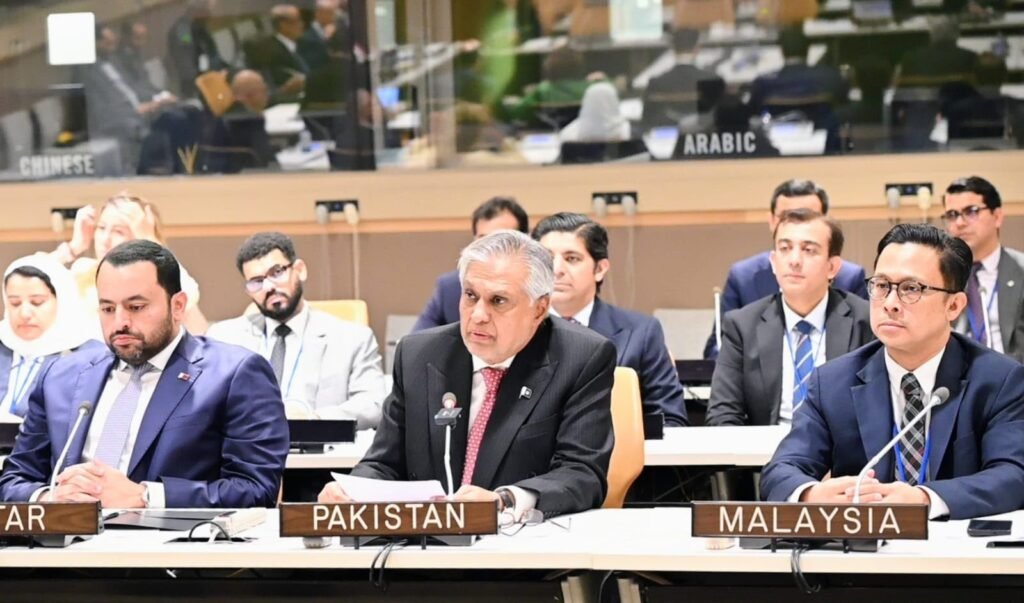
NEW YORK — Deputy Prime Minister and Foreign Minister Senator Mohammad Ishaq Dar has called for decisive and verifiable measures to prevent the use of Afghan territory for terrorist activities targeting neighboring countries, particularly Pakistan. Dar made these remarks while addressing the meeting of the Organisation of Islamic Cooperation (OIC) Contact Group on Afghanistan on Tuesday. What Happened During the OIC Contact Group meeting held in New York, Deputy Prime Minister and Foreign Minister Mohammad Ishaq Dar emphasized the urgent need for Afghanistan to take concrete steps to ensure that its soil is not used for terrorism against Pakistan and other neighboring states. The meeting, attended by representatives from various OIC member countries, focused on the security situation in Afghanistan and its implications for regional stability. Dar highlighted the persistent threat posed by terrorist groups operating from Afghan territory, which have been responsible for numerous attacks across the border in Pakistan. He urged the international community, particularly the OIC members, to support efforts aimed at neutralizing these threats. “Concrete and verifiable actions are essential to prevent the misuse of Afghan soil for terrorist activities,” Dar stated, underscoring the importance of regional cooperation in combating terrorism. The Deputy Prime Minister also reiterated Pakistan’s commitment to peace and stability in Afghanistan, expressing hope that the Afghan government would take necessary steps to address the concerns of its neighbors. He called for a collaborative approach to tackle the menace of terrorism, which has been a major obstacle to peace in the region. Background The issue of terrorism emanating from Afghan soil has been a longstanding concern for Pakistan. Over the years, various militant groups have used Afghanistan as a base to launch attacks on Pakistani territory, leading to significant loss of life and property. The porous border between the two countries has further complicated efforts to curb cross-border terrorism. Historically, Pakistan has been a vocal advocate for a stable and peaceful Afghanistan, recognizing that instability in the neighboring country directly impacts its own security. The two countries share a long and tumultuous history, with periods of cooperation often overshadowed by mutual distrust and accusations of harboring militants. The OIC, an influential body representing Muslim-majority countries, has been actively involved in facilitating dialogue and cooperation among its member states to address security challenges. The Contact Group on Afghanistan is one of the platforms through which the OIC seeks to promote peace and stability in the region. Why It Matters The call for action by Deputy Prime Minister Dar is significant in the context of ongoing regional security dynamics. The presence of terrorist groups in Afghanistan poses a direct threat not only to Pakistan but also to the broader region, including Central Asia and beyond. The destabilizing activities of these groups can undermine efforts to foster economic development and regional integration. For Pakistan, ensuring security along its western border is crucial for maintaining internal stability and protecting its citizens. The continued threat of cross-border terrorism has strained Pakistan’s resources and diverted attention from other pressing developmental needs. By advocating for verifiable actions, Pakistan seeks to hold Afghanistan accountable and encourage a more proactive stance against terrorism. Internationally, the situation in Afghanistan remains a focal point for global security discussions. The withdrawal of foreign troops has left a security vacuum that terrorist groups are eager to exploit. The international community, therefore, has a vested interest in supporting efforts to stabilize Afghanistan and prevent it from becoming a safe haven for terrorists. Key Takeaways Deputy PM Dar has called for verifiable measures to stop Afghan soil from being used for terrorism against Pakistan. The OIC Contact Group on Afghanistan meeting highlighted regional security concerns. Pakistan seeks international support to address the threat of cross-border terrorism. Stability in Afghanistan is crucial for regional peace and economic development. International cooperation is essential to combat the threat posed by terrorist groups in Afghanistan. Source Attribution This article is based on official government statements, press releases, and public communications from relevant authorities. Author: NEN Editorial Desk | Editor: NEN Newsroom | Fact Checked By: NEN Editorial Team Author: NEN Editorial Desk  |  Editor: NEN Newsroom  |  Last Updated: September 23, 2026  |  Source: NEN Reporter This article was produced by the NEN Editorial Desk in accordance with NEN Agency’s Editorial Policy and Fact-Checking Policy.

Ahsan Iqbal Emphasizes Creativity and Innovation in Education Reform
Pakistan

Ahsan Iqbal Emphasizes Creativity and Innovation in Education Reform

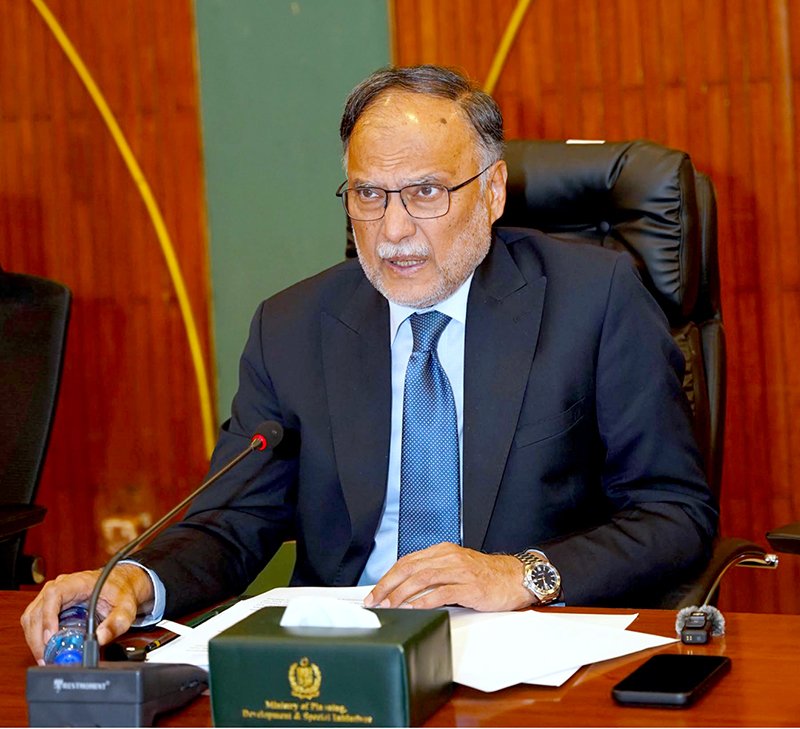
ISLAMABAD — Federal Minister for Planning, Development and Special Initiatives Professor Ahsan Iqbal highlighted the importance of creativity and innovation as essential drivers in the digital age during a speech on Tuesday. He called for a comprehensive transformation of Pakistan’s education system to foster critical thinking, questioning, observation, and problem-solving skills among students. What Happened Speaking at a seminar in Islamabad, Ahsan Iqbal underscored the urgent need to adapt educational frameworks to meet the demands of the 21st century. “Creativity and innovation have become the key currency of the digital age,” he stated, emphasizing that the current education system must evolve to prepare students for future challenges. Iqbal pointed out that traditional rote learning methods are inadequate in equipping students with the necessary skills to thrive in a rapidly changing global landscape. The minister stressed the importance of integrating technology into the classroom to enhance learning experiences and enable students to engage with content interactively. He also highlighted the role of teachers in this transformation, advocating for professional development programs that equip educators with the skills to foster an environment of inquiry and innovation. Iqbal’s remarks come amid increasing recognition of the need for educational reform in Pakistan. The country’s education system has often been criticized for its focus on memorization rather than critical thinking and creativity. The minister’s call for reform aligns with broader government initiatives aimed at modernizing education to better align with global standards. Background Pakistan’s education system has long faced challenges, including inadequate infrastructure, outdated curricula, and a lack of trained teachers. Historically, the focus has been on rote memorization, with little emphasis on developing critical thinking or problem-solving skills. In recent years, there has been a growing awareness of the need to shift towards more dynamic and interactive learning methods. The government’s Vision 2025 plan includes education reform as a key component, aiming to improve literacy rates, increase access to quality education, and integrate technology into learning environments. The plan seeks to align Pakistan’s education system with international standards, preparing students to compete in a global economy. Why It Matters The emphasis on creativity and innovation in education is crucial for Pakistan’s economic and social development. As the global economy becomes increasingly driven by technology and innovation, countries that fail to adapt their education systems risk falling behind. By fostering a culture of creativity and critical thinking, Pakistan can better prepare its workforce for the demands of the digital age. Educational reform also has significant implications for social mobility and equality. By providing all students with the skills needed to succeed in a modern economy, the country can help reduce poverty and improve living standards. Furthermore, a more educated workforce can attract foreign investment, bolster economic growth, and enhance Pakistan’s competitiveness on the international stage. Internationally, Pakistan’s efforts to reform its education system are being closely watched. Successful implementation could serve as a model for other developing countries facing similar challenges. It also demonstrates Pakistan’s commitment to meeting global education goals, such as those outlined in the United Nations Sustainable Development Goals (SDGs). Key Takeaways Federal Minister Ahsan Iqbal calls for educational reform to emphasize creativity and innovation. Current rote learning methods are deemed inadequate for preparing students for future challenges. Integration of technology and teacher training are highlighted as essential components of reform. Educational reform is crucial for Pakistan’s economic growth and social development. Pakistan’s efforts are aligned with international education standards and goals. Source Attribution This article is based on official statements and public communications from relevant authorities. Author: NEN Editorial Desk | Editor: NEN Newsroom | Fact Checked By: NEN Editorial Team Author: NEN Editorial Desk  |  Editor: NEN Newsroom  |  Last Updated: September 22, 2026  |  Source: NEN Reporter This article was produced by the NEN Editorial Desk in accordance with NEN Agency’s Editorial Policy and Fact-Checking Policy.
PSX Index Rises 248 Points Amid Positive Trading Session
Pakistan

PSX Index Rises 248 Points Amid Positive Trading Session

ISLAMABAD — The Pakistan Stock Exchange (PSX) experienced a positive trading session on Tuesday, with the benchmark KSE-100 Index rising by 248.92 points. This increase represents a 0.15 percent gain, closing the day at 171,402.08 points, up from the previous session’s 171,153.17 points. What Happened The KSE-100 Index, a key indicator of market performance in Pakistan, saw a notable uptick, reflecting investor optimism. The trading session concluded with the index at 171,402.08 points, marking a gain of 248.92 points or 0.15 percent. This positive shift is attributed to increased investor confidence and a surge in trading activity. The trading volume on the ready market was substantial, with 641.834 million shares changing hands. This volume indicates robust market participation, suggesting that investors are actively engaging with the market amidst prevailing economic conditions. The increase in the index is seen as a response to various economic indicators and market sentiments. Market analysts suggest that the recent performance of the PSX is influenced by several factors, including global market trends, domestic economic policies, and investor sentiment towards future economic stability. The rise in the index may also be linked to expectations of favorable economic reforms and potential policy adjustments by the government. Background The Pakistan Stock Exchange has been a barometer of economic health and investor sentiment in the country. Historically, the PSX has experienced fluctuations based on political stability, economic policies, and international market trends. The KSE-100 Index, in particular, serves as a benchmark for the overall performance of the stock market. In recent years, the PSX has faced challenges due to economic uncertainties, including inflationary pressures, currency fluctuations, and geopolitical tensions. However, the market has also shown resilience, with periods of recovery driven by positive economic indicators and investor confidence. The government’s economic policies, including fiscal reforms and efforts to stabilize the currency, have played a significant role in shaping market performance. Additionally, international factors such as oil prices and trade relations have also impacted the PSX’s trajectory. Why It Matters The recent rise in the KSE-100 Index is significant for several reasons. Economically, a positive trend in the stock market can boost investor confidence, leading to increased capital inflows and investment in various sectors. This can have a ripple effect on the broader economy, potentially spurring growth and development. Socially, a thriving stock market can contribute to wealth creation and financial stability for investors, including individual and institutional stakeholders. As the market performs well, it can enhance the financial well-being of those invested in it, thereby contributing to overall economic prosperity. Politically, the performance of the PSX can influence government policy decisions. A strong stock market may encourage the government to continue implementing reforms that foster economic stability and growth. Conversely, market volatility can prompt policymakers to reassess and adjust their strategies to maintain investor confidence. Internationally, the performance of the PSX is watched by foreign investors and analysts as an indicator of Pakistan’s economic health. A positive trend can attract foreign investment, contributing to foreign exchange reserves and strengthening the country’s economic position globally. Key Takeaways The KSE-100 Index of the Pakistan Stock Exchange gained 248.92 points, closing at 171,402.08. The market saw a trading volume of 641.834 million shares, indicating active investor participation. Investor confidence and economic indicators are influencing the positive market trend. The performance of the PSX has implications for economic growth, investment, and government policy. International observers view the PSX as a measure of Pakistan’s economic stability and potential. Source Attribution This article is based on official government statements, press releases, and public communications from relevant authorities. Author: NEN Editorial Desk | Editor: NEN Newsroom | Fact Checked By: NEN Editorial Team Author: NEN Editorial Desk  |  Editor: NEN Newsroom  |  Last Updated: September 22, 2026  |  Source: NEN Reporter This article was produced by the NEN Editorial Desk in accordance with NEN Agency’s Editorial Policy and Fact-Checking Policy.
Governor Urges Support For Humanitarian Welfare Organizations
Pakistan

Governor Urges Support For Humanitarian Welfare Organizations

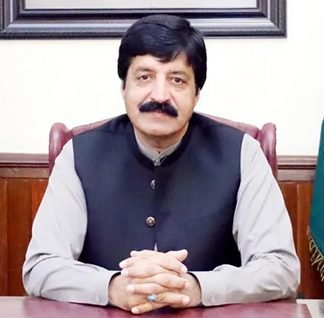
LAHORE — Punjab Governor Sardar Saleem Haider Khan emphasized the importance of supporting welfare organizations dedicated to humanitarian efforts during a ceremony on September 22. The event, held to donate ambulances to the Sundas Foundation, highlighted the critical role such organizations play in serving the community. What Happened During the ceremony in Lahore, Governor Sardar Saleem Haider Khan praised the efforts of the Sundas Foundation, a prominent welfare organization known for its humanitarian services. The governor participated in the donation of ambulances, which are expected to enhance the foundation’s ability to provide critical medical services to those in need. He remarked, “A truly meaningful life is one devoted to the well-being of others,” underscoring the value of altruism and community service. The Sundas Foundation, which has been active in providing medical assistance and blood transfusion services, particularly for patients suffering from thalassemia and other blood disorders, received the ambulances as part of an initiative to bolster its operational capacity. The governor’s presence at the event was a testament to the government’s recognition of the foundation’s contributions to society. Governor Saleem further stated that the collaboration between governmental bodies and non-governmental organizations (NGOs) is vital for addressing the healthcare needs of the population, especially in underserved areas. He encouraged more public and private partnerships to support such initiatives, which he believes are essential for societal development and welfare. Background The Sundas Foundation, established in 1998, has been at the forefront of providing healthcare services to individuals with blood disorders in Pakistan. It operates several centers across the country, offering free medical care and blood transfusions to thousands of patients annually. The foundation’s work is particularly crucial in a country where access to quality healthcare remains a challenge for many. In recent years, Pakistan has seen a rise in the number of NGOs and welfare organizations working to fill the gaps in public services, particularly in health and education. These organizations often rely on donations and support from both local and international donors to sustain their operations. The government’s acknowledgment and support of these entities are seen as a positive step towards enhancing their reach and effectiveness. Why It Matters The governor’s call for supporting welfare organizations comes at a time when Pakistan is grappling with multiple socio-economic challenges, including inadequate healthcare infrastructure and limited access to essential services for large segments of the population. By promoting the work of organizations like the Sundas Foundation, the government can help mobilize resources and public support for initiatives that directly impact the lives of vulnerable communities. Economically, the support for welfare organizations can lead to improved health outcomes, which are essential for boosting productivity and economic growth. Socially, these organizations play a crucial role in fostering a sense of community and solidarity, encouraging citizens to contribute to the common good. Politically, the government’s engagement with NGOs can enhance its credibility and demonstrate a commitment to addressing the needs of its citizens. Internationally, Pakistan’s support for humanitarian efforts aligns with global development goals, such as the United Nations Sustainable Development Goals (SDGs), which emphasize health, well-being, and partnerships for sustainable development. By investing in welfare organizations, Pakistan can improve its standing in the international community as a nation committed to human development and social progress. Key Takeaways Governor Sardar Saleem Haider Khan emphasized the importance of supporting welfare organizations in Pakistan. The Sundas Foundation received ambulances to enhance its medical service capabilities. Public-private partnerships are encouraged to address healthcare needs in underserved areas. Support for welfare organizations can lead to improved health outcomes and economic growth. Pakistan’s engagement with NGOs aligns with global development goals and enhances its international standing. Source Attribution This article is based on official government statements, press releases, and public communications from relevant authorities. Author: NEN Editorial Desk | Editor: NEN Newsroom | Fact Checked By: NEN Editorial Team Author: NEN Editorial Desk  |  Editor: NEN Newsroom  |  Last Updated: September 22, 2026  |  Source: Press Release from Government of Pakistan This article was produced by the NEN Editorial Desk in accordance with NEN Agency’s Editorial Policy and Fact-Checking Policy.

French Defence Secretary Meets Pakistan Army Chief at GHQ
Pakistan

French Defence Secretary Meets Pakistan Army Chief at GHQ

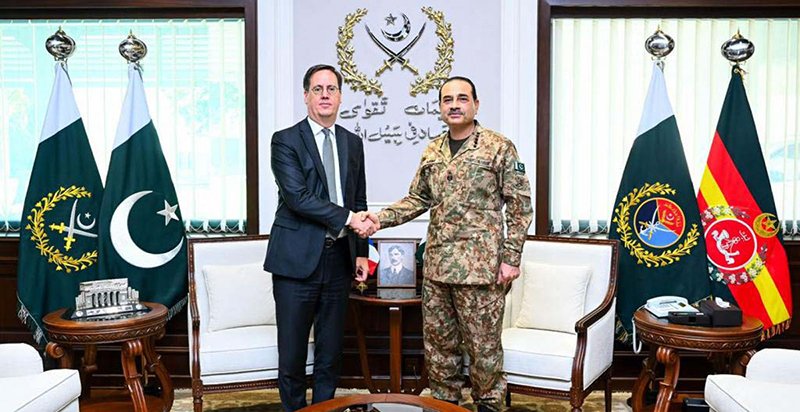
RAWALPINDI — Nicolas Roche, Secretary General for Defence and National Security (SGDSN) of France, along with Jean-Noël Poirier, the French Ambassador to Pakistan, met with Field Marshal Syed Asim Munir, Chief of Army Staff (COAS) and Chief of Defence Forces (CDF) of Pakistan, at the General Headquarters (GHQ) in Rawalpindi on Monday. The meeting aimed to discuss bilateral defence cooperation and regional security issues. What Happened The French delegation, led by Nicolas Roche, visited the General Headquarters to engage in high-level talks with Pakistan’s top military leadership. The discussions focused on enhancing defence ties between France and Pakistan, with an emphasis on strategic partnerships and collaborative efforts in counter-terrorism. According to an official statement, the meeting also addressed regional security dynamics, particularly the situation in Afghanistan and its implications for regional stability. During the meeting, Field Marshal Munir highlighted the importance of international cooperation in addressing security challenges. He stated, “Pakistan values its relationship with France and looks forward to strengthening bilateral ties in various domains, including defence and security.” The French delegation expressed a keen interest in expanding military cooperation and acknowledged Pakistan’s efforts in maintaining regional peace. The visit of the French Secretary General for Defence and National Security underscores the growing interest of European nations in South Asian security affairs. The meeting concluded with both sides agreeing to continue dialogue and explore new avenues for cooperation. Background Pakistan and France have a history of diplomatic and military relations that date back to the early years of Pakistan’s independence. Over the decades, both countries have engaged in various military exchanges and training programs. France has been a supplier of military equipment to Pakistan, including aircraft and naval vessels. The bilateral relationship has seen periodic fluctuations, often influenced by broader geopolitical dynamics. In recent years, the focus has shifted towards counter-terrorism and regional security cooperation. France, as a key member of the European Union and a permanent member of the United Nations Security Council, plays a significant role in global security affairs. The ongoing situation in Afghanistan, with its potential to affect regional stability, has been a point of mutual concern for both nations. Why It Matters The meeting between the French defence delegation and Pakistan’s military leadership is significant for several reasons. Firstly, it highlights the strategic importance of Pakistan in regional security dynamics, particularly in the context of the evolving situation in Afghanistan. As a country that shares a border with Afghanistan, Pakistan’s role in ensuring regional stability is crucial. Secondly, the discussions on enhancing defence cooperation reflect a mutual recognition of the need to address common security challenges. This includes combating terrorism, which remains a significant threat to both nations. France’s interest in strengthening military ties with Pakistan indicates a broader European interest in South Asian security affairs. Furthermore, the visit underscores the importance of diplomatic engagement in fostering international partnerships. As global security challenges become increasingly complex, collaborative efforts between nations are essential. The meeting at GHQ serves as a platform for dialogue and cooperation, paving the way for future engagements. Key Takeaways Nicolas Roche, the French Secretary General for Defence, met with Pakistan’s Army Chief at GHQ. The meeting focused on enhancing bilateral defence cooperation and regional security. Discussions included the situation in Afghanistan and counter-terrorism efforts. France and Pakistan have a history of military and diplomatic relations. The visit highlights the strategic importance of Pakistan in South Asian security dynamics. Source Attribution This article is based on official government statements, press releases, and public communications from relevant authorities. Author: NEN Editorial Desk | Editor: NEN Newsroom | Fact Checked By: NEN Editorial Team Author: NEN Editorial Desk  |  Editor: NEN Newsroom  |  Last Updated: September 22, 2026  |  Source: NEN Reporter This article was produced by the NEN Editorial Desk in accordance with NEN Agency’s Editorial Policy and Fact-Checking Policy.
Pakistan’s Mobile Phone Imports Drop 8.85% to $274 Million
Pakistan

Pakistan’s Mobile Phone Imports Drop 8.85% to $274 Million

ISLAMABAD — Pakistan’s mobile phone imports have decreased by 8.85% to $274.129 million during the first two months of the financial year 2026-27, compared to the same period last year, according to official data. What Happened The decline in mobile phone imports was reported for the months of July and August 2026. During this period, the total value of imported mobile phones amounted to $274.129 million, a noticeable reduction from the $300.618 million recorded in the first two months of the previous financial year. This decrease reflects a broader trend of reduced imports across various sectors as Pakistan grapples with economic challenges. The reduction in mobile phone imports is attributed to several factors, including a depreciating currency, increased import duties, and regulatory measures aimed at curbing the outflow of foreign exchange. The government has been implementing policies to prioritize essential imports over luxury items to stabilize the economy. Industry experts have noted that the decrease in imports might also be influenced by a shift in consumer behavior, with more individuals opting for locally assembled or refurbished phones due to cost considerations. Additionally, the global supply chain disruptions caused by the COVID-19 pandemic have continued to affect the availability and pricing of electronic goods, including mobile phones. Background Pakistan’s economy has been under significant pressure in recent years, with the government taking various steps to manage the balance of payments and reduce the trade deficit. In the past, the country has relied heavily on imports to meet domestic demand for mobile phones, given the lack of local manufacturing capabilities. To address this, the government has been encouraging local assembly and manufacturing through incentives and policy support. The introduction of the Mobile Device Manufacturing Policy in 2020 aimed to boost local production and reduce dependency on imports. This policy has led to the establishment of several local assembly plants, which are gradually increasing their market share. Historically, the import of mobile phones has been a significant contributor to Pakistan’s trade deficit. The government has been working to promote digitalization and increase the penetration of smartphones across the country, which has driven demand for mobile devices. Why It Matters The decrease in mobile phone imports has several implications for Pakistan’s economy and its citizens. Economically, the reduction in imports helps in conserving foreign exchange reserves, which are crucial for maintaining the country’s financial stability. By reducing the trade deficit, the government can better manage its fiscal policies and focus on economic growth. Socially, the shift towards locally assembled phones could lead to job creation and skill development in the technology sector. As local manufacturers increase their production capabilities, there is potential for Pakistan to become a hub for mobile phone assembly, reducing reliance on imports and fostering technological innovation. Politically, the government’s efforts to reduce imports align with its broader economic strategy to promote self-reliance and sustainable development. By prioritizing local manufacturing, the government aims to create a more resilient economy capable of withstanding external shocks. Internationally, the trend of decreasing imports may impact Pakistan’s trade relations with major exporting countries. However, it also presents an opportunity for Pakistan to negotiate better trade terms and explore new partnerships in the technology sector. Key Takeaways Mobile phone imports in Pakistan decreased by 8.85% to $274.129 million in the first two months of FY 2026-27. The decline is attributed to economic challenges, regulatory measures, and a shift towards local assembly. The reduction in imports helps conserve foreign exchange reserves and manage the trade deficit. Local assembly of mobile phones is being encouraged, potentially leading to job creation and technological growth. The trend aligns with the government’s strategy for economic self-reliance and sustainable development. Source Attribution This article is based on official government statements, press releases, and public communications from relevant authorities. Author: NEN Editorial Desk | Editor: NEN Newsroom | Fact Checked By: NEN Editorial Team Author: NEN Editorial Desk  |  Editor: NEN Newsroom  |  Last Updated: September 22, 2026  |  Source: NEN Reporter This article was produced by the NEN Editorial Desk in accordance with NEN Agency’s Editorial Policy and Fact-Checking Policy.

Iranian Consul General, LCCI President Unveil Wall Of Iqbal In Lahore
Pakistan

Iranian Consul General, LCCI President Unveil Wall Of Iqbal In Lahore

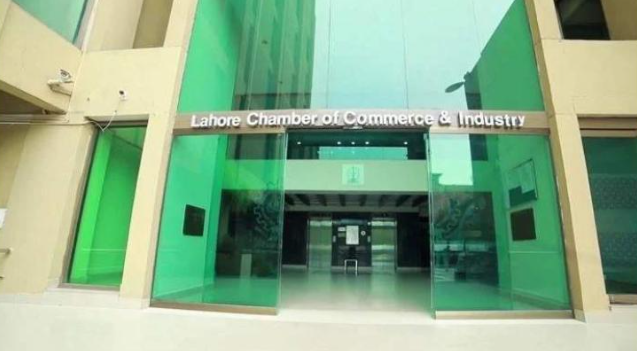
LAHORE — Iranian Consul General Mehran Movahedfar and Lahore Chamber of Commerce and Industry (LCCI) President Faheem Ur Rehman Saigol inaugurated the Wall of Iqbal and an Iqbal Corner at the LCCI building on Tuesday. This initiative aims to promote the philosophical and literary contributions of Allama Iqbal, a revered poet and philosopher in Pakistan. What Happened The Wall of Iqbal, unveiled at the LCCI, is a dedicated space to honor the legacy of Allama Iqbal, who played a pivotal role in inspiring the Pakistan Movement. The inauguration ceremony was attended by various dignitaries, business leaders, and members of the LCCI. The event highlighted the cultural and historical ties between Pakistan and Iran, as both countries share a rich heritage of Persian literature and philosophy. Mehran Movahedfar, the Iranian Consul General, expressed his admiration for Iqbal’s work, stating, “Iqbal’s poetry transcends borders and continues to inspire millions across the globe.” He emphasized the importance of cultural exchanges in strengthening bilateral relations between Iran and Pakistan. LCCI President Faheem Ur Rehman Saigol noted that the Wall of Iqbal and the Iqbal Corner are part of the chamber’s efforts to celebrate the intellectual legacy of Iqbal. “This initiative will serve as a source of inspiration for the business community and the youth, encouraging them to learn from Iqbal’s visionary ideas,” Saigol remarked. The Wall of Iqbal features portraits and quotes from Iqbal’s works, while the Iqbal Corner is designed as a reading space with books and literature related to Iqbal’s philosophy. This initiative is expected to attract scholars, students, and enthusiasts of Iqbal’s work, fostering a deeper understanding of his contributions to philosophy and literature. Background Allama Muhammad Iqbal, often referred to as the “Poet of the East,” was a prominent philosopher, poet, and politician in British India who is regarded as having inspired the Pakistan Movement. His poetry, primarily in Persian and Urdu, is known for its deep philosophical themes and advocacy for self-realization and spiritual upliftment. The Lahore Chamber of Commerce and Industry, established in 1923, is one of Pakistan’s oldest and most influential business associations. It plays a crucial role in promoting trade and commerce in the region, serving as a bridge between the government and the business community. The relationship between Pakistan and Iran is historically rooted in cultural and linguistic ties, with Persian literature and poetry being a significant part of the shared heritage. Initiatives like the Wall of Iqbal aim to reinforce these connections and promote mutual understanding. Why It Matters The inauguration of the Wall of Iqbal is significant for several reasons. Culturally, it underscores the enduring influence of Iqbal’s philosophy on both Pakistani and Iranian societies. By promoting his work, the LCCI aims to inspire future generations to engage with Iqbal’s ideas, which emphasize self-awareness, unity, and progress. Economically, the event highlights the role of cultural diplomacy in enhancing bilateral relations. By fostering cultural exchanges, Pakistan and Iran can strengthen their economic ties, potentially leading to increased trade and collaboration in various sectors. Politically, the initiative serves as a reminder of the historical connections between the two nations. As regional neighbors, Pakistan and Iran share strategic interests, and cultural initiatives like this can contribute to a more stable and cooperative relationship. For the business community, the Wall of Iqbal represents a fusion of cultural heritage and modern enterprise. It encourages entrepreneurs to draw inspiration from Iqbal’s vision of self-reliance and innovation, which are essential for economic growth and development. Key Takeaways The Wall of Iqbal was inaugurated by Iranian Consul General Mehran Movahedfar and LCCI President Faheem Ur Rehman Saigol. The initiative aims to promote the philosophical and literary contributions of Allama Iqbal. The event highlights cultural and historical ties between Pakistan and Iran. The Wall of Iqbal features portraits and quotes, while the Iqbal Corner offers literature related to Iqbal’s work. The initiative is expected to enhance cultural diplomacy and strengthen bilateral relations. Source Attribution This article is based on official government statements, press releases, and public communications from relevant authorities. Author: NEN Editorial Desk | Editor: NEN Newsroom | Fact Checked By: NEN Editorial Team Author: NEN Editorial Desk  |  Editor: NEN Newsroom  |  Last Updated: September 22, 2026  |  Source: NEN Reporter This article was produced by the NEN Editorial Desk in accordance with NEN Agency’s Editorial Policy and Fact-Checking Policy.

Scroll to Top