

Pakistan

News related to Pakistan in Pakistan and around the world.

Pakistan

Pakistan Cricket Team Begins Pre-Series Camp for West Indies Tour

RAWALPINDI — Pakistan’s national cricket team has commenced preparations for their upcoming Test series against the West Indies, with a pre-series training camp that began on Thursday at the Rawalpindi Cricket Stadium. The camp is designed to ready the squad for the two-match series, which is part of the ICC World Test Championship. What Happened The national Test squad gathered at the Rawalpindi Cricket Stadium for an intensive training session under the guidance of the coaching staff. Head coach Sarfaraz Ahmed, batting coach Asad Shafiq, and bowling coach Umar Gul led the three-hour session, focusing on batting, bowling, and fielding drills. The training aimed to fine-tune the players’ skills and enhance their readiness for the upcoming matches. Test captain Babar Azam, along with his teammates, engaged in extensive net sessions on the practice wickets. The team is intensifying its preparations as they gear up for the series, which will see them face the West Indies in two Test matches. The first Test is scheduled to take place at the Brian Lara Cricket Academy in Tarouba, and the second at the Queen’s Park Oval in Port of Spain. To further assess the players’ match readiness, the Pakistan Test team will participate in a two-day intra-squad scenario match on Friday and Saturday. This exercise is intended to provide the players with valuable game practice and to evaluate their performance under match conditions. Background The upcoming series in the West Indies is a critical part of the ICC World Test Championship, a tournament that adds context and stakes to Test cricket. Pakistan’s performance in this series will contribute to their standings in the championship, which is contested by the world’s top Test-playing nations. Historically, Pakistan has had a competitive record against the West Indies in Test cricket. The two teams have faced each other numerous times, with Pakistan often emerging as a formidable opponent. The last time Pakistan toured the West Indies for a Test series was in 2021, where they managed to secure a series win. The team’s preparation is crucial, given the conditions in the Caribbean, which can be challenging due to the pitches and weather. The coaching staff’s focus on all aspects of the game is aimed at ensuring that the players are well-equipped to handle these challenges. Why It Matters The Test series against the West Indies holds significant importance for Pakistan’s cricket ambitions. Success in this series will not only enhance their position in the ICC World Test Championship standings but also boost the team’s morale and confidence. For the players, performing well on an international stage provides opportunities to solidify their places in the national team and gain recognition. Economically, a successful tour can increase viewership and sponsorships, benefiting the Pakistan Cricket Board (PCB) and the sport’s development in the country. The series is also an opportunity for Pakistan to showcase its cricketing talent on a global platform, reinforcing its reputation as a cricketing nation. Socially, cricket is a unifying force in Pakistan, and the national team’s performance can significantly impact public morale. A successful series against the West Indies could inspire young cricketers and fans alike, fostering a deeper engagement with the sport. Key Takeaways Pakistan’s national cricket team has begun a pre-series training camp for the upcoming Test series against the West Indies. The training session, led by head coach Sarfaraz Ahmed, focused on batting, bowling, and fielding to prepare the squad. The Test series is part of the ICC World Test Championship and will take place from July 25 to August 10. The team will play a two-day intra-squad match to assess match readiness before the series. The series is crucial for Pakistan’s standings in the ICC World Test Championship and has significant economic and social implications. Source Attribution This article is based on official government statements, press releases, and public communications from relevant authorities. Author: NEN Editorial Desk | Editor: NEN Newsroom | Fact Checked By: NEN Editorial Team Author: NEN Editorial Desk  |  Editor: NEN Newsroom  |  Last Updated: July 09, 2026  |  Source: NEN Reporter This article was produced by the NEN Editorial Desk in accordance with NEN Agency’s Editorial Policy and Fact-Checking Policy.

Pakistan

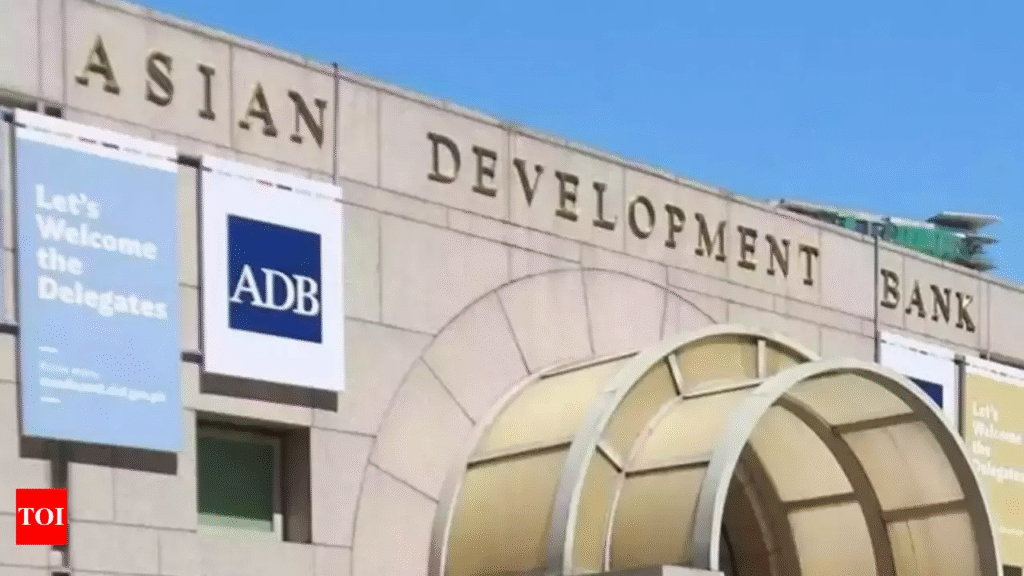
Pakistan’s Economy Expands by 3.7% in Fiscal Year 2025-26, Reports ADB

ISLAMABAD — The Asian Development Bank (ADB) announced on Thursday that Pakistan’s economy experienced a growth rate of 3.7 percent during the fiscal year 2025-26. This growth was primarily driven by robust performances in the industrial and services sectors, alongside moderate improvements in agriculture. What Happened The ADB’s report highlighted that Pakistan’s economic growth in the fiscal year 2025-26 was bolstered by significant contributions from the industrial sector, which saw increased activity and investment. The services sector also played a crucial role, with expansions in areas such as telecommunications, finance, and retail. Meanwhile, the agricultural sector, although not as dynamic as the others, managed to achieve modest gains, contributing to the overall economic performance. The report noted that the industrial sector benefited from improved energy supply and government incentives aimed at boosting manufacturing output. The services sector, on the other hand, capitalized on technological advancements and increased consumer demand. Agriculture, while facing challenges such as water scarcity and climate change impacts, still managed to support the economy through enhanced crop yields and better farming practices. ADB’s assessment also pointed out that the government of Pakistan implemented several policy measures to stabilize the economy, including fiscal consolidation efforts and structural reforms aimed at improving the business environment. These measures, coupled with international financial support, helped in sustaining economic growth during the fiscal year. Background Pakistan’s economy has faced numerous challenges over the past decade, including political instability, security concerns, and external economic shocks. In recent years, the government has focused on implementing reforms to stabilize the economy and promote sustainable growth. The fiscal year 2025-26 marks a period of recovery following the economic disruptions caused by the COVID-19 pandemic, which severely impacted global and domestic markets. The Asian Development Bank has been a key partner in Pakistan’s development journey, providing financial assistance and technical support for various projects aimed at infrastructure development, energy security, and social sector improvements. The ADB’s annual economic assessments are considered crucial for understanding the country’s economic trajectory and planning future policies. Why It Matters The reported economic growth of 3.7 percent is significant for Pakistan as it indicates a positive trend towards economic recovery and stability. This growth rate, while modest compared to regional peers, reflects the resilience of Pakistan’s economy in the face of numerous challenges. It also underscores the effectiveness of government policies and international support in steering the country towards a path of sustainable development. For the citizens of Pakistan, economic growth translates into potential improvements in living standards, job creation, and increased opportunities for businesses. A thriving industrial sector can lead to more employment opportunities, while a robust services sector can enhance access to essential services such as banking, healthcare, and education. Furthermore, improvements in agriculture can ensure food security and support rural livelihoods. On a broader scale, sustained economic growth can enhance Pakistan’s standing in the international community, attracting foreign investment and strengthening trade relations. It also provides the government with more resources to invest in critical areas such as infrastructure, education, and healthcare, further supporting long-term development goals. Key Takeaways Pakistan’s economy grew by 3.7 percent in fiscal year 2025-26, as reported by the ADB. The industrial and services sectors were the main drivers of this economic growth. Government policy measures and international support played a crucial role in stabilizing the economy. Economic growth has positive implications for job creation, living standards, and foreign investment. The ADB continues to be a vital partner in Pakistan’s economic development efforts. Source Attribution This article is based on official statements and reports from the Asian Development Bank and relevant government communications. Author: NEN Editorial Desk | Editor: NEN Newsroom | Fact Checked By: NEN Editorial Team Author: NEN Editorial Desk  |  Editor: NEN Newsroom  |  Last Updated: July 09, 2026  |  Source: NEN Reporter This article was produced by the NEN Editorial Desk in accordance with NEN Agency’s Editorial Policy and Fact-Checking Policy.

Pakistan

CDNS Targets Rs1.5 Trillion Savings for Fiscal Year 2026-27

ISLAMABAD — The Central Directorate of National Savings (CDNS) has announced an ambitious target to mobilize Rs1.5 trillion in savings for the fiscal year 2026-27. This initiative aims to bolster the country’s savings culture and enhance financial inclusion by leveraging the strong public confidence in government-backed savings schemes. What Happened The CDNS, a key institution under Pakistan’s Ministry of Finance, has set a savings target of Rs1.5 trillion for the fiscal year 2026-27. This goal reflects the government’s commitment to strengthening the national savings framework and providing secure investment opportunities to the public. The CDNS’s decision comes in response to the growing demand for reliable savings schemes, which are seen as a safe haven for individual and institutional investors alike. According to a statement from the CDNS, the organization plans to achieve this target by introducing new savings products and enhancing existing ones to cater to a broader audience. The focus will be on offering competitive returns, ensuring transparency, and maintaining the trust of investors. “Our aim is to encourage more citizens to save and invest in government-backed schemes, thus contributing to the country’s economic stability,” a CDNS official remarked. The CDNS has been instrumental in mobilizing savings from the public, which are then used to fund various government expenditures. The savings schemes offered by the CDNS are considered a vital tool for financial inclusion, providing an opportunity for individuals from all walks of life to participate in the national economy. Background The Central Directorate of National Savings has a long history of facilitating savings in Pakistan. Established in 1873, it has evolved over the years to become a key player in the country’s financial sector. The CDNS offers a range of savings products, including prize bonds, savings accounts, and pension schemes, designed to meet the diverse needs of the population. Historically, the CDNS has played a crucial role in supporting government finances by channeling public savings into development projects and other state expenditures. With a network of over 375 branches nationwide, the CDNS is one of the largest financial institutions in Pakistan, serving millions of customers. In recent years, the CDNS has focused on modernizing its operations, introducing digital platforms, and enhancing customer service to attract more investors. These efforts have been instrumental in maintaining the organization’s relevance in a rapidly changing financial landscape. Why It Matters The CDNS’s target of Rs1.5 trillion in savings for the fiscal year 2026-27 is significant for several reasons. Economically, it represents a substantial pool of funds that can be utilized for national development projects, reducing reliance on external borrowing. This, in turn, can help stabilize the country’s financial position and contribute to sustainable economic growth. Socially, the initiative promotes a culture of savings among the population, encouraging financial discipline and long-term planning. By offering secure and attractive investment options, the CDNS empowers individuals to take charge of their financial futures, which can lead to improved living standards and reduced poverty levels. Politically, the success of the CDNS in achieving its savings target could bolster public confidence in government institutions, demonstrating their ability to manage public funds effectively. This could have a positive impact on the overall trust in the government, which is crucial for maintaining social cohesion and political stability. Key Takeaways The CDNS has set a savings target of Rs1.5 trillion for FY2026-27 to enhance financial inclusion. The initiative aims to strengthen Pakistan’s savings culture and provide secure investment options. The CDNS plans to introduce new products and improve existing ones to achieve its target. The savings mobilized will support national development projects and reduce external borrowing. The success of this initiative could enhance public confidence in government institutions. Source Attribution This article is based on official government statements, press releases, and public communications from relevant authorities. Author: NEN Editorial Desk | Editor: NEN Newsroom | Fact Checked By: NEN Editorial Team Author: NEN Editorial Desk  |  Editor: NEN Newsroom  |  Last Updated: July 09, 2026  |  Source: NEN Reporter This article was produced by the NEN Editorial Desk in accordance with NEN Agency’s Editorial Policy and Fact-Checking Policy.

Pakistan

PSX Closes Lower, KSE-100 Index Falls Over 369 Points

ISLAMABAD — The Pakistan Stock Exchange (PSX) experienced a downturn on Thursday, with the benchmark KSE-100 Index shedding 369.69 points, or 0.20 percent, to close at 181,259.68 points. This decline comes as investors remain cautious amid ongoing economic uncertainties. What Happened The PSX’s KSE-100 Index, a key indicator of market performance, ended the trading session on a negative note, dropping from the previous day’s close of 181,629.37 points. The market’s bearish trend was attributed to a combination of factors, including investor concerns over the country’s economic stability and the global financial environment. Market analysts noted that trading volumes were relatively low, indicating a lack of investor confidence. “The market is reacting to the current economic challenges, including inflationary pressures and fiscal deficits,” said a senior market analyst. “Investors are adopting a wait-and-see approach, which is reflected in the subdued trading activity.” Sector-wise, the decline was broad-based, with major sectors such as banking, cement, and energy witnessing significant sell-offs. The banking sector, in particular, faced pressure as investors anticipated potential policy changes that could impact profitability. Similarly, the cement sector saw declines due to concerns over rising input costs and reduced construction activity. Despite the overall negative sentiment, some stocks managed to post gains, driven by company-specific news and developments. However, these gains were insufficient to offset the broader market decline. Background The Pakistan Stock Exchange has faced a challenging environment in recent months, with the KSE-100 Index experiencing volatility due to both domestic and international factors. The country’s economic situation, marked by high inflation, a depreciating currency, and fiscal challenges, has weighed heavily on investor sentiment. Globally, financial markets have been impacted by geopolitical tensions, fluctuating oil prices, and changes in monetary policies by major economies. These factors have contributed to uncertainty and risk aversion among investors, further affecting markets like the PSX. The government has been implementing various measures to stabilize the economy, including negotiations with international financial institutions for support packages and policy reforms aimed at boosting economic growth. However, the results of these efforts are yet to fully materialize, keeping market participants cautious. Why It Matters The performance of the Pakistan Stock Exchange is a barometer of the country’s economic health and investor confidence. The recent decline in the KSE-100 Index reflects underlying concerns about Pakistan’s economic trajectory and the challenges it faces in achieving sustainable growth. For the average citizen, the stock market’s performance can have indirect effects on their financial well-being. A bearish market can impact retirement funds, savings, and investments, leading to reduced consumer spending and economic activity. This, in turn, can slow down economic recovery efforts and affect employment opportunities. On a broader scale, sustained bearish trends in the stock market can deter foreign investment, which is crucial for economic development. Investors seek stable and predictable environments, and prolonged market volatility can lead to capital flight, further exacerbating economic challenges. Policymakers are closely monitoring the situation, as the stock market’s performance is intertwined with economic policies and reforms. Effective measures to address economic challenges and restore investor confidence are essential to reversing the bearish trend and fostering a more robust economic environment. Key Takeaways The KSE-100 Index fell by 369.69 points, closing at 181,259.68 points. Investor concerns over economic stability contributed to the market’s bearish trend. Major sectors, including banking and cement, experienced significant sell-offs. Global financial uncertainties and domestic economic challenges continue to impact investor sentiment. Policymakers are urged to implement effective measures to restore market confidence. Source Attribution This article is based on official government statements, press releases, and public communications from relevant authorities. Author: NEN Editorial Desk | Editor: NEN Newsroom | Fact Checked By: NEN Editorial Team Author: NEN Editorial Desk  |  Editor: NEN Newsroom  |  Last Updated: July 09, 2026  |  Source: NEN Reporter This article was produced by the NEN Editorial Desk in accordance with NEN Agency’s Editorial Policy and Fact-Checking Policy.

Pakistan

Rupee Records Marginal Gain Against US Dollar in Interbank Market

ISLAMABAD — The Pakistani Rupee experienced a slight appreciation against the US Dollar on Thursday, gaining 01 paisa in interbank trading. The currency closed at Rs 278.06 compared to the previous day’s closing rate of Rs 278.07, according to the Forex Association of Pakistan (FAP). What Happened On Thursday, the Pakistani Rupee showed a minor improvement against the US Dollar in the interbank market. This change brought the closing rate to Rs 278.06, a 01 paisa increase from the previous day, which had seen the Rupee at Rs 278.07. The Forex Association of Pakistan provided these figures, indicating the Rupee’s slight upward movement. In the open market, the buying and selling rates for the US Dollar were recorded at Rs 278.95 and Rs 279.10, respectively. These rates reflect the ongoing fluctuations in the currency market as traders and investors respond to various economic signals. Other currencies also saw changes in their exchange rates. The Euro appreciated by Rs 0.25, closing at Rs 317.93, up from the previous day’s Rs 317.68, as reported by the State Bank of Pakistan (SBP). Meanwhile, the Japanese Yen remained stable, closing at Rs 1.71. The British Pound experienced a significant increase of Rs 1.30, ending the day at Rs 373.06 compared to Rs 371.76 the day before. The Emirate Dirham’s exchange rate remained unchanged at Rs 75.71, while the Saudi Riyal saw a slight decrease of 01 paisa, closing at Rs 74.05. Background The Pakistani Rupee has been experiencing fluctuations due to various economic factors, including inflation, trade deficits, and foreign exchange reserves. Historically, the Rupee’s value against the US Dollar has been a critical indicator of Pakistan’s economic health. The State Bank of Pakistan regularly intervenes in the foreign exchange market to stabilize the Rupee and manage inflationary pressures. In recent years, Pakistan has faced economic challenges, including a widening current account deficit and pressure on foreign exchange reserves. These factors have contributed to the volatility of the Rupee in the foreign exchange market. Why It Matters The minor appreciation of the Rupee against the US Dollar is significant for several reasons. Firstly, it provides a momentary relief for importers who rely on a stronger Rupee to reduce the cost of imported goods. A stable or appreciating Rupee can help manage inflationary pressures by keeping import prices in check. For the general public, a stable currency can lead to more predictable pricing for goods and services, which is crucial in a country where inflation has been a persistent issue. Consumers can benefit from lower prices on imported goods, which can impact their purchasing power and overall economic well-being. On a broader scale, the Rupee’s performance can influence investor confidence in Pakistan’s economy. A stable or appreciating currency can attract foreign investment, as it reflects economic stability and sound fiscal management. This, in turn, can lead to job creation and economic growth. However, the Rupee’s minor gain should be viewed in the context of ongoing economic challenges. The government and the central bank continue to face pressures to implement policies that support sustainable economic growth and stabilize the currency in the long term. Key Takeaways The Pakistani Rupee appreciated by 01 paisa against the US Dollar, closing at Rs 278.06 in interbank trading. The open market rates for the US Dollar were recorded at Rs 278.95 for buying and Rs 279.10 for selling. The Euro and British Pound saw increases, while the Japanese Yen and Emirate Dirham remained stable. The Rupee’s performance is crucial for managing inflation and attracting foreign investment. Ongoing economic challenges continue to impact the Rupee’s stability and require careful policy management. Source Attribution This article is based on official government statements, press releases, and public communications from relevant authorities. Author: NEN Editorial Desk | Editor: NEN Newsroom | Fact Checked By: NEN Editorial Team Author: NEN Editorial Desk  |  Editor: NEN Newsroom  |  Last Updated: July 09, 2026  |  Source: NEN Reporter This article was produced by the NEN Editorial Desk in accordance with NEN Agency’s Editorial Policy and Fact-Checking Policy.
Pakistan

Federal Ombudsperson Imposes Rs 2.7 Million Penalty in Harassment Case

ISLAMABAD — The Federal Ombudsperson for Protection against Harassment has levied a Rs 2.7 million penalty in a workplace harassment case involving five employees, marking a significant enforcement of workplace conduct regulations. The decision mandates that Rs 2.16 million be awarded to the complainant, while Rs 540,000 is to be deposited into the national treasury. What Happened The Federal Ombudsperson for Protection against Harassment recently concluded a case involving allegations of workplace harassment by five employees. Following a thorough investigation, the Ombudsperson imposed a cumulative penalty of Rs 2.7 million. The judgement stipulates that Rs 2.16 million of this amount should be paid directly to the complainant as compensation for the distress and professional setbacks endured. Additionally, Rs 540,000 is directed to be deposited into the national treasury, underscoring the dual focus on individual restitution and public accountability. The case, which has been under review for several months, involved detailed testimonies and evidence from both the complainant and the accused parties. The Ombudsperson’s office, which is tasked with addressing issues of harassment in workplaces across Pakistan, highlighted the importance of maintaining a safe and respectful work environment. The penalties reflect the severity of the misconduct and serve as a deterrent to similar behavior in the future. In a statement, the Ombudsperson emphasized the need for organizations to adhere strictly to the guidelines set forth in the Protection against Harassment of Women at the Workplace Act of 2010. The office reiterated its commitment to ensuring that victims of harassment receive justice and that perpetrators are held accountable for their actions. Background The Protection against Harassment of Women at the Workplace Act, enacted in 2010, provides a legal framework for addressing harassment in the workplace in Pakistan. It mandates the establishment of inquiry committees within organizations to address complaints and outlines the role of the Federal Ombudsperson in overseeing these processes. This case is one of many that the Ombudsperson’s office handles annually, reflecting ongoing challenges in workplace environments across the country. Historically, workplace harassment has been a significant issue in Pakistan, with many cases going unreported due to fear of retaliation or lack of awareness about legal recourse. The establishment of the Ombudsperson’s office has been a critical step in providing victims with a formal mechanism to seek justice and has encouraged more individuals to come forward with their complaints. Why It Matters The imposition of a substantial penalty in this case underscores the Pakistani government’s commitment to enforcing workplace harassment laws. It serves as a reminder to employers and employees alike about the importance of maintaining a respectful and safe work environment. For the complainant, the decision not only provides financial compensation but also validates their experience, offering a sense of justice and closure. Economically, such penalties can impact organizations by highlighting the potential costs of non-compliance with harassment laws. This may encourage businesses to invest more in training and preventive measures to avoid similar situations. Socially, the case can empower other victims of harassment to come forward, knowing that there are mechanisms in place to support them and that their grievances will be taken seriously. Internationally, Pakistan’s efforts to address workplace harassment can improve its image as a country committed to upholding human rights and gender equality. This can have positive implications for foreign investment and international partnerships, as businesses and governments increasingly prioritize ethical practices in their engagements. Key Takeaways The Federal Ombudsperson imposed a Rs 2.7 million penalty in a harassment case involving five employees. Rs 2.16 million is to be paid to the complainant, with Rs 540,000 going to the national treasury. The case highlights the enforcement of the Protection against Harassment of Women at the Workplace Act of 2010. The decision may encourage more victims to report harassment, knowing there is legal recourse. Addressing workplace harassment can positively impact Pakistan’s international image and economic environment. Source Attribution This article is based on official government statements and public communications from relevant authorities. Author: NEN Editorial Desk | Editor: NEN Newsroom | Fact Checked By: NEN Editorial Team Author: NEN Editorial Desk  |  Editor: NEN Newsroom  |  Last Updated: July 09, 2026  |  Source: NEN Reporter This article was produced by the NEN Editorial Desk in accordance with NEN Agency’s Editorial Policy and Fact-Checking Policy.

Pakistan

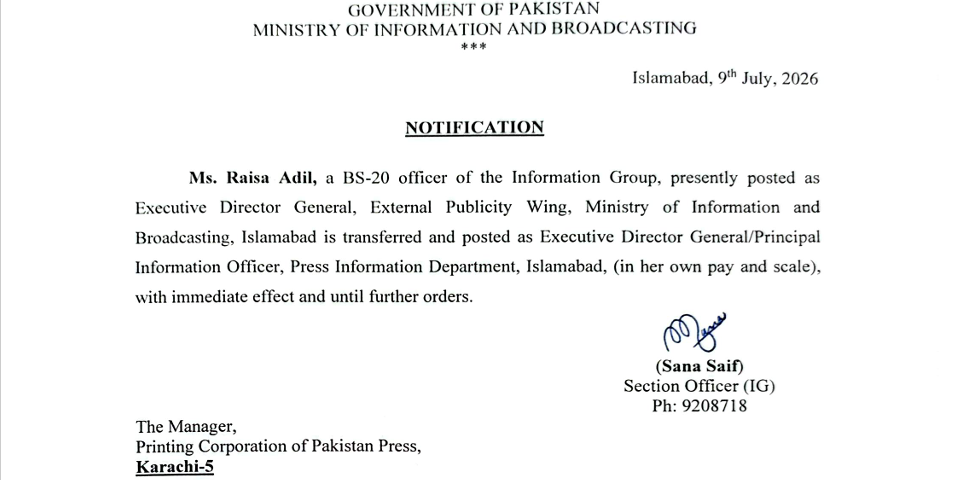
Raisa Adil Appointed As Principal Information Officer By Federal Government

ISLAMABAD — The federal government has appointed Raisa Adil as the new Principal Information Officer (PIO), according to a notification issued by the Ministry of Information and Broadcasting on Thursday. Raisa Adil, a BS-20 officer of the Information Group, was previously serving as the Executive Director General of the External Publicity Wing (EPW). What Happened The Ministry of Information and Broadcasting announced the appointment of Raisa Adil as the Principal Information Officer, a key position within the Press Information Department (PID), Islamabad. The notification highlighted that the appointment was made in her current pay and scale, effective immediately and will continue until further orders. Raisa Adil’s transfer from her role as Executive Director General of the EPW marks a significant transition within the department. Raisa Adil’s new role as PIO involves overseeing the dissemination of government information to the public and managing the press relations of the federal government. The PIO is responsible for ensuring that accurate and timely information is provided to the media and the public, a role that is crucial in maintaining transparency and effective communication between the government and citizens. The position of Principal Information Officer is pivotal, as it involves coordinating with various government departments to ensure that the public is informed about government policies, initiatives, and decisions. Raisa Adil’s extensive experience in the Information Group is expected to aid her in fulfilling these responsibilities effectively. Background The Press Information Department (PID) is a vital arm of the Ministry of Information and Broadcasting, tasked with the responsibility of managing the government’s communication strategy. The role of the Principal Information Officer is to act as a bridge between the government and the media, facilitating the flow of information and ensuring that the government’s narrative is accurately represented in the public domain. Raisa Adil’s appointment comes at a time when the government is focusing on enhancing its communication strategy to better engage with the public. The role of PIO has historically been held by senior officers of the Information Group, who bring a wealth of experience in media management and public relations. Prior to her appointment as PIO, Raisa Adil served as the Executive Director General of the External Publicity Wing, where she was responsible for managing Pakistan’s image abroad and handling international media relations. Her experience in this role is expected to contribute to her new responsibilities as PIO. Why It Matters The appointment of Raisa Adil as Principal Information Officer is significant for several reasons. Firstly, it underscores the government’s commitment to strengthening its communication infrastructure by placing experienced officers in key positions. In an era where information dissemination is rapid and often unregulated, the role of the PIO becomes even more critical in ensuring that the public receives accurate and timely information. Furthermore, Raisa Adil’s appointment is a step towards enhancing gender representation in senior government positions. As a female officer in a prominent role, her appointment is likely to inspire other women in the civil service and contribute to gender equality in government roles. The role of the PIO is also crucial in shaping the public’s perception of government policies and actions. Effective communication can help build public trust and support for government initiatives, which is essential for the successful implementation of policies. By appointing a seasoned officer like Raisa Adil, the government aims to enhance its communication strategy and engage more effectively with the public. Key Takeaways Raisa Adil has been appointed as the new Principal Information Officer by the federal government. She previously served as the Executive Director General of the External Publicity Wing. The appointment is effective immediately and will continue until further orders. The role of PIO is crucial for government communication and public engagement. Raisa Adil’s appointment enhances gender representation in senior government roles. Source Attribution This article is based on official government statements, press releases, and public communications from relevant authorities. Author: NEN Editorial Desk | Editor: NEN Newsroom | Fact Checked By: NEN Editorial Team Author: NEN Editorial Desk  |  Editor: NEN Newsroom  |  Last Updated: July 09, 2026  |  Source: Press Release from Government of Pakistan This article was produced by the NEN Editorial Desk in accordance with NEN Agency’s Editorial Policy and Fact-Checking Policy.

Pakistan

Supreme Court Mandates Verbatim Recording of Witness Testimonies

ISLAMABAD — The Supreme Court of Pakistan has mandated that trial courts must record witness testimonies verbatim, emphasizing the necessity for accurate and transparent judicial proceedings. This directive aims to uphold the principles of a fair trial by ensuring that the evidence presented in court is documented precisely as delivered. What Happened The Supreme Court issued a ruling clarifying the legal and constitutional obligations of trial courts in Pakistan regarding the recording of witness testimonies. The court underscored the importance of capturing testimonies verbatim to maintain the integrity of the judicial process. This decision was made to ensure that any errors in the recording of testimonies are promptly identified and rectified, thereby safeguarding the rights of individuals to a fair trial. In its ruling, the Supreme Court highlighted that the accurate documentation of witness statements is crucial for the transparency of judicial proceedings. The court noted that discrepancies in recorded testimonies could lead to miscarriages of justice, as the evidence forms the foundation upon which judicial decisions are based. Therefore, the court stressed the need for trial courts to adhere strictly to this requirement. The ruling comes in response to concerns about the potential for inaccuracies in the recording of witness testimonies, which can arise from various factors, including human error or technical issues. By mandating verbatim recording, the Supreme Court aims to eliminate these discrepancies and enhance the credibility of the judicial process. Background The Supreme Court’s decision is rooted in the constitutional provisions that guarantee the right to a fair trial. Article 10-A of the Constitution of Pakistan enshrines the right to fair trial and due process, which includes the accurate recording of evidence. This ruling reinforces previous legal frameworks and judicial precedents that emphasize the importance of transparency and accuracy in judicial proceedings. Historically, the Pakistani judiciary has faced challenges related to the documentation of court proceedings, including issues of incomplete or inaccurate records. Such challenges have often led to appeals and retrials, burdening the judicial system and delaying justice. The Supreme Court’s directive seeks to address these longstanding issues by ensuring that trial courts maintain a high standard of accuracy in recording witness testimonies. Why It Matters The Supreme Court’s ruling has significant implications for the judicial system in Pakistan. By mandating verbatim recording of witness testimonies, the court aims to enhance the reliability and integrity of judicial proceedings. This move is expected to reduce the likelihood of errors in the documentation of evidence, thereby minimizing the risk of wrongful convictions or acquittals. For citizens, this ruling represents a step towards greater accountability and transparency in the judicial process. Accurate recording of testimonies ensures that the voices of witnesses are heard and preserved in their entirety, which is crucial for the delivery of justice. This decision also aligns with international standards for fair trial practices, potentially improving Pakistan’s standing in global judicial rankings. From an institutional perspective, the ruling places an additional responsibility on trial courts to invest in resources and training necessary for implementing verbatim recording practices. This may involve upgrading recording equipment and ensuring that court staff are adequately trained to handle the technical aspects of verbatim documentation. Key Takeaways The Supreme Court of Pakistan has mandated trial courts to record witness testimonies verbatim. This decision aims to ensure fair trial practices by maintaining accurate records of evidence. The ruling addresses historical challenges of inaccuracies in court documentation. Verbatim recording aligns with constitutional rights to fair trial and due process. The directive may necessitate resource and training investments by trial courts. Source Attribution This article is based on official statements and public communications from the Supreme Court of Pakistan. Author: NEN Editorial Desk | Editor: NEN Newsroom | Fact Checked By: NEN Editorial Team Author: NEN Editorial Desk  |  Editor: NEN Newsroom  |  Last Updated: July 09, 2026  |  Source: Press Release from Government of Pakistan This article was produced by the NEN Editorial Desk in accordance with NEN Agency’s Editorial Policy and Fact-Checking Policy.

Pakistan

Sialkot to Introduce Eco-Friendly Electric Bus Service This Month

ISLAMABAD — Sialkot is poised to launch an environmentally friendly electric bus service later this month, aiming to provide residents with a cleaner, more comfortable, and cost-effective mode of public transportation, according to local officials. The service will operate on two major routes, enhancing urban mobility and reducing the city’s carbon footprint. What Happened The announcement of the electric bus service was made by officials on Thursday, highlighting the city’s commitment to sustainable urban development. The initiative is part of a broader effort to modernize public transportation systems across Pakistan, aligning with global trends towards greener transport solutions. The new fleet of electric buses will serve two primary routes within Sialkot, offering a significant upgrade to the current public transport options. These buses are designed to provide a more comfortable travel experience while also being economically viable for daily commuters. By shifting to electric buses, the city aims to reduce vehicular emissions, contributing to improved air quality and public health. Officials have emphasized that the introduction of electric buses is expected to lower operational costs compared to traditional diesel-powered buses. This cost-effectiveness is anticipated to translate into more affordable fares for passengers, thereby encouraging more residents to opt for public transport over private vehicles. Background Sialkot, known for its vibrant industrial sector, has been grappling with increasing traffic congestion and pollution, common challenges in many urban areas across Pakistan. The city’s decision to adopt electric buses is part of a national strategy to tackle these issues through sustainable solutions. In recent years, the Pakistani government has been actively promoting the adoption of electric vehicles (EVs) as part of its National Electric Vehicle Policy, which aims to have 30% of all vehicles in the country running on electricity by 2030. This policy is designed to reduce the country’s reliance on imported fossil fuels, decrease greenhouse gas emissions, and stimulate the local economy by fostering new industries related to EV manufacturing and infrastructure. Why It Matters The introduction of electric buses in Sialkot is a significant step towards achieving Pakistan’s environmental and economic goals. By reducing emissions, the city contributes to the national effort to combat climate change, which is increasingly affecting Pakistan through extreme weather events and rising temperatures. Economically, the shift to electric buses presents an opportunity to reduce the operational costs of public transportation. Electric buses typically require less maintenance and have lower fuel costs compared to their diesel counterparts. This can lead to reduced fares, making public transport more accessible to a broader segment of the population. Socially, the initiative is expected to improve the quality of life for Sialkot’s residents. Cleaner air resulting from reduced emissions can lead to better health outcomes, while the availability of reliable and affordable public transport can enhance mobility and reduce the reliance on personal vehicles, alleviating traffic congestion. On an international level, Pakistan’s move towards electric public transportation aligns with global efforts to reduce carbon footprints and promote sustainable urban development. It positions the country as a proactive player in the global transition to green energy solutions. Key Takeaways Sialkot will launch an electric bus service later this month on two major routes. The initiative aims to provide a cleaner, more comfortable, and affordable public transport option. This move aligns with Pakistan’s National Electric Vehicle Policy targeting 30% EV adoption by 2030. Electric buses are expected to reduce operational costs and improve air quality in the city. The project supports Pakistan’s broader environmental and economic objectives. Source Attribution This article is based on official government statements, press releases, and public communications from relevant authorities. Author: NEN Editorial Desk | Editor: NEN Newsroom | Fact Checked By: NEN Editorial Team Author: NEN Editorial Desk  |  Editor: NEN Newsroom  |  Last Updated: July 09, 2026  |  Source: NEN Reporter This article was produced by the NEN Editorial Desk in accordance with NEN Agency’s Editorial Policy and Fact-Checking Policy.

Pakistan

Havelian Ayub Bridge Reconstruction Advances with Rs1 Billion Funding

ISLAMABAD — The reconstruction of the Havelian Ayub Bridge, funded by a Rs1 billion grant, is progressing as the construction of an alternate road nears completion. This initiative aims to maintain traffic flow during the bridge’s renovation. What Happened The Havelian Ayub Bridge, a crucial infrastructure component in the region, is undergoing significant reconstruction funded by a Rs1 billion allocation approved by Prime Minister Shehbaz Sharif. The project is crucial for ensuring the continued flow of traffic and connectivity in the area. As part of the reconstruction efforts, an alternate road is being constructed to facilitate uninterrupted traffic during the bridge’s renovation. Construction work on the alternate route is advancing rapidly, with engineers and laborers working diligently to meet project timelines. The alternate road is expected to be completed soon, providing a temporary solution to the traffic disruptions caused by the bridge’s reconstruction. The completion of this road is a critical step in minimizing inconvenience for commuters and ensuring smooth transportation in the region. Officials have emphasized the importance of the bridge in connecting various parts of the region and supporting local economic activities. The reconstruction project is not only a response to the bridge’s aging infrastructure but also a proactive measure to enhance its capacity and safety standards. The project is expected to bolster regional connectivity and economic growth once completed. Background The Havelian Ayub Bridge has long been a vital link for commuters and transporters in the region, facilitating the movement of goods and people. Over the years, the bridge has experienced wear and tear, necessitating comprehensive reconstruction to ensure its structural integrity and safety. The decision to allocate Rs1 billion for its reconstruction underscores the government’s commitment to improving infrastructure and addressing public safety concerns. Historically, the bridge has played a significant role in regional trade and transportation, serving as a conduit for economic activities. Its strategic location has made it an essential infrastructure asset, and its reconstruction is expected to enhance its role in supporting local economies and communities. Why It Matters The reconstruction of the Havelian Ayub Bridge is significant for several reasons. Economically, the bridge is a critical component of the region’s transportation network, facilitating trade and commerce. By ensuring the bridge’s structural integrity and safety, the project supports local businesses and economic activities that rely on efficient transportation routes. Socially, the bridge serves as a vital link for communities, enabling access to essential services such as education and healthcare. The alternate road construction during the bridge’s reconstruction is crucial in minimizing disruptions to daily life and maintaining access to these services. Politically, the government’s investment in the bridge’s reconstruction reflects its commitment to infrastructure development and public safety. The project demonstrates a proactive approach to addressing infrastructure challenges and enhancing regional connectivity, which is vital for national development. Internationally, the reconstruction aligns with broader efforts to improve infrastructure and connectivity in Pakistan, contributing to the country’s economic growth and development goals. By investing in critical infrastructure projects, Pakistan aims to enhance its competitiveness and attractiveness for investment. Key Takeaways The Havelian Ayub Bridge reconstruction is funded by a Rs1 billion grant approved by Prime Minister Shehbaz Sharif. An alternate road is being constructed to ensure uninterrupted traffic during the bridge’s renovation. The project aims to enhance regional connectivity and support local economic activities. The bridge reconstruction reflects the government’s commitment to infrastructure development and public safety. Completion of the alternate road is expected to minimize disruptions for commuters and maintain access to essential services. Source Attribution This article is based on official government statements, press releases, and public communications from relevant authorities. Author: NEN Editorial Desk | Editor: NEN Newsroom | Fact Checked By: NEN Editorial Team Author: NEN Editorial Desk  |  Editor: NEN Newsroom  |  Last Updated: July 09, 2026  |  Source: NEN Reporter This article was produced by the NEN Editorial Desk in accordance with NEN Agency’s Editorial Policy and Fact-Checking Policy.

Scroll to Top