Pakistan

News related to Pakistan in Pakistan and around the world.

Pakistan

PML-N, PPP Convene in Gilgit to Discuss Government Formation

Senior delegations from the Pakistan Muslim League-Nawaz (PML-N) and the Pakistan Peoples Party (PPP) convened in Gilgit on Wednesday. Their primary agenda was to discuss forming the next government in Gilgit-Baltistan. The focus was on coalition strategies in this strategically vital region. Recent elections in Gilgit-Baltistan have prompted both parties to explore potential coalition arrangements, aiming to ensure a stable administration. Leadership of Delegations The PML-N delegation was led by the Federal Minister for Kashmir Affairs, Gilgit-Baltistan, and SAFRON. This highlights the priority placed on achieving governance in the region. Meanwhile, senior PPP representatives actively participated, negotiating terms for a possible power-sharing deal. Key Negotiation Issues During the meeting, several critical topics regarding the Gilgit-Baltistan government formation were addressed: Distribution of ministerial portfolios between PML-N and PPP Power-sharing mechanisms for regional governance Terms of cooperation to ensure stable administration Timeline for forming the government in Gilgit-Baltistan Ongoing Closed-Door Talks Discussions on Wednesday did not result in a formal agreement. However, sources indicate that the PML-N and PPP negotiations continue behind closed doors. Both parties aim to establish a power-sharing arrangement that aligns with their leaderships’ approvals. Further negotiations are anticipated in the coming days. As the region awaits clarity on its future administration, both parties diligently work to finalize the coalition agreement. This outcome is crucial for governance in this strategically important part of Pakistan.

Pakistan

Dar, Egyptian FM Back Mediation Efforts for Regional Peace

High-Level Diplomatic Exchange Deputy Prime Minister and Foreign Minister Senator Mohammad Ishaq Dar recently engaged in a phone conversation with Egyptian Foreign Minister Badr Abdelatty. Their discussion centered on promoting regional peace and strengthening bilateral coordination. They expressed optimism about ongoing mediation efforts in the Middle East. The dialogue highlighted diplomatic strategies intended to reduce tensions and foster communication among conflicting parties. Key Outcomes of Diplomatic Dialogue Several commitments were established to advance peace efforts: Joint support for regional mediation tracks Emphasis on multilateral engagement for conflict resolution Shared goal of achieving lasting peace and stability Preference for diplomatic over confrontational approaches Commitment to Regional Stability The foreign ministers expressed hope that coordinated mediation initiatives would enhance regional peace and stability. Pakistan’s foreign ministry emphasized a mutual dedication to diplomatic solutions. They underscored the importance of multilateral engagement in resolving regional conflicts. Egypt continues to play an active role in diplomatic efforts to reduce tensions in neighboring areas. Strengthening Islamabad-Cairo Partnership This dialogue demonstrates the growing collaboration between Islamabad and Cairo in regional diplomacy. Many countries are actively pursuing mediation initiatives to ease tensions in the Middle East. The cooperation between Pakistan’s and Egypt’s foreign ministries highlights ongoing diplomatic endeavors. Both nations remain committed to addressing regional challenges through dialogue and negotiation rather than confrontation.

Pakistan

IRSA Releases 246,800 Cusecs Water From Rim Stations

ISLAMABAD — The Indus River System Authority (IRSA) has released 246,800 cusecs of water from various rim stations. This significant outflow follows an inflow of 229,000 cusecs into the system. The released water is crucial for fulfilling agricultural and domestic demands throughout Pakistan. Federal authorities manage this distribution to ensure fair allocation among provinces. Current Tarbela Dam Water Levels According to IRSA, the water level at Tarbela Dam on the River Indus is at 1,450.03 feet. This level is 50.03 feet above the dead level, ensuring a healthy storage capacity for the country’s needs. Tarbela Dam is vital to Pakistan’s water infrastructure. Federal authorities closely monitor the dam’s levels to maintain a consistent water supply to provinces and agricultural sectors. Management of Water Distribution The Indus River System Authority oversees the distribution of water from major dams and rim stations throughout Pakistan. As a federal entity, IRSA tracks daily inflows and outflows to ensure equitable distribution among provinces. Core Responsibilities of IRSA Monitoring reservoir levels daily at major dams Coordinating releases from rim stations Ensuring equitable water distribution among provinces Supporting agricultural irrigation needs Meeting domestic water supply requirements Provincial Water Allocation Efforts The recent water release from rim stations emphasizes ongoing distribution efforts. Federal water management officials closely observe reservoir levels to maintain seamless operations. These efforts address both agricultural and domestic needs nationwide. Through dedicated monitoring, IRSA ensures that provinces receive their designated water shares from the Indus River system. The authority collaborates with both federal and provincial governments to ensure a uniform water supply across all regions.

Pakistan

Tarar Urges Social Media Push to Mainstream Climate Change Discourse

ISLAMABAD — Federal Minister for Information and Broadcasting, Attaullah Tarar, has called for a cultural shift in public discussions on climate change. He stressed the importance of prioritizing environmental topics on social media, alongside viral content. Insights from the Green Journalism Conference Speaking at the International Conference on Green Journalism, Media, and Climate in Islamabad, Tarar emphasized public engagement in environmental conversations. These discussions often remain confined to specialized forums, limiting their impact on public awareness and government policy in Pakistan. The federal government recognizes that effective climate action relies on broad public involvement. Digital platforms can significantly influence policy support and drive essential behavioral changes. Pakistan’s Climate Vulnerability Tarar highlighted increasing concerns among officials about Pakistan’s susceptibility to climate-related disasters. The nation faces several environmental challenges threatening its people and economy: Devastating floods have displaced millions of citizens. Prolonged heatwaves impact both urban and rural areas. Extreme weather patterns disrupt agricultural yields. Boosting Awareness Through Digital Platforms Despite these urgent issues, climate change engagement is rare in Pakistan’s media landscape. Social media often focuses on trending topics rather than environmental discussions. Tarar insisted on the need to integrate climate change dialogue into mainstream discussions. Utilizing digital platforms is crucial for increasing awareness and galvanizing national efforts in environmental protection. Digital channels offer extensive reach and can educate the public about environmental conservation. The federal government plans to use these platforms to encourage behavioral change and bolster support for national policies.

Pakistan

PML-N, PPP Delegates Meet in Gilgit to Discuss Government Formation

GILGIT — Senior delegates from the Pakistan Muslim League-Nawaz (PML-N) and the Pakistan Peoples Party (PPP) met at a local hotel in Gilgit on Wednesday. The main agenda was to discuss the formation of the next government in Gilgit-Baltistan. Coalition Talks Between PML-N and PPP Leading the PML-N delegation was the Federal Minister for Kashmir Affairs, Gilgit-Baltistan, and SAFRON. The meeting aimed to explore potential coalition arrangements following recent regional elections that focused on governance and power-sharing. Discussions were detailed concerning how the provincial administration might be structured. Key Elements in Discussions The discussions between PML-N and PPP focused on several critical aspects necessary for establishing a coalition government in Gilgit-Baltistan: Power-sharing arrangements between PML-N and PPP Distribution of ministerial portfolios Governance framework for Gilgit-Baltistan Structure of the provincial administration Status of Coalition Negotiations While no formal agreement was reached, the meeting highlights ongoing negotiations between the parties. These discussions are crucial as PML-N and PPP aim to develop a stable government framework, significantly impacting the political landscape of Gilgit-Baltistan.

Pakistan

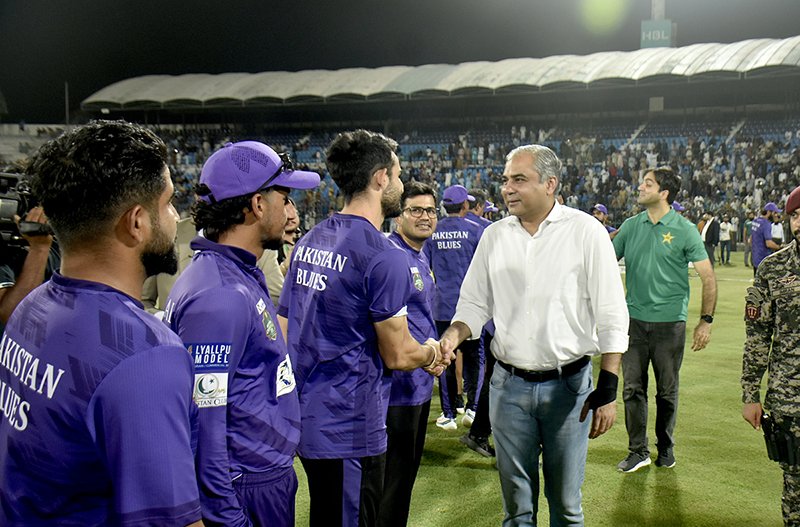
Naqvi Urges Tech-Driven Policing at National Police Academy Visit

ISLAMABAD — Interior Minister Mohsin Naqvi underscored the urgent need to modernize Pakistan’s police force using technology and professional excellence. He conveyed these sentiments during his visit to the National Police Academy in Islamabad. This initiative by the federal government aims to revolutionize law enforcement practices nationwide, affirming a commitment to comprehensive police reforms across all provinces. Focus on Modern Policing During his address to probationary Assistant Superintendents of Police, Naqvi outlined essential transformations for the police force. He identified two main priorities: Enhancing public service and community engagement Improving technical proficiency and adopting advanced methods The government’s commitment to raising professional standards was highlighted, urging officers to blend traditional values with innovative strategies. Upgrading Police Academy Facilities Naqvi reviewed several development projects aimed at enhancing the training environment at the academy. These facility upgrades target officers moving into supervisory roles. Improvements focus on expanding the academy’s capacity to offer top-tier police training, including enhanced classrooms, advanced equipment, and technology integration. These efforts align with international standards and demonstrate the government’s continuous investment in training. Integrating Technology in Law Enforcement Naqvi’s visit underscores the federal government’s broader commitment to modernizing Pakistan’s police force. This initiative emphasizes raising professional standards and building public trust in law enforcement. The modernization efforts focus on integrating technology into traditional policing, such as: Implementing digital crime reporting systems Utilizing data analytics to improve law enforcement efficiency Developing community policing platforms These reforms aim to create a police force that is both modern and community-focused, highlighting the importance of public service alongside technological advancements.

Pakistan

Dar, Turkey’s Fidan Urge Dialogue and Restraint Amid Regional Tensions

ISLAMABAD — Deputy Prime Minister and Foreign Minister Senator Mohammad Ishaq Dar engaged in a telephone conversation with Turkish Foreign Minister Hakan Fidan. They focused on the evolving regional situation, stressing the importance of dialogue and restraint to maintain peace and stability. Call for Regional De-escalation The ministers expressed optimism about reaching an early consensus among involved parties to ease regional tensions. Their discussions underscored shared concerns over rising conflicts threatening peace and security in the region. Main Discussion Points Strategies for de-escalation in current regional challenges Diplomatic solutions to prevent further escalation Coordinated approaches for maintaining peace and security Strengthening multilateral dialogue mechanisms Growth in Pakistan-Turkey Diplomatic Relations This conversation marks enhanced diplomatic engagement between Pakistan and Turkey amidst changing regional dynamics. Both nations maintain robust bilateral ties, often aligning on significant geopolitical developments. Recently, their relations have deepened, showing consistent support for each other on international issues like Kashmir and Cyprus. Strategic Partnerships Among Muslim Nations This interaction underscores the strategic partnership between these two Muslim-majority countries. Foreign Minister Dar and Turkish Foreign Minister Fidan regularly consult on regional issues of mutual interest. Their diplomatic framework enables the effective addressing of regional peace and security concerns. Unified stances on critical matters help shape regional policies, promoting stability across the Muslim world.

Pakistan

Pakistan National Assembly Session Suspended Over Lack of Quorum

ISLAMABAD — On Thursday, the Pakistan National Assembly session faced an abrupt suspension because of a quorum issue during Question Hour. This incident highlights ongoing problems with parliamentary attendance that affect federal legislative operations. Quorum Challenge Details During the session, Speaker Sardar Ayaz Sadiq was overseeing proceedings when MNA Iqbal Afridi pointed out that not enough members were present. The Speaker ordered an official count, confirming the lack of quorum, which resulted in the session’s suspension. Question Hour is crucial as it enables members to discuss issues and question ministers about government policies and national affairs. If the required member count is not met during this time, the session must be paused. Parliamentary Quorum Requirements The National Assembly, Pakistan’s lower house of parliament, requires a minimum number of members for proceedings to continue. If this constitutional requirement is not satisfied, the proceedings are paused until the quorum is met. This rule is crucial for ensuring the democratic legitimacy of parliamentary decisions and maintaining federal governance standards. Legislative activities are suspended until member attendance meets the necessary thresholds. Legislative Impact and Concerns Quorum issues frequently disrupt legislative business in the National Assembly. Sessions in Islamabad are often paused due to these challenges. Experts warn that low attendance reduces legislative oversight and lawmaking efficiency. This persistent problem poses significant concerns for Pakistan’s democratic institutions and governance. The National Assembly secretariat has yet to announce when the suspended session will resume. Additionally, no measures have been proposed to address this recurring attendance issue.

Pakistan

Karachi Heat to Intensify While Northern Pakistan Eyes Brief Relief

ISLAMABAD — Karachi is preparing for an extreme heat wave, with temperatures expected to rise further. In contrast, a western disturbance may bring light rain and relief to northern Pakistan. Meteorologists predict that areas near Islamabad could see rainfall on Thursday. Intensifying Karachi Heat Anjum Nazeer Zaighum from the Pakistan Meteorological Department emphasizes that Karachi’s temperature trend shows no signs of relief. The port city is enduring severe heat conditions. Residents are advised to prepare for prolonged heat as temperatures steadily increase with no immediate respite. Relief in Northern Pakistan A western disturbance is poised to change weather patterns across northern and southern Pakistan. This system is expected to bring some relief from the current heat wave. As the weather system progresses across Pakistan, regions around Islamabad and the northern areas might experience light rainfall. Weather Patterns Across Pakistan Contrasting weather patterns are evident across Pakistan. While Karachi is grappling with escalating heat, northern areas are set to experience cooler temperatures and potential rain. The meteorological department will closely monitor the western disturbance’s development, providing updates as it moves nationwide in the coming days.

Pakistan

National Assembly Session Opens Under Speaker Ayaz Sadiq

ISLAMABAD — The National Assembly of Pakistan convened on Thursday under the leadership of Speaker Sardar Ayaz Sadiq. The session, held in Islamabad, concentrated on vital legislative and parliamentary matters. Parliamentary Agenda and Legislative Priorities Speaker Ayaz Sadiq outlined the session’s agenda, emphasizing the importance of government accountability and legislative oversight. Key agenda items included: Question Hour focusing on government accountability Calling attention notices from members Reports presented by standing committees Consideration of legislative items Question Hour and Government Accountability During the Question Hour, members scrutinized the government’s approach to critical national affairs. This essential exercise ensures accountability and oversight of the federal government. Members submitted calling attention notices to demand immediate responses from the government, enhancing transparency within Pakistan’s federal legislature. Standing Committees and Their Reports Standing committees presented their recent reports, which were deliberated by parliament. These reports address routine legislative matters requiring review and action by the federal parliament. Focus Areas of Reports The reports highlighted ongoing legislative responsibilities, urging necessary actions by parliament members. Legislative Activity in Islamabad Lawmakers gathered in Islamabad to actively engage in legislative processes. Under Speaker Sardar Ayaz Sadiq’s guidance, the session emphasized continuous parliamentary operations. The National Assembly of Pakistan remains committed to addressing national issues through established constitutional methods, making legislative oversight essential to its democratic functions.

Scroll to Top