World

Welcome to the World section of NEN Agency, your window to the stories shaping our planet. From global politics and economic shifts to science breakthroughs, cultural moments, and humanitarian crises, we connect you to events that matter — wherever they happen.

Inside This Category

  • Global Politics & Diplomacy: International relations, summits, and policy shifts.

  • World Economy & Trade: Market trends, trade agreements, and financial developments.

  • Conflicts & Security: Coverage of wars, peace efforts, and security challenges.

  • Science & Environment: Climate change, technological advances, and space exploration.

  • Culture & Society: Arts, sports, and lifestyle stories from around the globe.

Why Our World Coverage Stands Out
We deliver global news with context, helping readers see how events beyond borders influence life in Pakistan and the wider region.

World

China Announces Emergency Humanitarian Aid for Venezuela

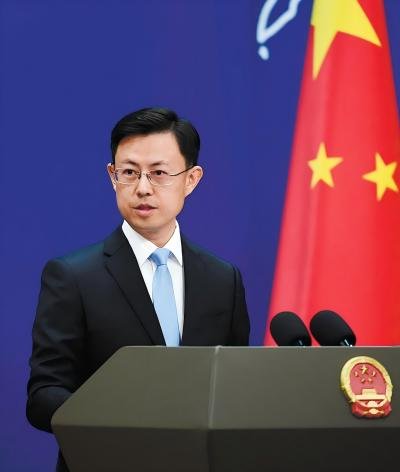
BEIJING — China has announced plans to provide emergency humanitarian assistance to Venezuela, addressing the South American nation’s ongoing crises. The aid will be delivered by the Chinese government in collaboration with the Red Cross Society of China. This initiative was unveiled by Chinese Foreign Ministry spokesperson Guo Jiakun during a Friday press briefing. Details of China’s Aid The collaboration between the Chinese government and the Red Cross Society of China promises emergency assistance as Venezuela faces severe economic and social challenges. These issues are intensified by natural disasters and political instability. Guo Jiakun revealed China’s readiness to extend further support depending on the situation’s evolution. Guo emphasized China’s dedication to international humanitarian efforts, focusing on alleviating Venezuela’s immediate needs. While the specifics of the aid package were not disclosed, China is closely monitoring the situation to adapt its response effectively. China’s Role in Global Aid Efforts During the press briefing, Guo responded to inquiries about China’s role in addressing global humanitarian crises. He reiterated China’s commitment to supporting nations in distress and the crucial nature of international cooperation during challenging times. Venezuela’s Crisis Venezuela has been in the throes of a prolonged economic crisis, with hyperinflation, shortages of essentials, and a collapse of public services. The country’s plight has worsened due to disasters like recent floods and landslides, displacing thousands. In response, Venezuela has sought international assistance. Over the years, China and Venezuela have maintained robust diplomatic and economic relations. As one of Venezuela’s major trading partners, China has significantly invested in its oil and infrastructure sectors. This humanitarian aid aligns with China’s broader strategy of engaging with Latin American countries through aid and investment. Implications of the Aid The Chinese aid initiative highlights China’s expanding role in global humanitarian efforts. As a significant economic power, China’s involvement in international aid reflects its strategic interests in maintaining and bolstering bilateral relations with countries like Venezuela. Not only does this initiative address immediate needs, but it also enhances China’s regional influence. For Venezuela, the aid offers much-needed relief amid the humanitarian crisis. It underscores the importance of international support in tackling the complex challenges faced by the nation. China’s humanitarian efforts may also influence geopolitical dynamics in Latin America by altering alliances and economic dependencies, potentially impacting the influence of other global powers in the region. Key Takeaways China and the Red Cross Society of China to provide emergency humanitarian aid to Venezuela. The aid targets essential needs amidst economic and social crises in Venezuela. China’s engagement underscores its increasing role in global humanitarian initiatives. This effort reinforces China’s strategic interests and influence in the region.

World

Senator Highlights Historical Significance Of Hazrat Imam Hussain’s Sacrifice

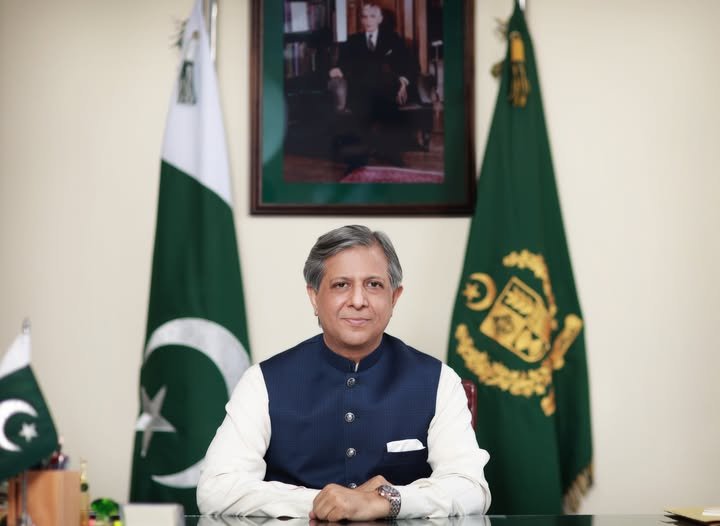
ISLAMABAD — Senator Azam Nazeer Tarar, Federal Minister for Law, Justice and Human Rights, highlighted the enduring significance of Hazrat Imam Hussain’s sacrifice at Karbala. He emphasized it as a monumental example of courage and truth prevailing over oppression. His remarks, made on Friday, underscored the historical and moral importance of the Karbala events. Historical Context Senator Azam Nazeer Tarar reflected on the sacrifice made by Hazrat Imam Hussain (AS) and his companions during the Battle of Karbala. He praised the courage and steadfastness of Imam Hussain and his followers facing Yazid’s oppressive forces. The senator noted that the 680 AD events of Karbala resonate as a powerful symbol of the fight for justice and truth. “The timeless sacrifice of Hazrat Imam Hussain (AS) and his devoted companions at Karbala remains one of history’s greatest examples of courage, steadfastness, and the triumph of truth over oppression,” stated Senator Tarar. He elaborated on how the sacrifice continues to inspire generations against tyranny and injustice. Global Relevance Senator Tarar’s comments come as the teachings of Imam Hussain gain renewed relevance. Communities worldwide reflect on justice and sacrifice principles during the Islamic month of Muharram. This period involves mourning and remembrance of Karbala, where Imam Hussain and his followers were martyred. Internationally, commemorating Imam Hussain’s sacrifice unites Muslims, fostering unity and offering opportunities for interfaith dialogue. The universal story of Karbala is appreciated by diverse audiences. Event Significance The Battle of Karbala, occurring on the 10th of Muharram in 680 AD, is pivotal in Islamic history. Hazrat Imam Hussain, Prophet Muhammad’s grandson, opposed the Umayyad caliph Yazid’s oppressive rule. Imam Hussain’s refusal to pledge allegiance to Yazid led to the Karbala confrontation in present-day Iraq. Despite being outnumbered, Imam Hussain and his followers chose to fight for their principles, leading to martyrdom. This event is commemorated annually during Muharram, especially on Ashura, serving as a reminder of standing up for justice and righteousness. Impact on Society The sacrifice of Hazrat Imam Hussain at Karbala holds deep significance for Muslims and all who value justice and moral integrity. The Karbala narrative transcends religious boundaries, offering a universal message about standing up against tyranny. For Pakistan, a nation built on justice and equality, Karbala’s lessons are particularly strong. Imam Hussain’s story inspires citizens and leaders to uphold these values amidst challenges. Senator Tarar’s remarks remind us of these historical events’ impact on contemporary society. Key Takeaways Senator Tarar emphasized the historical significance of Imam Hussain’s sacrifice at Karbala. The Battle of Karbala is annually commemorated during Muharram, focusing on justice and courage themes. Imam Hussain’s stand against tyranny continuously inspires global justice movements. The Karbala events transcend religious boundaries, offering universal lessons on moral integrity. Pakistan’s leaders and citizens are reminded of justice and equality’s importance.

World

EU, UK Support Pakistan’s Right To Defend Against TTP Threat

ISLAMABAD — The European Union (EU) and United Kingdom (UK) have affirmed their support for Pakistan’s right to self-defense against the Tehrik-i-Taliban Pakistan (TTP), a militant group in the region. This affirmation follows concerns about the presence of multiple terrorist organizations in Afghanistan, as observed by the United Nations Security Council Monitoring Team. International Backing Against Terrorism The EU and UK envoys reasserted their backing of Pakistan’s terrorism combat efforts, especially due to the rising TTP threat. The UN Security Council Monitoring Team has reported over 20 terrorist organizations operating with relative freedom under the Taliban regime in Afghanistan. Among these are between 13,000 to 23,000 terrorist fighters, including members of TTP, Al-Qaida, Islamic State Khorasan Province (ISKP), Eastern Turkistan Islamic Movement (ETIM), Islamic Movement of Uzbekistan (IMU), and Jamaat Ansarullah. This situation highlights the international community’s recognition of the security challenges Pakistan faces due to these militant groups’ activities. The EU and UK support represents a significant diplomatic gesture, emphasizing regional stability and the need for coordinated anti-terrorism efforts. Security Challenges and Diplomatic Significance Pakistan has expressed concern over security risks from Afghanistan, especially after the Taliban’s return to power in August 2021. The resurgence of TTP and other groups has led to increased cross-border attacks, threatening Pakistan’s national security directly. The TTP, known as the Pakistani Taliban, is responsible for numerous attacks in Pakistan, targeting civilian and military sites. It aims to overthrow the Pakistani government and establish its version of Islamic law. The Taliban takeover in Afghanistan has emboldened TTP, allowing it to regroup and plan attacks using Afghanistan as a safe haven. Impact on Bilateral Relations and Economic Growth Support from the EU and UK is vital for Pakistan as it navigates the complex geopolitical environment of South Asia. Affirming Pakistan’s right to self-defense not only strengthens bilateral ties but also reinforces global anti-terrorism efforts. This international support could boost collaboration in intelligence-sharing, counter-terrorism training, and financial aid to enhance Pakistan’s security infrastructure. Economically, terrorism has impeded Pakistan’s growth, deterring foreign investment and affecting tourism. Resolving these security issues can help Pakistan foster a more favorable environment for economic development and regional trade. Global Security Implications The international community’s stance against Afghan-based terrorist organizations necessitates a unified approach for regional stability. These groups not only threaten Pakistan but also pose a risk to global security with their potential for international attacks. Key Takeaways The EU and UK have affirmed Pakistan’s right to self-defense against TTP threats. Over 20 terrorist organizations, including TTP, operate freely in Afghanistan. UN estimates suggest up to 23,000 terrorist fighters are present in the region. International support is crucial for Pakistan’s counter-terrorism efforts.

World

EU, UK Envoys Support Pakistan’s Right To Self-Defense Against TTP

ISLAMABAD — European Union Special Envoy Gilles Bertrand and United Kingdom Special Envoy Richard Lindsay have voiced support for Pakistan’s right to self-defense against threats from the Tehrik-i-Taliban Pakistan (TTP). They criticized the Taliban regime in Afghanistan for not eliminating terrorist safe havens, underscoring the security challenges Pakistan faces. International Envoys’ Support In separate interviews, both Bertrand and Lindsay acknowledged Pakistan’s concerns over cross-border terrorism from Afghanistan. They affirmed Pakistan’s right to defend against imminent TTP threats, a group responsible for many attacks within Pakistan. Their statements emerge amid rising tensions with Afghanistan, as Islamabad accuses the Taliban of sheltering TTP militants. Gilles Bertrand, representing the EU, stated, “Pakistan’s security concerns are valid, and it is crucial for the international community to recognize the challenges it faces from terrorism.” Similarly, UK envoy Richard Lindsay remarked, “The Taliban’s inability to dismantle terrorist networks is a threat to regional stability.” They emphasized international cooperation against terrorism and urged the Taliban to take action against militant groups. TTP Background The TTP, known as the Pakistani Taliban, has persistently threatened Pakistan’s internal security. Formed in 2007, it has conducted numerous attacks on civilians, military personnel, and government sites. Despite Pakistan’s military efforts to dismantle the TTP’s infrastructure, the group has regrouped, launching attacks from Afghanistan. Pakistan has urged the Afghan Taliban to honor commitments in the Doha Agreement, preventing terrorist groups from using Afghan territory to threaten other nations. The Taliban’s inaction has strained Islamabad-Kabul relations, with Pakistan calling for international accountability of the Taliban commitments. Significance of International Statements The EU and UK envoys’ support is noteworthy as it shows growing international recognition of Pakistan’s security challenges and the necessity for a coordinated terrorism response. Such backing may bolster Pakistan’s diplomatic efforts to pressure the Taliban into taking action against the TTP. For Pakistan, the TTP threat extends beyond security, posing political and economic challenges. Terrorist attacks erode investor confidence and hinder economic growth, affecting citizens’ lives. The presence of militant groups affects regional stability, with broader international security implications. The envoys’ remarks highlight the complex geopolitical landscape in South Asia, where international interests intersect. By supporting Pakistan, the EU and UK might influence others to adopt a similar stance, potentially increasing diplomatic pressure on the Taliban regime. Key Takeaways EU and UK envoys support Pakistan’s right to self-defense against TTP threats. Envoys criticize the Taliban regime for not dismantling terrorist safe havens. Pakistan faces ongoing security, political, and economic challenges due to TTP activities. International support may enhance diplomatic pressure on the Taliban.

World

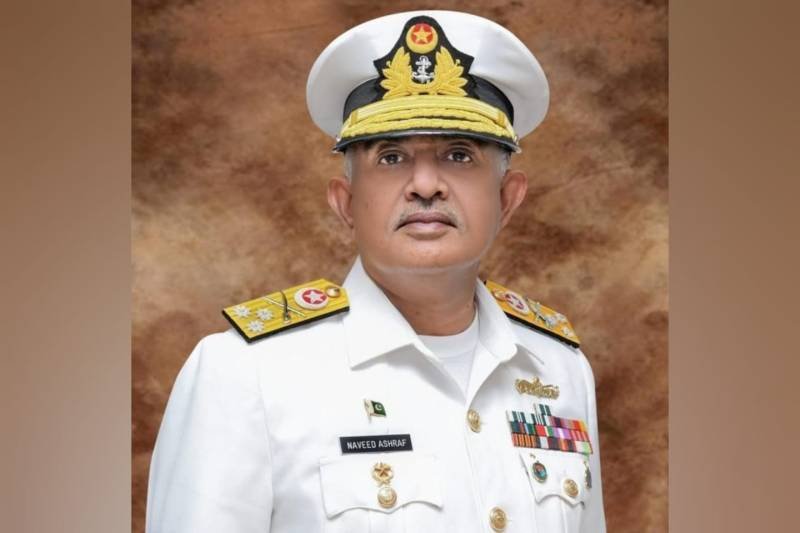
Naval Chief Stresses Need for Technologically Skilled Workforce in Future Warfare

ISLAMABAD — Chief of the Naval Staff, Admiral Naveed Ashraf, emphasized the necessity of cultivating a technologically skilled workforce to meet the demands of future warfare. On Wednesday, he highlighted the critical role such a naval force will play in ensuring national security. Technological Advancements in Warfare Admiral Ashraf outlined the need for the Pakistan Navy to develop expertise in advanced technologies. He noted that warfare is evolving rapidly, with technology as a central component of military strategy and operations. He stated, “Developing and sustaining a future-ready, intellectually astute, and technologically proficient workforce is essential for future warfare.” His remarks coincide with global military investments in technological advancements. Admiral Ashraf stressed that integrating cutting-edge technology into naval operations is crucial. The Pakistan Navy must keep pace with technological trends to effectively safeguard maritime interests. Commitment to Education and Training The Navy is committed to investing in education and training programs focused on emerging technologies like artificial intelligence, cyber warfare, and autonomous systems. Admiral Ashraf emphasized these efforts as essential for preparing naval personnel for a complex, advanced warfare environment. Background on Modernization Efforts The push for a skilled military workforce is not new. The Pakistan Navy has been actively modernizing its operational capabilities. This includes inducting advanced naval vessels, submarines, and aircraft equipped with state-of-the-art technology. Historically, the Navy has played a pivotal role in protecting maritime borders and sea lanes. However, the global shift towards technology in warfare has necessitated a focus on developing human resources to leverage these advancements effectively. Globally, navies like those of the United States, China, and Russia are prioritizing technology integration, recognizing its strategic advantages in modern warfare. Significance of a Skilled Workforce A technologically skilled workforce is crucial for several reasons: Economically: It can drive innovation within the military, enhancing efficiency and effectiveness, leading to cost savings. Socially: Technology-driven education can create opportunities for Pakistani youth, fostering job creation and economic growth. Politically: An advanced naval force elevates Pakistan’s international standing, deterring potential adversaries and supporting regional stability. Internationally: A skilled workforce enables collaboration with other advanced nations, facilitating knowledge sharing and partnerships.

World

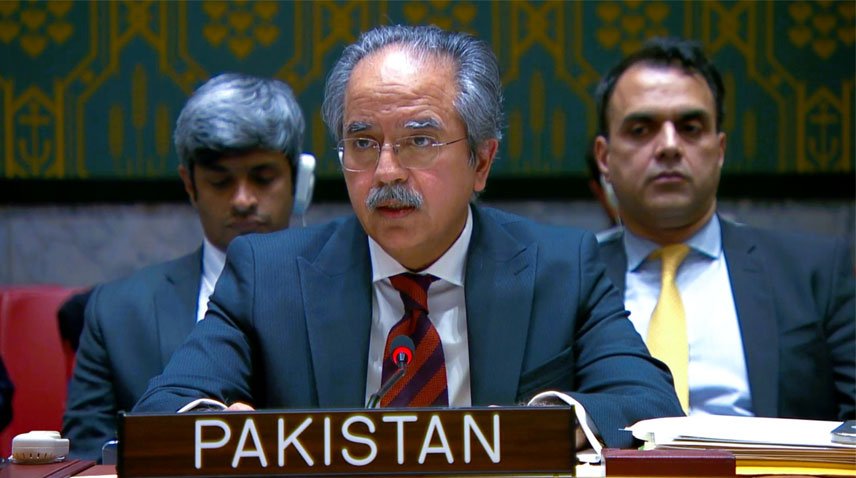
China-Pakistan Event Highlights Need for UNSC Resolution Enforcement

NEW YORK — During an informal meeting at the United Nations Security Council (UNSC) on Tuesday, delegates stressed the critical need for robust enforcement of the Council’s resolutions. They argued that without effective implementation, these resolutions are inadequate. The event featured representatives from China and Pakistan, focusing on enhancing the UNSC’s credibility and effectiveness in maintaining global peace and security. Meeting Highlights The informal meeting was held at the United Nations headquarters and included participation from various international delegates, notably from China and Pakistan. Speakers stressed the importance of consistent enforcement of UNSC resolutions, as inconsistency diminishes their impact. There was a call for stronger mechanisms to monitor and report compliance. A key theme was the need for non-selective implementation of UNSC decisions. Selective enforcement was seen as undermining the Council’s authority and eroding trust among member states. A Pakistani representative noted, “The credibility of the UNSC is at stake if resolutions are not applied equally to all member states.” China’s delegate reiterated these concerns, emphasizing that the UNSC’s effectiveness relies on unbiased mandate enforcement. The call for reform was linked to international relations, where geopolitical interests can affect UNSC resolution application. UNSC Background The United Nations Security Council is tasked with maintaining international peace and security, empowered to issue binding resolutions that member states must implement. However, enforcement consistency has historically varied, attracting criticism and calls for reform to ensure equity and transparency in UNSC operations. Past selective enforcement, particularly involving major powers with veto rights, has led to a lack of accountability and hindered the UNSC’s decisive action in conflicts. Significance of Reforms The discussions at the China-Pakistan event highlight the urgent need for UNSC reforms to enhance its legitimacy and effectiveness. Selective resolution enforcement not only weakens the Council’s authority but also undermines global trust in its conflict management capabilities. For countries like Pakistan, consistent application of UNSC resolutions is critical for regional stability. The call for non-selective enforcement is vital amid ongoing global tensions. As challenges like cybersecurity and climate change arise, the UNSC’s role in addressing them becomes crucial. Fair resolution enforcement is essential for fostering an international cooperative environment. For both Pakistan and China, with vested interests in regional stability, enforcing UNSC resolutions is strategic. The event emphasized the need for collective efforts to address current system shortcomings and work towards equitable global governance frameworks. Key Takeaways The UNSC’s effectiveness is consistently undermined by selective resolution enforcement. Speakers at the event advocated for stronger monitoring and reporting frameworks. The need for non-selective implementation and broad reform was strongly highlighted. Global trust in the UN’s peace management capabilities is affected by inconsistent resolutions. Pakistan and China emphasize the strategic importance of enforcement for regional stability.

World

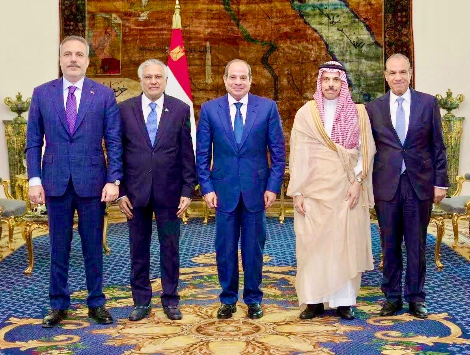
Deputy Prime Minister Discusses Regional Issues in Cairo

CAIRO — Deputy Prime Minister and Foreign Minister, Senator Mohammad Ishaq Dar, participated in extensive discussions in Cairo on June 20 and 21, 2026. He engaged with foreign ministers from Egypt, Saudi Arabia, and Türkiye during the R4 ministerial meeting, hosted by Egypt’s Foreign Minister, Badr Abdellaty. Key International Discussions The talks centered on pivotal regional and international issues with a primary focus on boosting cooperation among the involved nations. Participants exchanged perspectives to foster stability and address the persistent challenges within the region. Pakistan’s Role in Regional Diplomacy Senator Ishaq Dar reiterated Pakistan’s commitment to reinforcing ties and collaboration with regional partners. This endeavor aims to promote peace and stimulate development. The visit highlights Pakistan’s active participation in regional diplomacy, emphasizing its crucial role in international foreign policy and geopolitical matters.

World

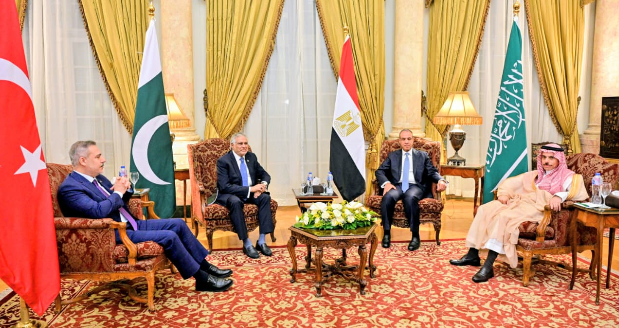
Cairo Meeting Endorses US-Iran MoU for Regional Stability

CAIRO — At the Fourth Consultative Meeting, Foreign Ministers from Egypt, Pakistan, Saudi Arabia, and Turkiye supported the US-Iran Memorandum of Understanding (MoU). This MoU is acknowledged as vital for reducing regional tensions. Diplomatic Efforts in Cairo The meeting in Cairo highlighted diplomatic efforts to promote stability in the Middle East. The gathered ministers recognized the MoU as a forward-looking initiative, emphasizing peaceful resolutions. Pathway to Dialogue Ministers voiced confidence that the agreement could foster dialogue and cooperation among regional stakeholders. This is seen as a significant contribution to peace and stability. Role of the Islamabad MoU Facilitated by Pakistan, the Islamabad MoU seeks to resolve longstanding US-Iran issues. It emphasizes collaboration over confrontation, paving the way for future diplomatic engagements in the region.

World

Pakistan Aims to Train 400,000 Workers for World Cup 2034

Pakistan plans to train and deploy between 300,000 and 400,000 workers for the FIFA World Cup 2034. This initiative is part of a broader strategy to enhance overseas employment and strengthen Pakistan’s presence in the international labor market. Dedicated to Global Workforce Demand This ambitious plan showcases Pakistan’s dedication to meeting global workforce demands, particularly for significant international events. By entering the lucrative international labor sector, the initiative is expected to significantly boost Pakistan’s economic growth. Extensive Training Program The extensive training program aims to equip workers with skills that align with international standards. These efforts improve the employability of Pakistani workers globally and highlight the government’s commitment to increasing employment opportunities abroad.

World

Archbishop Welcomes US-Iran Peace Accord As Hope For Stability

RAWALPINDI — Archbishop Dr. Joseph Arshad, Bishop of Islamabad-Rawalpindi, has expressed his support for the US-Iran peace accord. He describes it as a crucial step towards stability in the Middle East. Significance of the Accord Archbishop Arshad, in a statement, emphasized that agreements like this are vital for promoting global peace and protecting innocent lives. The potential of the accord to bring tranquility to a region long affected by conflicts cannot be overstated. Importance of Diplomatic Efforts The Archbishop highlighted the role of diplomatic efforts in resolving disputes and creating an environment conducive to peace and cooperation. He stressed the importance of such initiatives within the broader context of international relations. Global and Regional Impact The accord is viewed globally and regionally as a positive development. There is hope it will pave the way for a more secure and harmonious future worldwide. The agreement is expected to stabilize the geopolitical landscape significantly.

Scroll to Top