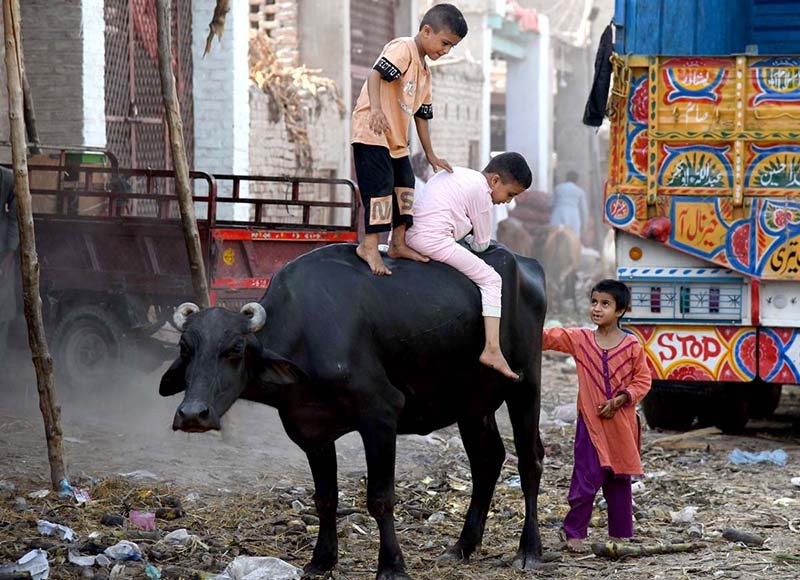
LARKANA — On September 17, children in Larkana were seen riding on the back of a buffalo near the local vegetable market, offering a picturesque glimpse into the rural lifestyle of Pakistan. This scene captured the essence of traditional life in the region, where such activities are a common sight.
What Happened
In the bustling town of Larkana, a group of children found joy in an unconventional playground — the back of a buffalo. The vegetable market, usually a hub of commercial activity, became a backdrop for this charming display of rural life. As the buffalo ambled along, the children, perched atop, laughed and enjoyed the ride, embodying a sense of freedom and simplicity that is often associated with rural living.
This scene is not an uncommon one in rural Pakistan, where buffaloes are not only a crucial part of agricultural life but also serve as a means of transport and a source of entertainment for children. The buffalo, a symbol of strength and endurance, is integral to the agrarian economy, providing milk, meat, and labor for farming activities.
Witnesses at the market noted the children’s delight, as they waved to passersby, their laughter mingling with the sounds of the market. The buffalo, seemingly accustomed to its role, moved steadily, unfazed by the attention it garnered.
Background
Larkana, located in the Sindh province of Pakistan, is a region steeped in agricultural traditions. The use of buffaloes in daily life is deeply embedded in the local culture. Historically, these animals have been indispensable to farmers, aiding in plowing fields and transporting goods.
The region’s economy heavily relies on agriculture, with rice, wheat, and sugarcane being the primary crops. Buffaloes play a vital role in sustaining this agricultural framework. Over the years, despite modernization and the introduction of machinery, the reliance on buffaloes remains significant, especially in smaller villages and towns.
In rural communities, children often grow up around livestock, learning to care for them and understanding their importance to the family’s livelihood. This connection fosters a sense of responsibility and appreciation for their environment and heritage.
Why It Matters
The sight of children riding buffaloes in Larkana is more than just a quaint image; it is a reflection of the enduring rural traditions that continue to thrive in Pakistan. In an era where urbanization and technological advancements are rapidly changing lifestyles, such scenes highlight the resilience of cultural practices that have been passed down through generations.
Economically, the use of buffaloes in agriculture remains crucial. They provide an affordable and sustainable means of farming for many families who cannot afford modern machinery. This not only helps in maintaining agricultural productivity but also supports the livelihoods of countless families across rural Pakistan.
Socially, these traditions foster a sense of community and continuity. Children participating in such activities are not only engaging in play but are also learning valuable lessons about their heritage and the importance of agriculture in their lives. This connection to their roots is vital in preserving cultural identity amidst the pressures of modernization.
Internationally, scenes like these can enhance Pakistan’s image as a country with rich cultural diversity and deep-rooted traditions. They offer a counter-narrative to the often negative portrayals in global media, showcasing the warmth, simplicity, and resilience of rural life.
Key Takeaways
- Children in Larkana were seen riding a buffalo near the vegetable market, highlighting rural life.
- Buffaloes are integral to the agricultural economy in Pakistan, providing labor and produce.
- Such scenes reflect the enduring cultural traditions amidst growing urbanization.
- Rural activities foster community spirit and preserve cultural heritage for future generations.
- Internationally, these images portray Pakistan’s cultural richness and diversity positively.
Source Attribution
This article is based on official government statements, press releases, and public communications from relevant authorities.