
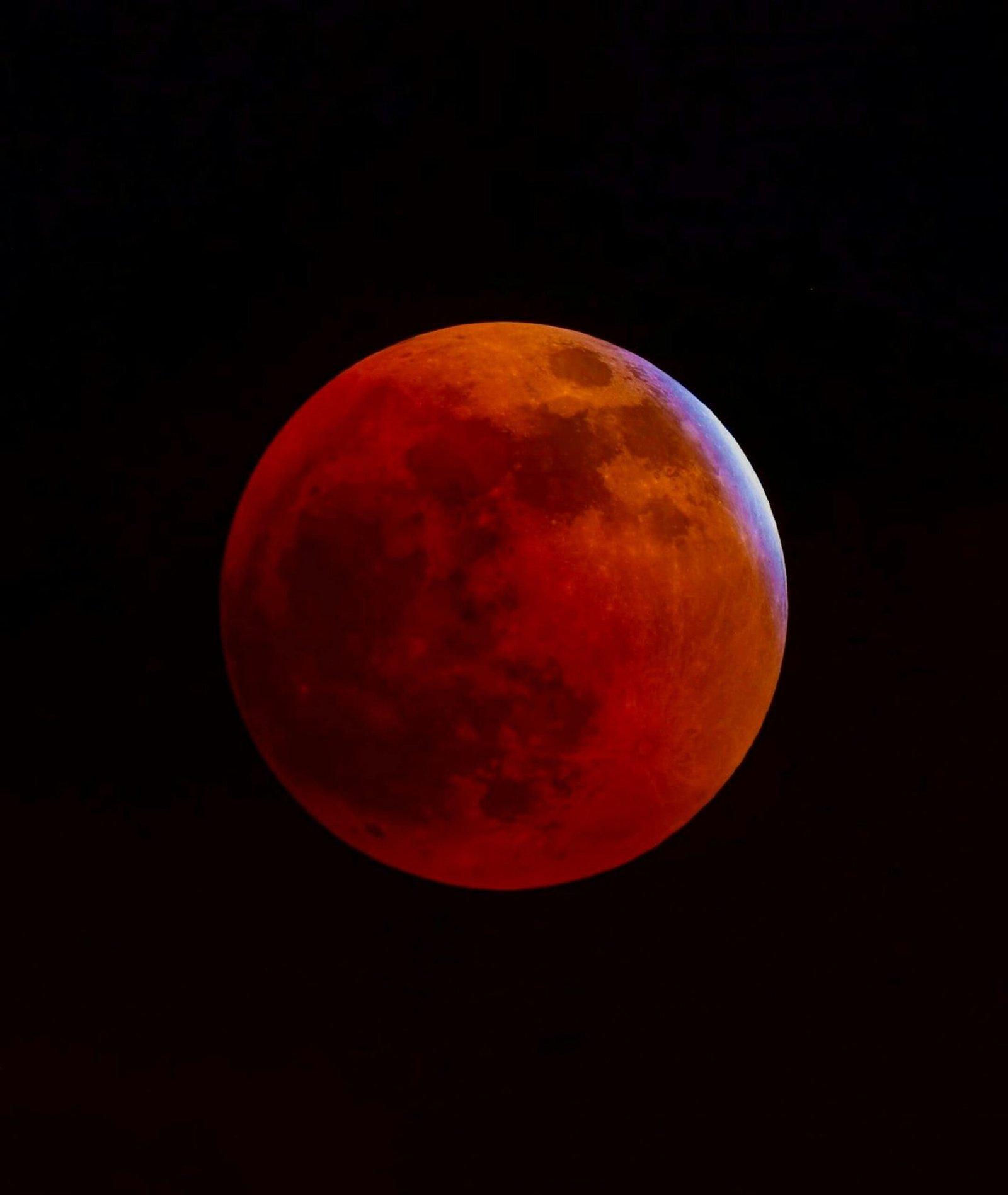
This Sunday night, a rare celestial event unfolds as the sun, Earth, and moon align to create a total lunar eclipse visible across several continents.
The Blood Moon Phenomenon
During this event, known as a “blood moon,” the lunar surface will turn a deep red while passing through Earth’s darkest shadow, the umbra. This spectacle is especially significant for UK viewers who haven’t witnessed a total eclipse since 2022. The next occurrence will be in August 2026.
When to Watch the Total Lunar Eclipse
In the UK, the eclipse starts with the moon still below the horizon. The moon will be fully eclipsed as it rises. According to the Royal Observatory, 7:33 PM on Sunday is the best time for viewing.
By 9:55 PM, the moon will begin to emerge from Earth’s shadow. UK observers will have about two hours and 22 minutes to enjoy the event. Full visibility is also anticipated in easternmost Africa, the Middle East, most of Asia, and western Australia.
Science of the Red Moon
As the moon enters Earth’s umbra, it loses direct sunlight and receives refracted light from Earth’s atmosphere. The shorter blue light wavelengths scatter, while the longer red wavelengths reach the moon, giving it its distinctive red hue.
NASA highlights that atmospheric conditions, such as dust or clouds, might intensify the red color, similar to the glow seen during sunrises and sunsets.
How to Observe the Blood Moon
The blood moon can be seen with the naked eye. Astronomer Tom Kerss offers the following tips:
- Understand your horizon: Scan the west and southwest for optimal views of the moon.
- Use a telescope to observe lunar details closely.
- Photographers should employ tripods or remote shutter lenses for superior shots.
In urban environments, locate elevated spots to avoid obstructions, as the moon will appear low on the horizon.
Weather Forecast for Eclipse Viewing
The Met Office predicts clear skies over much of England and Wales, ideal for viewing the eclipse. In contrast, northern England and Scotland may encounter clouds and rain, affecting visibility throughout the night.














