
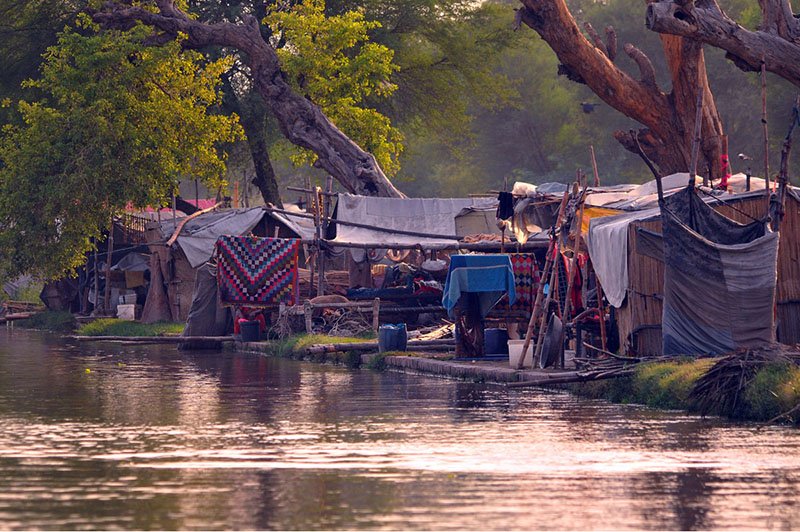
MULTAN — Informal settlements have greatly transformed the Nau Bahar Canal area, where makeshift shelters have emerged. This change has sparked concerns regarding environmental impact and the residents’ living conditions.
Current Situation
The banks of the Nau Bahar Canal in Multan have seen a surge of informal settlements, with makeshift shelters constructed from tarpaulins, wood, and metal sheets. These shelters serve as basic homes for families drawn to the area seeking better prospects.
The settlements have expanded in recent months, driven by economic hardship and a shortage of affordable urban housing. The canal, once a crucial irrigation source supporting local ecology, now faces sanitation, pollution, and ecosystem sustainability challenges.
Local Concerns
Authorities are worried about the unchecked growth of these settlements. A Multan Municipal Corporation representative remarked, “The expansion of settlements along the canal is concerning. It presents considerable environmental risks and urban planning challenges.”
Attempts to address the issue have been constrained by limited resources and the complexities of relocating large populations. However, calls for a unified response to manage the settlements and lessen their environmental impact are growing.
Background and Challenges
The Nau Bahar Canal is a vital part of an extensive irrigation network, essential for agriculture and ecological balance. Historically, it has supported local farmers, providing necessary irrigation. Yet, rapid urbanization and population growth have strained land resources, leading to the spread of informal settlements.
For decades, Pakistan has dealt with informal housing issues as urban areas face significant rural influxes seeking jobs and better living environments. This has resulted in numerous informal settlements in major cities due to a lack of affordable housing and effective urban planning.
Implications of Informal Settlements
The transformation along the Nau Bahar Canal holds broader consequences for the local community and ecosystem health. Inadequate waste disposal and sanitation facilities in these settlements increase pollution risks, potentially contaminating waterways and harming agriculture and local biodiversity.
Economically, these settlements highlight ongoing struggles with housing affordability and job opportunities in urban areas. Residents often work in low-paying, informal sector jobs, underscoring the need for policies addressing income disparity and sustainable livelihoods.
Social and Political Context
Socially, these settlements emphasize challenges in integrating marginalized communities into urban settings. Without proper infrastructure and services, residents face health risks and limited education and employment access, perpetuating poverty cycles.
Politically, the situation demands a reevaluation of urban planning policies, focusing on development that balances environmental sustainability. Resolving the needs of informal settlers while protecting resources like the Nau Bahar Canal requires coordinated efforts from government, non-governmental organizations, and community stakeholders.
Key Takeaways
- Informal settlements are significantly altering the Nau Bahar Canal area.
- Major environmental and urban planning challenges have arisen.
- Addressing the issue requires coordinated government and community efforts.














