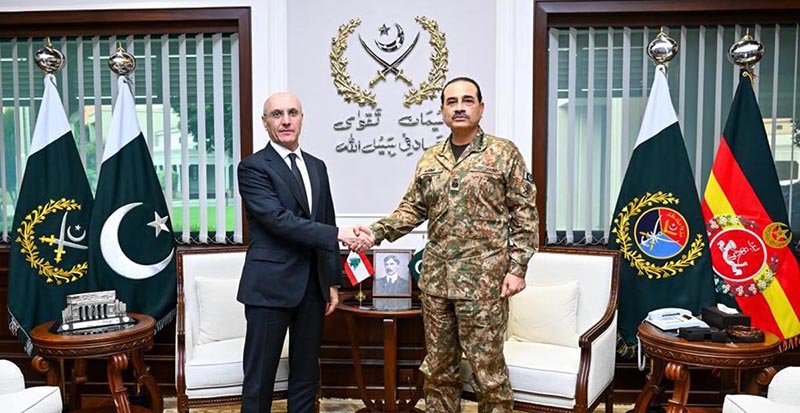
RAWALPINDI — Lebanese Minister of Interior and Municipalities Ahmad Al Hajjar met with Pakistan’s Chief of Army Staff, Field Marshal Syed Asim Munir, at the General Headquarters in Rawalpindi. The meeting took place during Al Hajjar’s two-day official visit to Pakistan.
What Happened
On his visit to Pakistan, Ahmad Al Hajjar, the Lebanese Minister of Interior and Municipalities, held discussions with Field Marshal Syed Asim Munir, the Chief of Army Staff and Chief of Defence Forces of Pakistan. The meeting occurred at the General Headquarters (GHQ) in Rawalpindi, a key location for military and strategic discussions in Pakistan.
The discussions between the two officials focused on enhancing bilateral ties, particularly in areas of mutual interest such as security cooperation and regional stability. According to official sources, the meeting underscored the importance of collaboration between Lebanon and Pakistan in tackling shared challenges, including terrorism and regional security threats.
During the meeting, Field Marshal Munir emphasized Pakistan’s commitment to fostering strong relations with Lebanon. He stated, “Our countries share a common interest in promoting peace and stability in the region, and we look forward to working closely with Lebanon to achieve these goals.” Minister Al Hajjar reciprocated the sentiment, expressing Lebanon’s desire to strengthen ties with Pakistan.
The two leaders also discussed potential areas for future cooperation, including training programs for Lebanese military personnel in Pakistan, which has a well-regarded military training infrastructure. Discussions highlighted the potential for joint exercises and intelligence sharing to enhance the capabilities of both nations in addressing security challenges.
Background
Pakistan and Lebanon have maintained diplomatic relations since the mid-20th century, with both countries often engaging in dialogue to promote mutual interests. Historically, Pakistan has provided support to Lebanon in various capacities, including military training and humanitarian aid during times of crisis.
Lebanon, situated in a geopolitically sensitive region, faces numerous security challenges, including internal political instability and external threats from neighboring conflicts. Pakistan, with its experience in counter-terrorism and military operations, offers valuable expertise and support to Lebanon in addressing these challenges.
Why It Matters
The meeting between Minister Al Hajjar and Field Marshal Munir is significant for several reasons. Firstly, it highlights the ongoing efforts by both countries to strengthen their bilateral relations through strategic dialogue and cooperation. Such meetings are crucial for fostering trust and understanding between nations, particularly in regions plagued by instability.
Economically, enhanced cooperation between Pakistan and Lebanon could open avenues for trade and investment, benefiting both countries. Pakistan’s defense industry, which has been expanding its reach internationally, could find new markets in Lebanon, while Lebanese businesses could explore opportunities in Pakistan’s growing economy.
On a broader scale, the collaboration between Pakistan and Lebanon could contribute to regional stability. As both countries face threats from terrorism and political unrest, joint efforts in security and intelligence could help mitigate these challenges. By working together, Pakistan and Lebanon can play a role in promoting peace and security in the Middle East and South Asia.
Furthermore, this meeting underscores Pakistan’s role as a key player in regional diplomacy. By engaging with countries like Lebanon, Pakistan demonstrates its commitment to fostering peace and cooperation beyond its immediate borders, enhancing its standing in the international community.
Key Takeaways
- Lebanese Minister Ahmad Al Hajjar met with Pakistan’s Army Chief during a two-day visit.
- The meeting focused on enhancing bilateral ties and security cooperation.
- Discussions included potential military training programs and joint exercises.
- Strengthened relations could lead to economic and strategic benefits for both nations.
- Collaboration aims to contribute to regional stability and security.
Source Attribution
This article is based on official government statements, press releases, and public communications from relevant authorities.