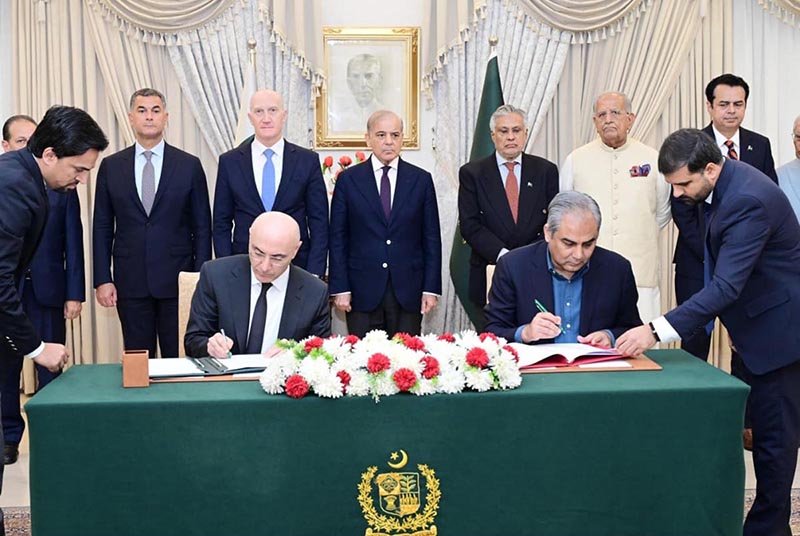
ISLAMABAD — Prime Minister Muhammad Shehbaz Sharif witnessed the signing of a Memorandum of Understanding (MoU) between Pakistan and Lebanon on the transfer of sentenced persons on Thursday. The ceremony, held in Islamabad, marks a significant step in fostering legal cooperation between the two nations.
What Happened
The MoU was signed in the presence of Prime Minister Muhammad Shehbaz Sharif, who emphasized the importance of international cooperation in legal matters. The agreement aims to facilitate the transfer of sentenced individuals between Pakistan and Lebanon, allowing them to serve their sentences in their home countries. This initiative is part of broader efforts to improve the rehabilitation process and uphold human rights by enabling prisoners to be closer to their families.
Prime Minister Sharif expressed his optimism about the agreement, stating, “This MoU is a testament to our commitment to enhancing legal cooperation and ensuring justice for our citizens abroad.” The signing ceremony was attended by high-ranking officials from both countries, underscoring the diplomatic significance of the agreement.
The MoU outlines the procedures and conditions under which sentenced persons can be transferred. It includes provisions for mutual consent, ensuring that both the sentencing and receiving countries agree to the transfer. This agreement is expected to benefit numerous Pakistani and Lebanese nationals currently serving sentences away from their home countries.
Background
The agreement between Pakistan and Lebanon is part of a broader trend of international treaties focused on the transfer of sentenced persons. Such agreements are designed to facilitate the rehabilitation of prisoners by allowing them to serve their sentences in familiar environments, which can aid in reducing recidivism rates and improving reintegration into society.
Pakistan has previously entered into similar agreements with several other countries, including the United Kingdom and Saudi Arabia. These agreements are often seen as a way to address humanitarian concerns and improve diplomatic relations. The transfer of sentenced persons is governed by international law, with the United Nations Model Agreement on the Transfer of Foreign Prisoners serving as a guiding framework.
Why It Matters
The signing of the MoU between Pakistan and Lebanon holds significant implications for both countries. For Pakistan, it represents a continuation of its efforts to enhance international legal cooperation and protect the rights of its citizens abroad. The agreement is expected to strengthen diplomatic ties with Lebanon, providing a foundation for further collaboration in other areas such as trade and security.
From a humanitarian perspective, the agreement is crucial for the well-being of prisoners. Serving a sentence in a foreign country can be challenging due to language barriers, cultural differences, and lack of family support. By allowing prisoners to serve their sentences in their home countries, the agreement aims to improve their mental health and facilitate their reintegration into society upon release.
Economically, the agreement could reduce the financial burden on both countries’ prison systems by allowing for the repatriation of foreign nationals. This can lead to cost savings and more efficient allocation of resources within the correctional facilities of both nations.
Key Takeaways
- Pakistan and Lebanon have signed an MoU for the transfer of sentenced persons, witnessed by Prime Minister Shehbaz Sharif.
- The agreement aims to facilitate the transfer of prisoners to their home countries, enhancing rehabilitation and human rights.
- This MoU is part of Pakistan’s broader strategy to improve international legal cooperation and protect its citizens abroad.
- The agreement is expected to strengthen diplomatic relations between Pakistan and Lebanon.
- Transferring prisoners can reduce the financial burden on both countries’ prison systems.
Source Attribution
The article is based on official government statements, press releases, and public communications from relevant authorities.