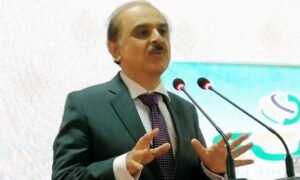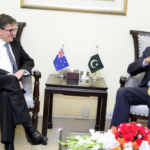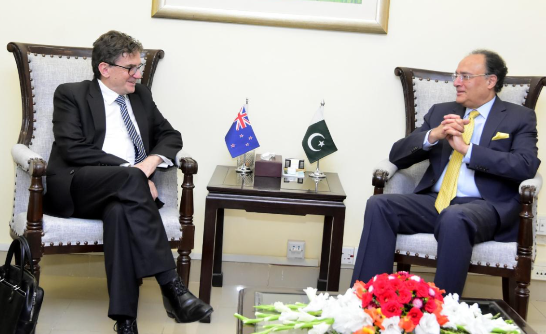
ISLAMABAD — The Federal Minister for Finance and Revenue, Senator Muhammad Aurangzeb, met with the High Commissioner-designate of New Zealand to Pakistan, David Pine, on September 9 to discuss enhancing bilateral economic relations. The meeting underscored both countries’ commitment to strengthening trade, investment, and business-to-business cooperation.
What Happened
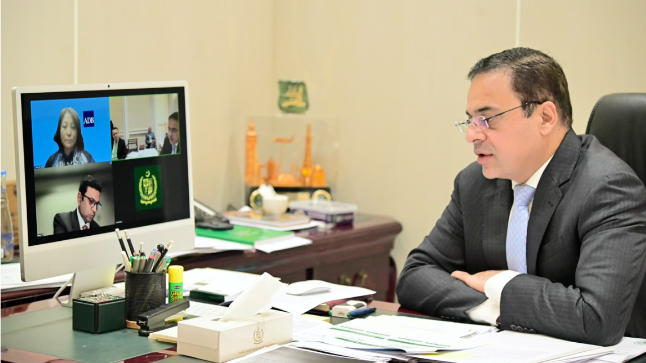
During the meeting held in Islamabad, Finance Minister Muhammad Aurangzeb and High Commissioner-designate David Pine discussed various avenues for deepening economic ties between Pakistan and New Zealand. Accompanied by Ms. Avanthi Kalansooriya, a policy advisor, Pine emphasized New Zealand’s interest in exploring new trade opportunities with Pakistan. The discussions focused on enhancing bilateral trade, fostering investment, and facilitating business collaborations.
David Pine expressed New Zealand’s willingness to support Pakistan in various sectors, including agriculture, technology, and education. He noted, “New Zealand sees great potential in Pakistan’s market and is eager to explore areas where both nations can mutually benefit.” The meeting also highlighted the importance of creating a conducive environment for businesses from both countries to thrive.
Finance Minister Aurangzeb welcomed the New Zealand envoy’s commitment to strengthening economic ties and assured full cooperation from Pakistan’s government. He stated, “Pakistan is open to foreign investment and is keen on building strong economic partnerships with countries like New Zealand.” The meeting concluded with both parties agreeing to continue dialogue and explore practical steps to enhance economic collaboration.
Background
Pakistan and New Zealand have historically maintained cordial relations, with both countries being members of the Commonwealth of Nations. Over the years, trade between the two nations has been modest, with room for significant growth. New Zealand primarily exports dairy products, wool, and meat to Pakistan, while Pakistan exports textiles, rice, and leather goods to New Zealand.
In recent years, both countries have expressed a desire to expand their economic relationship beyond traditional trade. The meeting between the finance minister and the New Zealand envoy is part of ongoing efforts to identify new areas of cooperation and increase bilateral trade volumes.
Why It Matters
The meeting between Pakistan’s finance minister and the New Zealand envoy is significant as it represents a concerted effort to boost economic ties between the two nations. For Pakistan, enhancing trade relations with New Zealand could lead to increased foreign investment, job creation, and access to advanced technologies, particularly in agriculture and education.
Economically, stronger ties with New Zealand could help Pakistan diversify its trade partners and reduce its reliance on traditional markets. This diversification is crucial for Pakistan’s economic stability, especially in light of global economic uncertainties. Politically, the strengthening of bilateral relations could enhance Pakistan’s standing in the Asia-Pacific region, providing it with a strategic partner in New Zealand.
For New Zealand, expanding economic ties with Pakistan presents an opportunity to tap into a large and growing market. With Pakistan’s population exceeding 220 million, there is significant potential for New Zealand businesses to expand their footprint in South Asia. Additionally, collaboration in sectors such as agriculture and education could lead to knowledge exchange and innovation, benefiting both countries.
Key Takeaways
- Finance Minister Muhammad Aurangzeb and New Zealand’s envoy David Pine discussed enhancing economic ties.
- The meeting focused on trade, investment, and business-to-business cooperation between Pakistan and New Zealand.
- New Zealand is interested in exploring opportunities in agriculture, technology, and education in Pakistan.
- Strengthening economic relations could lead to increased foreign investment and job creation in Pakistan.
- Both countries aim to diversify their trade partnerships and enhance bilateral cooperation.
Source Attribution
This article is based on official government statements and public communications from relevant authorities.