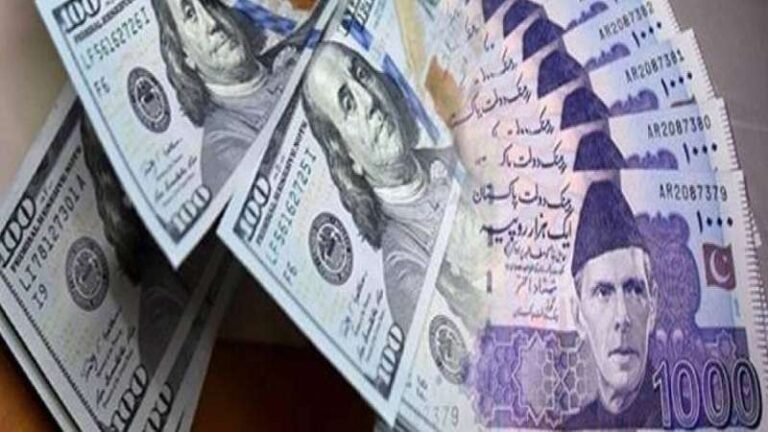
ISLAMABAD — On Wednesday, the Pakistani Rupee appreciated by one paisa against the US Dollar in interbank trading, closing at Rs277.36 compared to the previous day’s closing of Rs277.37. This minor gain reflects ongoing fluctuations in the currency market amid various economic challenges.
What Happened
The Rupee’s slight appreciation in the interbank market was reported by the Forex Association of Pakistan (FAP), which noted that the buying and selling rates of the US Dollar in the open market were recorded at Rs278.05. This movement comes as part of a broader trend of currency fluctuations influenced by both domestic and international economic factors.
The interbank rate is a critical indicator of the Rupee’s strength against foreign currencies, particularly the US Dollar, which plays a significant role in Pakistan’s import and export activities. The minor appreciation suggests a momentary easing of pressure on the Rupee, which has faced depreciation due to various economic pressures, including inflation and trade imbalances.
Market analysts suggest that the Rupee’s performance is closely tied to the country’s foreign exchange reserves and the government’s fiscal policies. The State Bank of Pakistan (SBP) has been actively involved in managing the currency’s stability through interventions and policy measures aimed at curbing excessive volatility.
Background
Pakistan’s economy has been navigating through a challenging period marked by high inflation rates, a growing fiscal deficit, and external debt obligations. The Rupee has experienced significant depreciation over the past year, driven by these economic challenges and global market dynamics.
Historically, the Rupee’s value has been sensitive to political stability, economic reforms, and international trade relations. The government’s efforts to stabilize the currency have included seeking financial assistance from international financial institutions and implementing structural reforms to boost economic growth.
The State Bank of Pakistan has also played a crucial role in managing the currency’s exchange rate through monetary policy adjustments and foreign exchange interventions. These measures aim to maintain a balance between supporting economic growth and controlling inflationary pressures.
Why It Matters
The Rupee’s performance against the US Dollar has significant implications for Pakistan’s economy, affecting everything from import costs to inflation rates. A stronger Rupee can help reduce the cost of imported goods and services, which is crucial for a country that relies heavily on imports for energy and essential commodities.
For consumers, a stable or appreciating Rupee can lead to lower prices for imported goods, potentially easing inflationary pressures that have been a major concern for households across the country. Inflation has been a persistent issue, eroding purchasing power and affecting the standard of living for many Pakistanis.
On the other hand, exporters may face challenges with a stronger Rupee, as it can make Pakistani goods more expensive in international markets. This can impact the competitiveness of local industries and affect the country’s trade balance.
Internationally, the Rupee’s exchange rate is closely watched by investors and financial institutions. A stable currency can boost investor confidence, attract foreign investment, and support economic growth. Conversely, volatility in the exchange rate can deter investment and complicate economic planning.
Key Takeaways
- The Pakistani Rupee appreciated by one paisa against the US Dollar in interbank trading, closing at Rs277.36.
- The Forex Association of Pakistan reported open market buying and selling rates of the Dollar at Rs278.05.
- The Rupee’s performance is influenced by domestic economic challenges and international market dynamics.
- A stable or appreciating Rupee can help reduce import costs and ease inflationary pressures.
- Currency stability is crucial for attracting foreign investment and supporting economic growth.
Source Attribution
This article is based on official government statements, press releases, and public communications from relevant authorities.