NBP Releases Updated Exchange Rates for Major Global Currencies
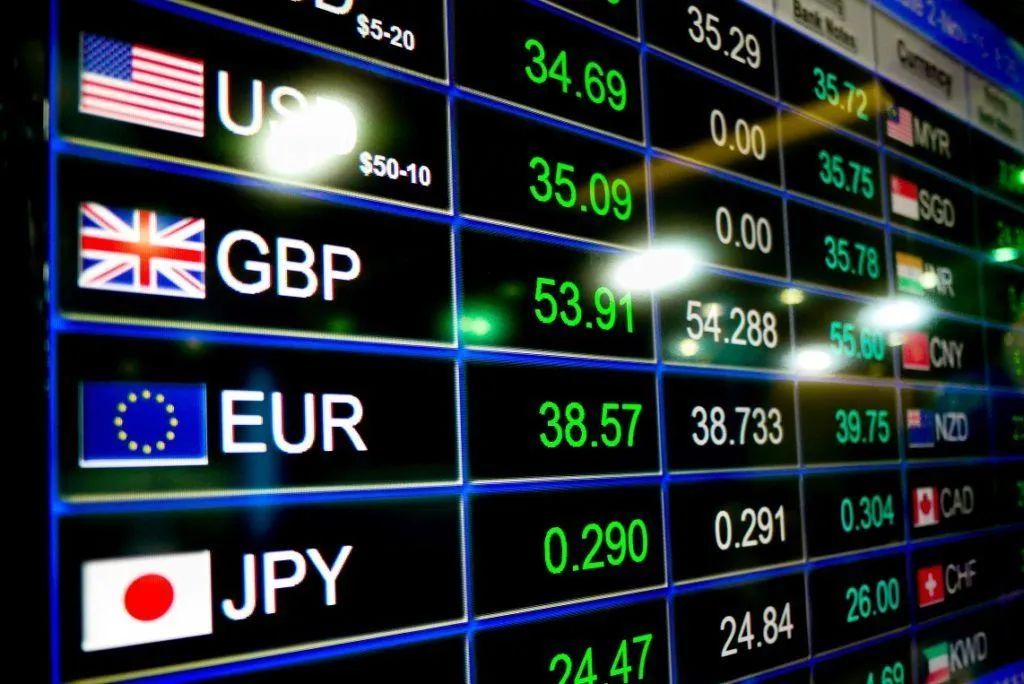
KARACHI — The Treasury Management Division of the National Bank of Pakistan (NBP) announced the latest exchange rates for major global currencies on Monday. The updated rates reflect the buying and selling prices for currencies including the US Dollar, Euro, and British Pound, among others. What Happened The National Bank of Pakistan, a key financial institution in the country, has issued the latest exchange rates through its Treasury Management Division. These rates are crucial for businesses, investors, and individuals involved in international trade and finance. The exchange rates were released on July 13, 2023, providing the current buying and selling prices for a variety of foreign currencies. According to the NBP, the US Dollar is being sold at PKR 278.45 and bought at PKR 277.95. The Euro stands at PKR 317.33 for selling and PKR 316.76 for buying. The British Pound is priced at PKR 372.50 for selling and PKR 371.83 for buying. Other notable currencies include the Japanese Yen, which is being sold at PKR 1.7180 and bought at PKR 1.7149, and the Swiss Franc, with selling and buying rates of PKR 343.77 and PKR 343.16, respectively. The Canadian Dollar is available at PKR 196.61 for selling and PKR 196.26 for buying, while the Australian Dollar is priced at PKR 192.94 for selling and PKR 192.60 for buying. The exchange rates also cover currencies such as the Swedish Krona, Norwegian Krone, Danish Krone, New Zealand Dollar, Singapore Dollar, Hong Kong Dollar, Korean Won, Chinese Yuan, Malaysian Ringgit, Thai Baht, UAE Dirham, Saudi Riyal, Qatar Riyal, and Kuwaiti Dinar. Background The National Bank of Pakistan plays a pivotal role in the country’s financial ecosystem, providing essential banking services and acting as a custodian of the government’s funds. Exchange rates are a critical aspect of the bank’s operations, influencing trade, investment, and economic planning. The NBP regularly updates these rates to reflect global market conditions and currency fluctuations. Exchange rates are determined by various factors, including supply and demand dynamics, geopolitical events, and economic indicators. In Pakistan, the State Bank of Pakistan oversees monetary policy and foreign exchange regulations, while commercial banks like NBP provide daily exchange rate updates to facilitate international transactions. Why It Matters Exchange rates have a significant impact on Pakistan’s economy, affecting everything from import and export prices to inflation and foreign investment. For businesses involved in international trade, knowing the current exchange rates is crucial for pricing goods and services competitively. Fluctuations in these rates can lead to increased costs or enhanced profitability, depending on the direction of the change. For individuals, exchange rates influence the cost of foreign travel, education abroad, and remittances from family members working overseas. A favorable exchange rate can make foreign goods and services more affordable, while an unfavorable rate can increase costs. On a broader scale, exchange rates are indicative of a country’s economic health and stability. They can affect investor confidence and influence decisions on foreign direct investment. For Pakistan, maintaining a stable exchange rate is essential for economic growth and development, as it impacts the country’s ability to manage its foreign debt and trade balance. Key Takeaways The National Bank of Pakistan has released updated exchange rates for major currencies, including the US Dollar, Euro, and British Pound. These rates are crucial for businesses and individuals involved in international trade and finance. Exchange rates impact the cost of imports and exports, foreign travel, and remittances. Stable exchange rates are vital for Pakistan’s economic growth and investor confidence. The NBP regularly updates these rates to reflect global market conditions and currency fluctuations. Source Attribution This article is based on official government statements, press releases, and public communications from relevant authorities. Author: NEN Editorial Desk | Editor: NEN Newsroom | Fact Checked By: NEN Editorial Team Author: NEN Editorial Desk | Editor: NEN Newsroom | Last Updated: July 13, 2026 | Source: Press Release from Government of Pakistan This article was produced by the NEN Editorial Desk in accordance with NEN Agency’s Editorial Policy and Fact-Checking Policy.