
World

Welcome to the World section of NEN Agency, your window to the stories shaping our planet. From global politics and economic shifts to science breakthroughs, cultural moments, and humanitarian crises, we connect you to events that matter — wherever they happen.

Inside This Category

  • Global Politics & Diplomacy: International relations, summits, and policy shifts.

  • World Economy & Trade: Market trends, trade agreements, and financial developments.

  • Conflicts & Security: Coverage of wars, peace efforts, and security challenges.

  • Science & Environment: Climate change, technological advances, and space exploration.

  • Culture & Society: Arts, sports, and lifestyle stories from around the globe.

Why Our World Coverage Stands Out
We deliver global news with context, helping readers see how events beyond borders influence life in Pakistan and the wider region.

World

Pakistani Climate Minister Meets Turkish Deputy Minister in Azerbaijan

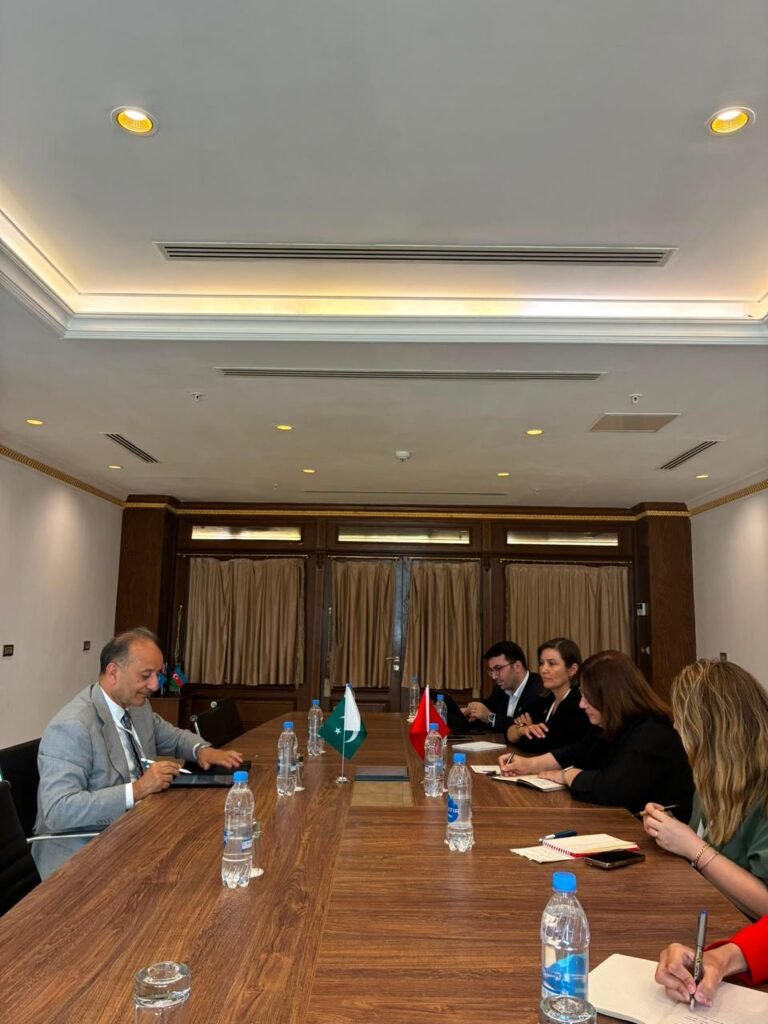
ISLAMABAD — Federal Minister for Climate Change and Environmental Coordination, Dr. Musadik Malik, engaged in a bilateral meeting with Ms. Fatma Varank, Deputy Minister for Environment, Urbanization and Climate Change of the Republic of Türkiye. This meeting was held on July 23 in Shamakhi, Azerbaijan, during the sidelines of the COP31 Heads of Delegation gathering. What Happened The meeting between Dr. Musadik Malik and Ms. Fatma Varank focused on enhancing collaboration between Pakistan and Türkiye in addressing climate change challenges. Both ministers expressed their commitment to strengthening bilateral ties and working together on environmental issues of mutual concern. Dr. Malik highlighted Pakistan’s initiatives in combating climate change and emphasized the importance of international cooperation in achieving sustainable development goals. Ms. Varank, who is also the President of the upcoming COP31, shared insights into Türkiye’s strategies for environmental sustainability and urbanization. She underscored the significance of regional partnerships in tackling climate-related issues and expressed Türkiye’s willingness to support Pakistan in its environmental endeavors. The discussions also covered potential areas for joint projects and knowledge exchange in climate resilience and adaptation strategies. The meeting concluded with both parties agreeing to continue dialogue and explore avenues for future cooperation, particularly in the context of the upcoming COP31 conference, which is expected to bring together global leaders to discuss climate action and policy implementation. Background Pakistan and Türkiye have a history of diplomatic relations and have collaborated on various fronts, including trade, defense, and cultural exchanges. In recent years, both countries have recognized the growing importance of addressing climate change and environmental issues as part of their national agendas. Pakistan, being highly vulnerable to climate change impacts, has been actively seeking international partnerships to enhance its climate resilience and adaptation capabilities. Türkiye, on the other hand, has been making strides in sustainable urbanization and environmental protection, positioning itself as a key player in regional climate initiatives. The COP31 conference, scheduled to be held in 2024, provides a platform for countries to come together and discuss strategies for reducing greenhouse gas emissions and promoting sustainable development. Why It Matters The meeting between Dr. Musadik Malik and Ms. Fatma Varank is significant as it highlights the growing collaboration between Pakistan and Türkiye in the realm of climate change. This partnership is crucial for both countries as they face similar environmental challenges, such as extreme weather events, water scarcity, and the need for sustainable urban planning. For Pakistan, strengthening ties with Türkiye can lead to valuable knowledge exchange and technical support in implementing effective climate policies. Türkiye’s experience in sustainable urbanization and environmental management can provide Pakistan with insights into best practices and innovative solutions for its own climate challenges. Moreover, the collaboration aligns with Pakistan’s broader strategy to engage with international partners and leverage global expertise in addressing climate change. As the world moves towards more stringent climate policies, regional cooperation becomes increasingly important for countries like Pakistan, which are on the front lines of climate impacts. The outcomes of this meeting could also influence the discussions at the upcoming COP31 conference, where both countries are expected to play active roles in shaping the global climate agenda. By working together, Pakistan and Türkiye can contribute to a more coordinated and effective international response to climate change. Key Takeaways Dr. Musadik Malik met with Ms. Fatma Varank in Azerbaijan to discuss climate cooperation. The meeting focused on enhancing bilateral ties and exploring joint environmental projects. Both countries aim to collaborate on climate resilience and sustainable urbanization. The discussions align with Pakistan’s strategy to engage international partners on climate issues. Outcomes may influence the agenda at the upcoming COP31 conference. Source Attribution This article is based on official government statements, press releases, and public communications from relevant authorities. Author: NEN Editorial Desk | Editor: NEN Newsroom | Fact Checked By: NEN Editorial Team Author: NEN Editorial Desk  |  Editor: NEN Newsroom  |  Last Updated: July 24, 2026  |  Source: Press Release from Government of Pakistan This article was produced by the NEN Editorial Desk in accordance with NEN Agency’s Editorial Policy and Fact-Checking Policy.
World

US-Funded WASH Project Transforms Access for 300,000 Pakistanis

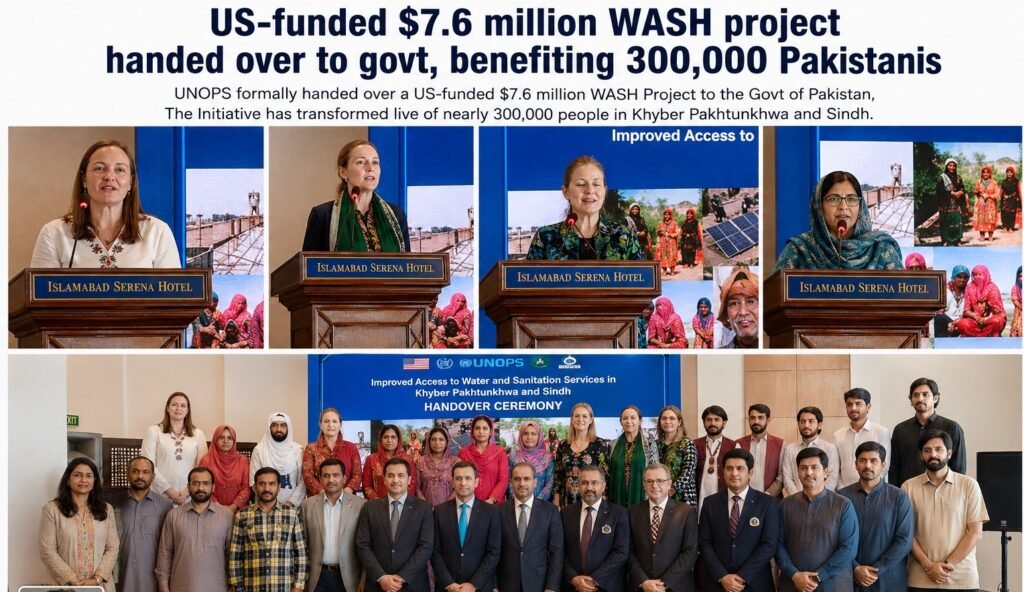
ISLAMABAD — The United Nations Office for Project Services (UNOPS) officially transferred a $7.6 million Water, Sanitation, and Hygiene (WASH) project to the Government of Pakistan on Thursday. This initiative, funded by the United States, has significantly improved access to essential services for nearly 300,000 people across the country. What Happened The WASH project, funded by the United States, was formally handed over to Pakistani authorities in a ceremony that underscored the successful collaboration between international and local entities. The project, valued at $7.6 million, has been pivotal in enhancing the availability of safe drinking water, adequate sanitation, and hygiene services, benefiting approximately 300,000 Pakistanis. UNOPS, which managed the project, highlighted the transformative impact on communities that previously lacked access to these critical services. The initiative included the construction of water supply systems, sanitation facilities, and hygiene promotion activities in various regions. These efforts aimed to address long-standing challenges related to waterborne diseases and inadequate sanitation infrastructure. During the handover ceremony, representatives from the United Nations, the United States, and the Government of Pakistan emphasized the importance of sustainable development and the role of international cooperation in achieving it. The project is expected to have lasting benefits, improving public health and quality of life for the communities involved. Background The WASH project is part of a broader international effort to improve water and sanitation infrastructure in developing countries. In Pakistan, access to clean water and proper sanitation has been a persistent challenge, particularly in rural and underserved urban areas. The lack of these basic services has contributed to health issues, including the spread of waterborne diseases. Historically, Pakistan has faced difficulties in managing its water resources effectively. The country has experienced periods of drought, flooding, and water scarcity, which have compounded the challenges of providing reliable water and sanitation services. International partnerships, such as the one with the United States, have been crucial in addressing these issues and supporting Pakistan’s development goals. Why It Matters The successful completion and handover of the WASH project are significant for several reasons. Firstly, it demonstrates the impact of international aid and cooperation in addressing critical infrastructure gaps in Pakistan. By improving access to clean water and sanitation, the project directly contributes to better health outcomes and reduces the incidence of waterborne diseases, which are a major public health concern. Economically, the project helps alleviate the burden on healthcare systems by reducing disease prevalence, allowing resources to be allocated more efficiently. Improved sanitation and hygiene also contribute to increased productivity, as healthier populations are better able to participate in economic activities. Socially, the project empowers communities by providing them with the tools and knowledge to maintain their water and sanitation systems. This empowerment is crucial for ensuring the sustainability of the project’s benefits. Furthermore, access to clean water and sanitation is a fundamental human right, and this project represents a step towards fulfilling that right for more Pakistanis. On an international level, the project highlights the importance of partnerships in achieving the United Nations Sustainable Development Goals (SDGs), particularly Goal 6, which aims to ensure availability and sustainable management of water and sanitation for all. The collaboration between the United States, UNOPS, and the Government of Pakistan serves as a model for similar initiatives in other regions. Key Takeaways The $7.6 million WASH project was funded by the United States and managed by UNOPS. Approximately 300,000 Pakistanis have benefited from improved water, sanitation, and hygiene services. The project addresses critical health issues by reducing the prevalence of waterborne diseases. It highlights the importance of international cooperation in achieving sustainable development goals. The initiative serves as a model for future projects aiming to improve basic infrastructure in developing countries. Source Attribution This article is based on official government statements, press releases, and public communications from relevant authorities. Author: NEN Editorial Desk | Editor: NEN Newsroom | Fact Checked By: NEN Editorial Team Author: NEN Editorial Desk  |  Editor: NEN Newsroom  |  Last Updated: July 23, 2026  |  Source: NEN Reporter This article was produced by the NEN Editorial Desk in accordance with NEN Agency’s Editorial Policy and Fact-Checking Policy.
World

Alpine Club Honors Austrian Mountaineer for Heroic Rescue on Broad Peak

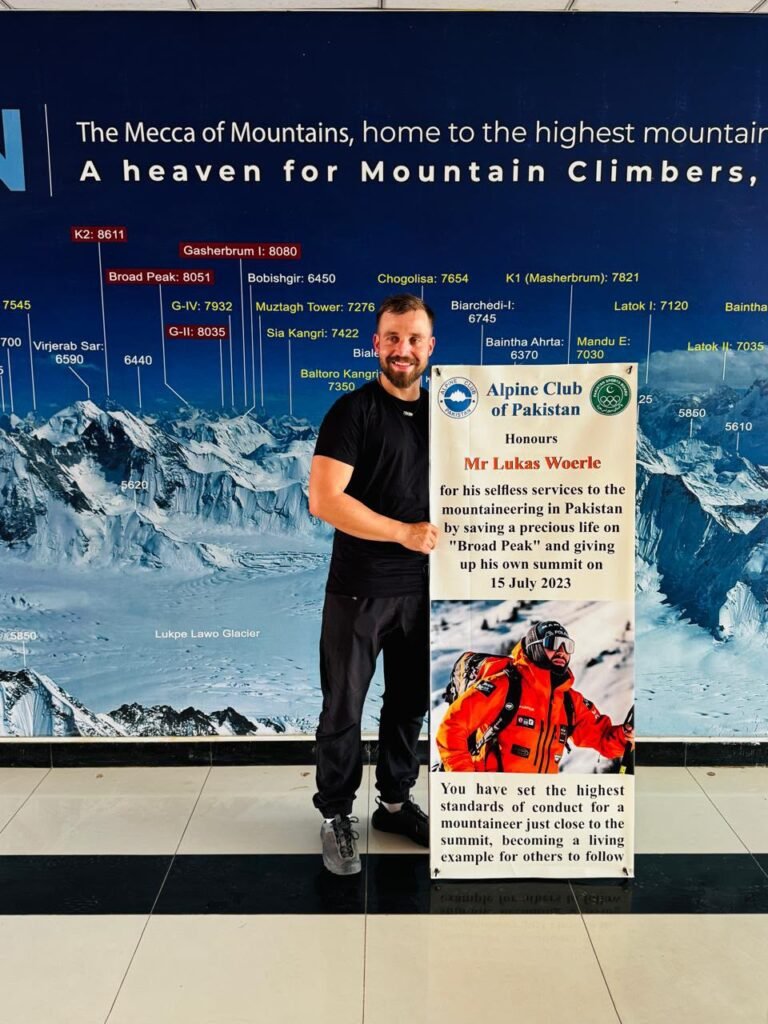
ISLAMABAD — The Alpine Club of Pakistan (ACP) has formally recognized Austrian mountaineer Lukas Woerle for his heroic efforts in rescuing a Pakistani high-altitude porter during an expedition on Broad Peak in July 2023. The tribute was paid on Thursday, acknowledging Woerle’s extraordinary courage and selflessness in the face of perilous conditions. What Happened In July 2023, Lukas Woerle, an experienced mountaineer from Austria, was part of an international expedition attempting to summit Broad Peak, which stands at 8,047 meters in the Karakoram Range. During the climb, a Pakistani high-altitude porter accompanying the team encountered severe health issues, putting his life at risk. Despite the challenges posed by the high altitude and harsh weather conditions, Woerle took decisive action to assist the ailing porter. According to the ACP, Woerle’s quick response and mountaineering skills were instrumental in the successful rescue operation. He managed to stabilize the porter’s condition and facilitated his safe descent to a lower altitude where medical assistance could be provided. The ACP highlighted that such acts of bravery and humanity are rare and deserve recognition. ACP President Abu Zafar Sadiq, while presenting the tribute, stated, “Lukas Woerle’s actions exemplify the spirit of mountaineering, where the safety and well-being of fellow climbers and support staff are paramount. His selfless act has set a benchmark for international cooperation and camaraderie in the mountaineering community.” Background Broad Peak, located in the Gilgit-Baltistan region of Pakistan, is the 12th highest mountain in the world and is known for its challenging climbing conditions. The mountain has been a popular destination for climbers from around the globe, but it also presents significant risks due to its extreme altitude and unpredictable weather. The tradition of mountaineering in Pakistan is deeply intertwined with the local communities, particularly the high-altitude porters who play a crucial role in supporting expeditions. These porters are often from the local regions and possess invaluable knowledge of the mountainous terrain. However, they are frequently exposed to the same dangers as the climbers they assist, including altitude sickness, avalanches, and severe weather conditions. Why It Matters Woerle’s rescue mission underscores the importance of international solidarity and mutual support in high-stakes environments such as mountaineering. His actions not only saved a life but also highlighted the critical role of teamwork and empathy in overcoming challenges posed by nature. For Pakistan, this event brings attention to the safety and welfare of high-altitude porters, who are essential to the success of climbing expeditions in the region. It emphasizes the need for better training, equipment, and support systems for these individuals to ensure their safety and well-being. On a broader scale, the recognition of Woerle’s bravery by the ACP fosters a positive image of international cooperation in Pakistan’s mountaineering sector. It may encourage more climbers to visit the country’s peaks, boosting local tourism and contributing to the economy. The incident also serves as a reminder of the inherent risks associated with high-altitude climbing and the need for climbers to be prepared for emergencies. It reinforces the values of preparedness, responsibility, and respect for the mountains and those who inhabit them. Key Takeaways Austrian mountaineer Lukas Woerle was honored by the ACP for rescuing a Pakistani porter on Broad Peak. The rescue operation took place during a challenging expedition in July 2023. Woerle’s actions highlight the importance of safety and teamwork in mountaineering. The incident draws attention to the welfare of high-altitude porters in Pakistan. Recognition of Woerle’s bravery promotes international cooperation and tourism in Pakistan’s mountaineering sector. Source Attribution This article is based on official statements from the Alpine Club of Pakistan and public communications from relevant authorities. Author: NEN Editorial Desk | Editor: NEN Newsroom | Fact Checked By: NEN Editorial Team Author: NEN Editorial Desk  |  Editor: NEN Newsroom  |  Last Updated: July 23, 2026  |  Source: NEN Reporter This article was produced by the NEN Editorial Desk in accordance with NEN Agency’s Editorial Policy and Fact-Checking Policy.
World

Iranian Ministers Meet Bilal Azhar Kayani to Enhance Cooperation

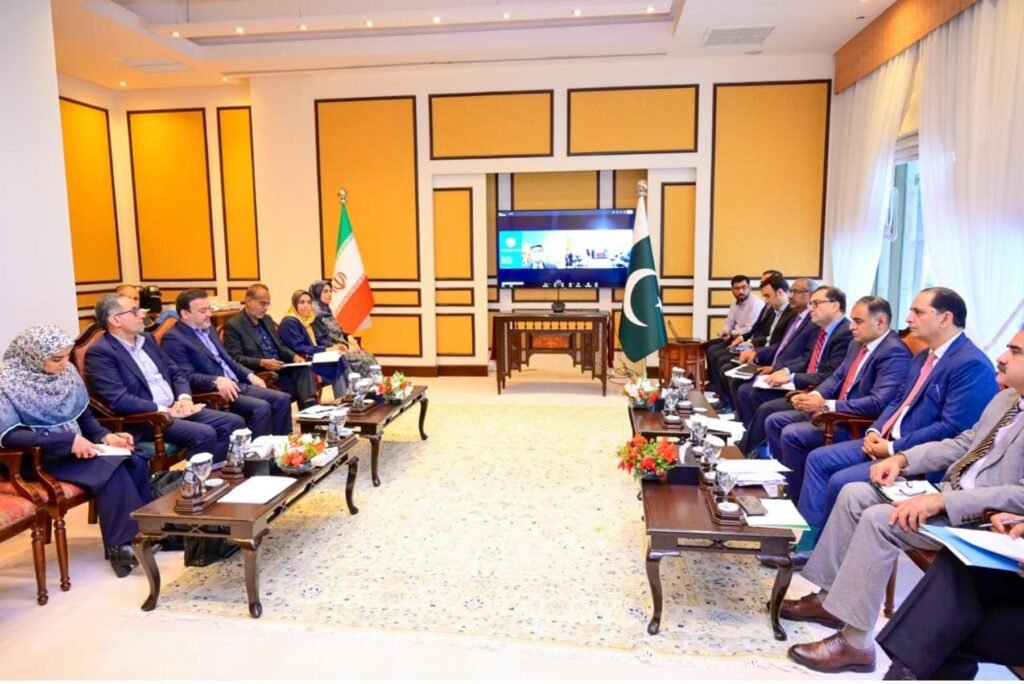
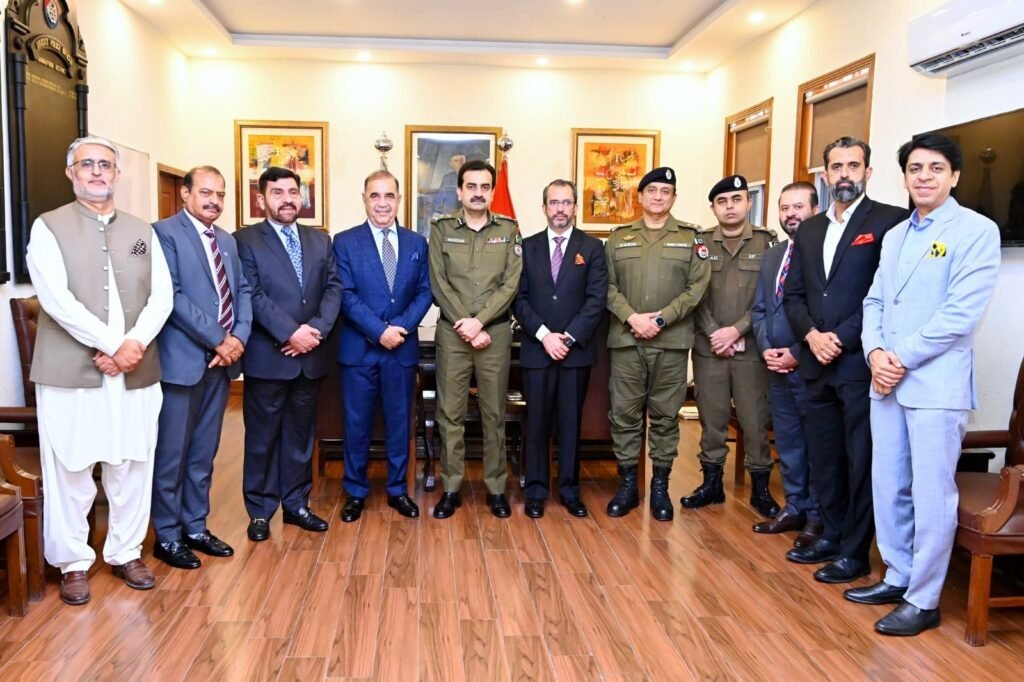
ISLAMABAD — Iranian Deputy Ministers of Transport and Interior met with Pakistan’s Minister of State for Finance and Railways, Bilal Azhar Kayani, on Wednesday to discuss enhancing cooperation and connectivity between the two nations. What Happened The meeting, held in Islamabad, brought together Iran’s Deputy Minister of Transport, Mehran Ghorbani, and Deputy Minister of Interior for Economic Affairs, Mehdi Dousti, with Pakistan’s Minister of State for Finance and Railways, Bilal Azhar Kayani. The discussions focused on strengthening bilateral ties, particularly in the domains of transportation and economic collaboration. Both sides expressed a keen interest in advancing mutual interests through improved connectivity and economic partnerships. According to official statements, the Iranian ministers emphasized the importance of regional connectivity and proposed several initiatives to enhance economic cooperation. Mehran Ghorbani highlighted the potential for increased rail and road links between Iran and Pakistan, which could facilitate trade and improve access to regional markets. Mehdi Dousti, on the other hand, stressed the significance of economic collaboration in fostering stability and prosperity in the region. Bilal Azhar Kayani welcomed the proposals and reiterated Pakistan’s commitment to strengthening ties with Iran. He noted that enhanced connectivity would not only benefit the two countries but also contribute to regional development. “Pakistan is eager to expand its economic and transportation links with Iran, recognizing the mutual benefits such cooperation can bring,” Kayani stated. Background Pakistan and Iran share a long history of diplomatic and economic relations, with both countries often collaborating on regional issues. In recent years, there has been a renewed focus on enhancing connectivity, particularly in the context of the China-Pakistan Economic Corridor (CPEC) and Iran’s strategic location as a gateway to Central Asia. The two nations have previously discussed various projects aimed at improving infrastructure and trade links, including the development of railways and road networks. The meeting comes amid broader efforts by both countries to boost economic ties and address regional challenges. Iran and Pakistan are part of several regional organizations, such as the Economic Cooperation Organization (ECO), which aims to promote economic, technical, and cultural cooperation among member states. Why It Matters The discussions between Iranian and Pakistani officials hold significant implications for the region’s economic and geopolitical landscape. Strengthening connectivity between Iran and Pakistan could lead to increased trade, investment, and economic growth for both countries. Improved transportation links would facilitate the movement of goods and people, potentially opening new markets and opportunities for businesses. From a geopolitical perspective, enhanced cooperation between Iran and Pakistan could contribute to regional stability. Both countries play crucial roles in the broader Middle East and South Asian regions, and their collaboration could help address common challenges such as security threats and economic development. Furthermore, as global economic dynamics shift, regional alliances and partnerships become increasingly important for sustaining growth and ensuring security. For Pakistan, the potential benefits of improved ties with Iran are particularly significant. As Pakistan continues to develop its infrastructure and expand its economic reach, partnerships with neighboring countries like Iran can provide valuable support and resources. Additionally, enhanced connectivity with Iran could complement Pakistan’s efforts under CPEC, further integrating the region’s economies and facilitating access to international markets. Key Takeaways Iranian ministers met with Pakistan’s Bilal Azhar Kayani to discuss cooperation and connectivity. The meeting focused on enhancing transportation links and economic collaboration. Both countries aim to strengthen regional ties and address common challenges. Improved connectivity could lead to increased trade and economic growth. The discussions align with broader regional efforts to boost economic partnerships. Source Attribution This article is based on official government statements, press releases, and public communications from relevant authorities. Author: NEN Editorial Desk | Editor: NEN Newsroom | Fact Checked By: NEN Editorial Team Author: NEN Editorial Desk  |  Editor: NEN Newsroom  |  Last Updated: July 23, 2026  |  Source: Press Release from Government of Pakistan This article was produced by the NEN Editorial Desk in accordance with NEN Agency’s Editorial Policy and Fact-Checking Policy.

World

RCCI Delegation Discusses Security and Traffic Concerns with Rawalpindi CPO

RAWALPINDI — A delegation from the Rawalpindi Chamber of Commerce and Industry (RCCI) met with City Police Officer (CPO) Rawalpindi, Hasan Mushtaq Sukhera, on Thursday to address pressing security and traffic management issues impacting the local business community. The meeting took place as a gesture of goodwill to congratulate Sukhera on his new appointment and to establish a collaborative approach to resolving civic challenges. What Happened The RCCI delegation, led by its president, engaged in a comprehensive dialogue with CPO Hasan Mushtaq Sukhera regarding the myriad of issues that the business community in Rawalpindi faces. The discussions primarily focused on enhancing security measures and improving traffic management in key commercial areas. The delegation highlighted the need for increased police presence and more effective traffic regulation to ensure a conducive environment for business operations. CPO Sukhera acknowledged the concerns raised by the RCCI and assured the delegation of his commitment to addressing these issues. He emphasized the importance of collaboration between the police department and the business community to devise practical solutions. “We are committed to ensuring the safety and security of the business community and will take all necessary measures to address their concerns,” Sukhera stated during the meeting. The meeting also explored potential strategies to streamline traffic flow in congested areas, which has been a longstanding issue for traders and commuters alike. The RCCI representatives proposed several initiatives, including the implementation of smart traffic systems and better coordination between traffic wardens and business owners. Background Rawalpindi, a bustling city adjacent to Pakistan’s capital, Islamabad, has long been grappling with security and traffic challenges. The city’s commercial hubs, such as Raja Bazaar and Saddar, are often congested, affecting both business activities and daily commutes. The RCCI has been actively engaging with local authorities to seek improvements in these areas, recognizing that efficient traffic management and robust security are vital for economic growth and stability. Historically, the collaboration between the RCCI and local law enforcement has been pivotal in addressing civic issues. Previous initiatives have included joint efforts to enhance surveillance systems and community policing, which have yielded positive results in terms of crime reduction and improved public safety. Why It Matters The meeting between the RCCI and CPO Sukhera is significant as it underscores the ongoing efforts to foster a safer and more business-friendly environment in Rawalpindi. Effective security measures are crucial for protecting businesses from theft and vandalism, which can otherwise deter investment and economic development in the region. Moreover, improved traffic management is essential for enhancing productivity and quality of life for residents and business owners. Traffic congestion not only hampers business operations but also contributes to pollution and stress, affecting the overall well-being of the community. By addressing these issues, the RCCI and local authorities aim to create a more efficient urban environment that supports economic activities and attracts new investment. On a broader scale, the collaboration between business leaders and law enforcement in Rawalpindi could serve as a model for other cities facing similar challenges. Effective public-private partnerships are increasingly recognized as vital for tackling complex urban issues, and the outcomes of such collaborations can have far-reaching implications for regional development and governance. Key Takeaways The RCCI delegation met with CPO Hasan Mushtaq Sukhera to discuss security and traffic issues. Enhanced police presence and improved traffic management were key topics of discussion. CPO Sukhera committed to working with the business community to address their concerns. Rawalpindi’s commercial areas face longstanding challenges of congestion and security threats. The meeting highlights the importance of public-private collaboration for urban development. Source Attribution This article is based on official statements and public communications from the Rawalpindi Chamber of Commerce and Industry and the City Police Office. Author: NEN Editorial Desk | Editor: NEN Newsroom | Fact Checked By: NEN Editorial Team Author: NEN Editorial Desk  |  Editor: NEN Newsroom  |  Last Updated: July 23, 2026  |  Source: NEN Reporter This article was produced by the NEN Editorial Desk in accordance with NEN Agency’s Editorial Policy and Fact-Checking Policy.
World

National Bank Of Pakistan Releases Latest Exchange Rates

KARACHI — The Treasury Management Division of the National Bank of Pakistan (NBP) announced the latest exchange rates on Thursday, providing updated figures for various currencies. This update is crucial for businesses, investors, and individuals involved in foreign exchange transactions. What Happened The National Bank of Pakistan’s Treasury Management Division released the current exchange rates for a wide range of international currencies. As of Thursday, the US dollar is being sold at Rs278.30 and bought at Rs277.80. The Euro stands at Rs318.10 for selling and Rs317.53 for buying. The British pound is priced at Rs372.64 for selling and Rs371.97 for buying. Other currencies also saw specific rates, with the Japanese yen at Rs1.7069 for selling and Rs1.7038 for buying, and the Swiss franc at Rs342.18 for selling and Rs341.57 for buying. The Canadian dollar is available at Rs197.89 for selling and Rs197.53 for buying, while the Australian dollar is priced at Rs195.29 for selling and Rs194.94 for buying. Among the Scandinavian currencies, the Swedish krona is being sold at Rs28.76 and bought at Rs28.71, the Norwegian krone at Rs29.10 for selling and Rs29.05 for buying, and the Danish krone at Rs42.55 for selling and Rs42.47 for buying. The New Zealand dollar is available at Rs161.96 for selling and Rs161.67 for buying. In Asia, the Singapore dollar is priced at Rs215.89 for selling and Rs215.50 for buying, the Hong Kong dollar at Rs35.50 for selling and Rs35.43 for buying, and the Korean won at Rs0.1899 for selling and Rs0.1895 for buying. The Chinese yuan is set at Rs41.12 for selling and Rs41.05 for buying. The Malaysian ringgit is available at Rs68.14 for selling and Rs68.09 for buying, the Thai baht at Rs8.25 for selling and Rs8.23 for buying, the UAE dirham at Rs75.78 for selling and Rs75.64 for buying, and the Saudi riyal at Rs74.15 for selling and Rs74.02 for buying. The Qatari riyal is priced at Rs76.35 for selling and Rs76.21 for buying, while the Kuwaiti dinar stands at Rs904.31 for selling and Rs902.68 for buying. Additionally, the conversion rates for frozen foreign currency deposits are set at Rs277.8777 for the US dollar, Rs371.6615 for the British pound, Rs316.9474 for the Euro, and Rs1.7042 for the Japanese yen. Background Exchange rates are a critical component of international trade and finance. The National Bank of Pakistan, being one of the largest commercial banks in the country, plays a pivotal role in setting these rates, which are influenced by various factors including global market trends, economic policies, and geopolitical developments. The NBP’s updates are closely monitored by businesses, financial institutions, and investors for making informed decisions. Historically, the Pakistani rupee has experienced fluctuations against major currencies due to economic challenges, including inflation, trade deficits, and external debt. The exchange rate announcements by NBP provide transparency and help stabilize the market by aligning expectations with current economic realities. Why It Matters The release of updated exchange rates by the National Bank of Pakistan is significant for several reasons. Firstly, it directly impacts the cost of imports and exports, affecting the trade balance and economic growth. Businesses involved in international trade rely on these rates to price their goods and services competitively. For individuals, especially those receiving remittances from abroad, the exchange rates determine the value of their income in local currency. This has a direct impact on household purchasing power and financial planning. Moreover, the exchange rates influence inflation and interest rates within the country. A weaker rupee can lead to higher import costs, contributing to inflationary pressures. Conversely, a stronger rupee can help reduce inflation but may impact export competitiveness. On a broader scale, the exchange rates are a reflection of the country’s economic health and investor confidence. Stable and predictable rates can attract foreign investment, while volatility may deter it. Thus, the NBP’s role in setting these rates is crucial for maintaining economic stability and fostering growth. Key Takeaways The National Bank of Pakistan has released updated exchange rates for various currencies. The US dollar is being sold at Rs278.30 and bought at Rs277.80. Exchange rates impact trade, inflation, and foreign investment in Pakistan. Businesses and individuals rely on these rates for financial planning and transactions. The NBP’s updates are crucial for economic stability and market transparency. Source Attribution This article is based on official government statements, press releases, and public communications from relevant authorities. Author: NEN Editorial Desk | Editor: NEN Newsroom | Fact Checked By: NEN Editorial Team Author: NEN Editorial Desk  |  Editor: NEN Newsroom  |  Last Updated: July 23, 2026  |  Source: NEN Reporter This article was produced by the NEN Editorial Desk in accordance with NEN Agency’s Editorial Policy and Fact-Checking Policy.
World

Pakistan and UK Agree to Enhance Bilateral Trade Relations

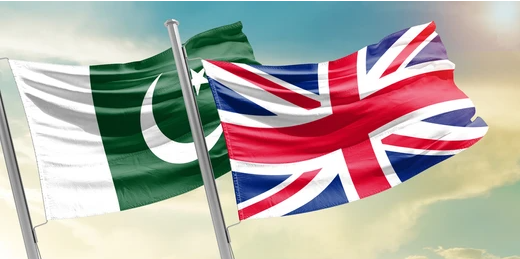
ISLAMABAD — Pakistan and the United Kingdom have agreed to enhance their bilateral trade relations, focusing on strengthening business-to-business cooperation and exploring the possibility of upgrading the existing Trade Dialogue into a more comprehensive economic and trade framework. The agreement was reached during discussions held on Thursday. What Happened The meeting between Pakistani and UK officials underscored a mutual commitment to intensify trade engagement between the two nations. Both countries recognized the potential for increased trade and investment opportunities and expressed a desire to build on the existing Trade Dialogue. This initiative aims to create a more structured framework that could facilitate greater economic collaboration. During the discussions, both sides highlighted the importance of removing trade barriers and fostering an environment conducive to business growth. The UK delegation emphasized the potential benefits of such cooperation, noting that stronger trade ties could lead to job creation and economic development in both countries. Pakistani officials echoed this sentiment, stressing the need for a robust partnership that could bolster Pakistan’s economic standing on the international stage. The talks also included discussions on specific sectors where cooperation could be enhanced, such as technology, agriculture, and renewable energy. Both countries agreed to explore joint ventures and investment opportunities in these areas, which could lead to significant economic benefits. Background Pakistan and the UK have a long-standing relationship that extends beyond trade, encompassing cultural, educational, and diplomatic ties. Historically, trade between the two countries has been significant, with the UK being one of Pakistan’s largest trading partners in Europe. The existing Trade Dialogue has served as a platform for discussing trade-related issues and identifying opportunities for collaboration. In recent years, both countries have expressed a desire to deepen their economic ties. The UK has been a major source of foreign direct investment in Pakistan, and there is potential for further growth in this area. The proposed upgrade of the Trade Dialogue into a more structured framework reflects both nations’ commitment to expanding their economic partnership. Why It Matters The agreement to enhance trade relations between Pakistan and the UK is significant for several reasons. Economically, it presents an opportunity for Pakistan to diversify its trade portfolio and reduce its reliance on traditional markets. By strengthening ties with the UK, Pakistan can access new markets and attract foreign investment, which could spur economic growth and development. For the UK, enhancing trade relations with Pakistan aligns with its post-Brexit strategy of forging stronger economic partnerships outside the European Union. As the UK seeks to establish itself as a global trading nation, partnerships with countries like Pakistan are crucial for expanding its economic reach and influence. Socially, increased trade and investment can lead to job creation and economic opportunities for citizens in both countries. By focusing on sectors such as technology and renewable energy, the partnership can also contribute to sustainable development and environmental goals. Politically, the strengthening of trade ties can enhance diplomatic relations between Pakistan and the UK, fostering greater cooperation on a range of international issues. As both countries navigate complex global challenges, a robust economic partnership can serve as a foundation for broader collaboration. Key Takeaways Pakistan and the UK have agreed to enhance bilateral trade relations and explore upgrading the existing Trade Dialogue. The discussions focused on strengthening business-to-business cooperation and removing trade barriers. Potential areas of collaboration include technology, agriculture, and renewable energy. The agreement aligns with the UK’s post-Brexit strategy and Pakistan’s economic diversification goals. Enhanced trade ties can lead to job creation, economic growth, and stronger diplomatic relations. Source Attribution This article is based on official government statements, press releases, and public communications from relevant authorities. Author: NEN Editorial Desk | Editor: NEN Newsroom | Fact Checked By: NEN Editorial Team Author: NEN Editorial Desk  |  Editor: NEN Newsroom  |  Last Updated: July 23, 2026  |  Source: NEN Reporter This article was produced by the NEN Editorial Desk in accordance with NEN Agency’s Editorial Policy and Fact-Checking Policy.
World

Pakistan and U.S. Strengthen Cultural Ties with Liberty Bell Exhibition

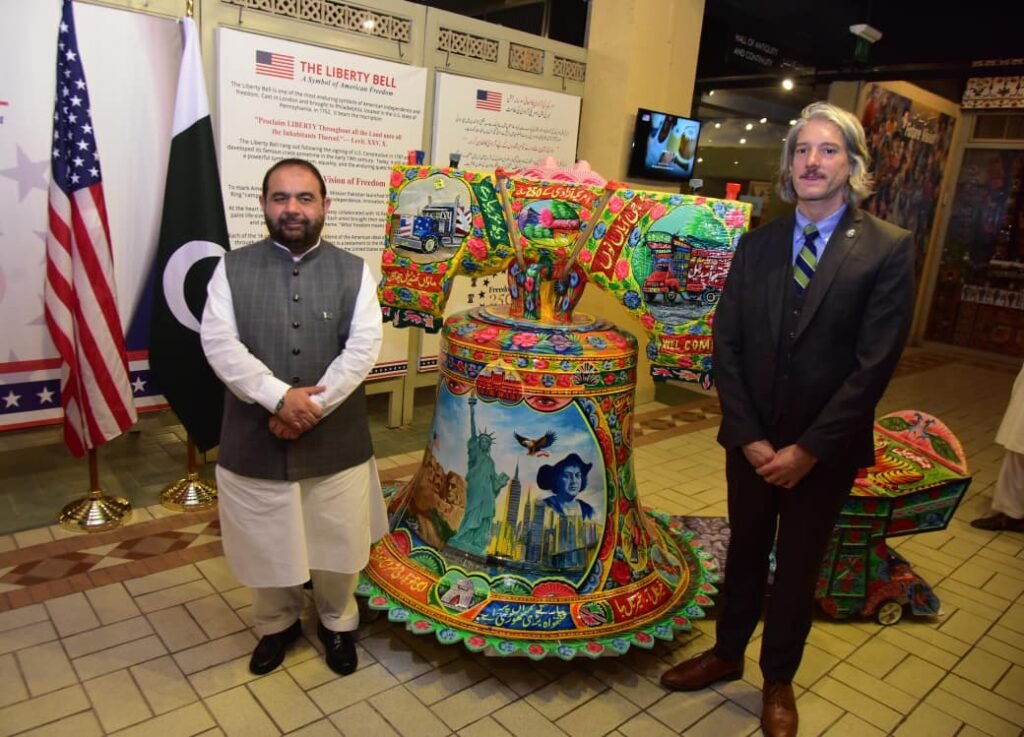
ISLAMABAD — Pakistan and the United States have reaffirmed their commitment to cultural collaboration with the inauguration of the ‘Let Freedom Ring’ exhibition, featuring the American Liberty Bell, at the Lok Virsa Heritage Museum. The event took place on Thursday, with Federal Minister for National Heritage and Culture Aurangzeb Khan Khichi and U.S. Chargé d’Affaires Andy Halus presiding over the ceremony. What Happened The ‘Let Freedom Ring’ exhibition was inaugurated at the Lok Virsa Heritage Museum, with the aim of celebrating and strengthening the cultural partnership between Pakistan and the United States. Federal Minister Aurangzeb Khan Khichi and U.S. Chargé d’Affaires Andy Halus jointly opened the exhibition, which showcases the iconic American Liberty Bell, a symbol of freedom and independence. During the inauguration, Minister Khichi emphasized Pakistan’s dedication to fostering cultural exchanges that promote mutual understanding and respect between the two nations. He stated, “Cultural diplomacy is a vital component of our bilateral relations, and exhibitions like this serve as a bridge between our peoples.” Andy Halus echoed these sentiments, highlighting the importance of cultural ties in enhancing diplomatic relations. He remarked, “The Liberty Bell is not just a symbol of American independence; it represents the universal ideals of freedom and democracy that both our countries cherish.” The exhibition is part of a series of cultural events planned to commemorate the longstanding relationship between Pakistan and the United States. It aims to engage the public in a dialogue about shared values and historical experiences. Background The Liberty Bell, originally located in Philadelphia, Pennsylvania, is an enduring symbol of American independence and liberty. Its inscription, “Proclaim Liberty Throughout All the Land Unto All the Inhabitants Thereof,” resonates with the ideals of freedom and democracy. The bell was commissioned in 1752 and has since become a national treasure in the United States. Pakistan and the United States have a history of cultural cooperation, with numerous exchanges and collaborations taking place over the years. These initiatives have included educational programs, artistic exchanges, and joint exhibitions, all aimed at enhancing mutual understanding and cooperation. The Lok Virsa Heritage Museum in Islamabad is a premier institution dedicated to preserving and promoting the cultural heritage of Pakistan. It regularly hosts exhibitions and events that showcase both local and international cultural artifacts and traditions. Why It Matters The reaffirmation of cultural ties between Pakistan and the United States through the Liberty Bell exhibition is significant for several reasons. Culturally, it highlights the shared values of freedom and democracy that underpin the relationship between the two countries. This exhibition serves as a reminder of the importance of cultural diplomacy in fostering peaceful and cooperative international relations. Economically, cultural exchanges can lead to increased tourism and economic benefits for both nations. By hosting international exhibitions, Pakistan can attract visitors interested in cultural and historical artifacts, thus boosting local tourism and related industries. Politically, the exhibition underscores the ongoing commitment of both countries to maintain and strengthen their bilateral relationship. In a global context where diplomatic relations can be strained by geopolitical tensions, cultural diplomacy offers a platform for dialogue and understanding. For Pakistani citizens, such events provide an opportunity to engage with global cultures, broadening their perspectives and fostering a sense of global citizenship. It also allows for the celebration of Pakistan’s own rich cultural heritage on an international stage, promoting national pride and identity. Key Takeaways The ‘Let Freedom Ring’ exhibition at Lok Virsa Heritage Museum highlights the cultural partnership between Pakistan and the U.S. The exhibition features the Liberty Bell, symbolizing shared values of freedom and democracy. Cultural diplomacy plays a crucial role in enhancing bilateral relations and mutual understanding. Such cultural events can have positive economic impacts through increased tourism. The exhibition fosters dialogue and cooperation amidst global geopolitical challenges. Source Attribution This article is based on official government statements, press releases, and public communications from relevant authorities. Author: NEN Editorial Desk | Editor: NEN Newsroom | Fact Checked By: NEN Editorial Team Author: NEN Editorial Desk  |  Editor: NEN Newsroom  |  Last Updated: July 23, 2026  |  Source: NEN Reporter This article was produced by the NEN Editorial Desk in accordance with NEN Agency’s Editorial Policy and Fact-Checking Policy.
World

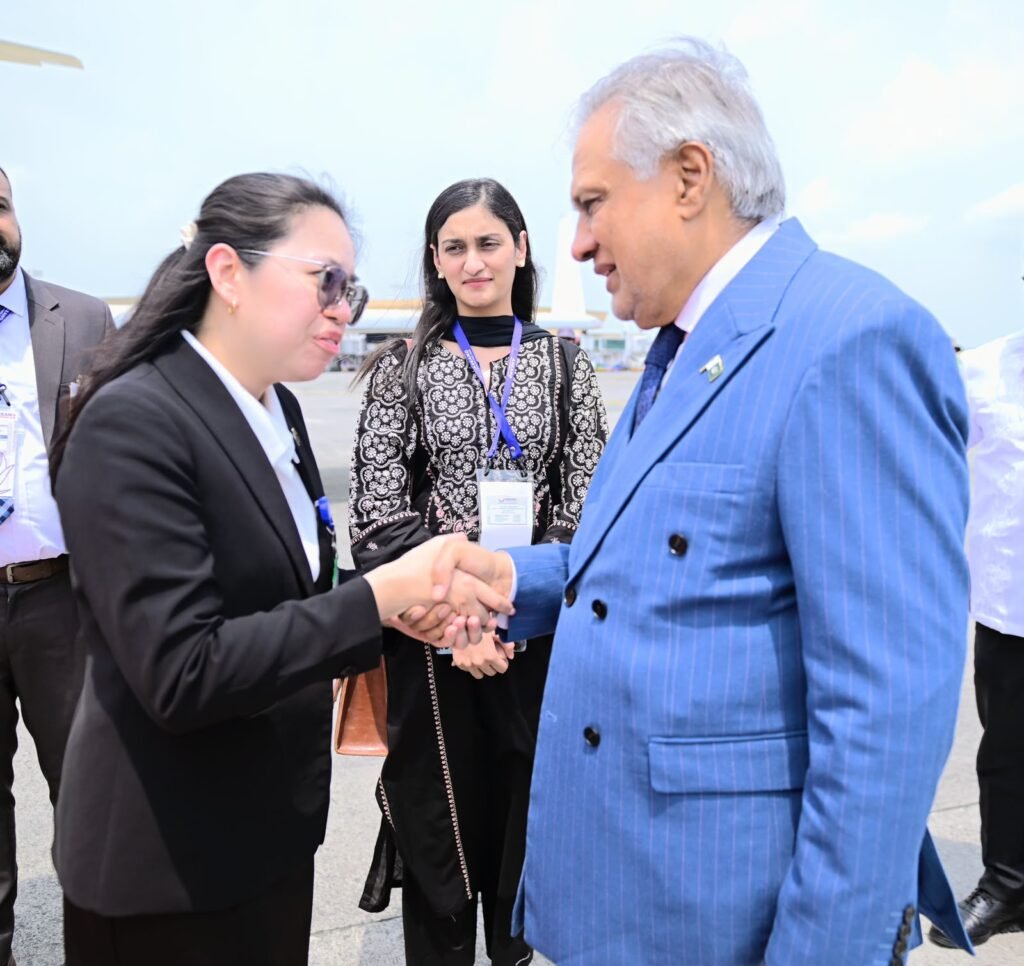
Pakistan’s Deputy PM Attends ASEAN Regional Forum In Manila

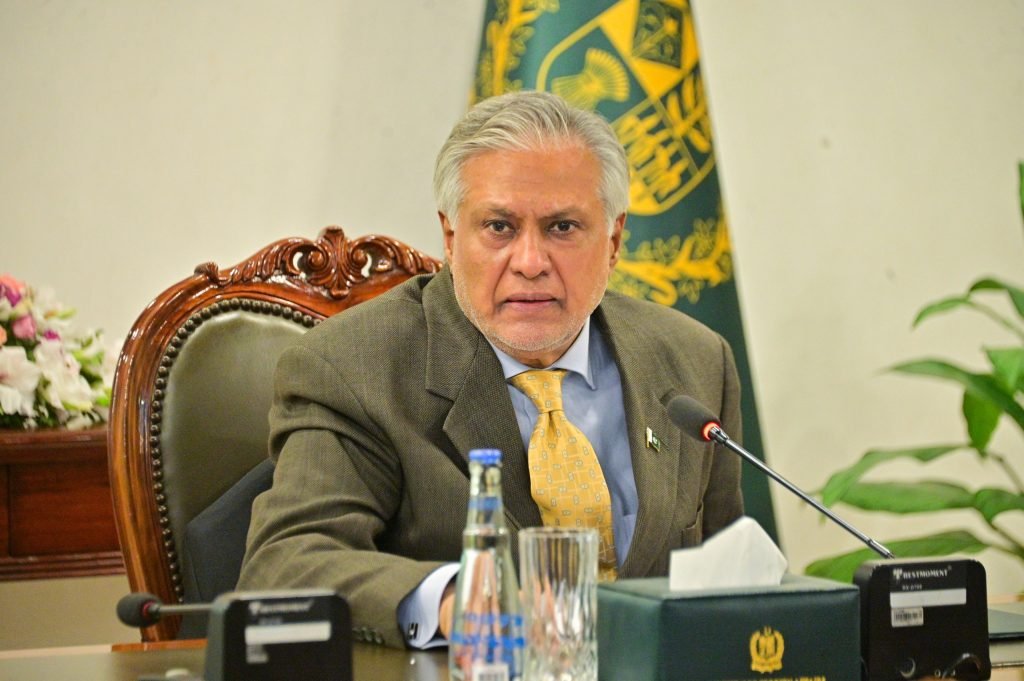
ISLAMABAD — Deputy Prime Minister and Foreign Minister of Pakistan, Senator Mohammad Ishaq Dar, represented Pakistan at the 33rd ASEAN Regional Forum (ARF) Ministerial Meeting in Manila on Thursday. The meeting saw participation from foreign ministers and representatives of 27 ARF member states, along with the Secretary-General of ASEAN, Dr. Kao Kim Hourn. What Happened The 33rd ASEAN Regional Forum (ARF) Ministerial Meeting convened in Manila, bringing together foreign ministers and representatives from 27 member states. Senator Mohammad Ishaq Dar led the Pakistani delegation, engaging in discussions aimed at strengthening regional cooperation and addressing pressing security issues. The ARF serves as a platform for dialogue and consultation on political and security issues in the Asia-Pacific region. During the meeting, participants deliberated on a range of topics including maritime security, counter-terrorism, and disaster management. The forum provided an opportunity for member states to exchange views on regional security challenges and explore collaborative solutions. The presence of Dr. Kao Kim Hourn, Secretary-General of ASEAN, underscored the importance of the forum in fostering regional stability and cooperation. Senator Dar highlighted Pakistan’s commitment to regional peace and security, emphasizing the country’s active role in combating terrorism and promoting economic integration. He stated, “Pakistan remains dedicated to working with ASEAN countries to address common challenges and enhance regional cooperation.” The meeting concluded with a joint statement reaffirming the commitment of member states to uphold peace and stability in the region. Background The ASEAN Regional Forum was established in 1994 with the aim of fostering dialogue and consultation on political and security issues in the Asia-Pacific region. It includes 27 member states, comprising ASEAN countries and their dialogue partners. Over the years, the ARF has played a crucial role in addressing regional security concerns and promoting confidence-building measures among member states. Pakistan has been an active participant in the ARF since becoming a member in 2004. The country has consistently advocated for regional cooperation in addressing security challenges, particularly in areas such as counter-terrorism, maritime security, and disaster management. The ARF Ministerial Meetings serve as a platform for Pakistan to engage with regional partners and contribute to collective efforts in promoting peace and stability. Why It Matters The participation of Pakistan’s Deputy Prime Minister and Foreign Minister in the ARF Ministerial Meeting underscores the country’s commitment to regional peace and security. As a member of the ARF, Pakistan plays a vital role in addressing security challenges that affect the Asia-Pacific region. The forum provides an opportunity for Pakistan to engage with regional partners and collaborate on initiatives aimed at enhancing regional stability. Pakistan’s active involvement in the ARF is significant in the context of its broader foreign policy objectives. The country seeks to strengthen its ties with ASEAN member states and enhance economic cooperation through initiatives such as the China-Pakistan Economic Corridor (CPEC). By participating in the ARF, Pakistan can contribute to regional efforts in combating terrorism, promoting maritime security, and addressing other security concerns. The ARF Ministerial Meeting also highlights the importance of multilateral forums in addressing regional security challenges. In an increasingly interconnected world, regional cooperation is essential for addressing complex security issues that transcend national borders. The ARF provides a platform for member states to engage in dialogue, build trust, and work towards collective solutions to common challenges. Key Takeaways Pakistan’s Deputy Prime Minister and Foreign Minister participated in the 33rd ASEAN Regional Forum in Manila. The meeting focused on regional cooperation and security issues, including maritime security and counter-terrorism. Pakistan emphasized its commitment to regional peace and security and its active role in combating terrorism. The ASEAN Regional Forum serves as a platform for dialogue and consultation on political and security issues in the Asia-Pacific region. Pakistan’s participation in the ARF aligns with its broader foreign policy objectives of enhancing regional cooperation and economic integration. Source Attribution This article is based on official government statements, press releases, and public communications from relevant authorities. Author: NEN Editorial Desk | Editor: NEN Newsroom | Fact Checked By: NEN Editorial Team Author: NEN Editorial Desk  |  Editor: NEN Newsroom  |  Last Updated: July 23, 2026  |  Source: NEN Reporter This article was produced by the NEN Editorial Desk in accordance with NEN Agency’s Editorial Policy and Fact-Checking Policy.

World

Deputy PM Dar to Attend SCO Foreign Ministers Meeting in Kyrgyz Republic

ISLAMABAD — Deputy Prime Minister and Foreign Minister Senator Mohammad Ishaq Dar will lead Pakistan’s delegation to the Shanghai Cooperation Organisation (SCO) Council of Foreign Ministers (CFM) meeting in Cholpon-Ata, Kyrgyz Republic, on July 23-24, 2026. The invitation was extended by Kyrgyz Foreign Minister Zheenbek Kulubaev. What Happened Deputy Prime Minister and Foreign Minister Mohammad Ishaq Dar is set to represent Pakistan at the SCO Council of Foreign Ministers meeting in Cholpon-Ata, Kyrgyz Republic, scheduled for July 23-24, 2026. This event marks a significant diplomatic engagement for Pakistan within the framework of the SCO, a regional intergovernmental organization that focuses on political, economic, and security-related cooperation. The meeting will bring together foreign ministers from SCO member states, including China, Russia, India, and several Central Asian countries. The agenda is expected to cover a wide range of issues, from regional security challenges to economic collaboration and cultural exchanges. The SCO CFM meeting serves as a platform for member states to discuss and coordinate their positions on key regional and international issues. In a statement, Deputy Prime Minister Dar emphasized the importance of the SCO as a forum for fostering regional cooperation and addressing common challenges. “Pakistan is committed to playing a constructive role in the SCO and contributing to regional peace and stability,” he said. Background The Shanghai Cooperation Organisation was established in 2001, succeeding the Shanghai Five mechanism, which included China, Russia, Kazakhstan, Kyrgyzstan, and Tajikistan. The SCO expanded to include Uzbekistan in 2001, with India and Pakistan joining as full members in 2017. The organization aims to enhance mutual trust and neighborly relations among member states, promote effective cooperation in politics, trade, economy, and culture, and ensure peace and stability in the region. The Council of Foreign Ministers is a key component of the SCO’s institutional framework, responsible for preparing for the annual SCO summit and implementing decisions made by the heads of state. The CFM meetings provide an opportunity for foreign ministers to engage in dialogue on pressing issues and coordinate their countries’ positions on various matters. Why It Matters The participation of Deputy Prime Minister Dar in the SCO CFM meeting underscores Pakistan’s commitment to regional cooperation and multilateral diplomacy. As a member of the SCO, Pakistan has the opportunity to engage with major regional powers, including China and Russia, on issues of mutual interest. This engagement is particularly crucial given the evolving geopolitical landscape in South and Central Asia. Economically, the SCO provides a platform for Pakistan to explore trade and investment opportunities with member states. The organization has been working to enhance economic connectivity through initiatives such as the Belt and Road Initiative (BRI), which aligns with Pakistan’s development goals. By participating in the CFM meeting, Pakistan can advocate for increased economic collaboration and infrastructure development in the region. Politically, the SCO serves as a forum for addressing security challenges, including terrorism, extremism, and drug trafficking. Pakistan’s involvement in the CFM meeting allows it to contribute to regional security efforts and strengthen its ties with other member states. The meeting also provides an opportunity for Pakistan to articulate its stance on key international issues and seek support from its SCO partners. Key Takeaways Deputy Prime Minister Mohammad Ishaq Dar will lead Pakistan’s delegation to the SCO CFM meeting in Kyrgyzstan. The meeting will address regional security, economic cooperation, and cultural exchanges among member states. Pakistan’s participation highlights its commitment to regional cooperation and multilateral diplomacy. The SCO provides a platform for Pakistan to engage with major regional powers like China and Russia. The meeting offers opportunities for Pakistan to advocate for economic collaboration and regional security efforts. Source Attribution This article is based on official government statements, press releases, and public communications from relevant authorities. Author: NEN Editorial Desk | Editor: NEN Newsroom | Fact Checked By: NEN Editorial Team Author: NEN Editorial Desk  |  Editor: NEN Newsroom  |  Last Updated: July 23, 2026  |  Source: Press Release from Government of Pakistan This article was produced by the NEN Editorial Desk in accordance with NEN Agency’s Editorial Policy and Fact-Checking Policy.

Scroll to Top