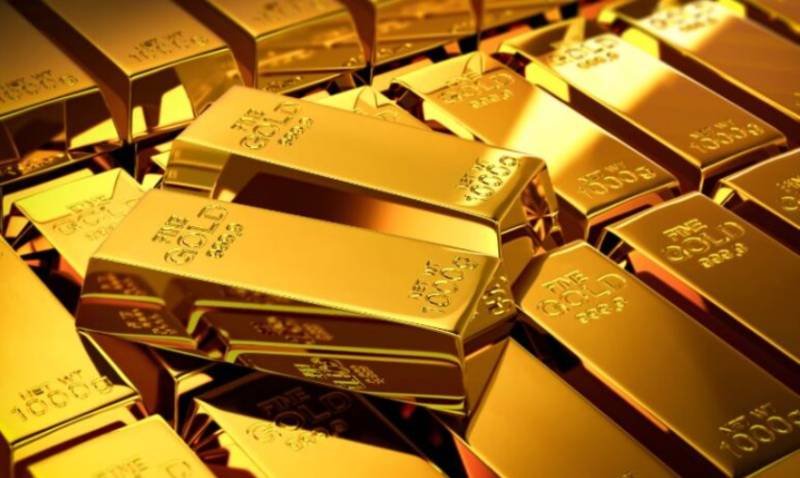
ISLAMABAD — The price of gold in Pakistan experienced a modest decline on Saturday, with the rate for 24-karat gold per tola decreasing by Rs100 to reach Rs460,236. This change was reported by the All Pakistan Sarafa Gems and Jewellers Association, reflecting fluctuations in the local bullion market.
What Happened
The local gold market saw a slight dip in prices as the rate for 24-karat gold per tola fell by Rs100. This adjustment brought the price down to Rs460,236, according to the latest figures provided by the All Pakistan Sarafa Gems and Jewellers Association. The price for 10 grams of 24-karat gold also saw a reduction, though specific figures were not disclosed in the initial report.
This decline in gold prices is part of a broader trend influenced by both international market dynamics and local economic factors. The global gold market has been experiencing volatility due to a variety of factors, including fluctuating currency values and changes in international demand. In Pakistan, these global trends are compounded by local economic conditions, including inflation and currency depreciation, which affect the purchasing power of consumers.
According to industry experts, the local gold market is sensitive to international price movements, with the US dollar’s strength playing a significant role. As the dollar appreciates, gold prices in local currency terms tend to rise, and vice versa. The recent adjustment in gold prices reflects these complex interactions.
Background
Gold has historically been a popular investment and a traditional store of value in Pakistan. The country’s gold market is influenced by cultural factors, including the demand for gold jewelry during weddings and festivals. Historically, gold prices in Pakistan have mirrored international trends, with local prices adjusting in response to changes in the global market.
The All Pakistan Sarafa Gems and Jewellers Association regularly updates gold prices based on international market rates and local demand conditions. These updates are crucial for traders and consumers, providing a benchmark for transactions in the gold market.
In recent years, Pakistan’s economy has faced challenges such as inflation and currency depreciation, which have impacted the purchasing power of consumers. These economic conditions have also affected the gold market, as consumers weigh the cost of investment against other financial priorities.
Why It Matters
The fluctuation in gold prices has significant implications for various stakeholders in Pakistan. For consumers, a decrease in gold prices can make gold jewelry and investment more affordable, potentially boosting demand. This is particularly relevant in a country where gold is a traditional gift and a preferred form of savings.
For investors, changes in gold prices can affect portfolio values and investment strategies. Gold is often considered a safe-haven asset, and its price movements can influence investor behavior, especially during times of economic uncertainty.
Economically, the gold market is an important component of Pakistan’s broader financial system. Changes in gold prices can impact the trade balance, as gold is both imported and exported. Additionally, the gold market can influence consumer spending patterns, with potential ripple effects on the retail and jewelry sectors.
On a macroeconomic level, the gold market’s performance can reflect broader economic trends, including inflation, currency stability, and international trade dynamics. As such, monitoring gold prices can provide insights into the health of the economy and the financial well-being of consumers.
Key Takeaways
- The price of 24-karat gold per tola in Pakistan decreased by Rs100, settling at Rs460,236.
- Gold prices are influenced by international market trends and local economic conditions.
- The All Pakistan Sarafa Gems and Jewellers Association regularly updates gold prices based on market dynamics.
- Fluctuations in gold prices have significant implications for consumers, investors, and the broader economy.
- Gold remains a popular investment and cultural asset in Pakistan, reflecting both economic and traditional values.
Source Attribution
This article is based on official statements and data provided by the All Pakistan Sarafa Gems and Jewellers Association.