
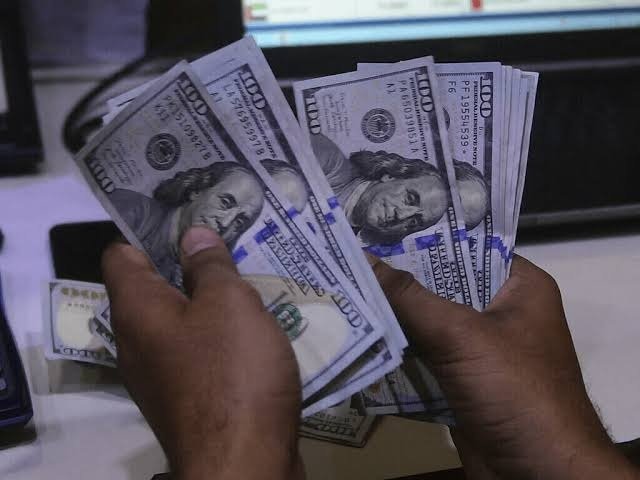
KARACHI — The National Bank of Pakistan (NBP) released its updated foreign exchange rates on Thursday, reflecting the latest figures from its Treasury Management Division. The announcement comes as Pakistan continues to navigate economic challenges, with currency fluctuations impacting both businesses and consumers.
What Happened
The Treasury Management Division of the NBP issued the latest exchange rates for a range of currencies, providing crucial information for importers, exporters, and financial analysts. According to the released data, the US Dollar (USD) was listed at a telegraphic transfer (TT) selling rate of PKR 278.40 and a buying rate of PKR 277.90. The Euro (EUR) was priced at a TT selling rate of PKR 319.26 and a buying rate of PKR 318.68.
Other notable currencies include the British Pound (GBP), which was set at a TT selling rate of PKR 376.78 and a buying rate of PKR 376.11, and the Japanese Yen (JPY) with a selling rate of PKR 1.7176 and a buying rate of PKR 1.7145. The Swiss Franc (CHF) was listed at PKR 345.53 for selling and PKR 344.91 for buying, while the Canadian Dollar (CAD) was priced at PKR 198.20 for selling and PKR 197.84 for buying.
Additional currencies such as the Australian Dollar (AUD), Swedish Krona (SEK), and Norwegian Krone (NOK) were also included in the update, reflecting minor fluctuations that could impact trade and investment decisions. The NBP also provided conversion rates for frozen foreign currency deposits, with the USD at PKR 277.9530, GBP at PKR 371.5676, and EUR at PKR 317.5335.
Background
Pakistan’s economy has been under significant pressure due to a combination of internal and external factors, including inflation, fiscal deficits, and geopolitical tensions. The foreign exchange rates issued by the NBP are crucial for businesses engaged in international trade, as they provide a benchmark for currency conversion and financial planning.
Historically, the Pakistani Rupee has experienced volatility against major currencies, influenced by global market trends, domestic economic policies, and international trade agreements. The State Bank of Pakistan (SBP) plays a pivotal role in managing the country’s monetary policy, including interventions in the foreign exchange market to stabilize the currency.
Why It Matters
The release of updated foreign exchange rates by the NBP is significant for several reasons. Firstly, it directly affects the cost of imports and exports, influencing the pricing strategies of businesses engaged in international trade. Fluctuations in exchange rates can lead to increased costs for imported goods, which may be passed on to consumers, contributing to inflationary pressures.
Secondly, the exchange rates impact remittances, a vital source of foreign exchange for Pakistan. With millions of Pakistanis working abroad, the value of remittances is closely tied to exchange rate movements. A stronger rupee can reduce the local currency value of remittances, affecting household incomes and spending power.
Furthermore, the foreign exchange rates are a barometer of investor confidence in Pakistan’s economy. Stable and predictable exchange rates can attract foreign investment, while volatility may deter investors seeking stable returns. The NBP’s rates provide insights into market perceptions and economic conditions, influencing investment decisions.
Lastly, these rates are crucial for policymakers and economists who analyze economic trends and formulate strategies to address macroeconomic challenges. Understanding exchange rate dynamics is essential for crafting effective monetary and fiscal policies that promote economic stability and growth.
Key Takeaways
- The NBP released updated foreign exchange rates, impacting trade and financial planning.
- The US Dollar was listed at a TT selling rate of PKR 278.40 and a buying rate of PKR 277.90.
- Exchange rates influence import costs, remittances, and investor confidence in Pakistan.
- Stable exchange rates are vital for attracting foreign investment and economic growth.
- Policymakers use exchange rate data to address macroeconomic challenges.
Source Attribution
This article is based on official statements and public communications from the National Bank of Pakistan.














