
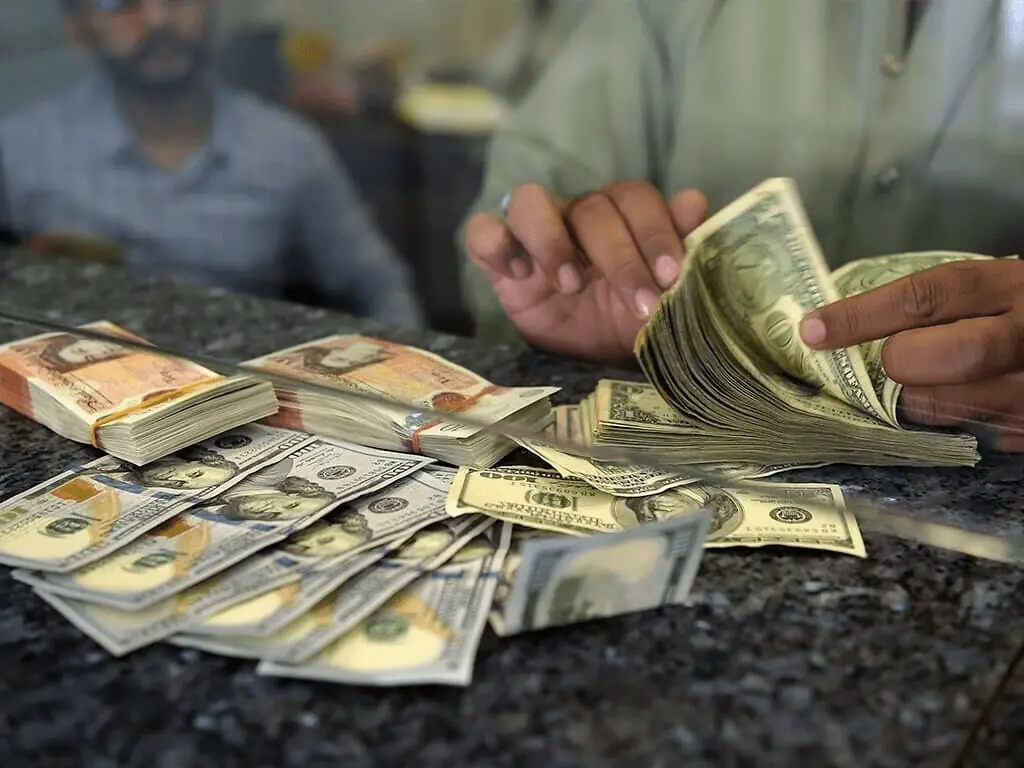
ISLAMABAD — On Thursday, the Pakistani Rupee experienced a minor appreciation against the US Dollar, gaining 3 paisa in interbank trading. The Rupee closed at Rs 277.97, a slight improvement from the previous day’s closing rate of Rs 278.00, as reported by the Forex Association of Pakistan (FAP).
What Happened
In the latest interbank market activity, the Rupee showed a modest gain against the US Dollar. The currency closed at Rs 277.97, marking a 3 paisa increase from the previous trading session’s closing rate of Rs 278.00. This fluctuation reflects ongoing volatility in the foreign exchange market, influenced by various economic factors.
According to the Forex Association of Pakistan, the open market buying and selling rates for the US Dollar were recorded at Rs 279.05 and Rs 279.20, respectively. This indicates a slight variation between the interbank and open market rates, a common occurrence due to differing demand and supply dynamics.
The Euro also saw a change in its exchange rate, increasing by Rs 1.08 to close at Rs 318.68, compared to the previous day’s rate of Rs 317.60, as per the State Bank of Pakistan (SBP). Meanwhile, the Japanese Yen remained stable at Rs 1.71, and the British Pound rose significantly by Rs 4.24, closing at Rs 375.91 from Rs 371.67.
The Emirate Dirham and Saudi Riyal experienced minor declines, with the Dirham decreasing by 1 paisa to Rs 75.68 and the Riyal by 3 paisa to Rs 74.01. These fluctuations demonstrate the dynamic nature of currency exchange rates, influenced by international trade, geopolitical events, and domestic economic policies.
Background
The Pakistani Rupee has faced significant pressure in recent years, primarily due to economic challenges, including a widening current account deficit and external debt obligations. The country’s reliance on imports, coupled with fluctuating global oil prices, has further strained the Rupee’s value against major currencies.
Historically, the Rupee’s value against the US Dollar has been a critical indicator of the country’s economic health. The State Bank of Pakistan has occasionally intervened in the foreign exchange market to stabilize the currency, using foreign reserves to manage excessive volatility.
Why It Matters
The slight appreciation of the Rupee against the US Dollar is significant for several reasons. Firstly, it provides a temporary relief to importers who face higher costs when the Rupee depreciates. A stronger Rupee can help reduce the cost of imported goods, potentially easing inflationary pressures on the economy.
For the general public, currency stability is crucial as it affects the prices of everyday goods and services. A stable or appreciating Rupee can lead to more predictable pricing, which is beneficial for household budgeting and financial planning.
On a broader scale, currency stability is vital for attracting foreign investment. Investors seek stable economic environments to minimize risks, and a stable Rupee can enhance Pakistan’s attractiveness as an investment destination. This is particularly important as the country seeks to boost economic growth and create employment opportunities.
Moreover, the exchange rate is a key factor in the country’s balance of payments. A stronger Rupee can help improve the trade balance by making exports more competitive, although it can also make imports cheaper, potentially widening the trade deficit if not managed carefully.
Key Takeaways
- The Pakistani Rupee appreciated by 3 paisa against the US Dollar, closing at Rs 277.97 in interbank trading.
- The open market rates for the US Dollar were slightly higher, with buying and selling at Rs 279.05 and Rs 279.20, respectively.
- The Euro and British Pound saw increases against the Rupee, while the Emirate Dirham and Saudi Riyal experienced minor declines.
- Currency stability is crucial for economic planning, affecting import costs, inflation, and foreign investment.
- The Rupee’s performance is a key indicator of Pakistan’s economic health and influences the country’s balance of payments.
Source Attribution
This article is based on official government statements, press releases, and public communications from relevant authorities.














