
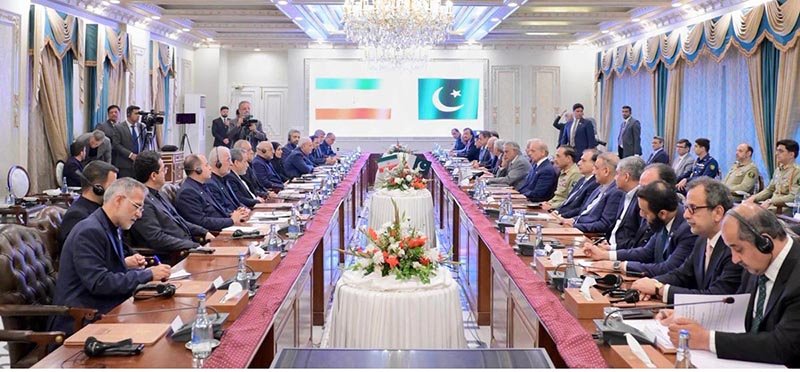
ISLAMABAD — Prime Minister Muhammad Shehbaz Sharif and Iran’s President Dr. Masoud Pezeshkian conducted delegation-level talks in Islamabad on June 23. These discussions centered on bolstering bilateral relations and exploring mutual interests like economic cooperation and regional security.
Discussion Details
Prime Minister Shehbaz Sharif and President Masoud Pezeshkian met on June 23 for in-depth discussions aimed at enhancing Pakistan-Iran bilateral ties. This significant diplomatic engagement focused on deepening economic cooperation and tackling regional security issues.
The conversations spanned a variety of topics, including trade, energy, and security collaboration. Prime Minister Sharif emphasized Pakistan’s dedication to enhancing trade relations with Iran, highlighting the potential for increased economic collaboration. President Pezeshkian responded by conveying Iran’s interest in strengthening sectoral ties with Pakistan.
Joint Press Conference
During a subsequent joint press event, both leaders highlighted the importance of regional peace and stability. They agreed to intensify cooperation to combat terrorism and address cross-border security concerns. Discussions also included potential energy sector collaborations, focusing on joint ventures that could benefit both nations.
Background
Pakistan and Iran have a long history of diplomatic relations and share significant cultural and historical ties. Over time, these nations have engaged in numerous bilateral agreements to enhance economic and security cooperation. However, relations have sometimes been strained due to geopolitical issues and security concerns.
Recently, both countries have expressed intentions to strengthen relations, particularly in trade and energy. The Iran-Pakistan gas pipeline project, though delayed, remains a crucial interest. Both nations are also part of the Economic Cooperation Organization (ECO), promoting economic collaboration.
Impact of the Talks
The talks between Prime Minister Sharif and President Pezeshkian are crucial for regional stability and economic development. Strengthening ties with Iran is vital for Pakistan as it aims to diversify economic partnerships and enhance energy security. Increased trade and investment with Iran could significantly boost Pakistan’s economy, which faces challenges.
Additionally, enhanced cooperation on regional security issues is critical for maintaining peace. Both countries have suffered from terrorism and cross-border security issues, making cooperative efforts a priority. This collaboration could help mitigate common threats and stabilize the region.
On the international front, strengthened Pakistan-Iran relations may affect South Asian and Middle Eastern geopolitical landscapes. As both navigate complex regional dynamics, their cooperation could serve as a stabilizing force.
Key Takeaways
- Prime Minister Shehbaz Sharif and President Masoud Pezeshkian held discussions in Islamabad to strengthen bilateral relations.
- The talks focused on economic cooperation, regional security, and potential energy projects.
- Both leaders emphasized the need for regional peace and stability.
- Enhancing ties with Iran is key for boosting Pakistan’s economy and regional security.














