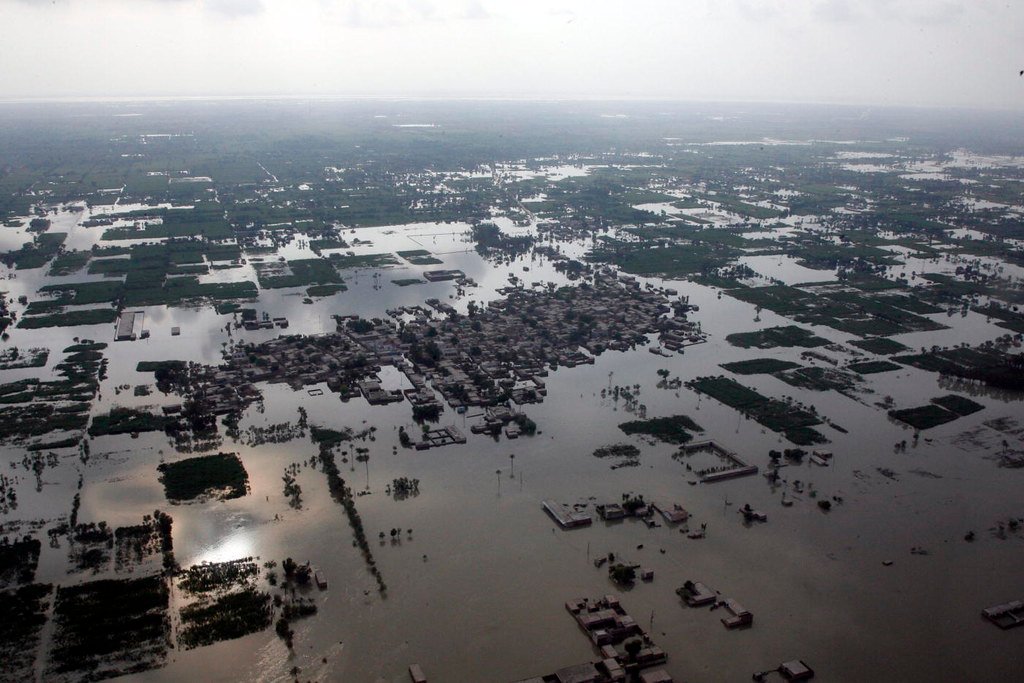
Flood devastation activates meals inflation fears
The floods in Punjab have submerged over 1.3 million acres of farmland along eastern rivers, causing significant damage to Kharif crops, especially cotton. This situation has heightened concerns about rising food inflation across Pakistan. Scale of Flood Devastation The floods have displaced two million people and submerged 2,000 villages. Authorities have successfully relocated 760,000 citizens and 516,000 livestock from the affected areas. Satellite imagery from 24 districts in Punjab reveals alarming statistics. Regions along the Sutlej, Ravi, and Chenab rivers show approximately 3,661 square kilometers remain under floodwaters, which accounts for 4.7 percent of the total area. Agricultural Losses The floods have severely impacted major crops across multiple districts: Rice Sugarcane Corn Vegetables Cotton The Pakistan Business Forum reports that approximately 35 percent of the cotton crop in central and southern Punjab is destroyed. Bahawalnagar, the province’s largest cotton-producing district, has suffered losses between 40-50 percent. Farmer Financial Losses According to Akhtar Farooq Meo from the Kissan Board Pakistan, farmers have endured losses totaling Rs536 billion due to crop damages, including cotton, rice, sesame, maize, and fodder. He warns of potential shortages of perishable goods in many towns, indicating a full-scale food crisis could worsen food inflation nationwide. Conflicting Reports on Rice Crop There are conflicting reports about rice crop damage. The Pakistan Business Forum claims that 60 percent of the rice crop in central and southern Punjab is destroyed. However, exporters dispute this, asserting that the Basmati crop area remains largely undamaged, except in Pasrur, Sialkot. The non-Basmati crop had mostly been harvested by late July and early August, leaving only hybrid varieties in some areas affected. Economic Impact The floods have caused a severe fodder shortage, threatening the cattle industry, a major contributor to the national GDP. Experts anticipate a sharp increase in domestic grain prices, which risks the competitiveness of Pakistani rice on the global market. Cotton Industry Challenges Ihsanul Haq, chairman of the Cotton Ginners Forum, confirmed severe stress on the cotton crop. Major cotton-producing areas in Punjab and Sindh face unprecedented challenges. Districts such as Bahawalnagar, Multan, Bahawalpur, and Rahim Yar Khan are either submerged or anticipating more heavy rainfall. The reduction in raw cotton supply has forced numerous ginning factories and mills to halt operations. Early reports indicate a disease affecting various cotton varieties, potentially reducing per-acre yields further. These developments add to agricultural losses and fuel concerns about economic growth and revenue in Pakistan’s vital export sectors.