
2026

World

Faisalabad Rally Demonstrates Solidarity With Kashmir Amid Ongoing Tensions

FAISALABAD — The Suthra Punjab Agency (SPA) organized a rally on Wednesday to express solidarity with the people of Indian Illegally Occupied Jammu and Kashmir (IIOJK). The event coincided with Youm-e-Istehsal-e-Kashmir, a day observed to mark the abrogation of Article 370 by India, which revoked the special status of Jammu and Kashmir in 2019. The rally aimed to draw international attention to the ongoing human rights issues in the region and called for the implementation of United Nations resolutions concerning the Kashmir dispute. What Happened The rally, led by Managing Director Abid Hussain Bhatti, saw participation from a diverse group of individuals, including local leaders, civil society members, and concerned citizens. Participants marched through the streets of Faisalabad, carrying banners and placards that highlighted the plight of Kashmiris under Indian administration. Chants demanding justice and freedom for the people of Kashmir echoed throughout the procession. Addressing the participants, Bhatti emphasized the need for international intervention to resolve the Kashmir issue, which has been a point of contention between India and Pakistan for decades. He stated, “The people of Kashmir have been enduring hardships for far too long. It is imperative that the international community takes notice and acts in accordance with the UN resolutions to ensure peace and justice in the region.” The rally concluded with a call to action for global leaders to facilitate dialogue and negotiations aimed at a peaceful resolution to the Kashmir conflict. Participants also observed a moment of silence in memory of those who have lost their lives in the struggle for self-determination. Background The Kashmir conflict dates back to 1947 when India and Pakistan gained independence from British rule. The princely state of Jammu and Kashmir, which was predominantly Muslim, became a contentious issue as both countries laid claim to it. The conflict has led to several wars and continuous skirmishes along the Line of Control (LoC), the de facto border between the two nations. In August 2019, the Indian government abrogated Article 370, which granted special autonomy to Jammu and Kashmir. This move was met with widespread protests and international criticism, as it was seen as an attempt to alter the demographic and political landscape of the region. Since then, the area has been under heavy military presence, with frequent reports of human rights violations. Why It Matters The ongoing conflict in Kashmir has significant implications for regional stability in South Asia. The unresolved dispute continues to strain relations between nuclear-armed neighbors India and Pakistan, posing a constant threat of escalation into a larger conflict. The international community’s involvement is crucial in mediating a peaceful resolution to prevent further deterioration of the situation. For Pakistan, the issue of Kashmir is not only a matter of territorial integrity but also a humanitarian concern. The country has consistently advocated for the rights of Kashmiris, urging the global community to uphold human rights and self-determination principles. The rally in Faisalabad is part of a broader effort to keep the Kashmir issue on the international agenda and press for diplomatic solutions. Economically, the prolonged conflict has hindered development in the region, affecting the livelihoods of millions. A peaceful resolution could potentially open avenues for economic cooperation and growth, benefiting both India and Pakistan. Moreover, it would alleviate the humanitarian crisis faced by the people of Kashmir, who have been living under constant fear and uncertainty. Key Takeaways The SPA organized a rally in Faisalabad to show solidarity with Kashmiris on Youm-e-Istehsal-e-Kashmir. Participants called for international intervention and implementation of UN resolutions on the Kashmir dispute. The Kashmir conflict remains a significant point of tension between India and Pakistan, with implications for regional stability. Resolving the dispute could lead to economic growth and improved human rights conditions in the region. The rally underscores Pakistan’s commitment to advocating for Kashmiris’ rights on the global stage. Source Attribution This article is based on official government statements, press releases, and public communications from relevant authorities. Author: NEN Editorial Desk | Editor: NEN Newsroom | Fact Checked By: NEN Editorial Team Author: NEN Editorial Desk  |  Editor: NEN Newsroom  |  Last Updated: August 05, 2026  |  Source: NEN Reporter This article was produced by the NEN Editorial Desk in accordance with NEN Agency’s Editorial Policy and Fact-Checking Policy.
Pakistan

Lahore Officials Lead Candlelight Vigil Honouring Police Martyrs

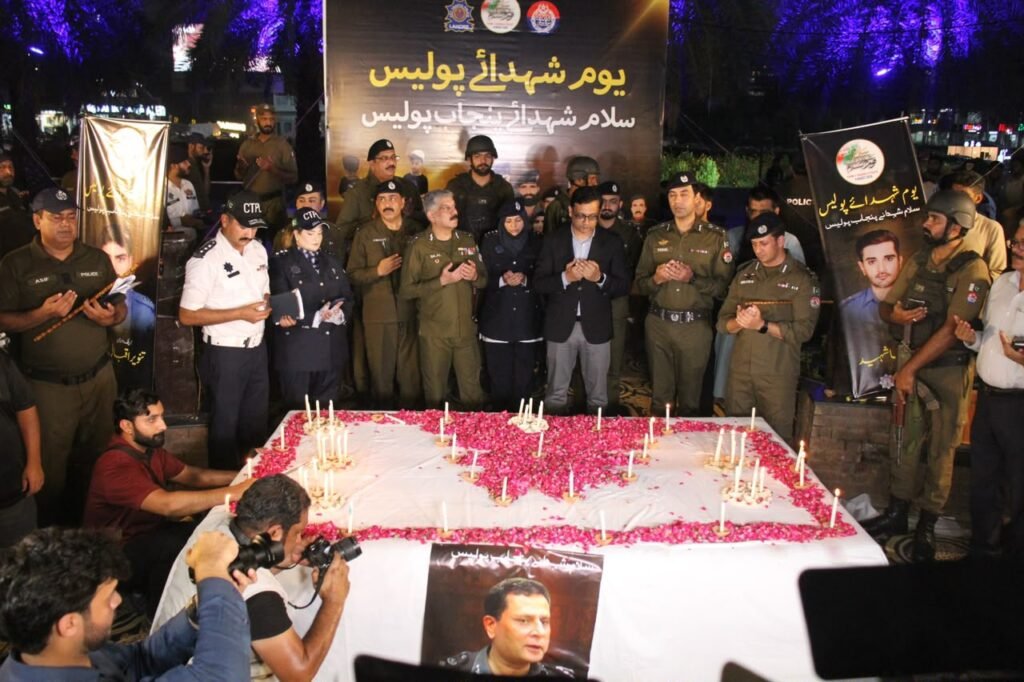
LAHORE — In a solemn ceremony to commemorate Police Martyrs’ Day, Lahore’s Chief Capital City Police Officer (CCPO) and the city commissioner led a candlelight vigil and peace walk at Liberty Chowk on Wednesday. The event aimed to honour the sacrifices of police martyrs who laid down their lives in the line of duty, reaffirming the commitment of law enforcement to protect citizens. What Happened The candlelight vigil, organized by the Lahore Police and City Traffic Police, drew a significant number of participants, including police officials, family members of the martyrs, and local citizens. The event commenced with a moment of silence, followed by the lighting of candles to pay tribute to the fallen heroes. The CCPO and commissioner addressed the gathering, expressing their gratitude for the sacrifices made by the police force. In his address, the CCPO highlighted the bravery and dedication of the police personnel who have sacrificed their lives for the safety and security of the nation. “Our martyrs are our pride, and their sacrifices will never be forgotten,” he stated. The commissioner echoed these sentiments, emphasizing the importance of remembering the martyrs and supporting their families. The peace walk that followed saw participants carrying banners and placards with messages of peace and solidarity. The walk symbolized the ongoing commitment of the police force to maintain peace and order in the city. The event concluded with prayers for the martyrs and their families, underscoring the community’s collective respect and appreciation for their service. Background Police Martyrs’ Day is observed annually in Pakistan to honour the police officers who have lost their lives in the line of duty. This day serves as a reminder of the sacrifices made by law enforcement personnel to ensure the safety and security of the public. Over the years, numerous police officers have been martyred in various incidents, including terrorist attacks and criminal confrontations. In recent years, the government and law enforcement agencies have taken several steps to improve the welfare of police personnel and their families. These measures include financial compensation, educational support for the children of martyrs, and health benefits. Such initiatives aim to provide support to the families left behind and recognize the invaluable contributions of the police force. Why It Matters The observance of Police Martyrs’ Day holds significant social and emotional importance for the families of the martyrs and the community at large. It serves as a poignant reminder of the risks faced by law enforcement officers daily and the ultimate sacrifice made by many in the line of duty. The event at Liberty Chowk not only honoured the fallen but also reinforced the public’s trust in the police force. Economically, the recognition and support for police martyrs can lead to increased morale within the force, potentially enhancing their effectiveness and commitment. By acknowledging their sacrifices, the government and society can foster a sense of pride and responsibility among serving officers, which is crucial for maintaining law and order. On a broader scale, such events contribute to the narrative of unity and resilience against crime and terrorism in Pakistan. They highlight the collective efforts of the state and its citizens to uphold peace and security, which is essential for the country’s stability and progress. Key Takeaways Lahore’s CCPO and commissioner led a candlelight vigil at Liberty Chowk to honour police martyrs. The event included a peace walk, emphasizing the commitment to maintaining peace and order. Police Martyrs’ Day is observed annually to remember the sacrifices of fallen police officers. Support for the families of martyrs includes financial, educational, and health benefits. Such events reinforce public trust in law enforcement and highlight national resilience. Source Attribution This article is based on official government statements, press releases, and public communications from relevant authorities. Author: NEN Editorial Desk | Editor: NEN Newsroom | Fact Checked By: NEN Editorial Team Author: NEN Editorial Desk  |  Editor: NEN Newsroom  |  Last Updated: August 05, 2026  |  Source: NEN Reporter This article was produced by the NEN Editorial Desk in accordance with NEN Agency’s Editorial Policy and Fact-Checking Policy.
World

WASA Organizes Rally to Express Solidarity with Kashmir

LAHORE — The Water and Sanitation Agency (WASA) held a rally on Wednesday to express solidarity with the people of Indian Illegally Occupied Jammu and Kashmir (IIOJK) and to mark Kashmir Exploitation Day. The event aimed to reaffirm Pakistan’s unwavering support for the Kashmiri people’s right to self-determination. What Happened In a show of solidarity, WASA organized a rally in Lahore that saw participation from a diverse group of individuals, including agency officials, local residents, and civil society members. The rally was part of a series of events across Pakistan to observe Kashmir Exploitation Day, a day marked annually to protest against the Indian government’s actions in the region. Participants in the rally carried placards and banners with slogans advocating for the freedom and rights of the Kashmiri people. The rally began at WASA’s headquarters and proceeded through major streets in the city, culminating in a gathering where speeches were delivered by key figures. WASA Managing Director Syed Zahid Aziz addressed the participants, stating, “The people of Pakistan stand firmly with our Kashmiri brothers and sisters in their struggle for freedom. We will continue to raise our voices against the injustices faced by them.” The rally also included a moment of silence to honor the sacrifices made by the people of Kashmir. The event concluded with prayers for peace and justice in the region. Background Kashmir Exploitation Day is observed annually on October 27, marking the day in 1947 when Indian troops landed in Srinagar, leading to the start of the conflict over the region. The day is commemorated in Pakistan and by Kashmiri communities worldwide as a reminder of the ongoing struggle for self-determination in IIOJK. The conflict in Kashmir has been a long-standing issue between India and Pakistan, with both countries claiming the region in full but controlling parts of it. The situation escalated in August 2019 when the Indian government revoked Article 370 of its constitution, which granted special autonomy to Jammu and Kashmir. This move was met with widespread protests and condemnation from Pakistan and other international bodies. Why It Matters The rally organized by WASA is significant as it highlights the continued support from various sectors of Pakistani society for the Kashmiri cause. Such events serve to keep the issue of Kashmir in the public eye and maintain pressure on international bodies to address the situation. Economically, the ongoing conflict in Kashmir has implications for regional stability, which in turn affects trade and economic relations in South Asia. The uncertainty in the region can deter investment and hinder economic growth, not just in Kashmir but in the surrounding areas as well. Politically, the Kashmir issue remains a central point of contention in India-Pakistan relations. It affects diplomatic ties and has been a cause of military skirmishes and heightened tensions between the two nuclear-armed neighbors. The international community’s involvement is crucial in mediating and finding a peaceful resolution to the conflict. Socially, the rally underscores the solidarity felt by Pakistanis towards the Kashmiri people, reflecting a shared cultural and historical bond. It also serves to educate and engage the younger generation in understanding the complexities of the Kashmir issue and the importance of advocating for human rights. Key Takeaways WASA organized a rally in Lahore to express solidarity with the Kashmiri people. The event was part of national observances for Kashmir Exploitation Day. Participants included WASA officials, local residents, and civil society members. Speeches highlighted Pakistan’s support for Kashmir’s right to self-determination. The rally reflects ongoing public engagement with the Kashmir issue in Pakistan. Source Attribution This article is based on official statements and public communications from relevant authorities. Author: NEN Editorial Desk | Editor: NEN Newsroom | Fact Checked By: NEN Editorial Team Author: NEN Editorial Desk  |  Editor: NEN Newsroom  |  Last Updated: August 05, 2026  |  Source: NEN Reporter This article was produced by the NEN Editorial Desk in accordance with NEN Agency’s Editorial Policy and Fact-Checking Policy.
World

Faisalabad Hosts Photo Exhibition Highlighting Kashmir’s Struggle

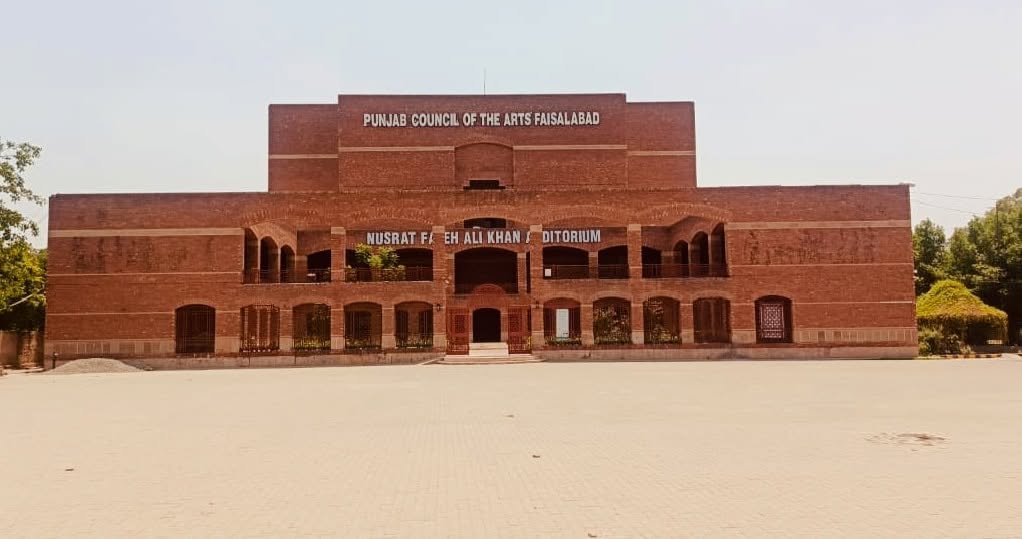
FAISALABAD — The Punjab Council of Arts, Faisalabad Division, organized a photo exhibition on Wednesday to commemorate Exploitation Day, focusing on the challenges faced by the people of Indian Illegally Occupied Jammu and Kashmir (IIOJK). What Happened The photo exhibition, held at the Punjab Council of Arts in Faisalabad, showcased a series of images that aimed to bring attention to the ongoing struggles and human rights issues in IIOJK. The event was part of a broader effort to raise awareness about the hardships endured by the Kashmiri people under Indian administration. The exhibition featured photographs depicting various aspects of life in the region, including the impact of military presence, daily life under curfew, and the resilience of the Kashmiri people. According to organizers, the exhibition was designed to educate the public about the historical and current realities of life in IIOJK. The images, captured by various photographers, provided a visual narrative of the region’s socio-political landscape. A spokesperson for the Punjab Council of Arts stated, “This exhibition is a tribute to the courage of the Kashmiri people and a reminder of the international community’s responsibility to address their plight.” The event attracted a diverse audience, including students, artists, and local residents, who engaged in discussions about the situation in Kashmir. Attendees expressed solidarity with the Kashmiri people and called for increased international attention to their cause. Background The Kashmir conflict has been a long-standing issue between India and Pakistan since the partition in 1947. The region of Jammu and Kashmir has been a flashpoint for military and political tensions, with both countries claiming it in full but controlling only parts. In August 2019, the Indian government revoked Article 370 of its constitution, which granted special autonomy to Jammu and Kashmir, leading to increased unrest and international concern over human rights violations in the region. Exploitation Day, observed annually, serves as a reminder of the ongoing conflict and the need for a peaceful resolution. It highlights the challenges faced by the Kashmiri people, including restrictions on movement, communication blackouts, and alleged human rights abuses. Why It Matters The photo exhibition in Faisalabad is significant as it underscores the cultural and diplomatic efforts within Pakistan to keep the Kashmir issue at the forefront of international discourse. By using art as a medium, the Punjab Council of Arts provides a platform for dialogue and education, aiming to foster greater understanding and empathy for the Kashmiri struggle. For Pakistan, the Kashmir issue is not only a matter of territorial dispute but also one of human rights and self-determination. The exhibition aligns with Pakistan’s broader strategy to garner international support and pressure India to address the grievances of the Kashmiri people. It also reflects the cultural sector’s role in advocating for political causes and influencing public opinion. Internationally, events like these serve as a reminder of the unresolved nature of the Kashmir conflict and its potential to affect regional stability in South Asia. The exhibition’s impact extends beyond Pakistan, as it encourages global audiences to consider the humanitarian aspects of the conflict. Key Takeaways The Punjab Council of Arts in Faisalabad hosted a photo exhibition on Exploitation Day to highlight the struggles in IIOJK. The exhibition aimed to educate the public on the socio-political issues faced by Kashmiris under Indian administration. The event attracted a diverse audience, fostering discussions on the Kashmir conflict and international responsibility. The exhibition aligns with Pakistan’s efforts to maintain international focus on the Kashmir issue. Art serves as a powerful tool for advocacy and raising awareness about human rights concerns. Source Attribution This article is based on official statements and public communications from the Punjab Council of Arts and relevant authorities. Author: NEN Editorial Desk | Editor: NEN Newsroom | Fact Checked By: NEN Editorial Team Author: NEN Editorial Desk  |  Editor: NEN Newsroom  |  Last Updated: August 05, 2026  |  Source: NEN Reporter This article was produced by the NEN Editorial Desk in accordance with NEN Agency’s Editorial Policy and Fact-Checking Policy.
World

National Bank of Pakistan Releases Latest Currency Exchange Rates

KARACHI — The National Bank of Pakistan (NBP) has announced the latest buying and selling rates for major foreign currencies as of Wednesday, August 5. These rates are critical for businesses and individuals involved in international trade and travel, providing a benchmark for currency conversion and financial planning. What Happened The NBP released the exchange rates for several major currencies, including the US Dollar (USD), British Pound (GBP), Euro (EUR), Japanese Yen (JPY), United Arab Emirates Dirham (AED), and Saudi Riyal (SAR). According to the NBP, the selling rate for the USD was set at 279.54 PKR, while the buying rate was 276.54 PKR. The GBP was listed at a selling rate of 376.16 PKR and a buying rate of 371.72 PKR. The EUR had a selling rate of 322.50 PKR and a buying rate of 318.71 PKR. For the JPY, the selling rate was 1.7754 PKR, with a buying rate of 1.7545 PKR. The AED was available at a selling rate of 74.43 PKR and a buying rate of 73.56 PKR, while the SAR was set at a selling rate of 76.12 PKR and a buying rate of 75.22 PKR. These rates reflect the current market conditions and are subject to fluctuations based on global economic events, demand and supply dynamics, and geopolitical developments. The NBP updates these rates regularly to provide accurate and timely information to its clients and the general public. Background The National Bank of Pakistan is one of the largest commercial banks in the country, playing a pivotal role in the financial sector. It is responsible for managing currency exchange rates and providing banking services to both corporate and individual clients. The bank’s currency rates are widely used as a reference point for financial transactions involving foreign currencies. Historically, Pakistan’s currency exchange rates have been influenced by various factors, including international trade balances, foreign investment inflows, and monetary policy decisions by the State Bank of Pakistan. The NBP’s role in setting these rates is crucial for maintaining economic stability and facilitating international trade. Why It Matters The release of currency exchange rates by the NBP is significant for several reasons. Firstly, it impacts the cost of imports and exports, affecting the overall trade balance of the country. Businesses engaged in international trade rely on these rates to price their goods and services competitively. A weaker Pakistani Rupee makes exports cheaper and imports more expensive, influencing trade dynamics. Secondly, currency exchange rates affect inflation and purchasing power. A depreciation in the Rupee can lead to higher import costs, contributing to inflationary pressures in the domestic economy. This, in turn, affects consumers’ purchasing power and can lead to adjustments in monetary policy by the central bank. Furthermore, the exchange rates have implications for foreign investment. Stable and predictable currency rates are attractive to foreign investors, who seek to minimize exchange rate risk. Fluctuations in the currency can impact investment decisions, affecting capital flows into the country. Lastly, for individuals, particularly those who travel abroad or send remittances, these rates determine the cost of currency conversion. Accurate and up-to-date information on exchange rates is essential for financial planning and budgeting. Key Takeaways The NBP has announced the latest buying and selling rates for major currencies, including the USD, GBP, and EUR. These rates are crucial for businesses engaged in international trade and individuals involved in currency conversion. Exchange rates impact the cost of imports and exports, inflation, and foreign investment decisions. The NBP plays a significant role in maintaining economic stability through its management of currency rates. Regular updates on exchange rates are essential for accurate financial planning and budgeting. Source Attribution This article is based on official government statements, press releases, and public communications from relevant authorities. Author: NEN Editorial Desk | Editor: NEN Newsroom | Fact Checked By: NEN Editorial Team Author: NEN Editorial Desk  |  Editor: NEN Newsroom  |  Last Updated: August 05, 2026  |  Source: NEN Reporter This article was produced by the NEN Editorial Desk in accordance with NEN Agency’s Editorial Policy and Fact-Checking Policy.
Pakistan

SECP Approves Rs1.5 Billion Capital Boost for HugoBank’s Launch

ISLAMABAD — The Securities and Exchange Commission of Pakistan (SECP) has approved a substantial capital injection for HugoBank Limited, facilitating its anticipated entry into the digital banking sector. The Rs1.5 billion equity infusion, sanctioned through the issuance of shares to sponsor shareholders, is a crucial step towards the commercial launch of one of Pakistan’s pioneering digital retail banks. What Happened The SECP’s approval allows HugoBank Limited to issue new shares, thereby raising Rs1.5 billion in fresh equity. This financial move is aimed at bolstering the bank’s capital base as it prepares to commence operations in Pakistan’s burgeoning digital banking landscape. The decision marks a pivotal moment for HugoBank, which aims to leverage technology to offer comprehensive retail banking services. HugoBank’s strategy focuses on providing a seamless digital banking experience, catering to the needs of tech-savvy consumers who prefer online platforms over traditional banking methods. The capital injection will be instrumental in developing the necessary infrastructure and technology to support its digital operations. In a statement, an SECP official highlighted the importance of this development, noting that it aligns with Pakistan’s broader financial inclusion goals by expanding access to banking services through digital means. The official stated, “The approval is a testament to our commitment to fostering innovation and competition in the financial sector.” Background HugoBank Limited is set to become one of the first digital retail banks in Pakistan, a country where the banking sector has traditionally been dominated by conventional brick-and-mortar institutions. The move towards digital banking is part of a global trend, with many countries witnessing a shift in consumer preferences towards online financial services. The SECP, as the regulatory authority, plays a critical role in overseeing the financial sector’s compliance with legal and regulatory frameworks. Its approval process ensures that new entrants like HugoBank meet the necessary standards to operate within the country’s financial system. In recent years, the Pakistani government has been actively promoting digital financial services as a means to enhance financial inclusion. Initiatives such as the National Financial Inclusion Strategy aim to increase the accessibility of banking services to underserved populations, particularly in rural areas. Why It Matters The SECP’s approval of HugoBank’s capital injection is significant for several reasons. Economically, it represents a step forward in diversifying Pakistan’s banking sector, which has been relatively slow to adopt digital innovations. By facilitating the entry of digital banks, the SECP is encouraging competition, which can lead to better services and lower costs for consumers. Socially, the launch of digital banks like HugoBank can significantly impact financial inclusion. With a large portion of Pakistan’s population still unbanked, digital banking offers a viable solution to reach these individuals, providing them with access to essential financial services such as savings accounts, loans, and payment systems. Politically, this move aligns with the government’s vision of a ‘Digital Pakistan,’ aiming to harness technology to improve governance, economic growth, and social development. The success of digital banks could serve as a model for other sectors looking to integrate technology into their operations. Internationally, the development positions Pakistan as a forward-thinking player in the global financial landscape. By embracing digital banking, Pakistan can attract foreign investment and expertise, further strengthening its financial sector. Key Takeaways The SECP approved a Rs1.5 billion capital injection for HugoBank Limited. HugoBank aims to be one of Pakistan’s first digital retail banks. The move supports Pakistan’s financial inclusion and digital innovation goals. Digital banking can enhance access to financial services for unbanked populations. This development aligns with the ‘Digital Pakistan’ initiative. Source Attribution This article is based on official government statements, press releases, and public communications from relevant authorities. Author: NEN Editorial Desk | Editor: NEN Newsroom | Fact Checked By: NEN Editorial Team Author: NEN Editorial Desk  |  Editor: NEN Newsroom  |  Last Updated: August 05, 2026  |  Source: NEN Reporter This article was produced by the NEN Editorial Desk in accordance with NEN Agency’s Editorial Policy and Fact-Checking Policy.
Pakistan

NBP Releases Latest Foreign Exchange Rates for August 2026

KARACHI — The Treasury Management Division of the National Bank of Pakistan (NBP) announced the latest exchange rates for various foreign currencies on Wednesday, August 5, 2026. These rates are crucial for businesses, investors, and individuals engaged in foreign exchange transactions across the country. What Happened The National Bank of Pakistan, a key player in the country’s banking sector, published its updated exchange rates for a range of currencies. The rates, which are used by individuals and businesses for currency conversion, reflect the buying and selling prices for each currency. The exchange rate for the US dollar was set at a buying rate of 277.65 PKR and a selling rate of 278.15 PKR. The Euro was listed at 320.32 PKR for buying and 320.90 PKR for selling. The British Pound was recorded at 373.62 PKR for buying and 374.29 PKR for selling. Other notable currencies included the Japanese Yen, which had a buying rate of 1.7634 PKR and a selling rate of 1.7665 PKR, and the Chinese Yuan, with a buying rate of 41.16 PKR and a selling rate of 41.23 PKR. Additional currencies such as the Swiss Franc, Canadian Dollar, and Australian Dollar were also listed. For instance, the Swiss Franc was available at 343.75 PKR for buying and 344.37 PKR for selling. The Canadian Dollar was set at 197.36 PKR for buying and 197.71 PKR for selling, while the Australian Dollar had a buying rate of 195.73 PKR and a selling rate of 196.09 PKR. Moreover, the NBP provided conversion rates for frozen foreign currency deposits, which are significant for account holders with foreign currency savings. The conversion rate for the US dollar was 277.7299 PKR, the British Pound was 373.1023 PKR, and the Euro was 319.061 PKR. These rates are applicable for transactions settled on the specified date of August 5, 2026. Background The National Bank of Pakistan, established in 1949, plays a pivotal role in the country’s financial system, offering a wide range of banking services, including foreign exchange transactions. Exchange rates are typically influenced by a variety of factors, including international market conditions, economic indicators, and geopolitical events. The NBP regularly updates its rates to reflect these dynamic conditions, ensuring that its clients receive accurate and competitive rates for their currency transactions. Historically, the exchange rate market in Pakistan has been subject to fluctuations due to various economic and political factors. The State Bank of Pakistan, the country’s central bank, also plays a significant role in managing the exchange rate policy, often intervening in the market to stabilize the currency when necessary. Why It Matters Exchange rates are a critical component of Pakistan’s economy, affecting everything from import and export prices to inflation and foreign investment. For businesses engaged in international trade, understanding and anticipating changes in exchange rates can be crucial for maintaining profitability and competitiveness. For individual consumers, the exchange rates impact the cost of foreign travel, education abroad, and remittances. A stronger Pakistani rupee can make foreign goods and services more affordable, while a weaker rupee can increase costs. On a broader scale, the exchange rates reflect the economic health of the country. A stable exchange rate can signal investor confidence and economic stability, which can attract foreign investment and promote economic growth. Conversely, volatile exchange rates can deter investment and create uncertainty in the market. Given the current global economic environment, with ongoing geopolitical tensions and fluctuating commodity prices, the NBP’s exchange rate announcements are closely watched by market participants and policymakers alike. Key Takeaways The National Bank of Pakistan released updated exchange rates for August 5, 2026. The US dollar buying rate is 277.65 PKR, and the selling rate is 278.15 PKR. Exchange rates impact international trade, consumer costs, and economic stability. NBP’s rates are crucial for businesses and individuals engaged in foreign exchange transactions. Stable exchange rates can attract foreign investment and promote economic growth. Source Attribution This article is based on official government statements, press releases, and public communications from relevant authorities. Author: NEN Editorial Desk | Editor: NEN Newsroom | Fact Checked By: NEN Editorial Team Author: NEN Editorial Desk  |  Editor: NEN Newsroom  |  Last Updated: August 05, 2026  |  Source: Press Release from Government of Pakistan This article was produced by the NEN Editorial Desk in accordance with NEN Agency’s Editorial Policy and Fact-Checking Policy.
World

Pakistan And Iran Commit To Expanding Bilateral Trade Ties

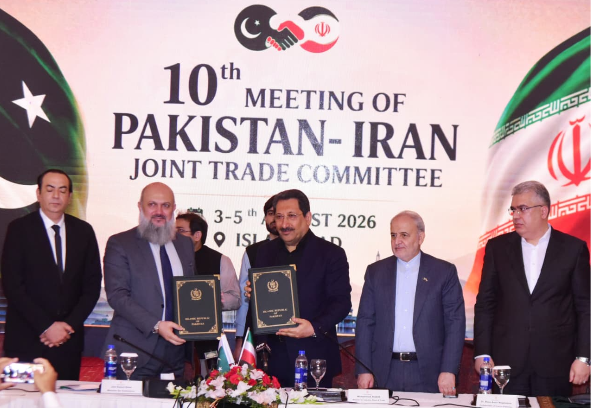
ISLAMABAD — Pakistan and Iran have concluded the 10th Session of the Pakistan-Iran Joint Trade Committee, agreeing on a series of measures aimed at enhancing bilateral trade. The session, held on August 5, was co-chaired by Federal Minister for Commerce Jam Kamal Khan and Iran’s Minister of Industry, Mines, and Trade. Both nations expressed a shared ambition to achieve an annual trade volume of US$ 10 billion. What Happened The 10th session of the Pakistan-Iran Joint Trade Committee marked a significant step forward in the economic relations between the two countries. Federal Minister for Commerce Jam Kamal Khan and Iran’s Minister of Industry, Mines, and Trade led the discussions, which focused on enhancing economic cooperation and addressing trade barriers. The meeting concluded with a mutual commitment to increase annual trade to US$ 10 billion, a goal that underscores the strategic importance both countries place on their economic relationship. During the session, both ministers highlighted the need to remove non-tariff barriers and improve trade facilitation measures. They discussed potential areas for collaboration, including energy, agriculture, and technology transfer. The ministers also agreed to explore joint ventures and investments in sectors of mutual interest, aiming to create a conducive environment for businesses in both countries. In a joint statement, the ministers emphasized the importance of regular dialogue and exchange of delegations to ensure the effective implementation of agreed measures. They also underscored the need for establishing banking channels to facilitate trade transactions, which has been a longstanding issue due to international sanctions on Iran. Background Pakistan and Iran share a long history of cultural and economic ties, with trade being a cornerstone of their bilateral relationship. Historically, trade between the two countries has been affected by geopolitical tensions and international sanctions on Iran. Despite these challenges, both nations have consistently sought to enhance economic cooperation. The Joint Trade Committee was established as a platform to address trade-related issues and explore opportunities for economic collaboration. Over the years, several sessions have been held, resulting in agreements on various trade facilitation measures. However, the actual trade volume has often fallen short of targets due to logistical and financial barriers. Why It Matters The commitment to expand trade ties between Pakistan and Iran holds significant economic and geopolitical implications. Economically, achieving the US$ 10 billion trade target could provide a substantial boost to both economies, particularly in sectors such as energy, agriculture, and technology. For Pakistan, increased trade with Iran could help diversify its trade portfolio and reduce dependency on traditional trading partners. Geopolitically, strengthening economic ties with Iran aligns with Pakistan’s broader strategy of enhancing regional connectivity and cooperation. It also reflects a pragmatic approach to navigating international sanctions on Iran, as both countries seek to establish mechanisms that facilitate trade while adhering to international regulations. Furthermore, successful implementation of the agreed measures could serve as a model for other regional trade initiatives, potentially encouraging greater economic integration in South Asia and the Middle East. This could lead to increased stability and prosperity in a region often characterized by political and economic volatility. Key Takeaways Pakistan and Iran have agreed to increase annual bilateral trade to US$ 10 billion. The 10th session of the Joint Trade Committee focused on removing trade barriers and facilitating economic cooperation. Both countries emphasized the need for establishing banking channels to facilitate trade transactions. Strengthening trade ties with Iran aligns with Pakistan’s strategy of enhancing regional connectivity. Successful trade expansion could serve as a model for regional economic integration. Source Attribution This article is based on official government statements, press releases, and public communications from relevant authorities. Author: NEN Editorial Desk | Editor: NEN Newsroom | Fact Checked By: NEN Editorial Team Author: NEN Editorial Desk  |  Editor: NEN Newsroom  |  Last Updated: August 05, 2026  |  Source: NEN Reporter This article was produced by the NEN Editorial Desk in accordance with NEN Agency’s Editorial Policy and Fact-Checking Policy.
Pakistan

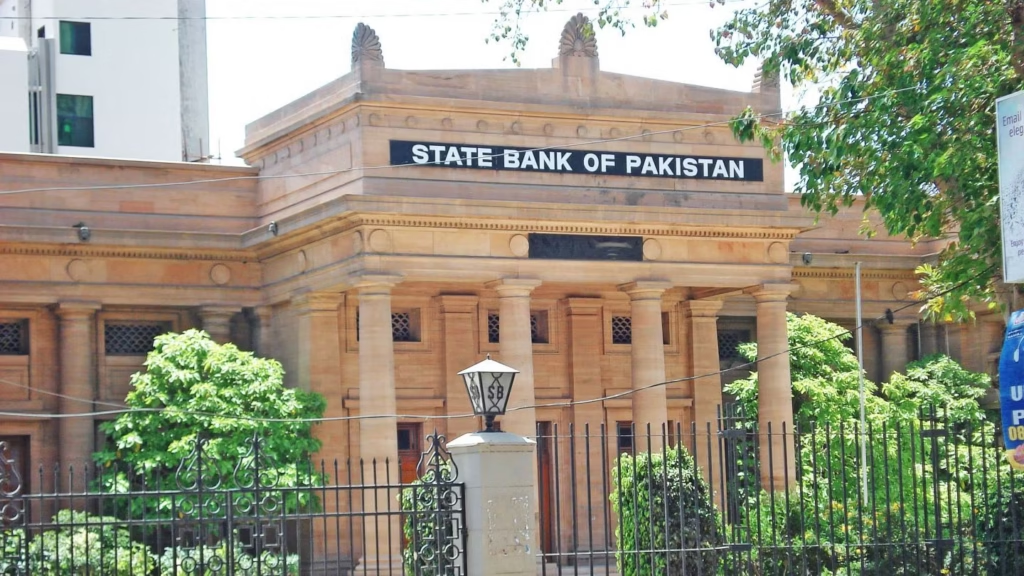
State Bank of Pakistan Infuses Rs 656 Billion to Stabilize Market Liquidity

KARACHI — The State Bank of Pakistan (SBP) injected Rs 656 billion into the financial market on Wednesday through Open Market Operations (OMO) Reverse Repo Purchase. This strategic move aims to ensure adequate liquidity within the banking system. What Happened On August 5, 2026, the SBP conducted an OMO injection with a two-day tenor, successfully injecting Rs 656 billion into the market. The central bank received seven bids for the Reverse Repo Purchase, all of which were accepted at a uniform rate of return of 11.54 percent. The bids collectively amounted to Rs 656 billion, with the rate of return ranging between 11.54 and 11.62 percent. By accepting the entire amount at the lower end of the rate spectrum, the SBP demonstrated its commitment to maintaining market stability and ensuring that banks have sufficient funds to meet their short-term obligations. The OMO Reverse Repo Purchase is a tool used by central banks to manage liquidity in the banking system. By injecting funds, the SBP provides banks with the necessary liquidity to continue lending and supporting economic activities. This operation is part of the SBP’s regular monetary policy measures to address liquidity fluctuations and maintain financial stability. Background The State Bank of Pakistan regularly uses Open Market Operations as a monetary policy tool to manage liquidity in the financial system. The OMO involves the buying or selling of government securities to regulate the money supply. In this case, the Reverse Repo Purchase allows the SBP to lend money to commercial banks, which in turn helps stabilize the financial system by ensuring that banks have adequate funds. Historically, the SBP has employed OMOs to address liquidity shortages, particularly during times of economic uncertainty or increased demand for funds. The central bank’s actions are guided by its mandate to maintain price stability and support economic growth. By adjusting liquidity levels, the SBP can influence interest rates and, consequently, the overall economic activity in the country. Why It Matters The SBP’s injection of Rs 656 billion is significant for several reasons. Firstly, it underscores the central bank’s proactive approach to managing liquidity and ensuring the smooth functioning of the financial system. By providing banks with the necessary funds, the SBP helps prevent potential liquidity crises that could disrupt economic activities. Economically, the infusion of liquidity supports lending activities, which are crucial for businesses and consumers. By ensuring that banks have sufficient funds, the SBP facilitates credit availability, which can stimulate investment and consumption. This is particularly important in a country like Pakistan, where economic growth is heavily reliant on domestic consumption and investment. Socially, maintaining liquidity in the banking system helps protect jobs and livelihoods. When banks have adequate funds, they can continue providing loans to businesses, helping them maintain operations and employment levels. This is crucial for the broader economy, as stable employment levels contribute to social stability and economic resilience. Politically, the SBP’s actions demonstrate its independence and commitment to its mandate. By taking decisive steps to manage liquidity, the central bank reinforces its role as a stabilizing force in the economy, which can enhance investor confidence and support the government’s broader economic objectives. Key Takeaways The State Bank of Pakistan injected Rs 656 billion into the market through OMO Reverse Repo Purchase. The operation was conducted with a two-day tenor at an 11.54 percent rate of return. The SBP’s actions aim to maintain liquidity and financial stability in the banking system. Ensuring adequate liquidity supports lending, investment, and economic growth. The move highlights the SBP’s proactive approach to managing economic challenges. Source Attribution This article is based on official government statements, press releases, and public communications from relevant authorities. Author: NEN Editorial Desk | Editor: NEN Newsroom | Fact Checked By: NEN Editorial Team Author: NEN Editorial Desk  |  Editor: NEN Newsroom  |  Last Updated: August 05, 2026  |  Source: NEN Reporter This article was produced by the NEN Editorial Desk in accordance with NEN Agency’s Editorial Policy and Fact-Checking Policy.

Pakistan

SCCI Honors Police Martyrs for Their Sacrifice and Service

PESHAWAR — The Sarhad Chamber of Commerce and Industry (SCCI) paid tribute to fallen police officers on Police Martyrs Day, recognizing their sacrifices for national peace and security. What Happened On Wednesday, the Sarhad Chamber of Commerce and Industry (SCCI) commemorated Police Martyrs Day by honoring the dedication and sacrifices of Pakistan’s police officers who have lost their lives in the line of duty. The event was marked by solemn ceremonies and heartfelt speeches, acknowledging the critical role that these officers play in maintaining law and order across the nation. The SCCI, representing the business community of Khyber Pakhtunkhwa, expressed its deep appreciation for the bravery and commitment of the police force. The chamber emphasized that the peace and security enjoyed by citizens and businesses alike are largely due to the relentless efforts of these officers. As part of the tribute, the SCCI highlighted the importance of remembering and supporting the families of the martyrs, who continue to bear the loss of their loved ones. During the ceremony, SCCI officials reiterated their commitment to standing by the police force and ensuring that the sacrifices of the martyrs are not forgotten. They called for greater community support for the families of fallen officers, emphasizing the need for societal recognition of their contributions. Background Police Martyrs Day is observed annually in Pakistan to honor the memory of police officers who have died in the line of duty. The day serves as a reminder of the ongoing challenges faced by law enforcement agencies in the country, particularly in regions affected by terrorism and violence. The police force in Pakistan has been at the forefront of combating various security threats, often putting their lives at risk to protect citizens and uphold the rule of law. Historically, the police force in Pakistan has faced numerous challenges, including resource constraints, operational difficulties, and threats from militant groups. Despite these challenges, police officers continue to serve with dedication, often in extremely dangerous environments. The observance of Police Martyrs Day is an opportunity to reflect on their sacrifices and renew commitments to supporting their families and improving the conditions under which they serve. Why It Matters The observance of Police Martyrs Day holds significant importance for several reasons. Firstly, it serves as a poignant reminder of the sacrifices made by police officers to ensure the safety and security of the nation. These sacrifices are crucial for maintaining law and order, which in turn supports economic stability and growth. The business community, represented by organizations like the SCCI, relies on a secure environment to thrive, making the role of the police indispensable. Secondly, acknowledging the sacrifices of police martyrs fosters a sense of unity and collective responsibility among citizens. It highlights the need for societal support for the families of fallen officers, who often face financial and emotional challenges. By honoring these martyrs, communities can strengthen their resolve to support law enforcement agencies and contribute to a safer society. Lastly, the day underscores the ongoing challenges faced by the police force in Pakistan. It calls for increased support from the government and society to address issues such as inadequate resources, training, and welfare for officers. By addressing these challenges, Pakistan can ensure that its police force is well-equipped to handle the evolving security landscape. Key Takeaways The SCCI paid tribute to police martyrs on Police Martyrs Day, emphasizing their sacrifices for national security. Police Martyrs Day is observed annually to honor officers who have died in the line of duty. The event highlights the importance of community support for the families of fallen officers. The police force in Pakistan faces ongoing challenges, including threats from militant groups. Improving support for law enforcement is crucial for maintaining security and economic stability. Source Attribution This article is based on official statements and public communications from the Sarhad Chamber of Commerce and Industry. Author: NEN Editorial Desk | Editor: NEN Newsroom | Fact Checked By: NEN Editorial Team Author: NEN Editorial Desk  |  Editor: NEN Newsroom  |  Last Updated: August 05, 2026  |  Source: NEN Reporter This article was produced by the NEN Editorial Desk in accordance with NEN Agency’s Editorial Policy and Fact-Checking Policy.

Scroll to Top