
World

Welcome to the World section of NEN Agency, your window to the stories shaping our planet. From global politics and economic shifts to science breakthroughs, cultural moments, and humanitarian crises, we connect you to events that matter — wherever they happen.

Inside This Category

  • Global Politics & Diplomacy: International relations, summits, and policy shifts.

  • World Economy & Trade: Market trends, trade agreements, and financial developments.

  • Conflicts & Security: Coverage of wars, peace efforts, and security challenges.

  • Science & Environment: Climate change, technological advances, and space exploration.

  • Culture & Society: Arts, sports, and lifestyle stories from around the globe.

Why Our World Coverage Stands Out
We deliver global news with context, helping readers see how events beyond borders influence life in Pakistan and the wider region.

World

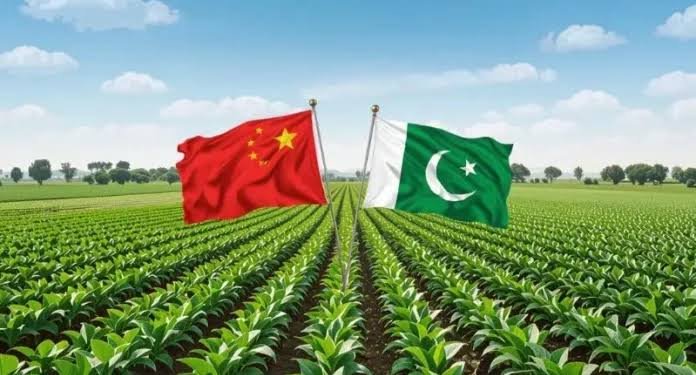
Pak-China Partnership Enhances Cotton Research And Mechanization Efforts

LAHORE — The collaboration between Pakistan and China is set to revolutionize the cotton sector through enhanced research and mechanization efforts. This was highlighted during a meeting of the Pakistan China Joint Chamber of Commerce and Industry (PCJCCI) held in Lahore, where Commercial Ambassador Adeel Munawar emphasized the potential of this partnership to boost the country’s cotton production. What Happened During the meeting, Adeel Munawar, the Commercial Ambassador of the PCJCCI, pointed out that Pakistan’s cotton industry possesses strong genetic potential, a vast cultivation area, skilled farmers, and a significant textile industry reliant on local cotton. These factors position Pakistan as a formidable player in the global cotton market. The collaboration with China aims to leverage these strengths by introducing advanced research methodologies and mechanization techniques. Munawar stated, “The cooperation between Pakistan and China in cotton research and mechanization marks a new era for the industry. This partnership will not only enhance productivity but also ensure sustainable practices in cotton farming.” The meeting underscored the importance of adopting modern technologies to improve yield and quality, which are crucial for meeting both domestic and international demand. China, being one of the largest consumers of cotton, has expressed keen interest in supporting Pakistan’s cotton sector. The partnership is expected to involve technology transfer, training programs for farmers, and investment in research facilities. These initiatives aim to address challenges such as pest management, water usage, and climate resilience, which have historically impacted cotton production in Pakistan. Background Pakistan’s cotton industry has been a cornerstone of its economy, contributing significantly to employment and exports. Historically, the sector has faced challenges including fluctuating global prices, pest infestations, and water scarcity. In recent years, efforts have been made to revitalize the industry through policy reforms and international collaborations. The Pakistan China Joint Chamber of Commerce and Industry (PCJCCI) has been instrumental in fostering economic ties between the two nations. The chamber has facilitated numerous initiatives aimed at enhancing trade and investment, with a particular focus on sectors like agriculture, textiles, and technology. China’s involvement in Pakistan’s cotton sector is part of a broader strategy to strengthen bilateral trade relations under the China-Pakistan Economic Corridor (CPEC). This initiative has already seen significant investments in infrastructure and energy projects, and the focus is now expanding to include agriculture and textile industries. Why It Matters The collaboration between Pakistan and China in the cotton sector holds significant implications for both countries. For Pakistan, it represents an opportunity to modernize its agricultural practices, increase productivity, and improve the quality of its cotton. This is crucial for maintaining competitiveness in the global market, where demand for high-quality cotton is on the rise. Economically, the partnership is expected to boost Pakistan’s textile industry, which is a major contributor to the country’s GDP and employment. By improving cotton yield and quality, the industry can enhance its export potential, thereby increasing foreign exchange earnings and reducing trade deficits. From a social perspective, the introduction of mechanization and advanced research in cotton farming could lead to job creation and skill development. Farmers and workers in the textile industry stand to benefit from training programs and technology transfer, which can improve livelihoods and reduce poverty in rural areas. Internationally, the partnership aligns with China’s Belt and Road Initiative, which aims to enhance connectivity and cooperation between Asia, Africa, and Europe. By investing in Pakistan’s cotton sector, China not only secures a reliable source of raw material for its textile industry but also strengthens its geopolitical ties with Pakistan. Key Takeaways Pakistan and China are collaborating to enhance cotton research and mechanization. The partnership aims to improve productivity and sustainability in cotton farming. China’s involvement includes technology transfer and investment in research facilities. The initiative is part of broader economic ties under the China-Pakistan Economic Corridor. The collaboration is expected to boost Pakistan’s textile industry and export potential. Source Attribution This article is based on official government statements, press releases, and public communications from relevant authorities. Author: NEN Editorial Desk | Editor: NEN Newsroom | Fact Checked By: NEN Editorial Team Author: NEN Editorial Desk  |  Editor: NEN Newsroom  |  Last Updated: July 07, 2026  |  Source: NEN Reporter This article was produced by the NEN Editorial Desk in accordance with NEN Agency’s Editorial Policy and Fact-Checking Policy.
World

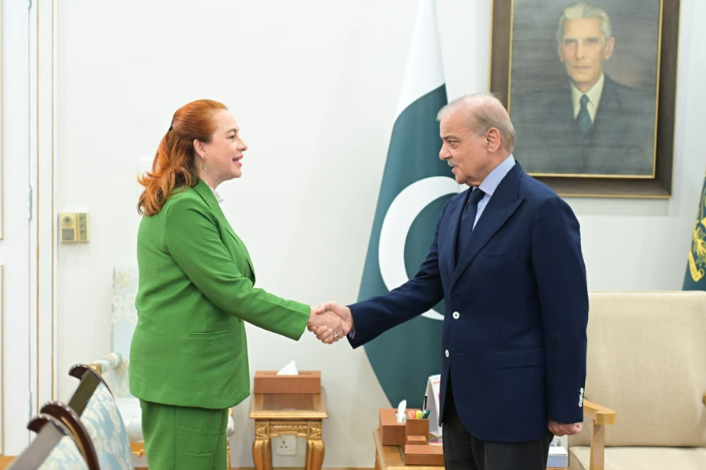
UNSG Candidate María Espinosa Meets Prime Minister Shehbaz Sharif

ISLAMABAD — María Fernanda Espinosa, a candidate for the position of United Nations Secretary-General, met with Prime Minister Shehbaz Sharif at the Prime Minister House on Monday. The meeting underscored Pakistan’s commitment to multilateralism and its active role in the United Nations. What Happened During her visit to Islamabad, María Fernanda Espinosa, who is vying for the role of the United Nations Secretary-General, engaged in discussions with Prime Minister Shehbaz Sharif. The meeting took place at the Prime Minister House, where both leaders exchanged views on various global and regional issues. Prime Minister Sharif welcomed Ms. Espinosa, emphasizing Pakistan’s longstanding dedication to multilateralism and its significant contributions to the United Nations. He highlighted the importance of the UN’s role in addressing global challenges such as climate change, sustainable development, and international peace and security. Ms. Espinosa, who has previously served as the President of the United Nations General Assembly, expressed her appreciation for Pakistan’s efforts and its active participation in the UN’s initiatives. She acknowledged the country’s contributions to peacekeeping missions and its advocacy for sustainable development goals. The discussions also touched upon the current geopolitical landscape, with both leaders agreeing on the need for strengthened international cooperation to address pressing global issues. Ms. Espinosa reiterated her commitment to promoting dialogue and understanding among nations if elected as the UN Secretary-General. Background María Fernanda Espinosa is an Ecuadorian diplomat and politician with a distinguished career in international relations. She served as the President of the 73rd session of the United Nations General Assembly from 2018 to 2019, becoming the first woman from Latin America and the Caribbean to hold the position. Pakistan has been a member of the United Nations since 1947 and has played a significant role in peacekeeping operations, contributing over 200,000 troops to 46 UN missions. The country is also a strong advocate for the Sustainable Development Goals (SDGs) and has been actively involved in efforts to address climate change and promote global peace and security. Why It Matters The meeting between Ms. Espinosa and Prime Minister Sharif is significant as it highlights Pakistan’s active engagement in international diplomacy and its support for multilateralism. As a candidate for the UN Secretary-General position, Ms. Espinosa’s visit to Pakistan underscores the importance of the country in global affairs. Pakistan’s role in the United Nations is crucial, particularly in peacekeeping and advocating for sustainable development. The country’s contributions to UN missions have been widely recognized, and its commitment to the SDGs aligns with the global agenda for peace and prosperity. The discussions between Ms. Espinosa and Prime Minister Sharif also reflect the need for enhanced international cooperation in addressing challenges such as climate change, poverty, and conflicts. As global issues become increasingly interconnected, the role of the United Nations in fostering dialogue and collaboration among nations is more critical than ever. Moreover, the meeting serves as a platform for Pakistan to reiterate its commitment to international peace and security, as well as its readiness to support initiatives that promote global stability and development. Key Takeaways María Fernanda Espinosa, a candidate for UN Secretary-General, met with Prime Minister Shehbaz Sharif in Islamabad. Discussions focused on global challenges, multilateralism, and Pakistan’s role in the United Nations. Ms. Espinosa acknowledged Pakistan’s contributions to peacekeeping and sustainable development. The meeting underscores the importance of international cooperation in addressing global issues. Pakistan continues to play a significant role in promoting peace and security through its UN engagements. Source Attribution This article is based on official government statements, press releases, and public communications from relevant authorities. Author: NEN Editorial Desk | Editor: NEN Newsroom | Fact Checked By: NEN Editorial Team Author: NEN Editorial Desk  |  Editor: NEN Newsroom  |  Last Updated: July 07, 2026  |  Source: Press Release from Government of Pakistan This article was produced by the NEN Editorial Desk in accordance with NEN Agency’s Editorial Policy and Fact-Checking Policy.
World

Pakistan Criticizes UN’s ‘Responsibility to Protect’ at General Assembly

UNITED NATIONS — Pakistan has voiced strong criticism at the United Nations General Assembly (UNGA) regarding the global norm of ‘Responsibility to Protect’ (R2P), asserting that it has been undermined by inaction and selective application. The statement was made during a session held on July 6, where Pakistan emphasized the need for consistent and unbiased implementation of R2P to effectively prevent mass atrocities. What Happened During a session at the United Nations General Assembly, Pakistan’s representative highlighted the shortcomings of the ‘Responsibility to Protect’ (R2P) doctrine, which was adopted by the UN in 2005. The doctrine was intended to prevent genocide, war crimes, ethnic cleansing, and crimes against humanity. However, Pakistan argued that the implementation of R2P has been hindered by inaction, denial, and selectivity. Pakistan’s representative stated, “Occupiers are still shielded and their grave atrocities against besieged people continue unabated.” This pointed criticism reflects Pakistan’s longstanding concerns about the selective enforcement of international norms, particularly in conflict zones where geopolitical interests often dictate the international response. The session at the UNGA was part of a broader dialogue on the effectiveness of international frameworks designed to protect vulnerable populations. Pakistan’s intervention underscored the need for a more equitable application of R2P, urging the international community to address the inconsistencies that have plagued its implementation. Background The ‘Responsibility to Protect’ is a global political commitment endorsed by all member states of the United Nations at the 2005 World Summit. It aims to prevent mass atrocity crimes by ensuring that the international community takes collective action when national authorities fail to protect their populations. Historically, the application of R2P has been contentious, with critics arguing that it has been used selectively, often influenced by the political and strategic interests of powerful nations. Instances such as the interventions in Libya and the lack of action in Syria have been cited as examples of this selective application, leading to debates about the credibility and effectiveness of the doctrine. Why It Matters The critique by Pakistan at the UNGA is significant as it highlights the ongoing challenges in implementing international norms consistently. The concept of R2P, while noble in intention, requires a robust and impartial mechanism to ensure its effectiveness. Pakistan’s call for a fair application of R2P resonates with many other countries that have expressed similar concerns about the international community’s selective response to crises. The implications of this critique are profound for global governance and international law. If R2P is to serve its intended purpose, reforms may be necessary to address the issues of selectivity and inaction. This could involve strengthening the UN’s capacity to respond to crises impartially, regardless of the geopolitical interests involved. For Pakistan, the issue also ties into broader regional dynamics, particularly concerning the Kashmir conflict, where Pakistan has consistently sought international intervention against what it terms as human rights violations. The perceived inaction of the international community in such conflicts underscores the need for a more balanced approach to global governance. Key Takeaways Pakistan criticized the UN’s ‘Responsibility to Protect’ doctrine for selective application and inaction. The critique was presented at a UNGA session on July 6, focusing on the need for unbiased implementation. R2P was adopted in 2005 to prevent mass atrocities but has faced criticism for inconsistent application. Pakistan’s concerns highlight broader issues of international law and the need for reform in global governance. The call for fair application of R2P reflects ongoing geopolitical tensions, including those involving Pakistan. Source Attribution This article is based on official statements and public communications from relevant authorities. Author: NEN Editorial Desk | Editor: NEN Newsroom | Fact Checked By: NEN Editorial Team Author: NEN Editorial Desk  |  Editor: NEN Newsroom  |  Last Updated: July 07, 2026  |  Source: NEN Reporter This article was produced by the NEN Editorial Desk in accordance with NEN Agency’s Editorial Policy and Fact-Checking Policy.
World

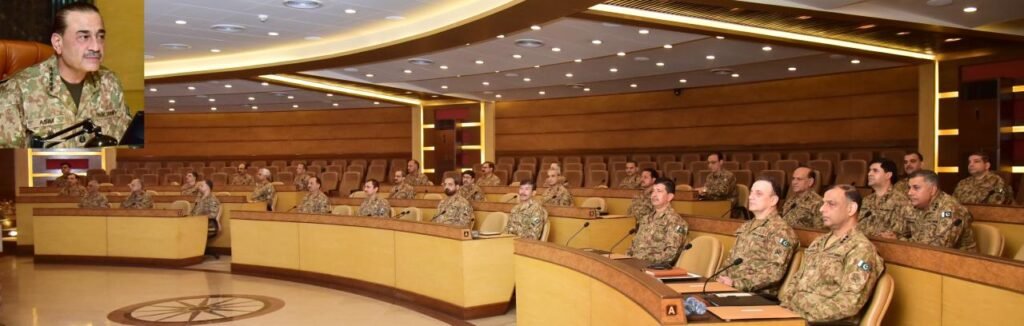
Corps Commanders Vow To Safeguard Pakistan’s Indus Water Rights

RAWALPINDI — The Corps Commanders’ Conference (CCC) has reaffirmed its commitment to protect Pakistan’s water rights under the Indus Waters Treaty (IWT). Meeting on Monday, the military leadership addressed recent statements from India regarding the treaty, emphasizing the necessity of ensuring Pakistan’s rightful water share in accordance with government directives and public expectations. What Happened The 276th Corps Commanders’ Conference convened in Rawalpindi, focusing on the strategic and operational concerns impacting Pakistan’s national security. A significant portion of the discussion centered around the Indus Waters Treaty, a critical agreement between Pakistan and India that governs the distribution of water from the Indus River system. The CCC expressed its determination to take all requisite measures to secure Pakistan’s water rights, highlighting the importance of water security for the nation. During the meeting, the commanders reviewed the current situation and deliberated on potential strategies to counter any challenges posed by India’s recent rhetoric. The conference underscored the military’s role in supporting the government’s efforts to ensure compliance with the treaty. A senior military official stated, “We are committed to safeguarding Pakistan’s water rights as per the Indus Waters Treaty and will implement all necessary measures to achieve this goal.” The CCC also discussed the broader implications of water security on national stability and development, recognizing the vital role that water resources play in sustaining Pakistan’s agricultural and economic sectors. Background The Indus Waters Treaty, signed in 1960, is a water-distribution agreement brokered by the World Bank between Pakistan and India. It allocates the use of the Indus River and its tributaries, granting control of the eastern rivers (Sutlej, Beas, and Ravi) to India, while Pakistan receives the western rivers (Indus, Jhelum, and Chenab). Despite its success in preventing major conflicts over water, the treaty has faced challenges, particularly in recent years, as both countries have accused each other of violations. India’s construction of dams and hydroelectric projects on the western rivers has been a point of contention, with Pakistan expressing concerns over potential reductions in water flow. The treaty includes mechanisms for dispute resolution, but tensions have persisted, exacerbated by broader geopolitical issues between the two nations. Why It Matters Water security is a critical issue for Pakistan, a country heavily reliant on its agricultural sector, which constitutes a significant portion of its economy and employs a large segment of the population. The availability of water from the Indus River system is essential for irrigation, drinking, and industrial use. Any disruption in water supply could have severe implications for food security, economic stability, and social welfare. The Corps Commanders’ emphasis on safeguarding water rights reflects the strategic importance of water resources in national security planning. As climate change and population growth exert additional pressure on water availability, ensuring equitable distribution and sustainable management becomes increasingly crucial. Furthermore, the military’s involvement underscores the intersection of environmental and security concerns in Pakistan. By aligning with government efforts, the military aims to present a united front in addressing potential threats to the country’s water resources, thereby reinforcing national resilience. Key Takeaways The Corps Commanders’ Conference has pledged to protect Pakistan’s water rights under the Indus Waters Treaty. The meeting addressed India’s recent statements and explored strategies to ensure water security. The Indus Waters Treaty is vital for managing water distribution between Pakistan and India. Water security is crucial for Pakistan’s agriculture, economy, and national stability. The military’s role highlights the strategic importance of water resources in national security. Source Attribution This article is based on official government statements, press releases, and public communications from relevant authorities. Author: NEN Editorial Desk | Editor: NEN Newsroom | Fact Checked By: NEN Editorial Team Author: NEN Editorial Desk  |  Editor: NEN Newsroom  |  Last Updated: July 06, 2026  |  Source: NEN Reporter This article was produced by the NEN Editorial Desk in accordance with NEN Agency’s Editorial Policy and Fact-Checking Policy.
World

Irtaza, Habib, Rahim Triumph at Islamabad Junior Golf Championship 2026

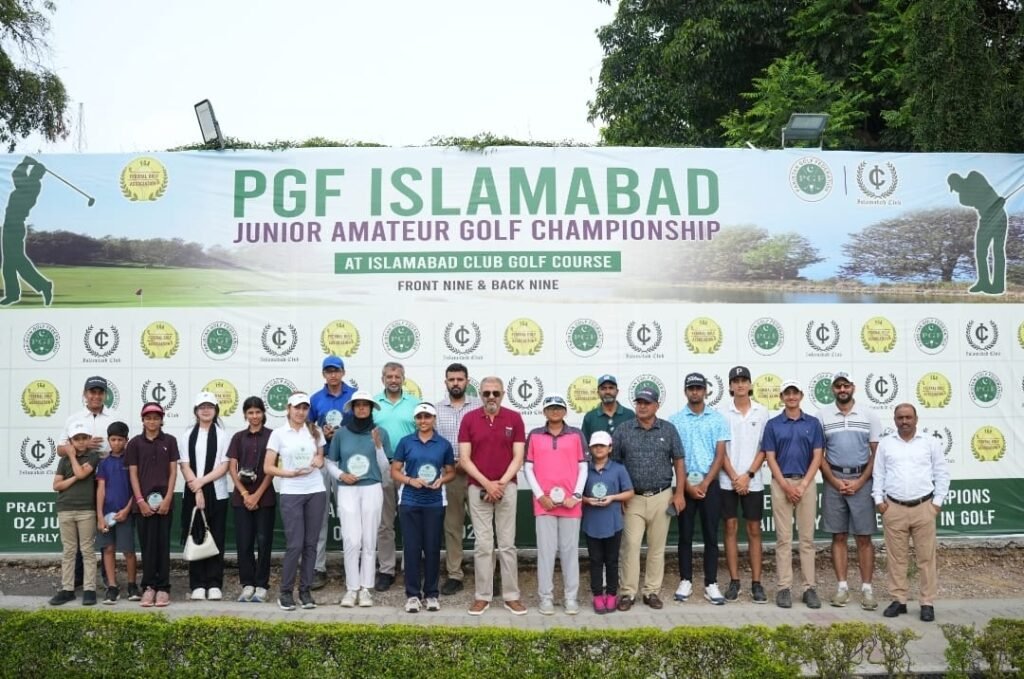
ISLAMABAD — The Pakistan Golf Federation (PGF) concluded the Islamabad Junior Amateur Golf Championship 2026 at the Islamabad Club Golf Course, where young golfers showcased their talents from July 3 to July 5. What Happened The Islamabad Junior Amateur Golf Championship 2026, organized by the Pakistan Golf Federation, brought together 72 elite junior golfers from across the nation to compete in a challenging 54-hole stroke play format. Held at the picturesque Islamabad Club Golf Course, the event spanned three days, from July 3 to July 5, and featured intense competition across various age categories. Under the guidance of Tournament Director Malik Muhammad Kamran, the championship was lauded for the exceptional performances of the young athletes. In the highly competitive Category A, Muhammad Irtaza Hussain emerged victorious, demonstrating remarkable skill and composure. Hamza Waheed secured the runner-up position, with Zaid Umar finishing in third place. Category B saw Saad Habib claim the top spot after a fierce battle, with Muhammad Raza and Mustafa Zubair taking second and third places, respectively. In Category C, Abdul Rahim Usman showcased consistent performance throughout the tournament to secure first place, followed by Mubeen Akram and Muhammad Musa Adil in second and third positions. The Girls’ Championship was equally thrilling, with Rameen Amin clinching the first-place title after a brilliant display of golf. Zarmeenah Khan and Warisha Shahid completed the podium in second and third places, respectively. The championship concluded with a vibrant prize distribution ceremony attended by the young golfers and their families. Aamir Saleh Abbasi, the Chief Guest, presented the trophies and commended the athletes for their achievements, highlighting the importance of such events in nurturing future talent. Background The Islamabad Junior Amateur Golf Championship is part of the Pakistan Golf Federation’s ongoing efforts to promote golf among young athletes in the country. The PGF has been instrumental in organizing various tournaments to provide a platform for emerging golfers to hone their skills and gain competitive experience. The federation’s initiatives aim to cultivate a strong foundation for the sport’s future in Pakistan. Golf in Pakistan has seen gradual growth over the years, with increasing participation in junior and amateur levels. The PGF’s focus on youth development is crucial in sustaining this momentum and ensuring that talented players have the opportunity to compete at national and international levels. Why It Matters The successful organization of the Islamabad Junior Amateur Golf Championship 2026 holds significant implications for the future of golf in Pakistan. By providing young athletes with a platform to compete and excel, the PGF is fostering a new generation of golfers who can potentially represent the country on international stages. Events like these not only enhance the skill levels of participants but also instill values of discipline, sportsmanship, and perseverance. The enthusiasm displayed by both players and their families underscores the growing interest in golf as a viable sport for youth in Pakistan. Moreover, the championship highlights the role of community support in nurturing sports talent. The involvement of clubs, coaches, and families in such events is crucial for the holistic development of young athletes. By investing in junior championships, the PGF is laying the groundwork for a vibrant golfing culture in Pakistan, which could lead to increased participation and success in the sport at higher levels. Key Takeaways The Islamabad Junior Amateur Golf Championship 2026 featured 72 elite junior golfers competing over three days. Muhammad Irtaza Hussain, Saad Habib, and Abdul Rahim Usman emerged as champions in their respective categories. The event emphasized the importance of youth development in golf, with strong community and family support. The PGF’s efforts in organizing such championships are vital for the future of golf in Pakistan. The championship concluded with a prize distribution ceremony, celebrating the achievements of young athletes. Source Attribution This article is based on official statements and public communications from the Pakistan Golf Federation and Islamabad Club management. Author: NEN Editorial Desk | Editor: NEN Newsroom | Fact Checked By: NEN Editorial Team Author: NEN Editorial Desk  |  Editor: NEN Newsroom  |  Last Updated: July 06, 2026  |  Source: NEN Reporter This article was produced by the NEN Editorial Desk in accordance with NEN Agency’s Editorial Policy and Fact-Checking Policy.
World

Faisalabad Business Community Pledges Support to New Deputy Commissioner

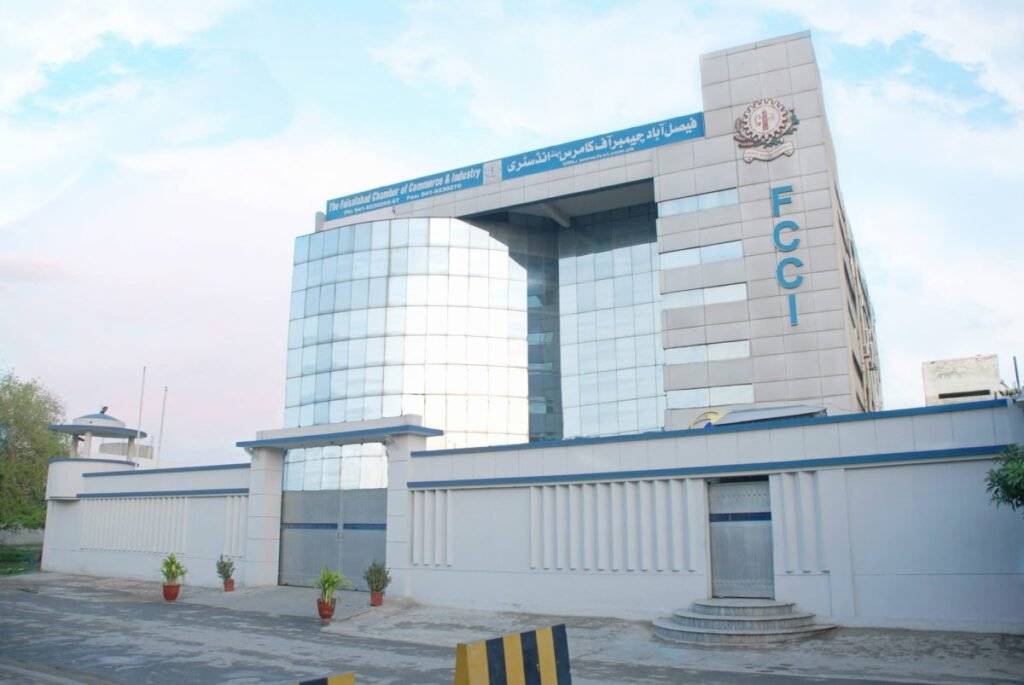
FAISALABAD — The Faisalabad Chamber of Commerce & Industry (FCCI) has expressed its full support for the newly appointed Deputy Commissioner, Muhammad Nauman Siddique, as he embarks on a mission to foster sustainable development in Faisalabad. FCCI President Farooq Yousaf Sheikh announced the business community’s commitment to collaborate with the district administration to achieve planned growth and development in the city. What Happened On Monday, FCCI President Farooq Yousaf Sheikh officially welcomed Muhammad Nauman Siddique as the new Deputy Commissioner of Faisalabad. In his statement, Sheikh emphasized the importance of cooperation between the business community and local government to ensure the city’s development is both strategic and sustainable. He stated, “The business community in Faisalabad is ready to extend its full cooperation to the new Deputy Commissioner for the planned and sustainable development of the city.” Sheikh highlighted the role of the FCCI in facilitating dialogue and collaboration between the private sector and government agencies. He noted that the chamber has historically been a pivotal player in advocating for policies that promote economic growth and infrastructure development in Faisalabad. The FCCI is keen to work with Siddique to address the challenges facing the city, including infrastructure improvements, industrial expansion, and urban planning. Deputy Commissioner Siddique, in response, acknowledged the support from the FCCI and expressed his commitment to working closely with the business community. He outlined his vision for Faisalabad, focusing on enhancing public services, improving urban infrastructure, and creating a conducive environment for business and investment. Siddique assured stakeholders that his administration would prioritize transparency and efficiency in all developmental projects. Background Faisalabad, often referred to as the Manchester of Pakistan, is a major industrial hub known for its textile industry. Over the years, the city has faced challenges related to urbanization, infrastructure, and industrial growth. The role of the Deputy Commissioner is crucial in managing these challenges and facilitating development initiatives. The FCCI has been instrumental in representing the interests of the business community in Faisalabad. It has actively engaged with local and national government bodies to advocate for policies that support economic growth and improve the business climate. The chamber’s collaboration with the district administration is seen as vital for the successful implementation of development projects. Why It Matters The appointment of Muhammad Nauman Siddique as Deputy Commissioner comes at a critical time for Faisalabad. The city is poised for significant growth, with numerous development projects in the pipeline. The support from the FCCI is expected to enhance the effectiveness of these initiatives by ensuring that the business community’s needs and perspectives are considered in planning and execution. Economically, Faisalabad’s development is crucial for Pakistan’s overall economic health. As a major contributor to the national GDP, the city’s industrial growth can significantly impact employment rates and economic stability. The collaboration between the FCCI and the district administration is likely to attract further investment, boost industrial output, and improve the quality of life for residents. Socially, the planned development initiatives aim to address urban challenges such as traffic congestion, inadequate public services, and environmental concerns. By working together, the FCCI and the Deputy Commissioner’s office can implement solutions that enhance urban living conditions and promote sustainable practices. Key Takeaways The FCCI has pledged full support to the new Deputy Commissioner, Muhammad Nauman Siddique, for Faisalabad’s development. The collaboration aims to address infrastructure, industrial, and urban planning challenges in the city. Faisalabad’s growth is crucial for Pakistan’s economic stability and industrial output. The partnership is expected to attract investment and improve public services and infrastructure. Deputy Commissioner Siddique has committed to transparency and efficiency in developmental projects. Source Attribution This article is based on official statements and public communications from the Faisalabad Chamber of Commerce & Industry and the Deputy Commissioner’s office. Author: NEN Editorial Desk | Editor: NEN Newsroom | Fact Checked By: NEN Editorial Team Author: NEN Editorial Desk  |  Editor: NEN Newsroom  |  Last Updated: July 06, 2026  |  Source: Press Release from Government of Pakistan This article was produced by the NEN Editorial Desk in accordance with NEN Agency’s Editorial Policy and Fact-Checking Policy.

World

Pakistan, Kazakhstan Discuss Cooperation in Digital Transformation

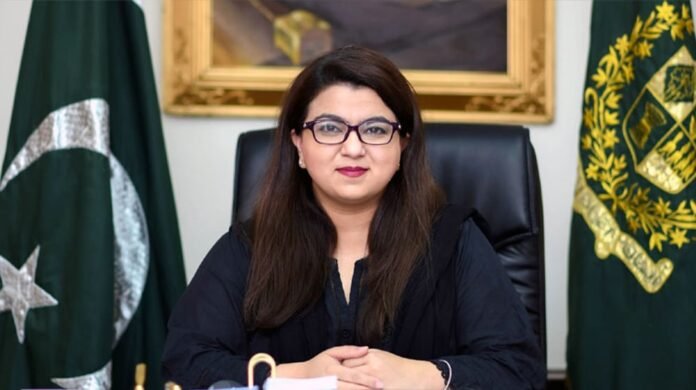
ISLAMABAD — Federal Minister for Information Technology and Telecommunication Shaza Fatima Khawaja met with Kazakhstan’s Deputy Prime Minister and Minister of Digital Development, Zhaslan Madiyev, on Monday. The meeting took place during the Geneva Digital Week and the Global Dialogue Summit, where the two leaders explored potential areas of cooperation in digital transformation. What Happened Federal Minister Shaza Fatima Khawaja engaged in a bilateral meeting with Kazakhstan’s Deputy Prime Minister Zhaslan Madiyev to discuss collaborative efforts in the realm of digital transformation. The meeting was part of her high-level engagements at the Geneva Digital Week and the Global Dialogue Summit. Both leaders expressed a keen interest in enhancing cooperation between Pakistan and Kazakhstan, particularly in the fields of information technology and digital development. During the discussions, Shaza Fatima Khawaja highlighted Pakistan’s strides in digital innovation and the government’s commitment to fostering a robust digital ecosystem. She emphasized the potential for mutual benefits through shared knowledge and expertise in digital technologies. Zhaslan Madiyev, on his part, conveyed Kazakhstan’s interest in learning from Pakistan’s experiences and implementing similar initiatives to boost its digital infrastructure. The meeting underscored the importance of international collaboration in digital transformation, with both countries recognizing the need to leverage technological advancements to drive economic growth and improve public services. The dialogue also touched upon the potential for joint ventures and partnerships in areas such as e-governance, cybersecurity, and digital skills development. Background Pakistan and Kazakhstan have historically maintained cordial relations, with both countries being members of various international organizations, including the United Nations and the Organization of Islamic Cooperation. In recent years, there has been a growing emphasis on strengthening economic and technological ties between the two nations. The Geneva Digital Week and the Global Dialogue Summit serve as platforms for countries to exchange ideas and best practices in digital transformation. These events bring together leaders and experts from around the world to discuss the challenges and opportunities presented by digital technologies. Pakistan has been actively pursuing digital transformation as part of its national agenda, with initiatives aimed at improving digital infrastructure, promoting e-governance, and enhancing digital literacy among its population. The government’s efforts are aligned with its vision to create a knowledge-based economy and position Pakistan as a key player in the global digital landscape. Why It Matters The meeting between Shaza Fatima Khawaja and Zhaslan Madiyev is significant as it highlights the growing importance of digital transformation in international relations. For Pakistan, collaboration with Kazakhstan presents an opportunity to expand its digital footprint and leverage new technologies to address domestic challenges. Economically, enhanced cooperation in digital transformation can lead to increased trade and investment opportunities between the two countries. By sharing expertise and resources, Pakistan and Kazakhstan can develop innovative solutions that drive economic growth and create new job opportunities in the digital sector. Socially, the collaboration can lead to improved public services and greater access to digital tools for citizens in both countries. This is particularly important for Pakistan, where digital inclusion remains a key priority for the government. By learning from Kazakhstan’s experiences, Pakistan can enhance its digital infrastructure and ensure that more people have access to the benefits of digital technologies. On an international level, the partnership between Pakistan and Kazakhstan can serve as a model for other countries seeking to collaborate on digital transformation initiatives. It underscores the importance of cross-border cooperation in addressing global challenges and highlights the role of technology in fostering international development. Key Takeaways Pakistan and Kazakhstan are exploring cooperation in digital transformation during high-level meetings. The discussions focused on enhancing digital infrastructure and sharing expertise in digital technologies. Collaboration can lead to economic growth, improved public services, and increased digital inclusion. The partnership underscores the importance of international cooperation in digital transformation. Pakistan aims to leverage this collaboration to enhance its position in the global digital landscape. Source Attribution This article is based on official government statements, press releases, and public communications from relevant authorities. Author: NEN Editorial Desk | Editor: NEN Newsroom | Fact Checked By: NEN Editorial Team Author: NEN Editorial Desk  |  Editor: NEN Newsroom  |  Last Updated: July 06, 2026  |  Source: Press Release from Government of Pakistan This article was produced by the NEN Editorial Desk in accordance with NEN Agency’s Editorial Policy and Fact-Checking Policy.
World

Pakistan Plans Rs 9.8 Billion Footwear Hub Near Lahore to Boost Investment

ISLAMABAD — The Pakistani government has unveiled plans to establish a Rs 9.8 billion footwear industrial hub near Lahore, aiming to attract substantial foreign investment and modernize the sector. The initiative, spearheaded by the Ministry of Industries and Production, is set to transform the country’s footwear manufacturing landscape. What Happened The government has announced its intention to develop a dedicated footwear industrial hub near Lahore, with a total investment of Rs 9.8 billion. This project is part of a strategic effort to enhance Pakistan’s industrial capabilities and attract foreign investment into the footwear sector. Official documents indicate that the Small and Medium Enterprises Development Authority (SMEDA) will lead the project execution, with the Board of Investment (BoI) and provincial industry departments serving as key partners. The footwear sector in Pakistan, particularly around Lahore, is currently characterized by informal and semi-organized production units. The absence of a dedicated industrial zone has led to fragmented manufacturing, elevated logistics costs, and limited technological advancements. The new hub aims to address these issues by offering a purpose-built industrial platform equipped with necessary infrastructure and compliance services. The project is scheduled to be completed over five years, with phased funding allocations: Rs 280 million in FY2026-27, Rs 5.32 billion in FY2027-28, Rs 2.8 billion in FY2028-29, and Rs 1.4 billion in FY2029-30. The hub will include facilities such as internal roads, electricity and gas supply networks, water and sanitation systems, and shared utility buildings. A significant feature of the hub will be a technology adoption platform, including a demonstration center with modern equipment like cutting lines and automated stitching machinery. This is expected to facilitate technology transfer and enable manufacturers to shift towards higher-value, export-oriented production. Background Pakistan’s footwear industry has long been a significant contributor to the economy, yet it has struggled with challenges related to informal production and lack of infrastructure. Historically, the sector has relied on small-scale operations with limited access to modern technology and investment. The government’s new initiative seeks to change this by providing a structured environment that encourages growth and attracts international investors. The initiative aligns with broader economic policies aimed at industrialization and export enhancement. By creating a specialized hub, the government hopes to replicate the success of similar industrial zones in other sectors, which have proven effective in boosting productivity and exports. Why It Matters The establishment of the footwear industrial hub is poised to have significant economic and social impacts. Economically, it is expected to attract both domestic and foreign investment, thereby increasing production capacity and export potential. The hub’s focus on technology adoption will likely lead to higher-quality products and enhanced competitiveness in international markets. Socially, the project promises to create numerous job opportunities, contributing to economic development in the region. By formalizing the sector and providing modern infrastructure, the hub could significantly improve working conditions and wages for workers traditionally employed in informal settings. Politically, the project demonstrates the government’s commitment to industrial development and economic diversification. It aligns with national goals of increasing exports and reducing reliance on traditional sectors like agriculture. The successful implementation of the hub could serve as a model for other industries seeking similar modernization and investment attraction. Key Takeaways The Pakistani government plans to establish a Rs 9.8 billion footwear industrial hub near Lahore. The project aims to attract foreign investment and modernize the footwear sector. SMEDA will lead the execution, with support from the BoI and provincial departments. The hub will include technology adoption platforms and shared facilities to boost production. The initiative is expected to enhance exports, create jobs, and improve sector competitiveness. Source Attribution The article is based on official government statements, press releases, and public communications from relevant authorities. Author: NEN Editorial Desk | Editor: NEN Newsroom | Fact Checked By: NEN Editorial Team Author: NEN Editorial Desk  |  Editor: NEN Newsroom  |  Last Updated: July 06, 2026  |  Source: Press Release from Ministry of Industries & Production This article was produced by the NEN Editorial Desk in accordance with NEN Agency’s Editorial Policy and Fact-Checking Policy.

World

Xi Jinping Congratulates Trump on 250th Anniversary of U.S. Independence

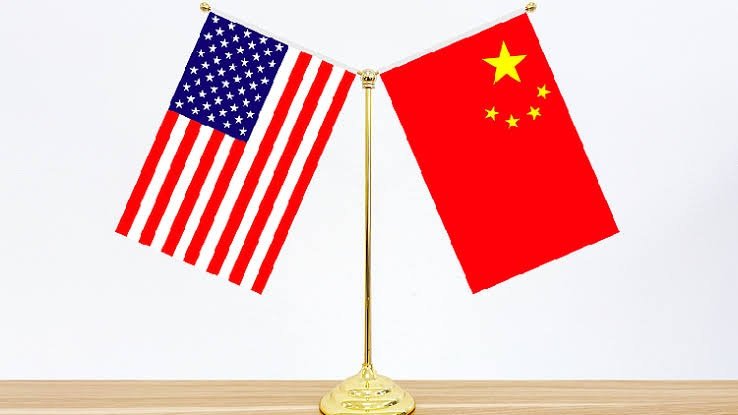
BEIJING — Chinese President Xi Jinping extended his congratulations to former U.S. President Donald Trump on the occasion of the 250th anniversary of the United States’ Declaration of Independence, according to a statement from the Chinese foreign ministry. The message was conveyed by spokesperson Mao Ning on Monday, reflecting China’s diplomatic engagement with the U.S. during this significant milestone. What Happened President Xi Jinping’s message was delivered on behalf of both the Chinese government and its people, marking a gesture of goodwill towards the United States. The congratulatory note highlights the importance China places on maintaining diplomatic relations with the U.S., despite ongoing tensions between the two nations. The Chinese foreign ministry spokesperson, Mao Ning, emphasized the significance of this anniversary, acknowledging the historical importance of the U.S. Declaration of Independence, which was adopted on July 4, 1776. The message from President Xi was part of a broader diplomatic tradition where leaders exchange greetings on national holidays and significant anniversaries. This practice is seen as a way to reinforce bilateral ties and promote mutual understanding, even amid geopolitical challenges. The Chinese government’s acknowledgment of the U.S. milestone underscores its recognition of the historical and global influence of the United States. Background The United States declared its independence from Great Britain on July 4, 1776, a pivotal moment in world history that laid the foundation for the modern democratic state. The Declaration of Independence, primarily authored by Thomas Jefferson, articulated the colonies’ desire for sovereignty and self-governance. Over the centuries, the U.S. has commemorated this event as Independence Day, a federal holiday celebrated with various patriotic displays and activities. China and the United States have had a complex relationship characterized by cooperation and competition. While economic ties have been strong, political and military tensions have occasionally strained relations. Recent years have seen increased friction over trade, technology, and regional security issues. Despite these challenges, both nations have continued to engage diplomatically, recognizing the importance of their bilateral relationship in addressing global issues. Why It Matters The exchange of congratulatory messages between China and the U.S. is significant in the context of their current diplomatic relations. As two of the world’s largest economies and influential global powers, the nature of their relationship has far-reaching implications for international stability and economic growth. President Xi’s message to former President Trump may also signal China’s intent to maintain open lines of communication with the U.S., regardless of leadership changes in Washington. For the U.S., China’s acknowledgment of its independence anniversary serves as a reminder of the global recognition of its historical achievements and its role as a leader in promoting democratic values. This gesture can be seen as an opportunity to foster dialogue and potentially ease tensions, contributing to a more stable international environment. Moreover, the diplomatic exchange underscores the importance of historical milestones in international relations. Such events provide a platform for countries to reaffirm their commitment to peaceful coexistence and mutual respect, which are essential for addressing shared global challenges such as climate change, public health, and economic development. Key Takeaways President Xi Jinping congratulated former U.S. President Donald Trump on the 250th anniversary of the U.S. Declaration of Independence. The message was delivered by Chinese foreign ministry spokesperson Mao Ning, emphasizing diplomatic engagement. The U.S. Declaration of Independence is a significant historical event, marking the birth of the modern democratic state. China and the U.S. have a complex relationship, balancing cooperation with competition in various spheres. The exchange highlights the importance of maintaining diplomatic channels amid global tensions. Source Attribution This article is based on official government statements and public communications from relevant authorities. Author: NEN Editorial Desk | Editor: NEN Newsroom | Fact Checked By: NEN Editorial Team Author: NEN Editorial Desk  |  Editor: NEN Newsroom  |  Last Updated: July 06, 2026  |  Source: Press Release from Government of Pakistan This article was produced by the NEN Editorial Desk in accordance with NEN Agency’s Editorial Policy and Fact-Checking Policy.

World

Pakistan-Russia Conference Highlights Academic Collaboration

ISLAMABAD — The First Pakistan–Russia International Student Research Conference, held for the 2025–2026 academic year, has underscored the growing academic collaboration between the two nations. Organized jointly by the Department of International Relations at the Federal Urdu University of Arts, Science and Technology (FUUAST) in Islamabad, the Financial University under the Government of the Russian Federation in Moscow, and the Consortium for Asia Pacific & Eurasian Studies (CAPES), the event was conducted online, facilitating a wide range of academic exchanges. What Happened The conference, which took place virtually, served as a platform for students and academics from Pakistan and Russia to present their research findings and discuss potential areas for further cooperation. Participants engaged in discussions on various topics, including international relations, economic strategies, and cultural exchanges. The event was marked by a series of presentations and panel discussions that highlighted the importance of academic partnerships in fostering mutual understanding and cooperation between the two countries. Dr. Muhammad Zafar Iqbal, head of the Department of International Relations at FUUAST, emphasized the significance of such collaborations in enhancing educational standards and research capabilities. “This conference is a testament to the strong academic ties between Pakistan and Russia, and it opens new avenues for joint research projects and academic exchanges,” he stated. Representatives from the Financial University in Moscow echoed these sentiments, noting that the collaboration would not only benefit the academic communities in both countries but also contribute to broader geopolitical understanding. The event featured over 50 research papers and presentations, with topics ranging from economic policy to cultural diplomacy. Background Pakistan and Russia have been strengthening their bilateral relations over recent years, with a particular focus on education and research. Historically, the two countries have shared a complex relationship, influenced by geopolitical dynamics and regional alliances. However, recent efforts have been made to enhance cooperation in various sectors, including education, energy, and defense. The establishment of academic partnerships is part of a broader strategy to build people-to-people connections and foster long-term collaboration. The Pakistan-Russia International Student Research Conference is one of several initiatives aimed at promoting educational exchanges and joint research endeavors. Why It Matters The academic collaboration between Pakistan and Russia holds significant implications for both countries. For Pakistan, engaging with Russian academic institutions provides access to advanced research methodologies and educational resources, which can enhance the quality of education and research output in the country. This collaboration also aligns with Pakistan’s broader educational goals of improving higher education standards and fostering international partnerships. On the international stage, the strengthening of Pakistan-Russia academic ties can contribute to a more balanced geopolitical landscape. As both countries seek to diversify their international alliances, academic collaboration serves as a non-political avenue to build trust and understanding. This can potentially lead to increased cooperation in other areas, such as trade and security. For Russia, engaging with Pakistani academic institutions offers an opportunity to expand its influence in South Asia and to gain insights into the region’s socio-political dynamics. The collaboration can also facilitate cultural exchanges, helping to break down stereotypes and build mutual respect between the two nations. Key Takeaways The First Pakistan–Russia International Student Research Conference highlights growing academic ties between the two countries. The event featured over 50 research papers and presentations, fostering academic exchanges. Such collaborations enhance educational standards and research capabilities in both nations. The partnership aligns with broader geopolitical strategies to diversify international alliances. Academic collaboration can lead to increased cooperation in trade and security. Source Attribution This article is based on official government statements, press releases, and public communications from relevant authorities. Author: NEN Editorial Desk | Editor: NEN Newsroom | Fact Checked By: NEN Editorial Team Author: NEN Editorial Desk  |  Editor: NEN Newsroom  |  Last Updated: July 06, 2026  |  Source: NEN Reporter This article was produced by the NEN Editorial Desk in accordance with NEN Agency’s Editorial Policy and Fact-Checking Policy.

Scroll to Top